
Brake Noise Decoder: When to Stop, Inspect, or Monitor

A brake sound is a clue, not a diagnosis. First decide whether braking performance has changed; then record exactly when the sound or vibration occurs. A soft pedal, reduced braking, a fluid leak, a loose wheel, or severe pulling outweighs any guess about pads or rotors.
What to do first
- Stop and arrange towing if the pedal is soft or sinking, braking force is reduced, fluid is leaking, a wheel is loose, or the vehicle pulls sharply under braking.
- Arrange prompt inspection for persistent grinding, new pedal pulsation, one hot wheel, or a noise that is getting worse.
- Record before replacing parts: cold or warm brakes, pedal pressure, vehicle speed, steering input, weather, and which corner seems involved.
In this guide
1. Decide whether the vehicle is safe to move
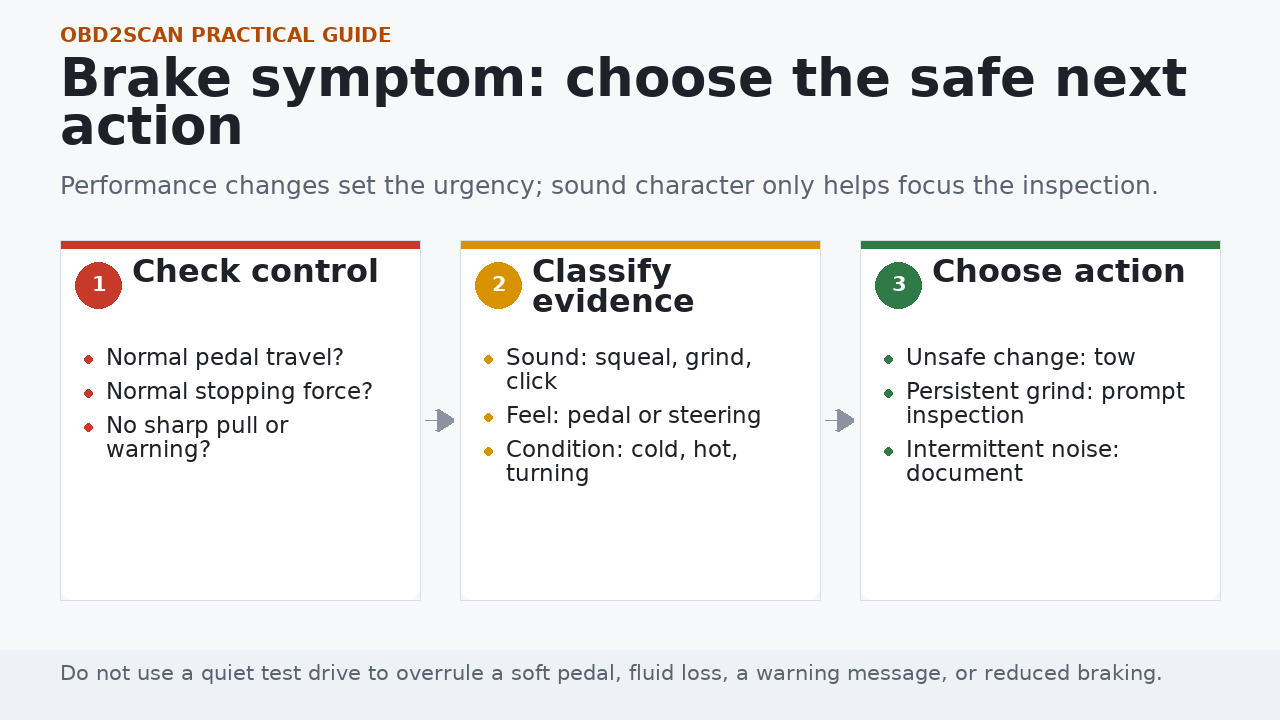
Before listening for a fine distinction between squeal and scrape, press the pedal while stationary and compare it with its normal height and firmness. Check the instrument panel and the ground near each wheel. Do not open a hydraulic system or crawl under the vehicle for this screening check.
| Observation | Decision | Why it matters |
|---|---|---|
| Soft, sinking, or unusually low pedal | Do not drive; arrange inspection or towing | The hydraulic system may not deliver predictable braking force. |
| Reduced stopping force or sharp pull | Stop using the vehicle | Control and stopping distance may be affected. |
| Persistent harsh grinding | Minimize movement and inspect promptly | Metal contact is possible and additional damage can occur quickly. |
| Brief surface-rust noise after rain, normal pedal, sound clears | Monitor, but inspect if it returns or performance changes | Moisture can change the first applications, but recurrence needs evidence. |
2. Capture the condition that produces the symptom
A useful description is reproducible: “one click from the left front when braking lightly while reversing” is actionable; “the brakes sound bad” is not. Note whether the vehicle is cold or fully warm, the approximate speed, light or firm pedal pressure, forward or reverse, straight or turning, dry or wet weather, and whether the noise changes after several stops.
- If vibration is present, state whether it is felt mainly in the pedal, steering wheel, or seat/body.
- If one wheel smells hot or radiates noticeably more heat, do not touch it. Record the corner and arrange prompt inspection.
- If the symptom started after wheel or brake work, record exactly what was removed, replaced, or tightened.
3. Translate the clue into an inspection area
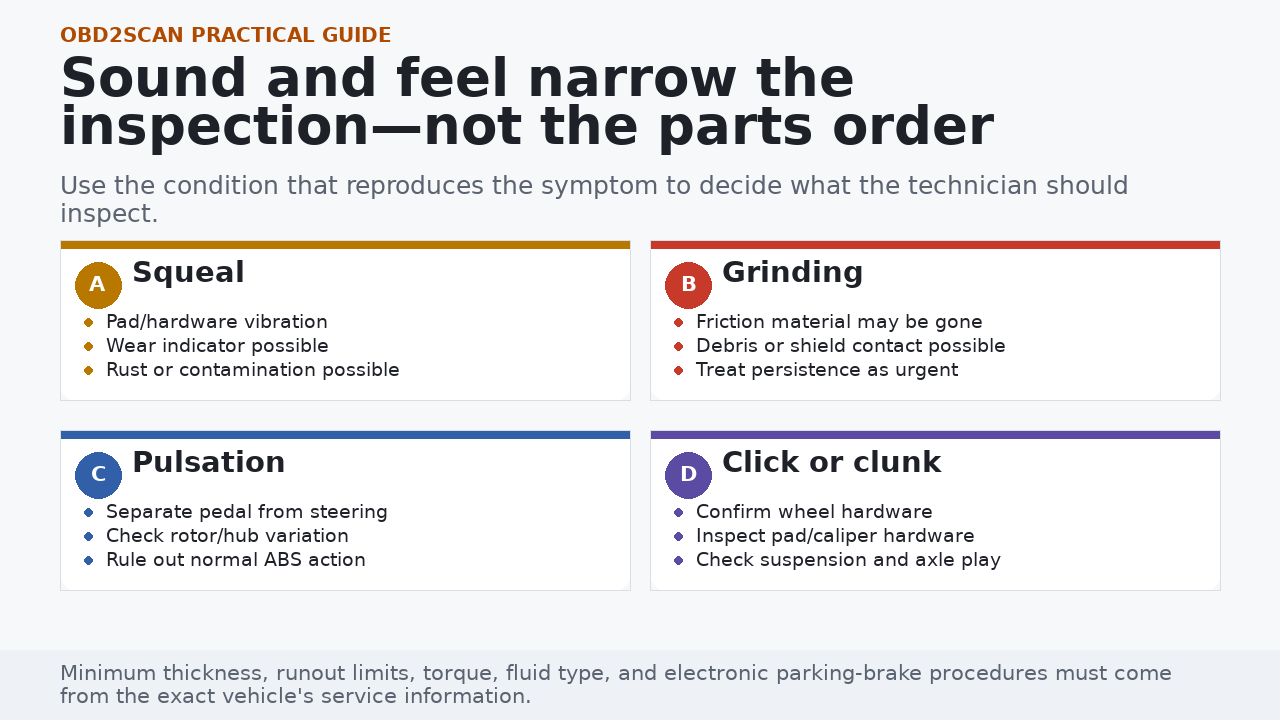
Ferodo describes brake noise as vibration that can originate anywhere in the wheel-end area, not automatically in the pad. That is why new pads do not guarantee a quiet result, and why a squeal should not be treated as a pad-thickness measurement.
Do not confuse ABS operation with a defect
Pedal feedback during a hard stop on a loose or slippery surface can be normal ABS intervention. Pulsation during ordinary repeatable braking on a dry road is a different observation and should be inspected.
4. What a complete brake inspection should verify
- Confirm wheel fasteners and wheel seating using the vehicle procedure.
- Inspect both the inner and outer pad at each affected corner; one visible outer pad does not represent the inner pad.
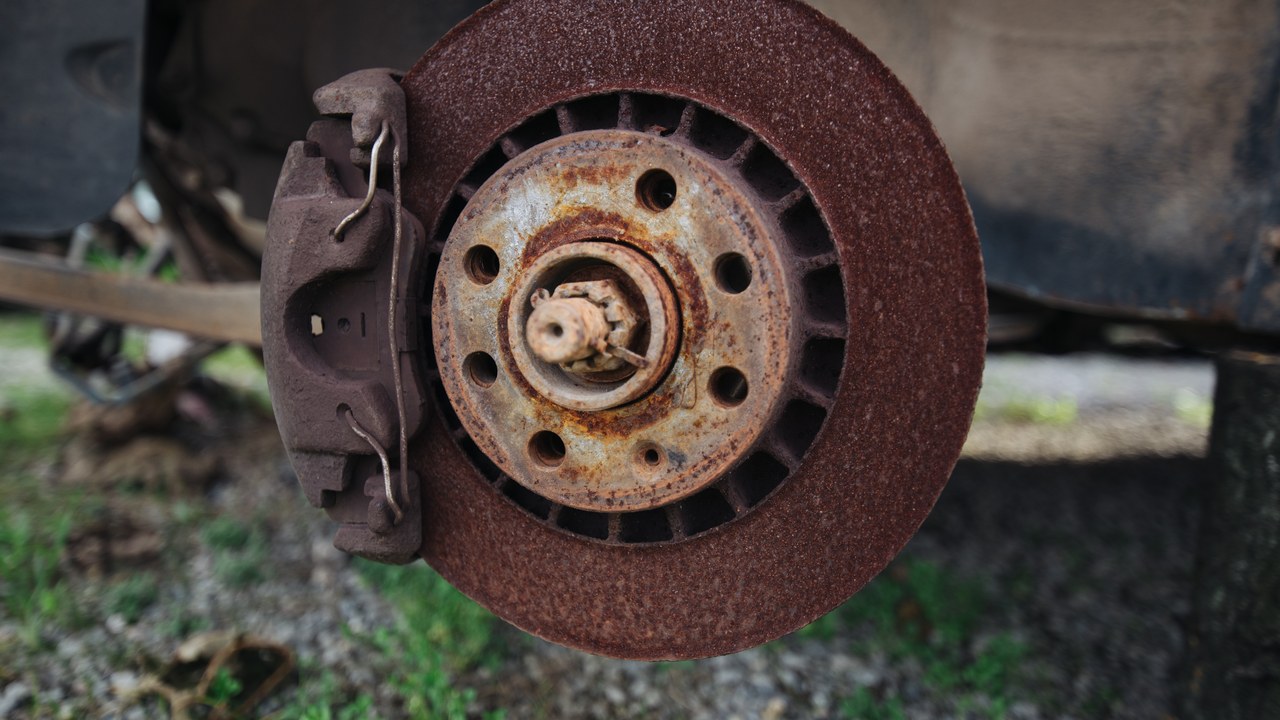
- Inspect both rotor faces, record measured thickness, and compare only with the correct vehicle/component specification.
- Check caliper slides, piston movement, boots, abutments, shims, clips, hoses, and evidence of fluid or grease contamination.
- If there is pulsation, inspect the hub/rotor mounting surfaces and measure variation with the correct procedure; do not diagnose a “warped rotor” from pedal feel alone.
- If there is pulling or a clunk, include tires, wheel bearings, steering, suspension, and axle components in the inspection.
Friction surfaces must stay clean
Do not apply general-purpose lubricant to pads or rotors. Any product, location, quantity, tightening torque, and bedding procedure must match the component and vehicle instructions.
Official references
Use these sources for the principles in this guide, then use the owner’s manual and current service information for your exact vehicle.
- Ferodo: Brake Noise — Issues and Solutions (ferodo.com)
- Brembo: Noises and Vibrations (asia.bremboparts.com)
The useful outcome
You should leave with a risk decision and a reproducible symptom record—not a guessed shopping list. A proper inspection must connect the sound or feel to measurements at the affected wheel end and to the exact vehicle specification.


Comments 0
Questions, fixes, and real-world diagnostic notes from readers.
Be the first to share a diagnostic result or ask a follow-up question.