
Fisker Ocean 12V Problems Keep Returning? Build an Event Log

When a Fisker Ocean low-voltage problem returns, record the event before external support changes what the vehicle is doing. A warning that disappears under stable power is useful evidence, but it does not prove that the battery caused the problem—or that the vehicle is repaired.
On this page
Freeze the event before it changes
Start with what an owner can observe safely. Note the date and time, how long the Ocean had been parked, whether it unlocked and woke normally, and the exact wording of every visible message. Photograph accessible displays, and record recent service, a battery replacement, a software event, unusual weather or a change in parking pattern.
Do not clear messages, disconnect the battery or repeat wake cycles simply to recreate the symptom. Preserve what happened naturally. Fisker’s Ocean 12V battery information explains that the low-voltage system has its own battery role and safety constraints; it does not make an owner observation into a diagnosis.
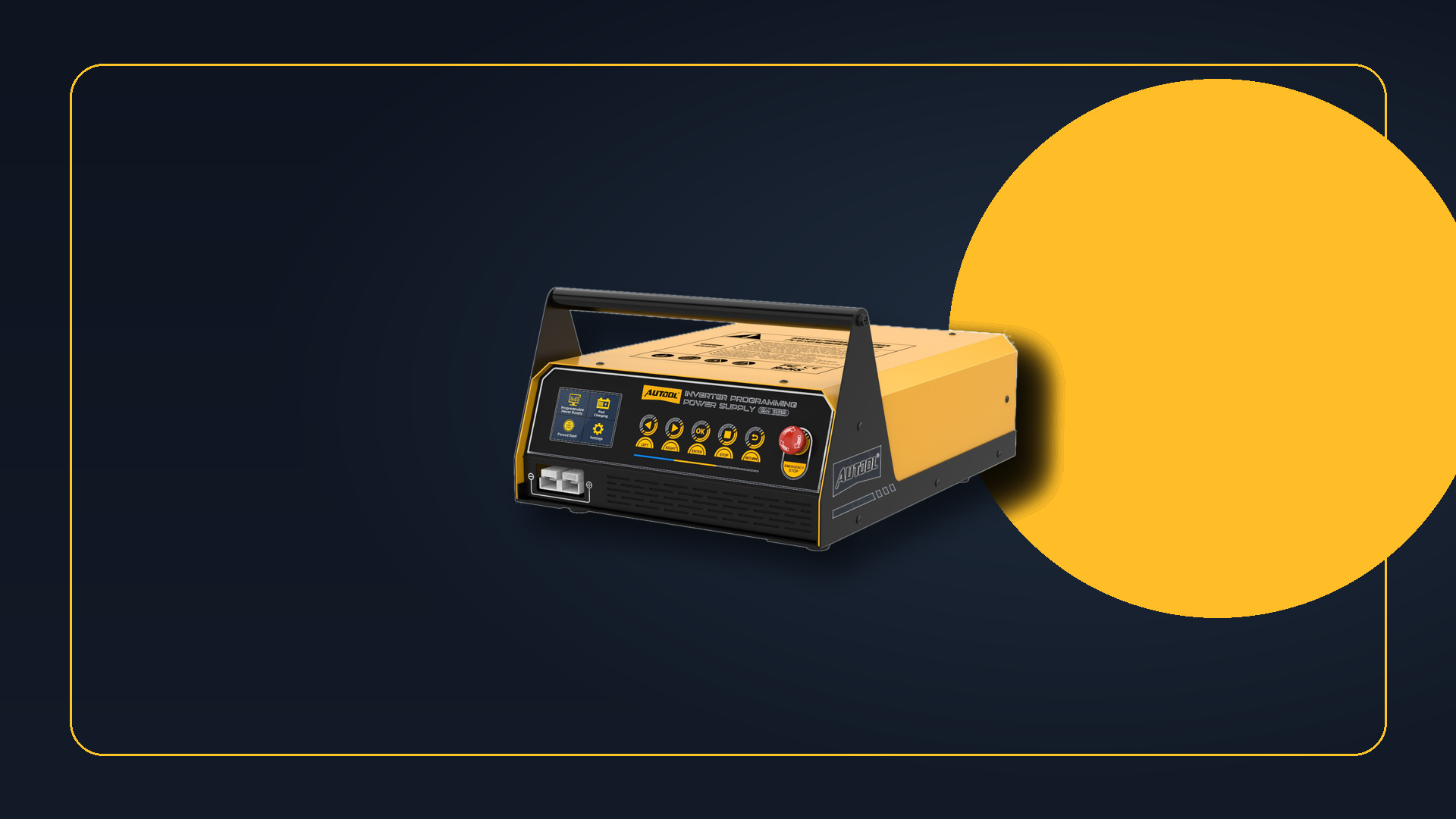
If a workshop later considers an AUTOOL EM355, preserve the as-found record first. Its physical controls can support a defined low-voltage task, but the unit is not a battery analyzer and cannot explain why the event occurred.
Build a state-tagged timeline
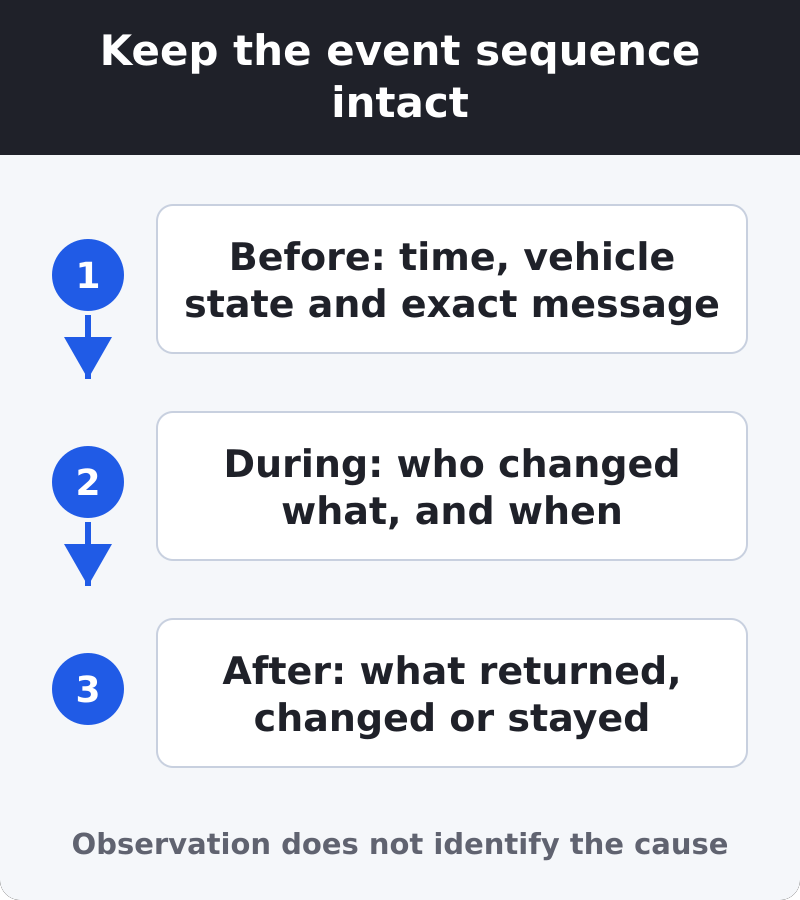
A useful log is more than a list of numbers. Every entry needs a vehicle state, elapsed time and the action immediately before it. Use three phases:
- As found: parked interval, lock/wake state, warnings and what the vehicle would or would not do.
- During an authorized intervention: who approved it, the task, start time, displayed supply state and any alert.
- After the intervention: what changed, how long the change lasted and what remained abnormal.
An AUTOOL EM365 offers a display-oriented view of equipment voltage, current and status during a supervised task. Record those observations with time and vehicle state. A stable display describes the supply at that moment; it does not certify battery state of health or identify a parasitic draw.
Separate what changed from what it proves
If the Ocean wakes normally while supported, write exactly that. The result shows that vehicle behavior changed under different electrical conditions. It does not distinguish among a discharged battery, battery deterioration, an abnormal vehicle load, a connection problem, software state or another cause.
If the symptom persists, record that too. Persistence may tell the technician that low-voltage support did not remove the immediate complaint, but it still does not identify a module or authorize parts replacement.
The AUTOOL EM385 provides touch controls and a documented adjustable-supply function. Those features can suit a procedure-defined workshop task; they do not turn an observed change into diagnosis, software recovery or proof of repair.
Mark every intervention
An intervention changes the evidence window, so give it its own log entry. Record the responsible person, the procedure or work-order reference, the intended purpose, start and stop times, the equipment mode selected by the technician, and any visible alert or thermal reduction. Do not invent a voltage, connection point or duration if the current Ocean procedure is unavailable.
The distinction also matters during storage. Fisker’s Ocean storage guidance describes interaction between the high-voltage and 12V systems. Separately, the EM355 manual, EM365 manual and EM385 manual require constant supervision during operation. A supervised service event and an unattended maintenance strategy are therefore different records and different equipment decisions.
If equipment is being considered for a later supervised task, coupon code HCM6E4GZ may be entered at checkout; confirm acceptance and the final total before paying.
Give the workshop a reproducible handoff
A technician should be able to reconstruct the event without interpreting vague phrases such as “battery acted up.” Bring a concise record containing:
- the exact message and safely captured photos;
- vehicle state, parked interval and timeline;
- recent service, software or battery history;
- what changed during authorized support and what did not;
- displayed equipment observations, alerts and elapsed time;
- how long any improvement lasted;
- the questions still unanswered.
The unresolved questions are as important as the observations. The log should not claim battery failure, parasitic draw, module failure or software corruption. It should make the next controlled test easier to choose and prevent temporary support from erasing the story the vehicle was already telling.


Comments 0
Questions, fixes, and real-world diagnostic notes from readers.
Be the first to share a diagnostic result or ask a follow-up question.