
Brakes Fade After Repeated Stops? Let Pedal Feel Separate Pad Fade from Fluid Boil

Hard Pedal Or Long Pedal?
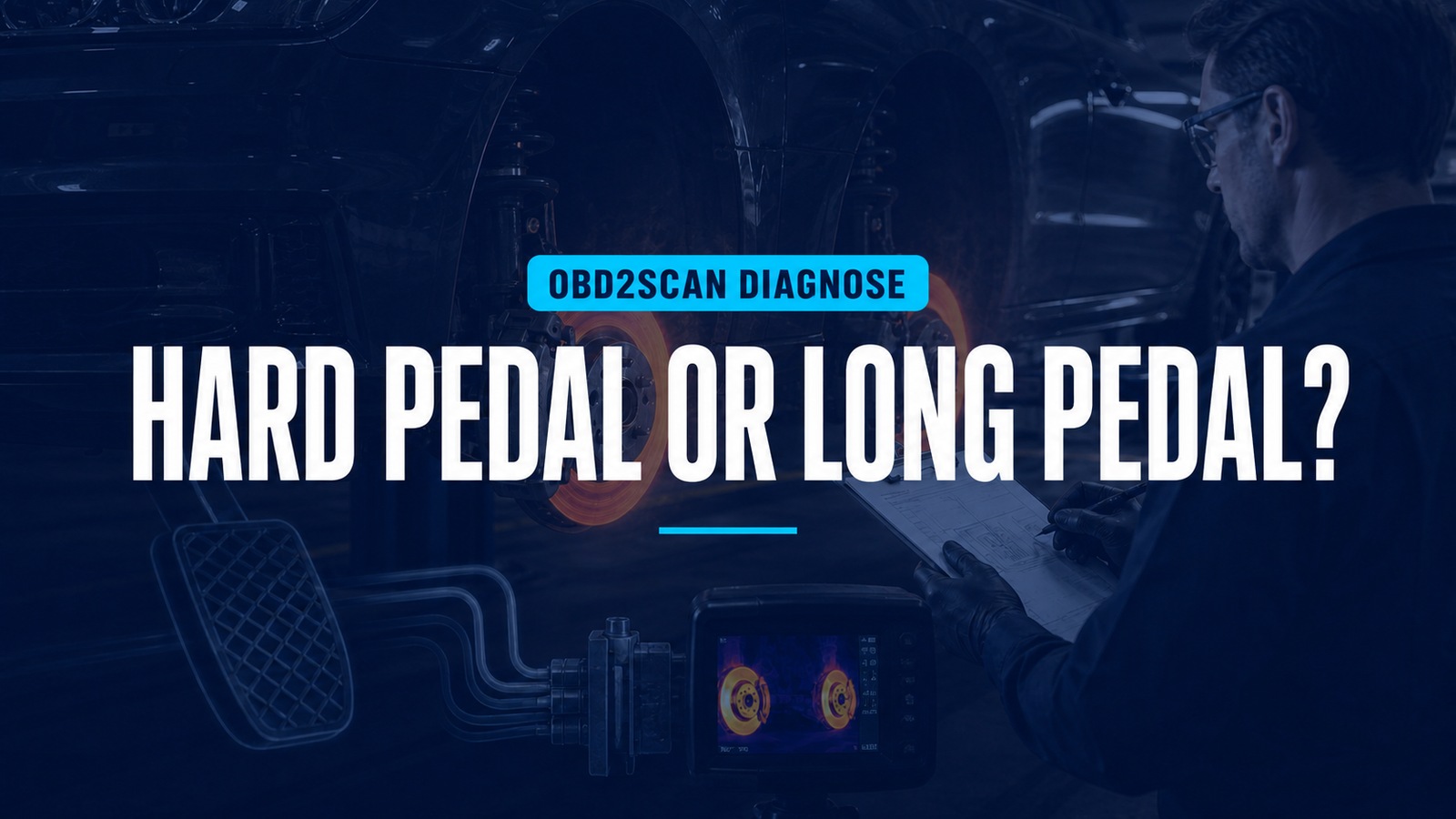
Brake fade is an event, not a workshop sensation. By the time the car is parked and cool, the pedal may feel normal and the brakes may stop normally again. The most valuable evidence is therefore what changed during the repeated stops: did the pedal stay high and firm while braking force fell, or did it become longer and softer?
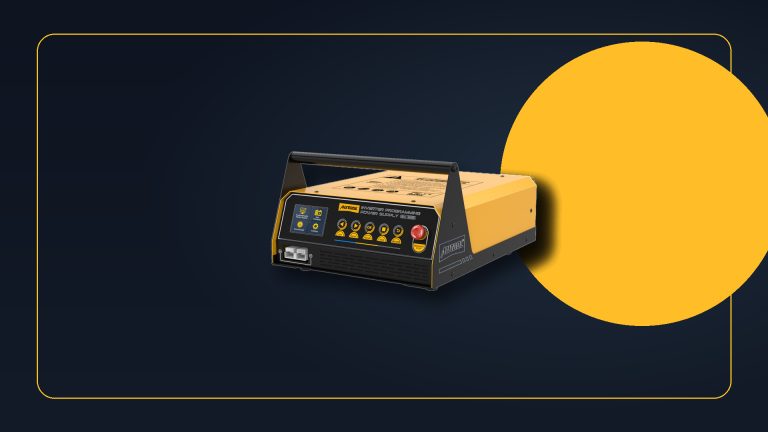
Testing the fluid can answer one part of that heat story. A direct boiling-point instrument such as the AUTOOL AS506 brake-fluid tester can screen a correctly identified sample. That result cannot diagnose pad fade, air, hose expansion, rotor condition, caliper travel, or an ABS hydraulic fault.
If braking ability falls, reduce speed safely and stop the test. Do not keep adding hard stops to improve the diagnosis. Use the field card below after the system has cooled enough to inspect; pedal feel selects a branch, but the repair must still be proved.
Quick answer: Preserve pedal feel during the heat event. A firm pedal with weak braking moves toward friction fade; a long or spongy pedal moves toward fluid boil, air or excess travel. Inspect both branches before choosing service.
In this guide
Freeze the event before the brakes cool
Write down the road and load: long descent, repeated emergency-style stops, towing, track use, high ambient temperature, or a dragging brake. Note how many applications occurred before the change, whether a warning appeared, which end produced odor or smoke, and whether the vehicle pulled. Ask whether braking force returned after a brief release or only after a full cooldown.
Record pedal position at three moments: the first normal stop, the point of reduced braking, and the first safe check after cooling. “The brakes went away” is too broad. A firm pedal with poor deceleration and a pedal approaching the floor are mechanically different complaints even if both frighten the driver.
Do not touch rotors or calipers to compare heat. Use a non-contact temperature method at matched locations when appropriate, and recognize that readings taken minutes apart may miss the peak. Smoke, odor, discoloration and left-right temperature imbalance deserve inspection, but none alone identifies the material that failed.
Read the hard-pedal branch
| During the fade | Leading direction | Immediate follow-up |
|---|---|---|
| Pedal remains high and firm; more force produces little extra deceleration | friction coefficient has fallen with temperature | inspect pads, rotors, glazing, material range and cooling |
| Pedal is hard from the start with poor assist | assist or vacuum/electrohydraulic issue | diagnose assist system by vehicle procedure |
| Vehicle pulls while pedal remains firm | side-to-side friction, temperature or chassis imbalance | compare both sides; do not call it uniform pad fade |
Classic friction fade occurs when the pad/rotor interface no longer produces its expected coefficient at the operating temperature. The driver presses a firm hydraulic system, but the requested torque does not appear. Wrong pad application, insufficient bedding, glazing, contaminated friction material, overloaded operation, poor cooling, dragging components, and rotor condition can all contribute.
After cooling, inspect every corner rather than only the hottest-looking one. Compare pad thickness and taper, surface condition, rotor color and cracking, caliper slide or piston release, dust shields, airflow paths, and evidence of contamination. A friction material that works for commuting may not suit repeated high-energy stops; a track compound may also behave poorly outside its intended range. Match the parts and duty, not a marketing label.
Read the long-pedal branch
| During the fade | Leading direction | Immediate follow-up |
|---|---|---|
| Pedal grows long or spongy with heat | compressible vapor, air, hose expansion or excess travel | inspect leaks/travel; identify and test the fluid |
| One pump temporarily raises the pedal | pad travel, knockback, adjustment or air remains possible | compare mechanical travel before bleeding |
| Pedal sinks under steady pressure | hydraulic leakage or control fault | stop use and follow hydraulic leak test |
Brake fluid boiling creates vapor, and vapor compresses. A long pedal that develops with heat and recovers when the system cools makes this branch important. Moisture absorption can lower the boiling margin of conventional glycol-based fluid, but wrong fluid, contaminated fluid, local caliper heat, old service history, and trapped air all deserve attention.
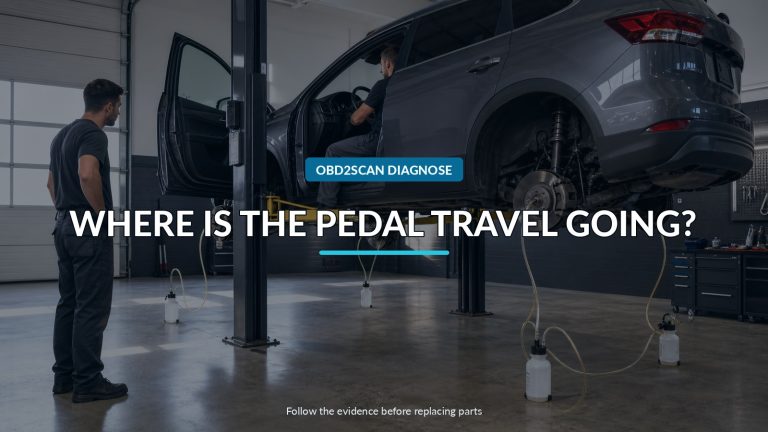
Do not use “spongy” to skip an external inspection. Check the reservoir level, every line and hose, caliper and wheel-cylinder areas, master cylinder behavior, pad and rotor travel, parking-brake adjustment where relevant, and recent service. A flexible hose can expand under pressure without leaking externally. Pad knockback from runout or bearing play can create a long first application even with excellent fluid.
Inspect what heat changed
Heat can expose a pre-existing problem. A sticking piston or parking-brake mechanism may overheat one corner before the demanding descent begins. A restricted hose can maintain pressure after release. A loose bearing or excessive rotor runout can push pads away, consuming pedal travel on the next stop. Boiled fluid, faded pads, and mechanical drag can also exist together.
Compare left and right wear, release and temperature. Inspect friction material for crumbling, transfer irregularity, taper and contamination. Look for damaged boots, darkened fluid near a hot caliper, hose contact or twisting, and hardware that prevents free pad movement. On vehicles with brake-by-wire or integrated control units, use the exact depressurization and service mode.
If the event followed brake work, audit the repair chronology. Confirm the correct pad and fluid specification, rotor preparation, hardware orientation, hose routing, torque, bleeding sequence and required scan-tool operations. A second fluid flush will not correct a reversed pad spring or a rotor that is forcing the pistons back.
Test fluid as one branch of the case
Identify the fluid specification before sampling. DOT 3, DOT 4 and DOT 5.1 are glycol-based classifications with different requirements; silicone DOT 5 is not interchangeable and should not be treated as merely the next number. Manufacturer-branded fluids and low-viscosity formulations may have application-specific requirements. Use the vehicle manual and tester instructions together.
Take a representative, uncontaminated sample with the specified volume and avoid returning it to the reservoir. Follow temperature, power and cleaning instructions. A direct boiling-point result is more decision-relevant than inferring one universal moisture percentage, but it is still a sample result. Fluid at a heavily overheated caliper may have experienced a different local history from the reservoir.
Interpret the result against the exact vehicle, fluid and service guidance. A marginal or failed result supports proper exchange and investigation of why the thermal load was so high. A strong result moves the branch toward pad/rotor behavior, mechanical travel, assist and hydraulics; it does not declare the whole brake system healthy.
Choose service by evidence, not fear
For friction fade, correct the application, damaged parts, drag, cooling or operating load. For fluid boil, use the specified fluid, remove old fluid and air with the approved procedure, and address the heat source. For excess travel, correct bearings, rotor runout, caliper alignment, rear adjustment or hydraulic defects before judging pedal feel.
Professional alternatives differ in what they prove. A basic conductivity pen is quick but often fluid- and calibration-dependent. A direct boiling-point tester answers a thermal property. Pressure gauges compare hydraulic output. Temperature tools compare heat distribution. Scan data and active tests address control systems. No single one deserves to dominate every fade case.
Replace any part that has crossed its inspection limit or suffered confirmed heat damage. Do not machine, reuse or “bed in” components contrary to service information. And do not road-test a braking system with a known leak, sinking pedal, damaged friction material or unresolved fade.
Repeat only a safe verification
Verification should not recreate the dangerous peak event on public roads. First prove a stable pedal statically, no leaks, correct release, normal wheel rotation, matched friction condition, correct fluid and any required module procedure. Then use a low-energy brake check in a controlled area, followed by a conservative road test within legal conditions.
The case closes when pedal position and braking response stay consistent, temperatures remain appropriately balanced, the original drag or travel mechanism is absent, and the vehicle handles the intended duty without returning to fade. Keep the field card. If the problem returns, it will tell the next technician whether heat attacked friction, fluid, travel—or more than one at once.


Comments 0
Questions, fixes, and real-world diagnostic notes from readers.
Be the first to share a diagnostic result or ask a follow-up question.