
Power Steering Groans but the Fluid Looks Clean? Separate Air, Drive, Fluid, and Hydraulic Load

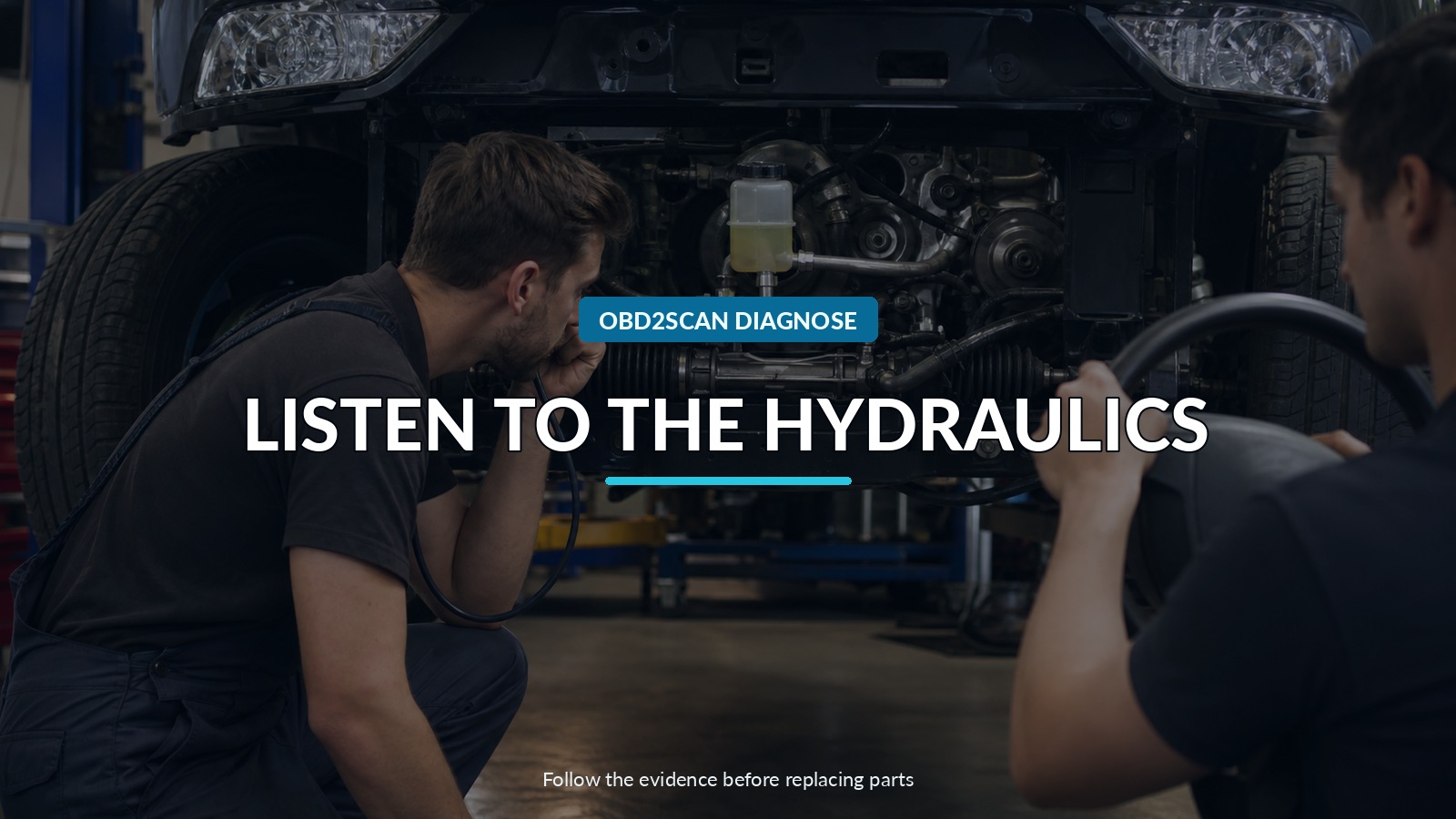
Listen To The Hydraulics
A hydraulic power-steering system can groan with fluid that looks perfectly clean in the reservoir. The noise may come from aeration, a restricted inlet, belt drive, pump load, a mechanical steering bind, or fluid that is visually clear but wrong for the system. “Clean” describes appearance; it does not certify pressure, flow, chemistry, or an air-free circuit.
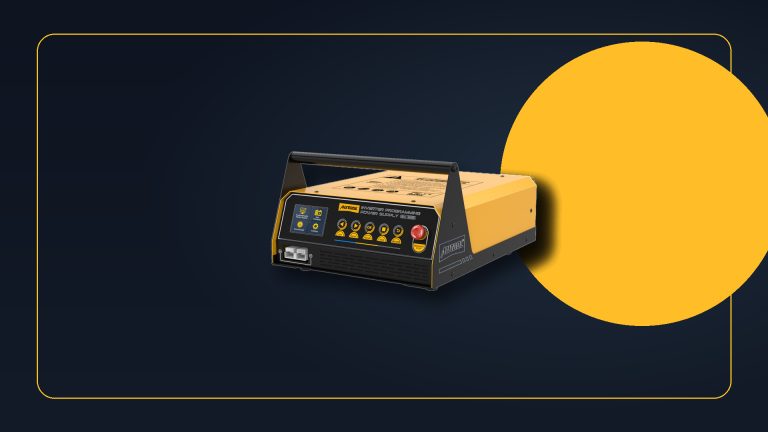
An optical fluid tester can add one bounded clue when history is uncertain. The AUTOOL AS507 power-steering fluid tester can compare transmittance, impurities, and sample temperature, but it cannot prove correct formulation, find a suction leak, measure hydraulic pressure, evaluate the rack, or certify the belt drive.
Listen to when the sound happens. A cold-start whine, a groan only while turning, a growl that follows engine speed, foam after several steering cycles, and heavy steering at idle are different signatures. The timing is often more diagnostic than the color.
Quick answer: Identify the steering system, map when the noise occurs, then inspect level, suction-side air paths, belt drive, fluid specification and contamination, mechanical load, and vehicle-specific hydraulic pressure or flow.
In this guide
Confirm that the system is hydraulic
Many vehicles use electric power steering and have no hydraulic reservoir or belt-driven steering pump. Others use electro-hydraulic pumps that do not follow engine speed. Identify the installed system before applying a hydraulic checklist. A noise near the steering column may be trim, a clock spring, a column bearing, or an electric motor rather than fluid.
For a hydraulic system, locate the reservoir, pump drive, pressure line, return line, and any cooler. Read the cap and service information for the required fluid. Power-steering fluid, automatic-transmission fluid, and model-specific hydraulic fluids are not automatically interchangeable even when they look similar.
Do not hold the steering hard against full lock. Relief pressure and fluid temperature can rise quickly at the stop, increasing noise and stress. Brief observation near the end of travel may be part of an approved test, but sustained full-lock loading is not a harmless way to “exercise” the pump.
Build a listening matrix
Start cold with the wheels straight. Record noise at idle without touching the wheel, during a slow turn, and when engine speed changes slightly. Repeat after the system warms. Note whether assist becomes heavy, jerky, or inconsistent and whether the wheel returns normally.
| Noise pattern | First branch to inspect | What would strengthen it |
|---|---|---|
| Whine follows engine speed with wheel still | Belt, pulley, pump, low inlet supply | visible wobble, slip, low level, restriction |
| Groan mainly while turning | Hydraulic load, aeration, rack or joint bind | bubbles, pressure anomaly, mechanical resistance |
| Noise after repeated turns | Heat, foaming, low level, return problem | rising temperature, foam, delayed clearing |
| Heavy at idle but better with speed | Pump output, inlet restriction, belt drive | pressure/flow evidence under specification |
This table is an orientation, not a parts list. More than one branch can coexist. A leaking shaft seal can admit air, contaminate the belt, and reduce pump performance in the same case.
Look for air before blaming the pump
Check level exactly as specified—cold or hot, engine running or stopped, and with the correct dipstick or markings. Overfilling can aerate fluid; underfilling can expose the inlet. Inspect for foam, fine bubbles, milkiness, or a level that rises after shutdown.
Trace the low-pressure suction side carefully. A hose can admit air without leaking much fluid outward. Hardened hoses, loose clamps, damaged O-rings, cracked reservoir fittings, and restricted filters or screens can starve the pump. Look for wet residue, but do not require a puddle before considering an air path.
Use only the manufacturer’s bleed method. Some systems require slow lock-to-lock movement with the front wheels raised; others specify vacuum filling, scan-tool commands, or additional steps. Rapidly cycling the wheel or holding it at the stops can whip air into the fluid and make the diagnosis worse.
Inspect the drive and mechanical load
With the engine off and safely secured, inspect the belt for contamination, glazing, cracking, incorrect routing, or poor tension. Check pulley alignment and visible wobble. A slipping belt can make pump speed and assist inconsistent while the fluid remains spotless.
Separate hydraulic resistance from mechanical resistance where service information allows. Binding ball joints, strut bearings, steering-shaft joints, tie-rod ends, or rack mounts can increase steering effort and load the pump. Tire pressure and front-end damage also affect the driver’s impression of assist.
If a noise seems to come from the pump, use a mechanic’s stethoscope only with extreme care around rotating parts, or use a remote chassis microphone placed with the engine off. Sound travels through brackets and lines; the loudest housing is not always the source.
Verify fluid identity and condition
Compare the reservoir label, service history, and approved specification. A recent top-up with the wrong fluid may not change color enough to notice. Mixed fluids can alter seal compatibility, cold behavior, foaming, and lubrication without producing an immediate visual warning.
Take a clean sample and record odor, suspended debris, separation, and temperature. Optical screening can make comparison more consistent, especially across a known-new sample and the vehicle sample, but interpret the result within the instrument’s method. A clear reading does not establish viscosity, additive health, correct chemistry, or absence of dissolved air.
If contamination is found, investigate its source. Rubber debris may indicate hose or seal deterioration; metallic material raises different concerns. Water or incompatible fluid calls for a service plan based on the system design, not a universal flush recipe. Protect the pump from running dry during any exchange.
Test hydraulics only after the basic branches
A vehicle-specific pressure and flow test can distinguish inadequate pump output, relief-valve behavior, restriction, and excessive system load. Use the specified adapters, test points, fluid temperature, engine speed, steering position, and time limits. Hydraulic pressure can be hazardous, and deadheading the pump incorrectly can damage components.
Compare the reading with current service data, not a generic number. If pressure rises normally but steering remains heavy, mechanical load or rack behavior becomes more important. If pressure is low, verify inlet supply, drive speed, fluid condition, and test setup before condemning the pump.
Return-line flow, temperature differences, and reservoir behavior can add context. A restricted cooler or return can raise heat and foaming. An intermittent symptom may require observation during the exact maneuver and temperature at which the driver hears it.
Match the repair to the proven branch
An air leak needs a sealed inlet and a correct bleed, not merely fresh fluid. A contaminated or incorrect fluid needs a compatible service plan and source correction. A slipping belt needs the belt-drive fault repaired. A binding joint or rack needs mechanical attention. A pump should be replaced only when its drive, supply, test conditions, and hydraulic result support that conclusion.
After replacing a component, clean spilled fluid from the belt path, use the approved fluid, and prevent the pump from operating dry. Follow any rack travel, alignment, steering-angle, or electronic initialization requirements relevant to the vehicle.
Do not use noise alone as proof of catastrophic failure. Some hydraulic sounds are amplified by reservoir level or cold viscosity and disappear when the underlying condition is corrected. Conversely, quieter operation after adding a generic additive does not prove the system is healthy or compatible.
Verify with the same sound map
Repeat the cold and warm listening matrix under the same engine speed and steering maneuvers. Confirm the reservoir remains free of foam, level stays stable, steering assist is smooth, the belt tracks correctly, and there are no leaks after a drive and heat soak. If hydraulic testing was needed, verify the repaired result within the same specification.
The diagnosis is finished when the noise pattern and assist problem are gone for the right reason. A clean-looking reservoir is reassuring only after air, drive, fluid identity, mechanical load, and hydraulic performance agree with it.








Comments 0
Questions, fixes, and real-world diagnostic notes from readers.
Be the first to share a diagnostic result or ask a follow-up question.