
Start-Stop Unavailable After Battery Replacement? Check the Permission Chain

What Is Blocking Start-Stop?
When automatic start-stop remains unavailable after a battery replacement, the new battery is not automatically defective and the system is not automatically broken. Start-stop is a permission decision. The vehicle may veto an engine stop because of energy reserve, temperature, HVAC demand, safety inputs, drivetrain state, adaptation status or a stored fault—even while ordinary starting feels normal.
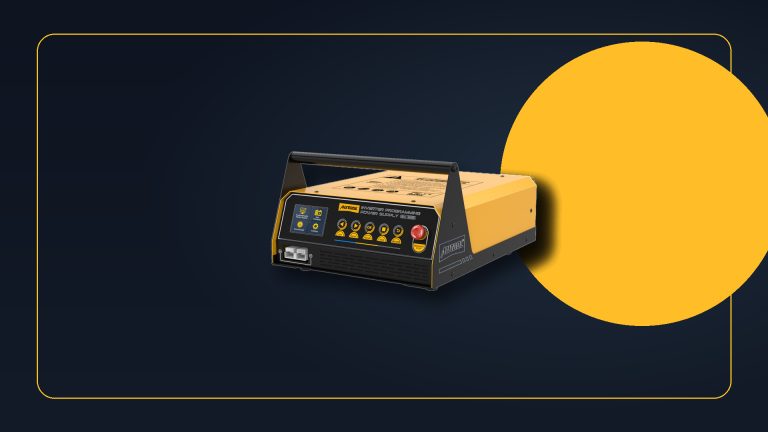
Begin by proving the electrical foundation with a battery tester that can observe cranking and charging behavior. The AUTOOL BT960 battery system tester is one route for supported lead-acid or lithium battery checks, startup/cranking, charging, voltage, current and drain observations. It does not register a new battery, read every start-stop inhibit reason or select the correct battery technology for the vehicle.
Build a permission ledger instead of replacing parts. Each row should contain one possible veto, the live evidence, and the condition under which the vehicle should release it. One active row can explain the whole complaint.
Quick answer: Treat start-stop unavailable as an active veto. Verify battery type, charge, cranking, charging, monitoring-sensor wiring, required registration, stored faults, and the vehicle’s live inhibit reason.
In this guide
- Treat unavailable as a veto—not a verdict
- Verify the battery that was installed
- Prove energy in three tests
- Audit the battery-monitoring path
- Read back registration instead of assuming it
- Ask the vehicle which condition is blocking permission
- Follow the veto that remains active
- Verify across two controlled stops
Treat unavailable as a veto—not a verdict
Ask what “unavailable” means on this vehicle. Is there a normal gray icon, a crossed-out symbol, a warning message or no indication at all? Does the system work after a long drive, fail only with defrost, or never work since the battery job? Separate a normal inhibited stop from a malfunction warning.
Record ambient temperature, engine temperature, cabin setting, defrost, blower speed, headlights, heated seats, steering position, brake or clutch use, gear, hood and door state, seat belt, road gradient and time since start. These are not trivia; many systems use some of them to decide whether an automatic restart can be guaranteed.
Do not diagnose while forcing unsafe stops in traffic. Use service information, live data and a controlled route. If the vehicle displays a charging, battery, brake, engine or safety fault, diagnose that first.
Verify the battery that was installed
Compare the old and new labels and the parts catalog. Confirm chemistry such as AGM, EFB or another specified design; capacity; cold-cranking rating; physical size; terminal layout; venting; and any battery-management compatibility. A battery can start the engine yet be the wrong technology for repeated cycling and smart charging.
Check installation: hold-down secure, terminals clean and tight, vent fitted, protective covers present and cable routing unchanged. Pay special attention to the battery-monitoring sensor on the negative terminal or ground path. An accessory ground connected on the wrong side of a current sensor can make vehicle energy accounting inaccurate.
Measure state of charge before condemning a new battery. Stock, transport and short workshop moves can leave a new unit undercharged. Charge it with the battery type’s approved profile and allow stabilization as directed before retesting.
Prove energy in three tests
The three electrical questions are different:
| Test | Question | Important limit |
|---|---|---|
| battery condition | can the installed battery store and deliver energy under the supported test? | result depends on correct type/rating entry and state of charge |
| cranking | how does voltage and starting behavior change under load? | one successful start does not prove reserve for repeated restart cycles |
| charging | is the system restoring energy under the tested state? | smart charging varies with command, temperature and load |
Record actual entered battery standard and rating, measured voltage, conductance/health result where applicable, crank minimum and duration, charging behavior and relevant loads. Compare with manufacturer information rather than a generic internet voltage table.
If the battery fails only because it is discharged, determine why. Recent installation, open doors, module wakeups, short trips and an abnormal parasitic draw lead to different repairs. A drain test must allow the vehicle to sleep and avoid interrupting the current path incorrectly.
Audit the battery-monitoring path
Inspect the intelligent battery sensor or battery monitoring module, its connector and wiring. Look for a disconnected small plug, damaged terminal, sensor bypass, corrosion, reversed accessory wiring or an unapproved ground modification. Scan relevant energy-management and body modules for codes before clearing them.
Compare battery voltage reported by modules with a trusted measurement at the appropriate points. A difference can indicate voltage drop, sensor or wiring issues. Review state-of-charge and state-of-health estimates, generator command and energy-management status where the platform provides them.
Remember that a calculated state may take time and operating conditions to converge after charging or replacement. Do not promise that one drive will always relearn it. The service procedure may specify a defined adaptation or diagnostic routine.
Read back registration instead of assuming it
Many vehicles require battery adaptation, registration or parameterization after replacement. The fields may include battery technology, capacity, manufacturer data or a replacement history flag. Other vehicles learn automatically or require no registration. Determine which applies to the exact model.
Use a compatible scan tool and stable power support as instructed. Read existing battery data before writing. Enter only what the installed battery and procedure require, save the tool response, then read the fields back. A “completed” message is weaker evidence than a correct stored value after an ignition cycle.
Registration does not charge the battery, repair the sensor or prove the correct battery was fitted. Likewise, a healthy electrical test cannot substitute for a required adaptation. These are separate rows in the ledger.
Ask the vehicle which condition is blocking permission
Look for a start-stop status, authorization or inhibit-reason parameter in the powertrain, body or energy-management system. Names vary. Capture the reason while the conditions for a stop appear satisfied; reading it later in the bay may show a different veto.
Common categories include:
- battery charge or restart reserve;
- engine, transmission or catalyst temperature;
- cabin heating, cooling or defrost demand;
- hood, door, seat-belt or occupancy status;
- brake vacuum, steering angle or vehicle gradient;
- frequent stop protection or starter limits;
- active regeneration, fault or diagnostic mode.
Do not turn this list into a universal rule. For example, HVAC demand may legitimately override start-stop, and temperature windows differ. The value is in the vehicle’s actual parameter and service description.
Follow the veto that remains active
If energy reserve is low after a correct charge, return to battery capacity, charging control, sensor accuracy and drains. If the registered type disagrees with the installed battery, correct the underlying selection and adaptation through the approved process. If the hood switch, brake input or temperature value is implausible, diagnose that circuit rather than bypassing it.
When no inhibit data is available, change one safe condition at a time. Turn off high HVAC demand, allow normal warm-up, close every opening, fasten the belt, straighten the steering and use the prescribed brake/clutch input. Record which change matters. Do not disable safety inputs or code the feature permanently just to create a pass.
If start-stop works only after extended charging, explain that finding to the owner. A new battery may have solved capacity but short-trip use or a charging problem can recreate low reserve.
Verify across two controlled stops
Clear codes only after recording and repairing their cause. Use a controlled route that brings the vehicle into the manufacturer’s start-stop operating conditions. At the first eligible stop, record battery state, temperatures, HVAC demand and inhibit reason. Confirm a smooth automatic restart and normal warning status.
Repeat after electrical loads change or after a short hot restart. The result should be consistent with the permission ledger: the system operates when conditions are satisfied and explains itself when a legitimate veto is present.
The case is complete when battery type and charge are correct, cranking and charging are credible, registration is verified where required, sensor wiring is intact, and no unexplained inhibit remains. Start-stop was never one switch. It is a chain of permissions, and the repair succeeds when every required link agrees.






Comments 0
Questions, fixes, and real-world diagnostic notes from readers.
Be the first to share a diagnostic result or ask a follow-up question.