
Motorcycle Idle Hangs After You Close the Throttle? Split Mechanical Return from Unmetered Air

Throttle Or Extra Air?
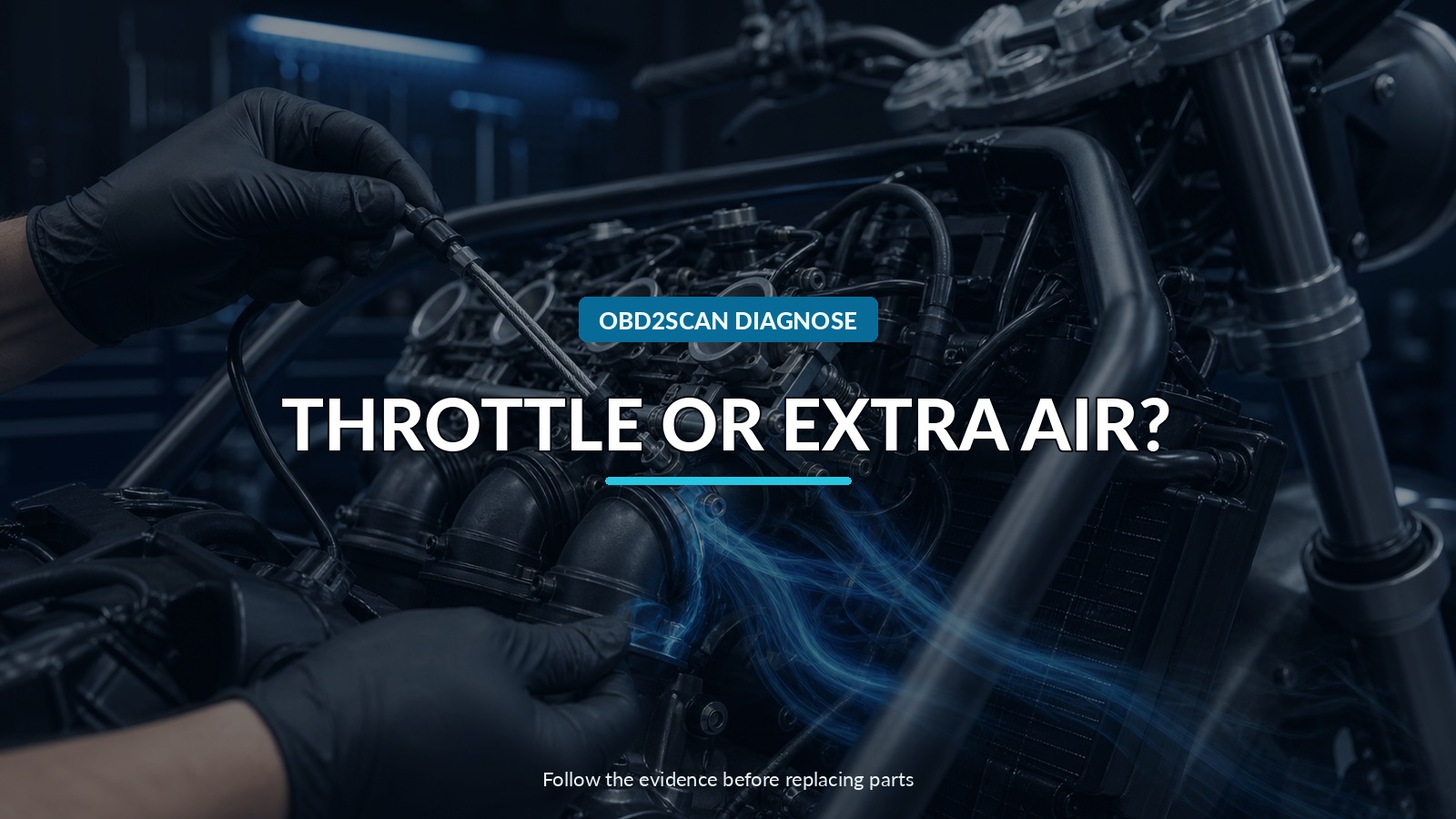
When motorcycle rpm stays high after you close the throttle, split the diagnosis before touching mixture screws or maps. First prove that the grip, cables, throttle plates or slides, and idle-control mechanism physically return. Then prove that the engine is not receiving unmetered air through an intake boot, manifold seal, vacuum cap, hose, injector seal, or throttle-body joint.
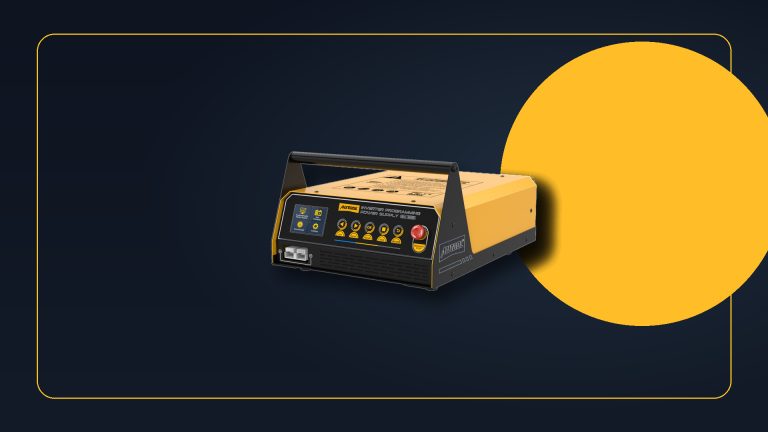
If the mechanical baseline passes and the intake path still needs a containment check, use a controllable low-pressure smoke route. The FXTUL F803 smoke leak detector is the model in the current FXTUL range that adds pressure, flow, and output control for broader intake testing. It does not make an arbitrary pressure safe or diagnose cable routing, idle control, ignition timing, valve clearance, or fueling.
Work on a stable motorcycle in a ventilated area. Keep hands, clothing, hoses, and test leads away from the chain, wheel, fan, belts, and hot exhaust. Do not run the engine while an intake is sealed for a smoke test. Stop if rpm does not return predictably or the motorcycle could move unexpectedly.
Quick answer: With the engine off, prove the grip, cables, linkage, plates, enrichment control, and idle mechanism return freely. If the mechanical path closes correctly, move to intake boots, caps, hoses, synchronization, idle control, and a regulated low-pressure leak test.
In this guide
- Choose the mechanical or air-path branch
- Verify throttle return with the engine off
- Watch steering and temperature change the symptom
- Inspect boots, caps, and idle-control paths
- Use low-pressure smoke only after the baseline
- Keep mixture adjustment until after containment
- Choose a controllable smoke route
- Verify snap-back hot and cold
Choose the mechanical or air-path branch
Define “hangs.” Record the commanded idle, peak rpm, time to return, engine temperature, gear and clutch state, steering position, weather, altitude, recent service, and whether the symptom follows a small blip or sustained road load. Note surging, popping, lean smell, rich loading, misfire, or a throttle grip that feels slow.
If rpm changes when the handlebars turn, begin with routing, free play, or wiring affected by steering. If the grip or linkage is visibly slow with the engine off, remain on the mechanical branch. If everything snaps shut but rpm remains elevated only when running, investigate air, idle control, ignition, and fueling.
Scan EFI motorcycles before disconnecting parts. Save codes, throttle position, desired and actual idle where available, idle-air control command, coolant or cylinder-head temperature, intake-air temperature, manifold pressure, oxygen-sensor response, fuel trims, and vehicle speed. A high-idle command differs from an engine ignoring a normal command.
Verify throttle return with the engine off
Follow the exact throttle-cable inspection and adjustment procedure. Check opening and closing cables where fitted, grip free play, bar-end or handguard interference, cable sheath seating, routing around the headstock, lubrication requirements, and damage. Turn the bars lock to lock and confirm the throttle opens and snaps closed consistently.
At the throttle body or carburetor, observe the pulley, stop, slide, or butterfly return. Verify return-spring condition and that a floor mat, tank, airbox, wiring loom, or accessory is not disturbing linkage. Do not adjust a factory-sealed throttle stop to cure a symptom; it can destroy the airflow baseline.
On ride-by-wire systems, do not force the throttle plate. Use the service mode and safety procedure. A commanded high idle during cold start, catalyst heating, charging support, or emissions control may be normal for a defined period. Compare with the owner’s and service information.
Watch steering and temperature change the symptom
With the motorcycle secured and only when safe, observe idle as the handlebars move. A change can indicate cable tension, harness movement, or a vacuum line being pulled. Reproduce cold, warm transition, and fully hot conditions because rubber seals, idle valves, and fuel vapor behavior change with temperature.
Check clutch switch, neutral, side-stand, gear, and vehicle-speed inputs. Some ECUs use different idle or deceleration strategies while moving or in gear. A sticking clutch or dragging driveline can alter the rider’s description without causing a true no-load hanging idle.
For carbureted motorcycles, verify enrichment/choke cable return. Mikuni’s HSR manual lists choke-cable routing, intake leakage, pilot-air adjustment, and jetting as separate poor-idle causes. A cable that leaves enrichment partly applied can produce a different mixture symptom from an air leak.
Inspect boots, caps, and idle-control paths
Let the engine cool. Inspect intake manifolds and boots for cracks, hardening, loose clamps, pinched seals, misalignment, and previous sealant. Look at vacuum caps, synchronization ports, emissions hoses, brake-booster hoses on sidecars or special applications, injector seals, throttle-body joints, and idle-air passages.
Use a mirror and gently flex rubber only where safe. Cracks can open beneath a clamp or on the engine side. Confirm airbox and filter installation too; a blocked filter, missing velocity stack, or disturbed sensor can change airflow, although it is not an unmetered leak in the same sense.
Avoid spraying flammable cleaner around a running hot engine to chase rpm changes. Fire risk, paint damage, sensor contamination, and ambiguous enrichment make that shortcut poor evidence. Use a controlled pressure or smoke method on the stopped engine instead.
Use low-pressure smoke only after the baseline
Identify the intake boundary and any path that must remain open or be protected. Close the valves or rotate the engine only by the service procedure if required. Protect MAP sensors, diaphragms, crankcase ventilation, and evaporative components from pressure beyond their design.
Connect through an approved adapter and begin at the lowest useful controlled flow. Watch the pressure gauge and flow meter before adding smoke. If the system cannot build the tiny specified test pressure, check the adapter and intended openings before assuming a leak.
Add smoke and inspect boots, caps, injector seals, throttle shafts where applicable, synchronization screws, manifolds, hoses, and idle-air circuits. Smoke from an intentionally vented crankcase or open valve path may be normal for the setup. The service diagram determines what should be sealed.
Mikuni documentation supports the diagnostic principle that intake leakage can create irregular or unreliable idle behavior and a lean condition. It does not supply a universal smoke pressure for every carburetor or EFI throttle body.
Keep mixture adjustment until after containment
Do not compensate for a leak by turning an idle screw, pilot screw, throttle stop, or fuel map. The adjustment may hide the symptom at one temperature while leaving a lean condition under load. Restore mechanical return and intake containment first.
If no leak exists, continue with idle-air control, throttle-position calibration, synchronization, fuel pressure, injector balance, pilot circuit, ignition timing, valve clearance, compression, and ECU adaptation as appropriate. A hanging idle on a highly modified motorcycle may also involve incompatible intake, exhaust, cam, or calibration choices.
Read spark plugs and oxygen-sensor data cautiously. A lean-looking plug or positive fuel trim supports an air/fuel imbalance but does not locate it. Exhaust leaks near an oxygen sensor can bias feedback and create corrective fueling without an intake leak.
Choose a controllable smoke route
The current FXTUL family lists F603 as the basic model, F703 with a pressure gauge, and F803 with added flow indication and control. That control matters more than maximum smoke volume for a small motorcycle intake. MRCARTOOL T80/T100/T105/T130, AUTOOL smoke-machine families, THINKCAR, Redline, OTC/Bosch, and AutoLine Pro provide other general or professional routes.
Choose by the lowest controllable output, gauge and flow feedback, adapter fit, supported systems, air-source needs, duty cycle, and service support. EVAP certification or microleak calibration is a different contract from a basic intake-boot check.
A hand vacuum pump can test individual diaphragms or hoses without filling the intake with smoke. A scan tool can command an idle valve. A multimeter or scope can test a throttle-position circuit. Use the instrument that answers the remaining branch.
Verify snap-back hot and cold
After repair, restore clamps, vacuum caps, cable routing, airbox, emissions hoses, sensors, and adaptations. Set free play, idle speed, synchronization, or relearn only by the exact procedure. Check handlebar movement again before starting.
Verify cold start, warm transition, fully hot idle, several controlled throttle openings, steering lock to lock, and the riding condition that produced the complaint. Confirm rpm returns consistently without lean popping, surge, warning lamps, or a new stall. Recheck smoke containment if a seal was replaced.
The case is closed when the correct branch changed: the throttle now physically returns, or the proven extra-air path is sealed and the same hot snap-back no longer hangs. Turning the idle down until the symptom is harder to hear is not the same repair.





Comments 0
Questions, fixes, and real-world diagnostic notes from readers.
Be the first to share a diagnostic result or ask a follow-up question.