
GDI Engine Cranks Longer After a Hot Soak? Replay Rail-Pressure Decay and Restart

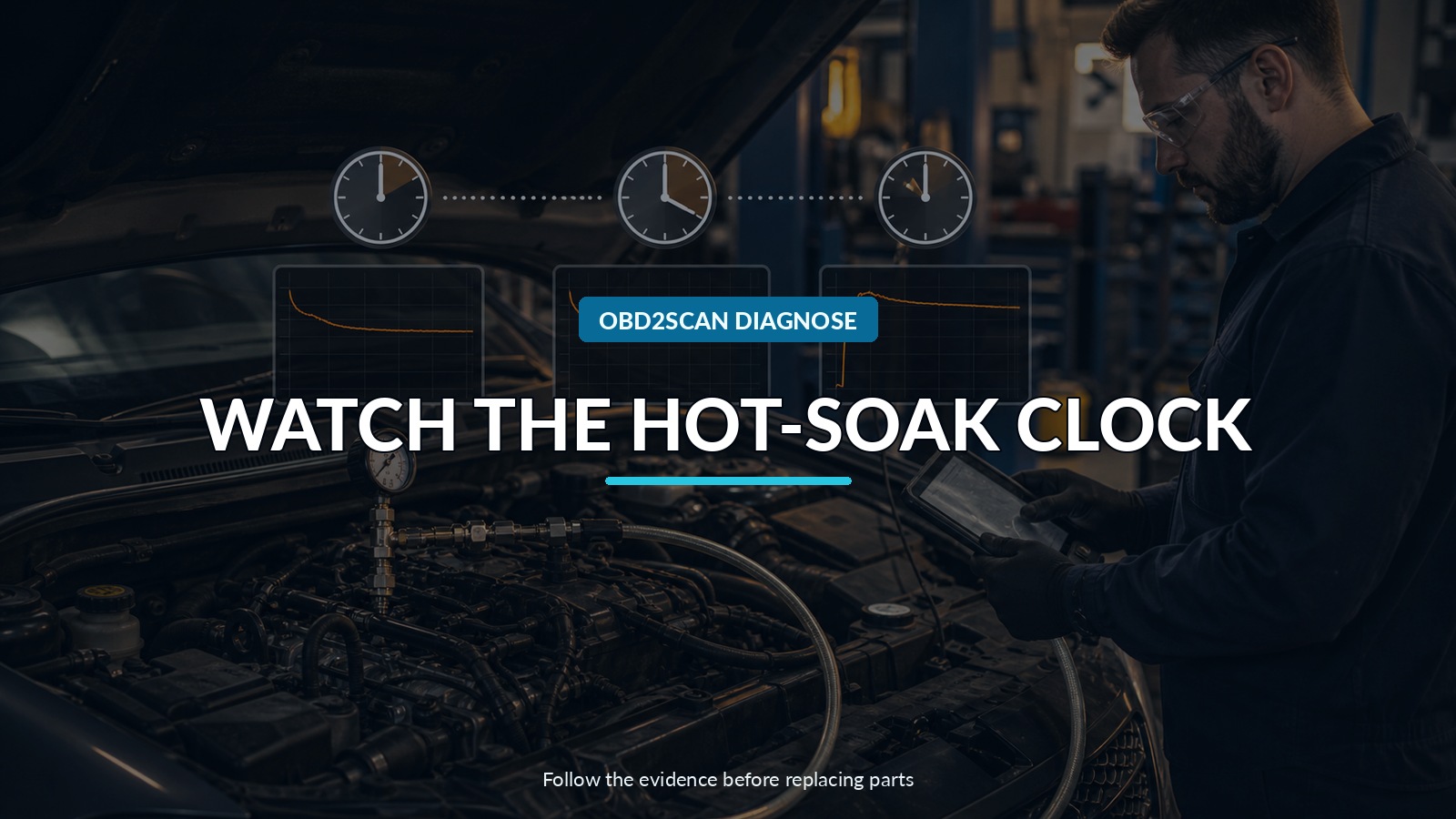
Watch The Hot-Soak Clock
A GDI engine that starts cleanly when cold but cranks too long after a short hot soak needs a timed replay, not a cold-shop snapshot. Watch what the fuel system was commanded to do before shutdown, how pressure and temperature changed while the engine sat, and what actual rail pressure did during the next crank. Then compare that evidence with purge flow, injector leakage, temperature inputs, ignition, and low-side supply.
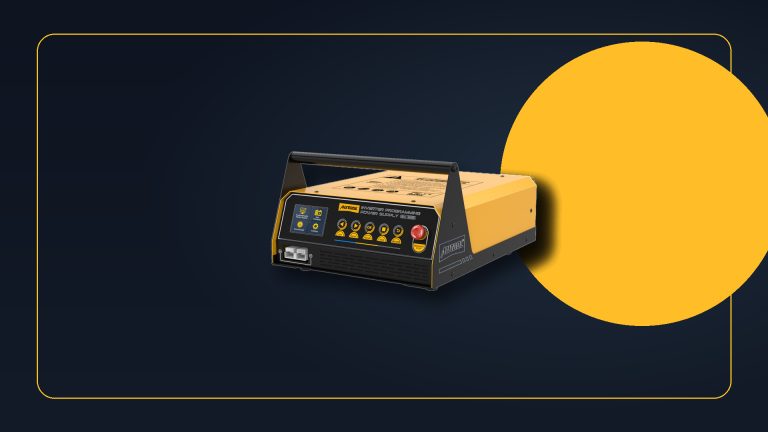
When scan data cannot independently confirm rail pressure, the missing capability may be a vehicle-approved high-pressure measurement route. The AUTOOL PT640 GDI fuel-pressure gauge is one current example for compatible direct-injection systems and adapters. It does not make a generic connection safe or supply the pressure specification for the vehicle.
Gasoline direct injection can retain extremely high pressure after shutdown. Fuel spray can penetrate skin, and gasoline vapor can ignite. Do not loosen a line, improvise an adapter, or defeat a depressurization procedure. If the exact service method, rated connection, ventilation, fire control, and protective equipment are not available, this test belongs with a qualified technician.
Quick answer: Replay the exact drive, shutdown, hot-soak interval, and restart while comparing desired and actual rail pressure, low-side supply, crank speed, voltage, temperatures, purge behavior, and mixture clues. Use only engine-approved high-pressure connections.
In this guide
Define the hot-restart clock
“Hard to start hot” is too broad. Record the drive that precedes it, coolant and intake-air temperature, ambient temperature, fuel level, ethanol content if known, shutdown time, soak duration, and crank time. Learn whether the worst restart occurs after two minutes, twenty minutes, or a fuel stop after a highway run.
Separate long crank from crank-no-start, start-and-stall, rough first seconds, rich odor, black smoke, lean stumble, and a starter that slows as it heats. Note whether opening the throttle changes the result, but do not repeatedly use an improvised clearing procedure that can alter the evidence or damage the catalyst.
Capture battery voltage and cranking speed. A hot starter, cable, ground, or battery problem can reduce rpm and mimic a fuel-pressure delay. Verify that the ECU sees plausible engine speed and cam/crank synchronization during the failed restart.
Save desired and actual pressure first
Before installing a gauge, scan the complete vehicle and save codes, pending codes, freeze-frame, fuel trims, misfire data, low-side pressure if reported, desired rail pressure, actual rail pressure, pump or regulator command, purge command, coolant temperature, intake-air temperature, and crank rpm.
The rail sensor is part of the control loop, so desired-versus-actual data is valuable. It is not independent proof when the sensor, wiring, or interpretation is the suspect. Look for timing: does actual pressure lag desired only during hot crank, fall unexpectedly during soak, or overshoot after the engine catches?
Do not apply one universal rail-pressure target. Bosch describes a coordinated low-pressure supply feeding a high-pressure pump, rail, sensor, and injectors, with pressure controlled for operating demand. Exact values, residual-pressure behavior, test ports, and cranking criteria are engine-specific.
Separate low-side and high-side supply
A high-pressure pump cannot build the expected rail pressure if its inlet supply is weak, aerated, vapor-affected, restricted, or incorrectly commanded. Verify low-side pressure and volume by the manufacturer procedure through the same hot event. Inspect electrical supply to the in-tank pump, pump control, filter or module restriction, tank venting, and fuel quality.
Then consider the high side: pump drive and follower where applicable, inlet metering valve, pressure control, relief or limiting valve, rail sensor plausibility, connections, and injector sealing. Keep these as branches. A slow rail-pressure rise does not automatically name the high-pressure pump.
Temperature inputs matter because the ECU uses them to calculate starting fuel. An implausible coolant or intake-air reading after heat soak can create the wrong enrichment without a mechanical pressure fault. Purge vapor admitted during restart can also shift the mixture. Pinch-off or command tests must follow exact service information; do not block an EVAP line casually.
Record shutdown, soak, and crank
Think in three clocks.
| Clock | Start and end | Record together | Diagnostic question |
|---|---|---|---|
| Shutdown | last stable hot idle to key-off | desired/actual rail, low-side supply, trims, purge | Was the system stable before shutdown? |
| Soak | key-off to restart request | elapsed time, rail pressure if available, temperatures | Did pressure or heat state change abnormally? |
| Restart | first crank revolution to stable idle | desired/actual rail, low-side supply, rpm, voltage, injector time, mixture clues | Did pressure arrive when injection needed it? |
Use the same soak duration for comparisons. A five-minute retest is not equivalent to a complaint that peaks after twenty-five minutes. If an independent gauge is required, install it only at the documented point with rated adapters, route it away from heat and moving parts, leak-check the connection by procedure, and observe remotely where possible.
Branch from the shape of the trace
If pressure drops during soak but rebuilds immediately and the engine still starts poorly, the decay may be incidental. Move toward purge vapor, injector leakage into a cylinder, temperature calculation, ignition, compression, or cranking speed. Inspect spark plugs and cylinders only by safe procedures; a leaking injector can create hydro-lock, catalyst damage, oil dilution, and fire risk.
If actual rail pressure lags desired during hot crank while low-side supply remains correct, investigate the high-pressure pump input/control, mechanical drive, rail control, sensor plausibility, and internal leakage. If low-side supply falls at the same moment, remain upstream.
If the sensor reports an implausible jump but an independent pressure route stays stable, test sensor supply, ground, signal, connector, and harness under heat. If both commanded and actual pressure behave normally, stop forcing the fuel hypothesis. Check spark energy under compression, cam/crank correlation, compression hot, and the ECU’s temperature and airflow inputs.
Control GDI pressure risk
Use only fittings rated for the system and the exact engine. Hand-start threads, confirm sealing method and depth, and never adapt a low-pressure gasoline kit because the connector appears close. Depressurize, contain fuel, ventilate, protect hot surfaces, keep ignition sources away, and inspect for leakage before running.
Do not stand over the rail or use fingers to search for a leak. A suspected high-pressure leak requires shutdown. Replace single-use pipes, seals, and fasteners where the manufacturer specifies. After the test, restore clips, shields, wiring, and fuel-line supports exactly.
Choose gauge or transducer depth
A compatible mechanical or digital gauge can answer whether actual pressure reaches and holds the specified state. A rated pressure transducer and oscilloscope can add a time-aligned trace with crank, injector command, and sensor voltage when the failure is brief. Pico and specialist OEM routes may suit advanced waveform work; Lang, OTC, and manufacturer tools may provide different adapter coverage.
Choose the least complex route that answers the unresolved question safely. Do not purchase a gauge before confirming the exact engine connection. Do not add a transducer when scan data and a low-side test have already proven the fault upstream.
Verify the same hot soak
After the supported repair, repeat the same drive, shutdown condition, soak duration, ambient window, and restart. Compare cranking time, voltage, rpm, desired/actual rail behavior, low-side supply, mixture response, codes, and leakage. Verify cold starting too, because a repair that improves hot restart by disturbing calibration can create a new cold problem.
The successful diagnosis is a matched replay: the original hot event failed in a documented way, the repair addressed the proven branch, and the same event now passes. “It started once in the bay” is not the same evidence.







Comments 0
Questions, fixes, and real-world diagnostic notes from readers.
Be the first to share a diagnostic result or ask a follow-up question.