
2022 Mercedes EQA 260 Coolant Warning: Two-Wire Valve Open Circuit

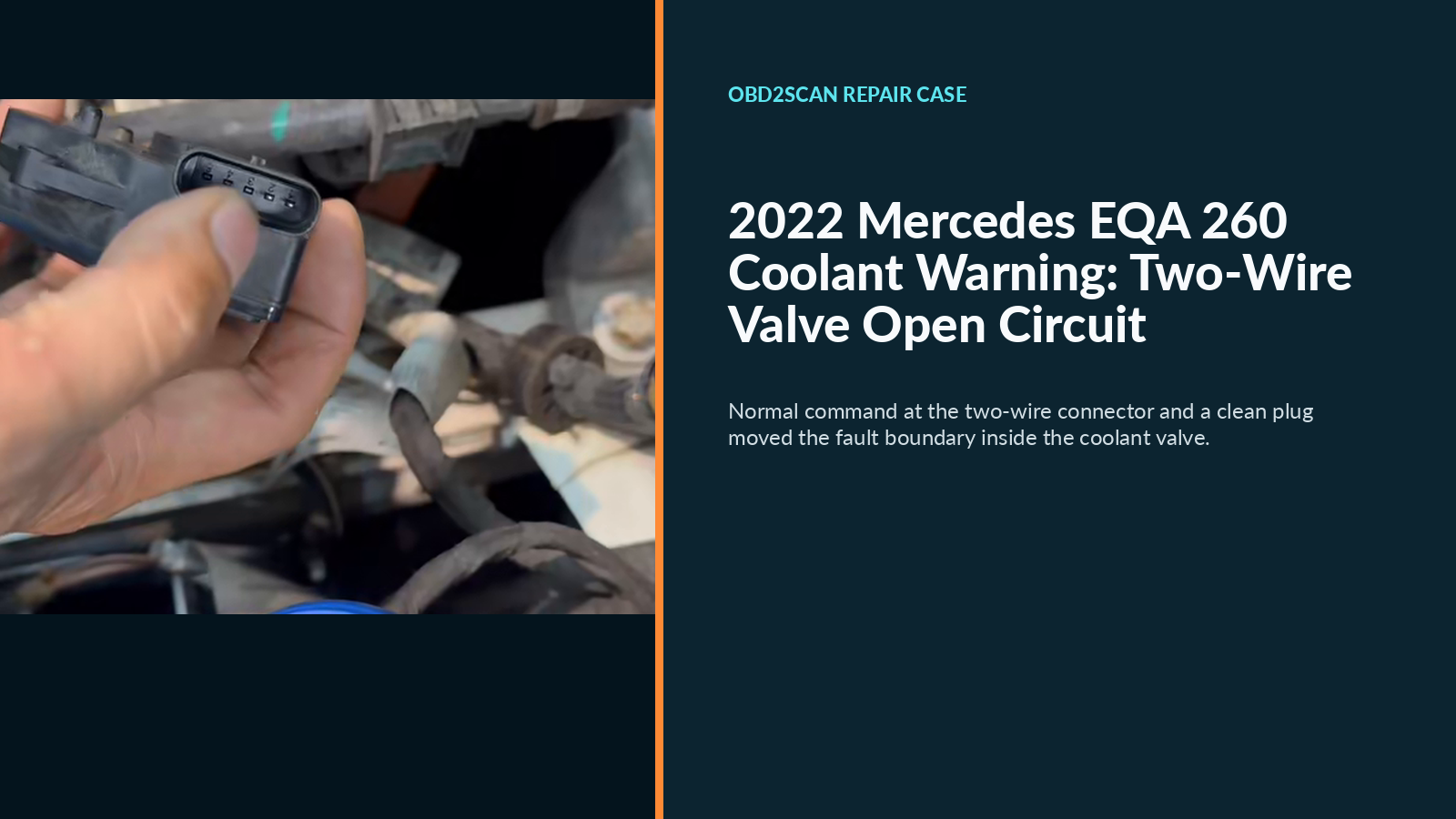
A 2022 Mercedes-Benz EQA 260 (W243; mileage not reported) arrived after a red cooling-system warning and reduced-power response. The scan named U105D13 and the high-voltage-battery coolant-circuit changeover valve, but circuit inspection showed that Y1/10 was a two-wire actuator rather than an independent network node. The harness could deliver the command and its connector was dry, while the actuator was open circuit; the valve was replaced, the coolant circuit was vacuum-filled and bled, and a dynamic thermal-data check ended without the warning returning.
Case at a glance
| Item | This vehicle |
|---|---|
| Vehicle | 2022 Mercedes-Benz EQA 260, W243 |
| Mileage | Not reported |
| Complaint | Red cooling-system warning and reduced power |
| Scan result | U105D13, associated with the HV-battery coolant-circuit changeover valve |
| Confirmed fault | Internal open circuit in two-wire coolant valve Y1/10 |
| Repair | Replaced valve, vacuum-filled and bled coolant circuit, ran initialization and cleared the stored fault |
| Verification | Warning absent during reported road test; battery and drive-motor temperature data returned to the reported safe range |
The wording of the code was only the starting point
The important first move was to preserve exactly what the car reported. U105D13 was recorded before clearing, and the affected thermal-management function was identified. Calling it a “communication” fault did not establish that the valve contained a failed communication module.
The circuit layout changed the direction of diagnosis. The case record describes Y1/10 as a two-wire motorized valve supplied and controlled directly by an upstream module. With that architecture, a controller can report a missing response when commanded current cannot complete its path. That makes an open load, damaged wiring, poor terminal contact and a driver-stage problem distinct candidates even though the scan wording sounds network-related.
Good peripheral evidence narrowed the fault to the valve
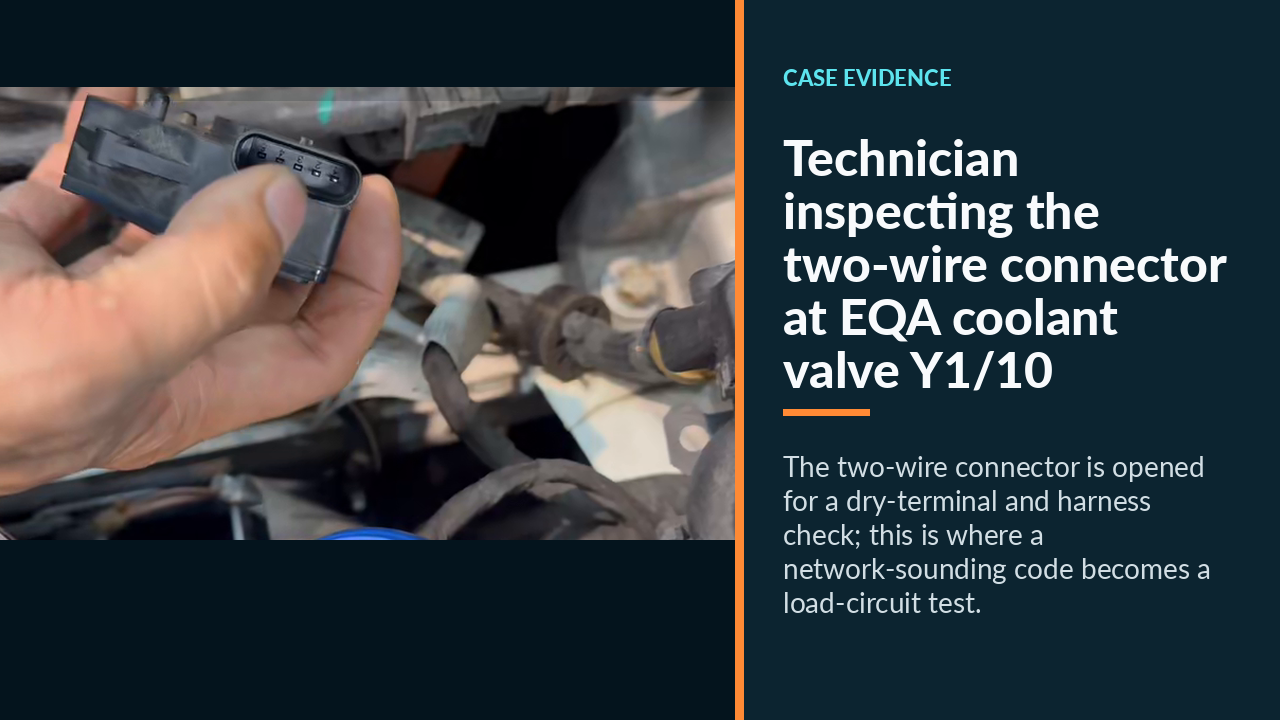
The connector was inspected first. It was reported dry and free of oxidation, which reduced—without magically eliminating—the likelihood of terminal contamination. Testing at the harness then found normal supply/drive pulses. Those two observations mattered because they separated the removable actuator from the command path feeding it.
The decisive result was an open circuit inside the valve actuator. In this car, that result fit both the electrical architecture and the stored code: the module issued a command, the external path was available, but the load could not form a current loop. The valve was therefore confirmed rather than replaced from code wording alone. With a two-wire valve isolated from the rest of the cooling system, the MRCARTOOL B550 circuit analyzer can quickly compare command, feed, ground, continuity, and actuator resistance before the valve or control unit is replaced.
EV thermal management sits beside high-voltage systems. This case does not authorize opening the battery pack, disabling high-voltage interlocks or probing orange-cable circuits. Work beyond accessible low-voltage checks and the prescribed coolant service belongs under the EQA’s current safety and isolation procedure.
Replacement had to be followed by coolant-system restoration
The failed Y1/10 valve assembly was replaced with the applicable specification part. That restored the electrical load, but fitting the component was only half the job. Opening a coolant circuit introduces air, and trapped air can impair flow or distort temperature behavior.
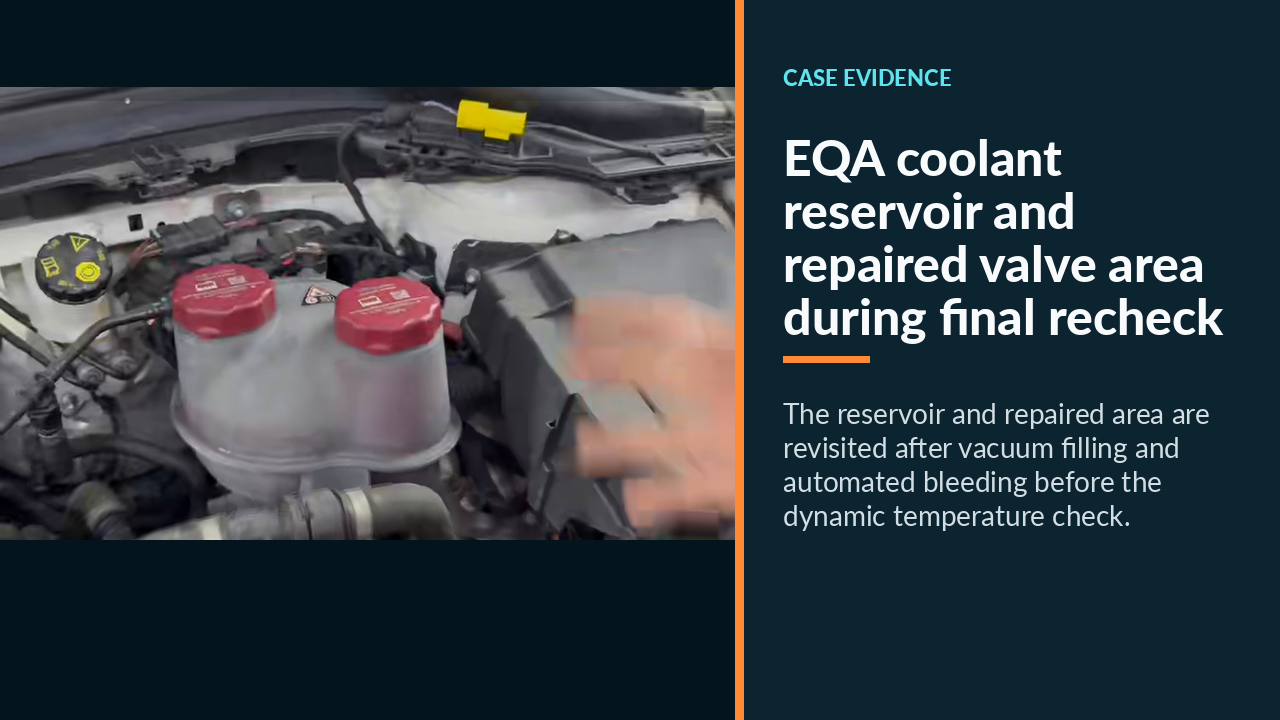
The shop reported vacuum-filling the circuit, then running the automated circulation/bleed routine and temperature-control-component initialization. The stored fault was cleared only after the physical circuit and coolant circuit had been restored. Exact coolant type, quantity, part number and service sequence were not published, so they must be selected from the vehicle’s VIN-specific information rather than copied from this story.
Dynamic temperature data closed the original complaint
Verification returned to the warning that brought the EQA in. During the reported dynamic test, the cooling warning stayed off and the case record reports that high-voltage-battery and drive-motor temperature trends returned to their safe operating range. That is stronger than a cleared dashboard alone because it challenges the repaired thermal function under operation.
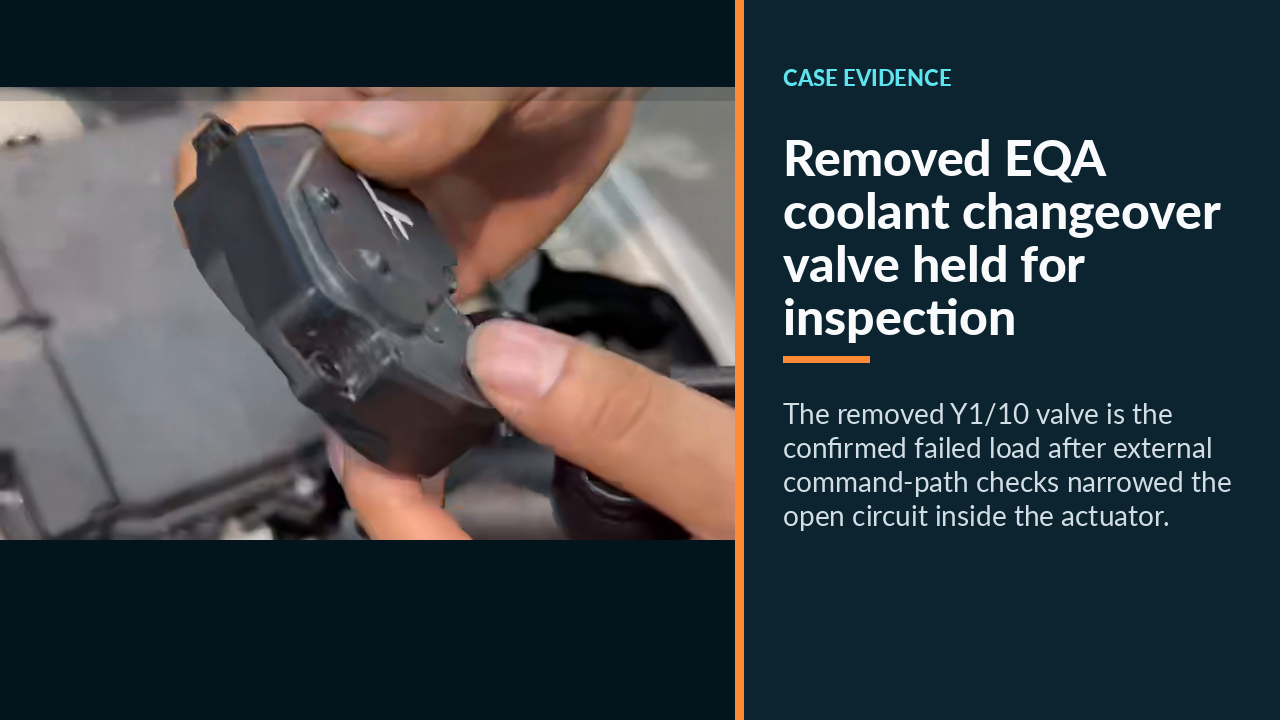
The available record does not state the route, distance, ambient temperature or a later cold recheck, so the result should be read at that scope: the post-repair dynamic check passed. It is not a guarantee against every future cooling-system fault.
What a similar warning should prompt first
On a similar EQA, save the exact code and operating conditions before clearing anything. Identify whether the named part is a bus module or a directly driven load; then separate connector condition, harness command, wiring continuity and actuator integrity. A valve becomes a supported conclusion only when the circuit evidence points to it.
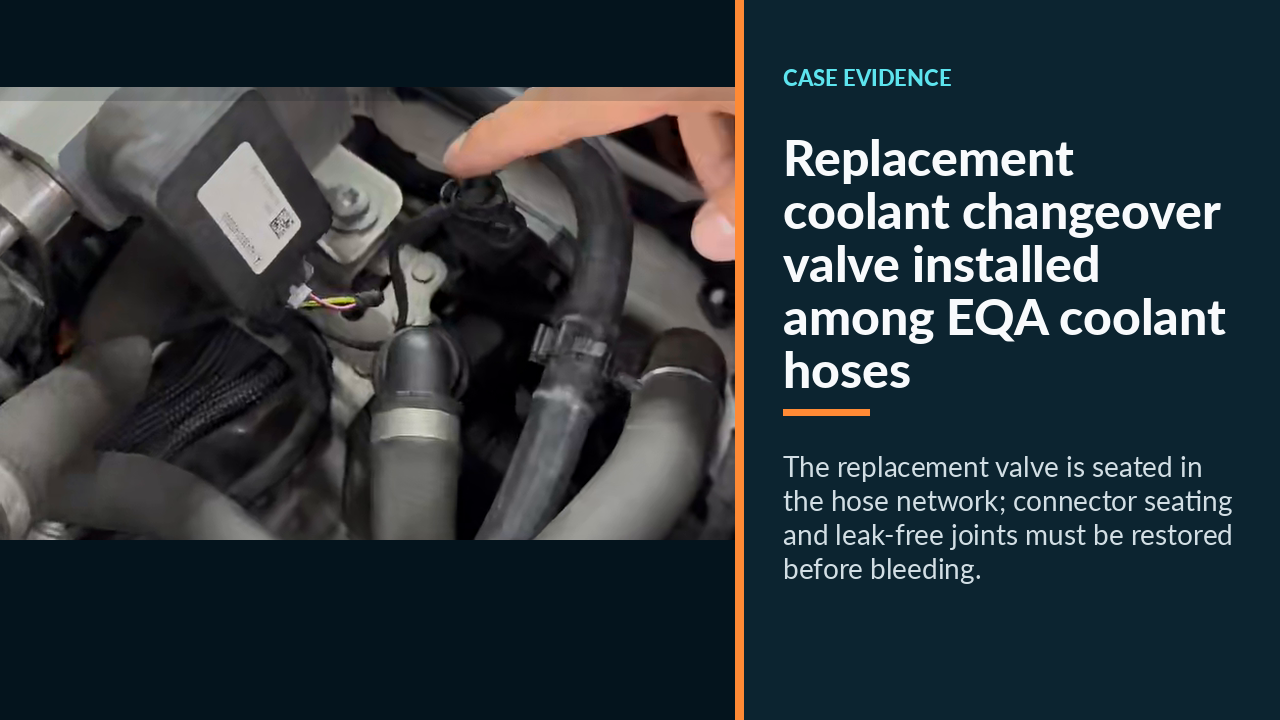
The transferable lesson is architectural: code wording must be interpreted through the actual circuit. Another EQA with the same warning can still have wiring, connector, controller, coolant-flow or sensor faults, so this car’s valve replacement is not a model-wide shortcut.
The reusable check is the circuit architecture
This EQA did not need a valve because the code contained the word “communication.” It needed a valve because the named part was a two-wire load, the connector was clean and dry, the external drive path operated, and the actuator itself measured open. On another vehicle, corrosion at the connector, a broken wire, a controller output fault or restricted coolant flow would change the endpoint.
The repair also had two different restoration jobs. Electrical initialization returned the replacement actuator to control; vacuum filling and automated bleeding returned coolant circulation. The dynamic check then revisited the red warning and watched battery and drive-motor temperature behavior. The available record does not state route, distance or a later cold recheck, so the supported conclusion is that the original condition passed that operational check—not that every future thermal-management fault was eliminated.






Comments 0
Questions, fixes, and real-world diagnostic notes from readers.
Be the first to share a diagnostic result or ask a follow-up question.