
2019 BMW 530Le Rear Suspension Stuck High: Relief-Valve Repair

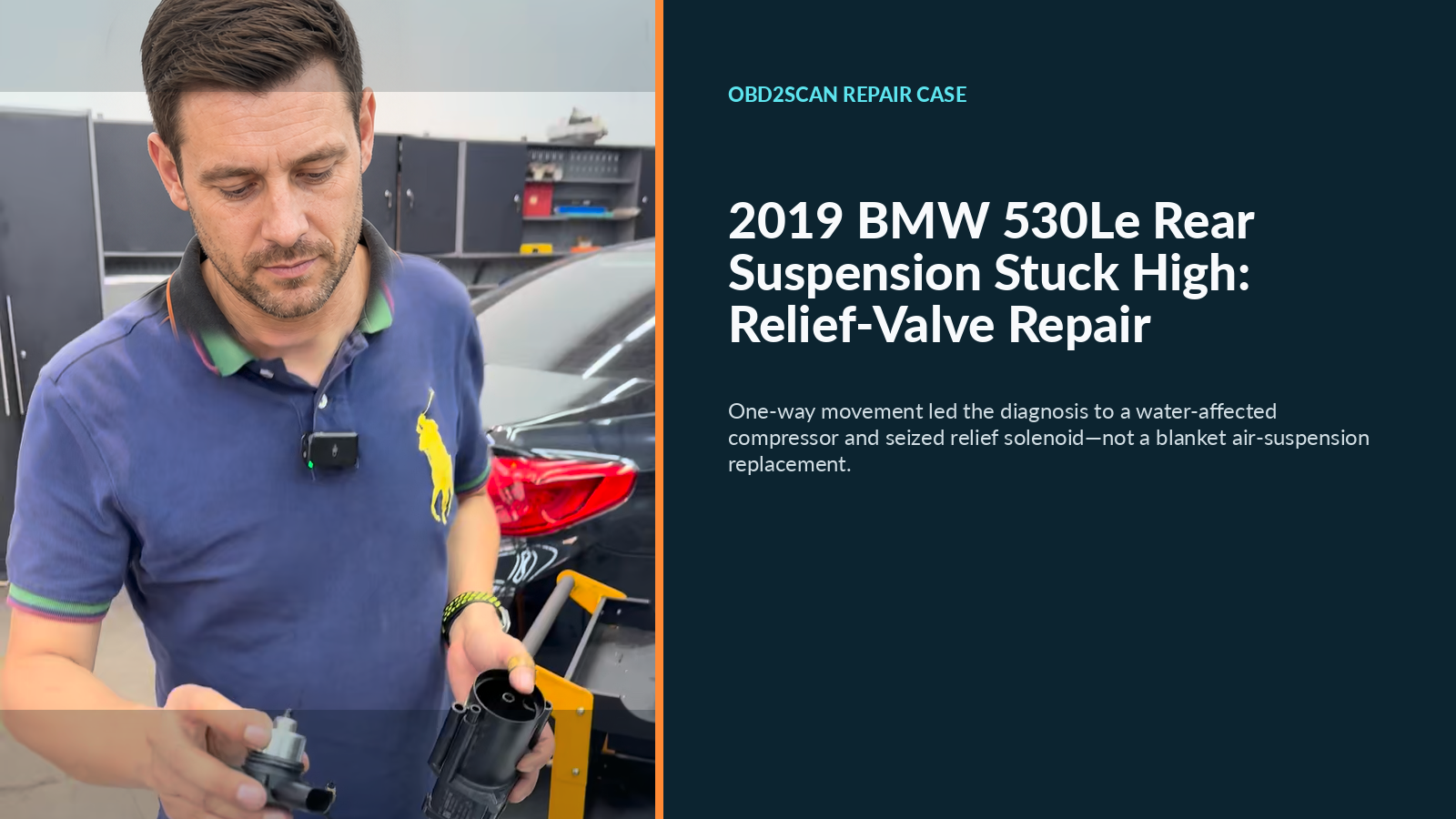
This 2019 BMW 530Le arrived with its rear suspension at maximum height, unable to lower, while the instrument display warned that chassis function was restricted; the available record did not report mileage, engine, or chassis. The workshop confirmed water and corrosion inside the original air-suspension compressor, saturated desiccant, and a seized relief solenoid after the distribution valve tested normally. It repaired the original solenoid, dried and reassembled the pump, calibrated ride height, and restored normal raising and lowering without replacing parts.
Case at a glance
| Element | This vehicle |
|---|---|
| Vehicle | 2019 BMW 530Le; mileage, engine, and chassis not reported |
| Complaint | Rear suspension rose to maximum height but would not lower; chassis-function warning displayed |
| Confirmed fault | Water-affected compressor with wet desiccant and a seized relief solenoid |
| Repair | Original relief solenoid repaired; compressor and desiccant dried; no parts reportedly replaced |
| Restoration | Original compressor refitted and ride height calibrated |
| Verification | Normal rear height and normal commanded raising/lowering on the workshop recheck |

One-way movement pointed to the exhaust side
“Stuck high” did not immediately identify a failed component. The useful clue was direction: the rear suspension could still rise but could not come back down. Continued upward movement showed that the system retained some ability to generate and deliver compressed air. The missing function was controlled pressure release. When the rear suspension can rise but will not lower, the AUTOOL PT680 air-suspension pressure tester can add a controlled pressure comparison to the valve and exhaust-path checks, provided the vehicle is safely supported and depressurized by the approved procedure.
That distinction moved the next check away from a blanket “air suspension failure” and toward the exhaust path. An air spring, line, distribution valve, compressor, relief device, sensor, electrical circuit, or control decision can all influence ride height on another vehicle. In this car, however, the sequence started with what still worked and what did not: inflation remained available, while lowering did not.
The available record does not provide DTCs, pressure readings, commanded-versus-actual data, current measurements, or measured corner heights. It therefore supports the diagnostic branch, not a numerical test procedure. Exact vehicle identification and service information would still be required before applying connector, pressure, or height specifications.
Opening the original pump supplied the physical evidence
The workshop removed and opened the original air-suspension compressor. Water and corrosion were visible inside, and the desiccant—the moisture-absorbing material intended to manage water in the air stream—was saturated. Those findings changed the case from a functional suspicion about exhaust flow to a physical internal problem.
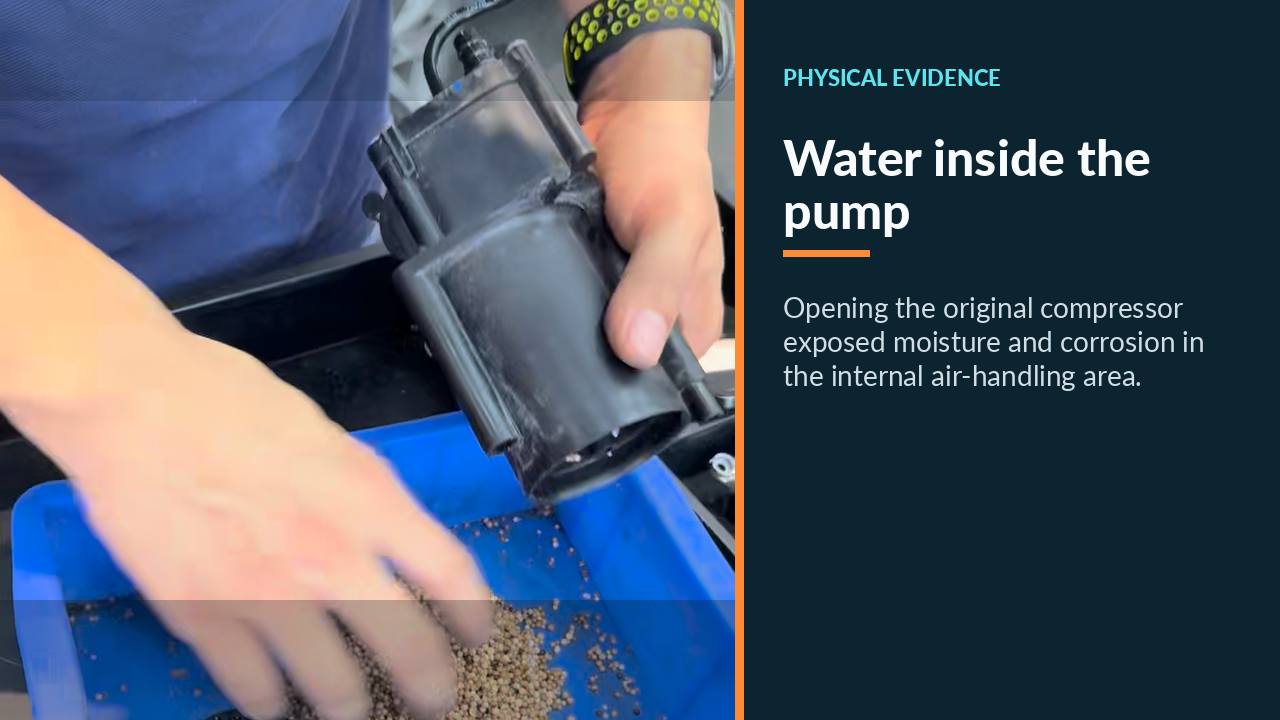
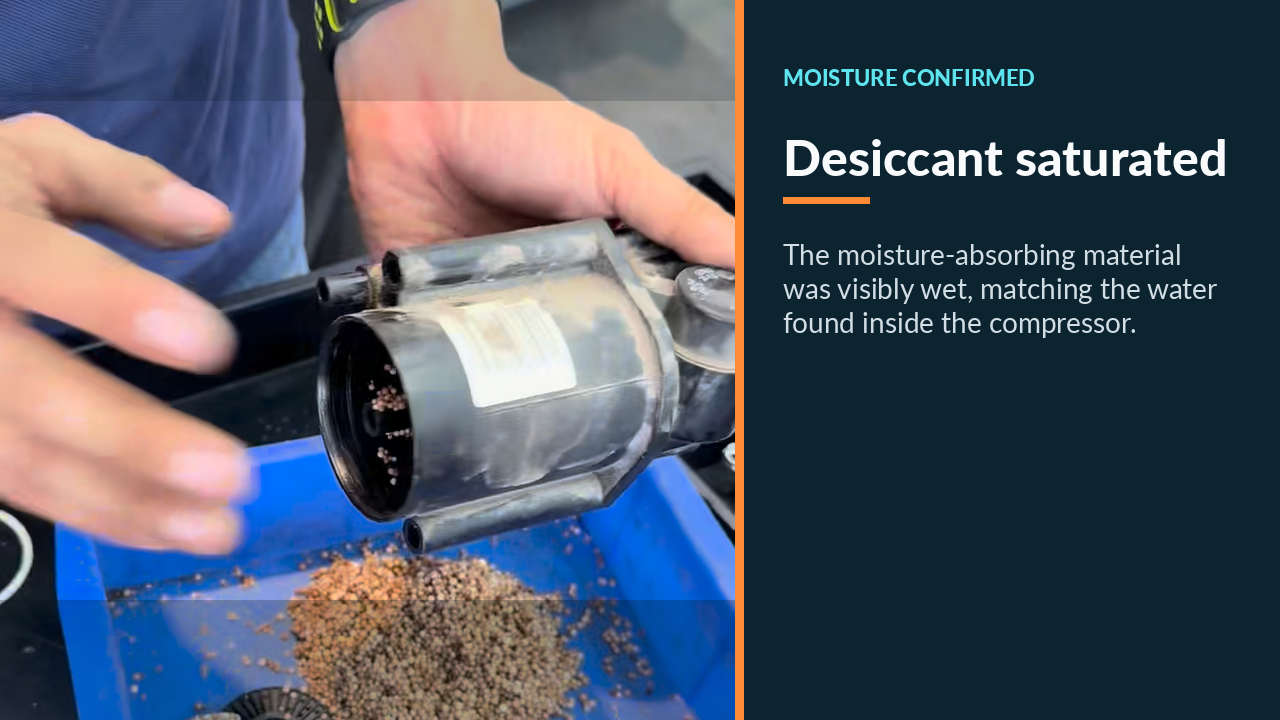
The distribution valve was then reported to test normally. That result mattered because it separated an adjacent air-routing component from the component that was finally repaired. Further inspection identified the compressor’s relief solenoid as seized. A stuck relief solenoid explained the directional symptom: the pump could add air, but its controlled release path could not lower the rear suspension as requested.
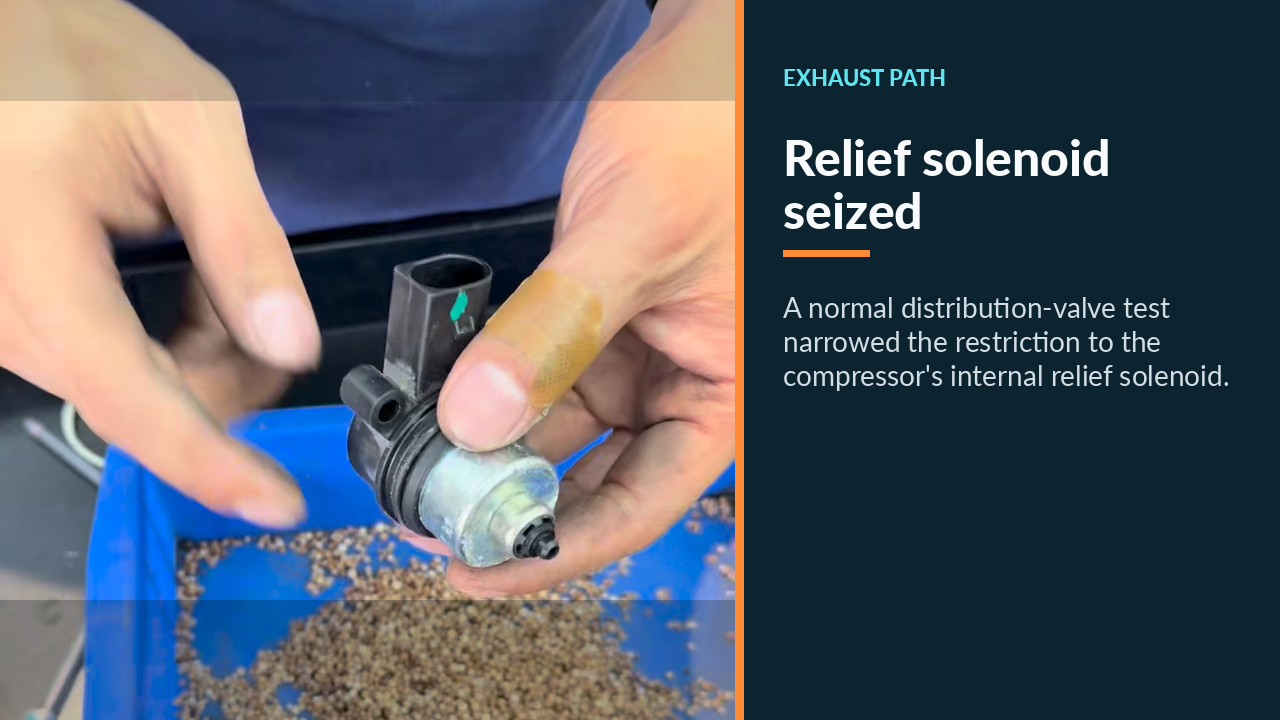
This evidence chain is narrower than saying every BMW that sits high needs a compressor. The available record does not report how the water entered, how the distribution valve was tested, or the relief-solenoid test values. It shows what was found in this particular pump and reports which neighboring component passed its test.
Repairing the original compressor rather than replacing it
With the restriction identified, the workshop repaired the original relief solenoid rather than installing a complete replacement compressor. It dried the moisture-affected desiccant and pump components, then reassembled the original unit. The case record explicitly reports that no parts were replaced.
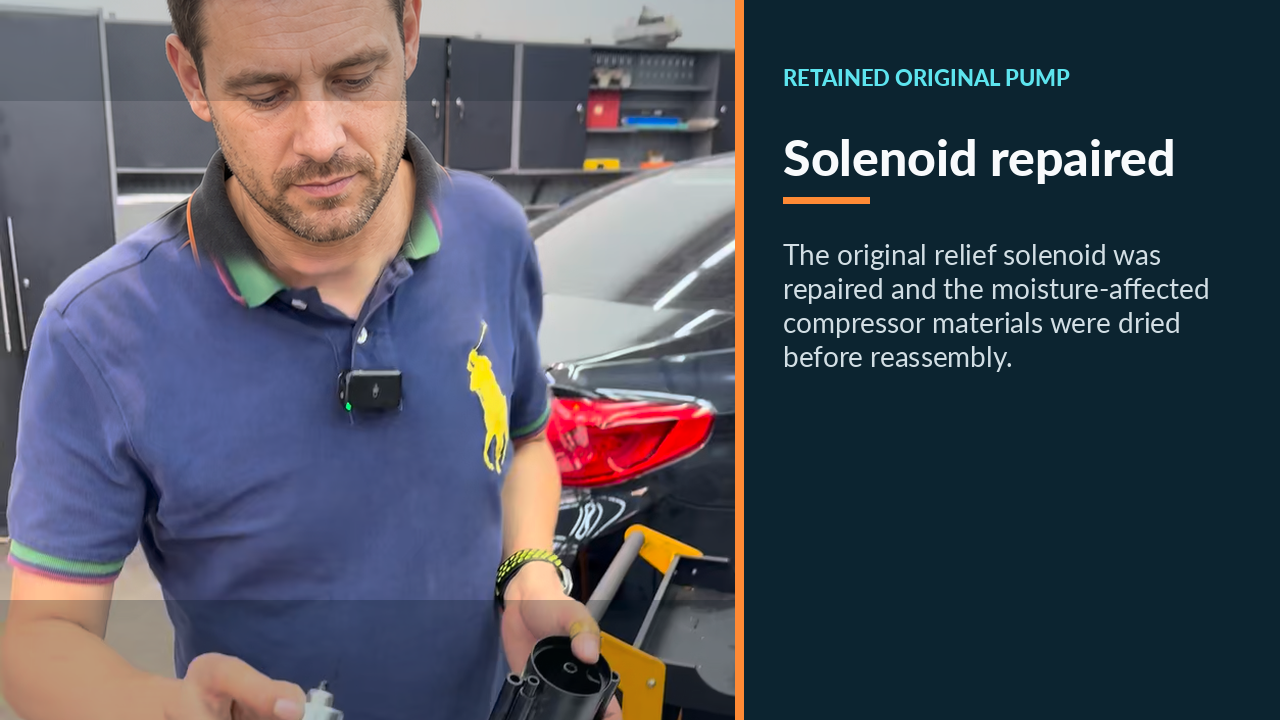
This was specialist repair, not a public rebuild recipe. The video shows the major stages and the affected components, but it does not publish cleaning chemistry, drying temperature or duration, seal criteria, fastener specifications, pressure limits, or an electrical acceptance test. Those omissions matter because compressed-air and suspension work must be restored without leaks, contamination, damaged connectors, or incorrect assembly.
The unanswered recurrence question is the water-ingress route. Finding water proves the internal condition at teardown; it does not, by itself, establish where the water entered or whether that route was corrected. A later inspection would need to treat renewed moisture or height symptoms as evidence, rather than assuming the original repair permanently removed the cause.
Calibration completed the restoration
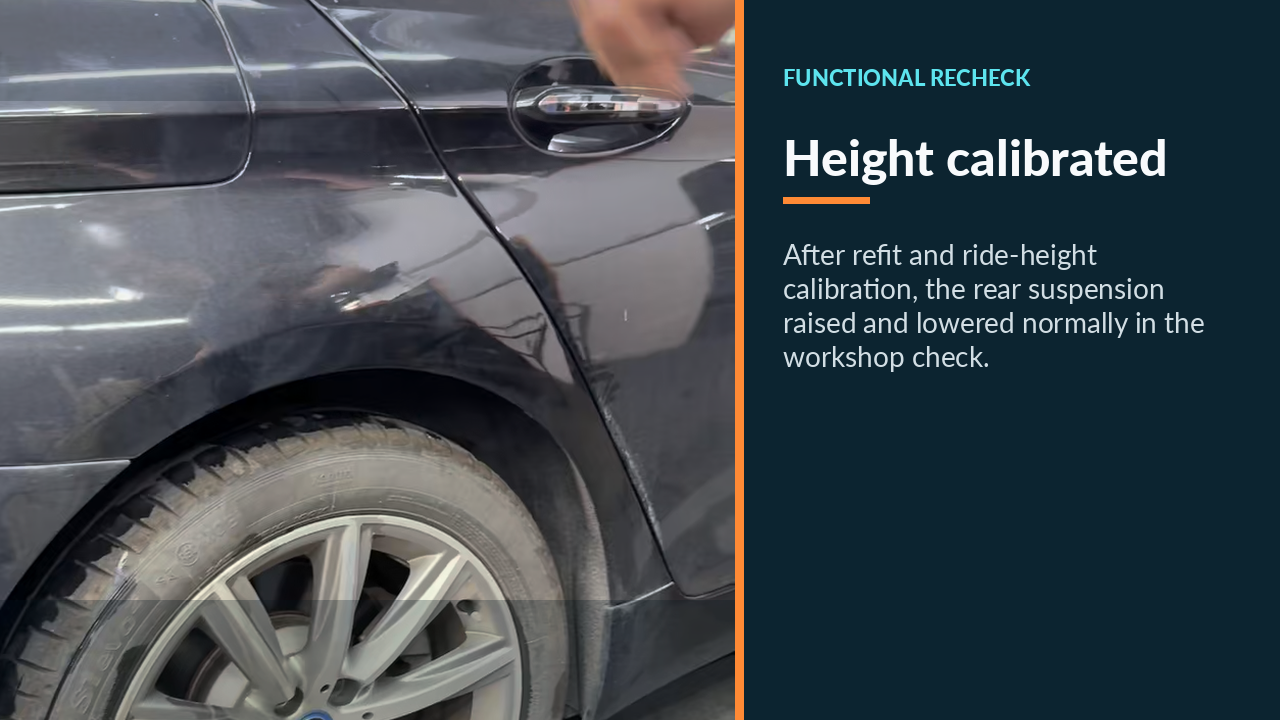
After the compressor was reassembled and returned to the car, the job was not finished merely because the pump was connected. The workshop completed vehicle ride-height calibration. That restoration step allowed the control system to work from the correct body-height reference after the pneumatic repair.
The final workshop check returned the rear of the BMW to a normal height and confirmed that the suspension could raise and lower normally. This directly tested the function that had failed on arrival, making it more useful than a visual stance check alone. The available record does not include an overnight height-retention check, road-test distance, repeated cycles, or a later follow-up, so verification is transparent but bounded: the first functional recheck passed.
A transferable lesson without copying the repair
For a similar one-way height complaint, first record the warning, actual corner heights, and whether each commanded direction works. If inflation works but lowering does not, inspect the correct exhaust-control path with exact-vehicle service information; if the system lowers but will not rise, that is a different branch. Preserve DTCs and commanded/actual data before clearing anything.
This BMW’s answer was a water-affected original compressor and seized relief solenoid, confirmed after internal inspection and a normal distribution-valve test. Another car may instead have an air leak, line restriction, valve-block problem, height-sensor issue, wiring fault, or control problem. The value of this case is the sequence: use directional behavior to choose the next path, confirm the failed area, restore calibration, and retest the exact function that brought the vehicle in.








Comments 0
Questions, fixes, and real-world diagnostic notes from readers.
Be the first to share a diagnostic result or ask a follow-up question.