
2013 GMC Sierra Has No Power and No Codes: A Starter Noise Changed the Diagnosis

Quick answer: An engine can reduce power in response to a mechanical noise without storing a fault code. Locate the noise before replacing exhaust or knock-sensing components.
Grinding or a starter that remains engaged is a reason to stop running the engine. Do not continue driving to investigate it or inspect near rotating starter and ring-gear parts.
Once the engine is disabled and access is safe, a camera such as the AUTOOL SVB308 can help document accessible hidden mechanical areas. That visual record cannot demonstrate ignition-timing changes; those require separate operating evidence.
In this guide
No code does not mean no useful evidence
A scan without fault codes can feel like a dead end when the truck plainly lacks power. It is better understood as one result within a larger assessment. The driver still has a complaint, and physical observations may still offer a direction. The absence of a code does not require replacing parts by intuition.
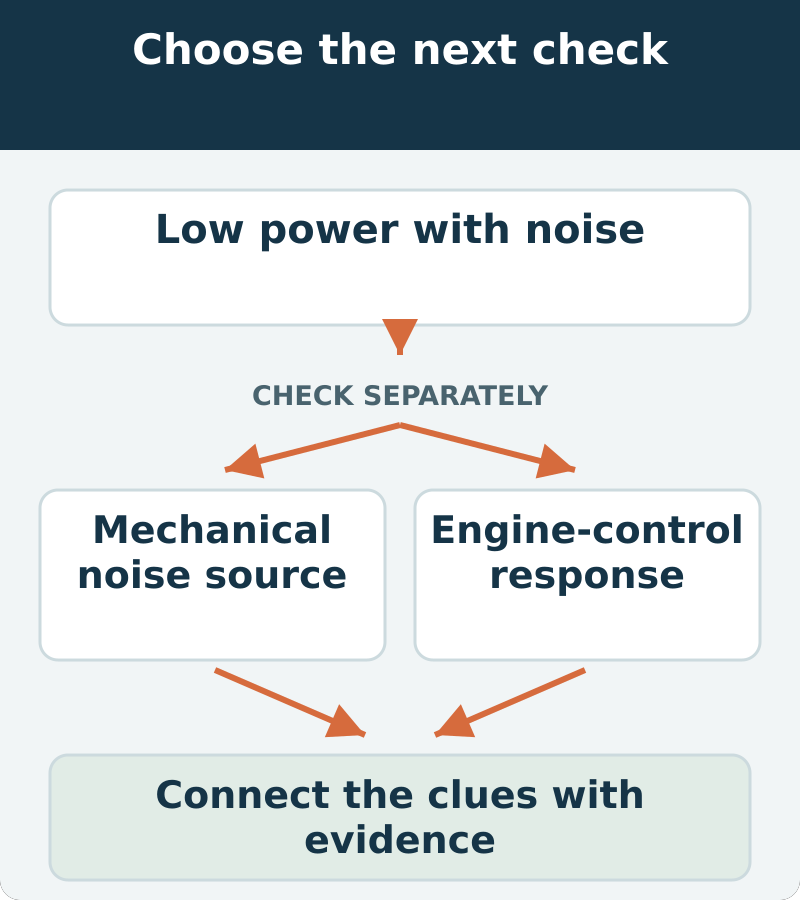
Describe the power loss alongside any unusual sound and the circumstances in which each was noticed. Keep “where it sounds loudest” separate from “which part failed.” A technician can use that distinction to investigate the noise while keeping other reasons for reduced performance open until the evidence supports a narrower conclusion.
The sound appeared to come from the exhaust
ALLDATA’s Sierra account describes a 2013 2500 4WD 6.0L with low power and a rear-engine rattle. Suspected catalyst trouble was not found. A broken starter-solenoid spring left the drive engaged; replacement restored performance. The author proposed knock-related timing reduction as the power-loss mechanism but supplied no timing log.
The case is useful because localization changed the repair target. A noise heard near an exhaust component need not originate inside it. That does not mean exhaust checks were inherently wasted; an appropriate negative result can redirect the investigation. The lesson is to let the new finding change the hypothesis rather than keep buying around the first suspected location.
A starter has to disengage as well as engage
Owners usually judge a starter by whether it turns the engine during starting. Its job also includes ending that engagement correctly. Thinking about both phases opens a mechanical question that a simple “the engine starts” observation would miss.
This does not make the starter a standard suspect for every no-code power complaint. It becomes relevant when the actual sound and inspection evidence point there. A repair discussion should identify what was physically found, whether related damage requires assessment and which checks support the proposed work. The explanation should not depend on running an engine with a known engagement problem merely to make the noise more convincing.
How noise could affect power
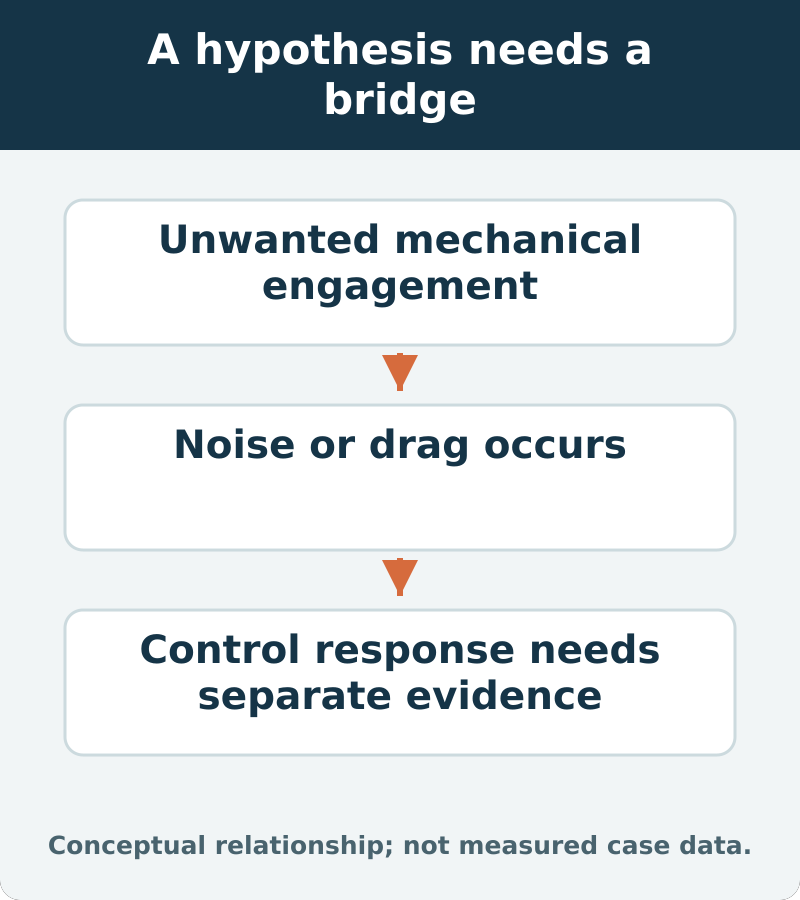
The proposed explanation links a mechanical disturbance to the engine controller’s interpretation and then to an operating response. It is a plausible chain to investigate, but each link needs the appropriate evidence. Finding the noise source is not the same measurement as recording the controller’s response to it.
For this case, keep the confidence levels separate: the account reports a physical defect and improved performance after repair; the timing explanation is the author’s interpretation. That boundary does not diminish the successful repair. It prevents a useful story from becoming an unsupported instruction to replace knock sensors or starters whenever an engine feels flat without setting a code.
What would strengthen the timing explanation
A stronger operating explanation would connect the relevant control data to the symptom and show how both changed after the supported repair, under suitable comparable conditions. It would also distinguish the proposed response from other factors that affect performance. A chart drawn after the event cannot supply that missing evidence.
This is a question about what a report proves, not a demand to leave a damaging fault in place for the sake of a perfect recording. Safety comes first. If the defect already justifies stopping and repair, the technician should not prolong exposure simply to demonstrate every theoretical link. The final record can accurately state which observations were obtained and which explanation remains inferred.
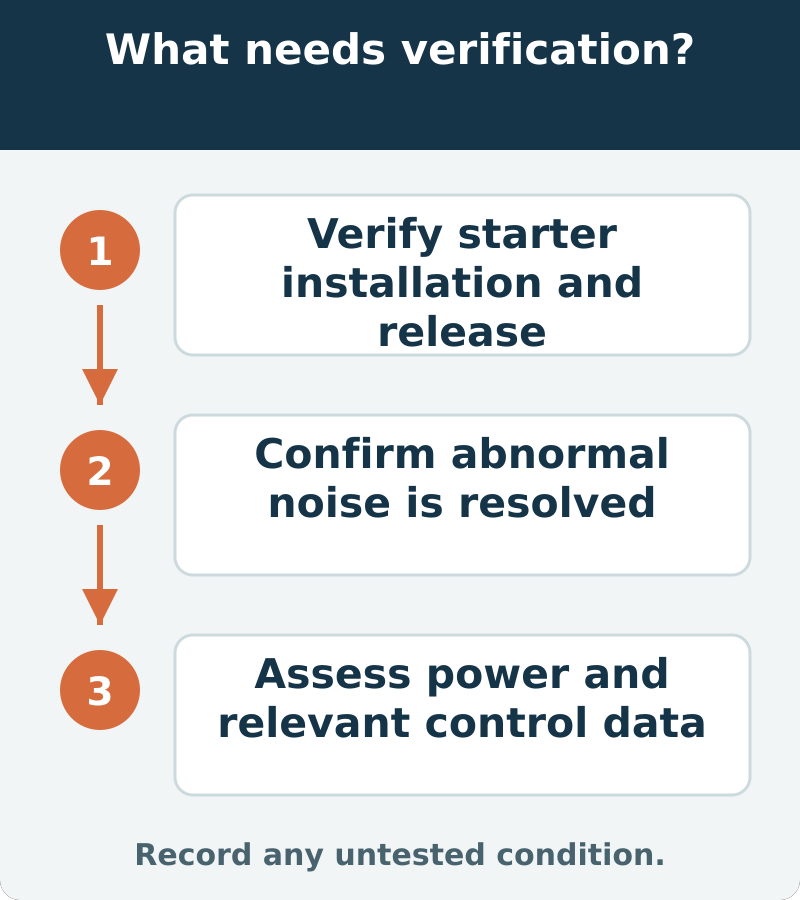
Confirm quiet disengagement and restored response
Verification needs to address both the mechanical starting behavior and the original performance complaint through the permitted service checks. A quieter start alone is not the whole low-power assessment, while improved acceleration alone should not obscure an unresolved mechanical noise. The repair record should explain how each concern was evaluated.
If the sound returns, stop safely and arrange inspection rather than continuing to test the theory on the road. Keep the findings with the invoice so another technician can distinguish a recurrence from a new problem. The practical lesson is to follow physical evidence even when the scan is quiet—and to keep an interesting mechanism no more certain than its supporting data.






Comments 0
Questions, fixes, and real-world diagnostic notes from readers.
Be the first to share a diagnostic result or ask a follow-up question.