
2018 BMW X5 40e Start/Stop Unavailable: Identify the Battery Behind the Fault

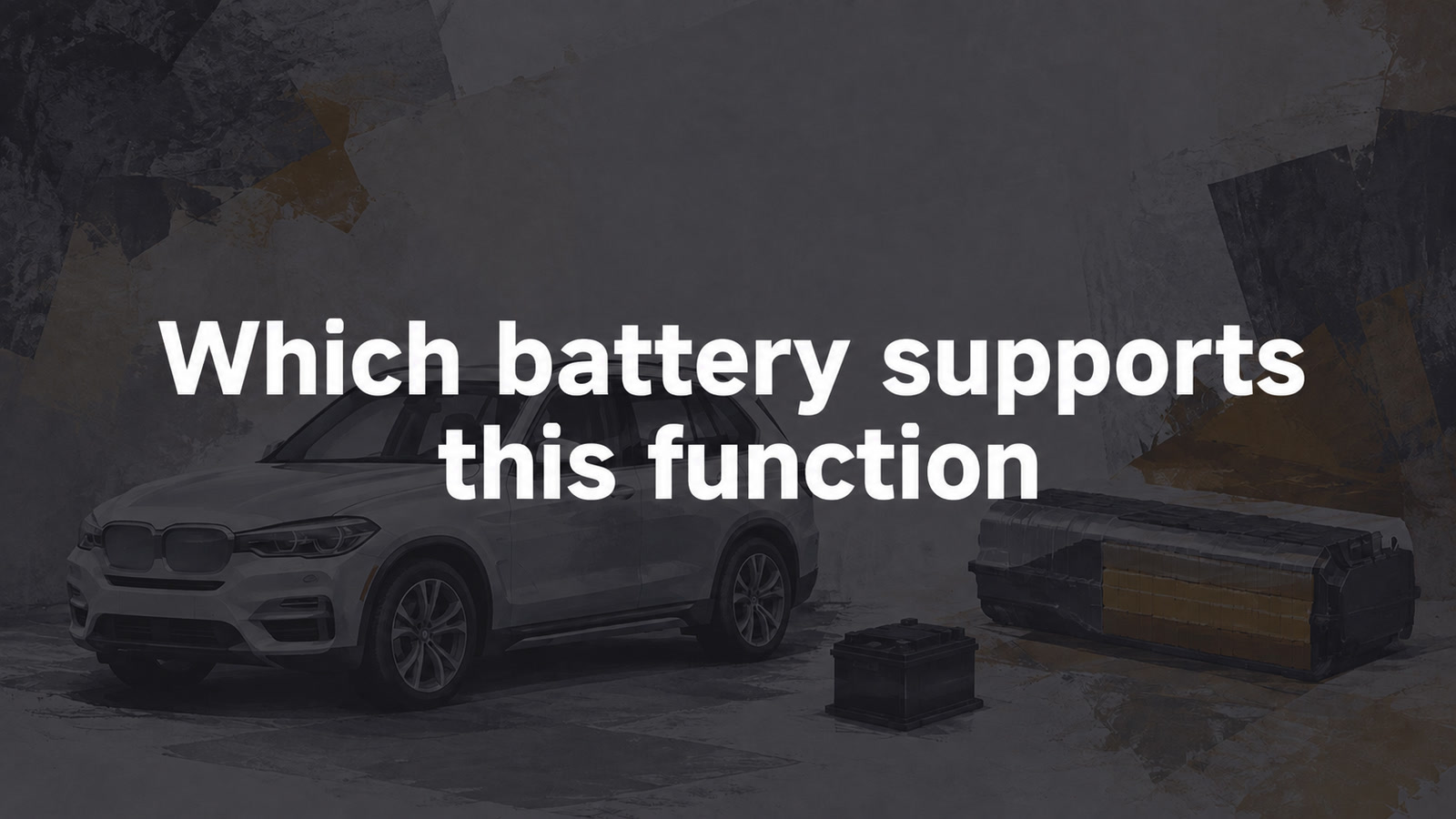
Quick answer: A hybrid can have several electrical energy stores with different jobs. A start/stop fault is not by itself a traction-battery verdict; identify the specific subsystem and battery test result before comparing repair estimates.
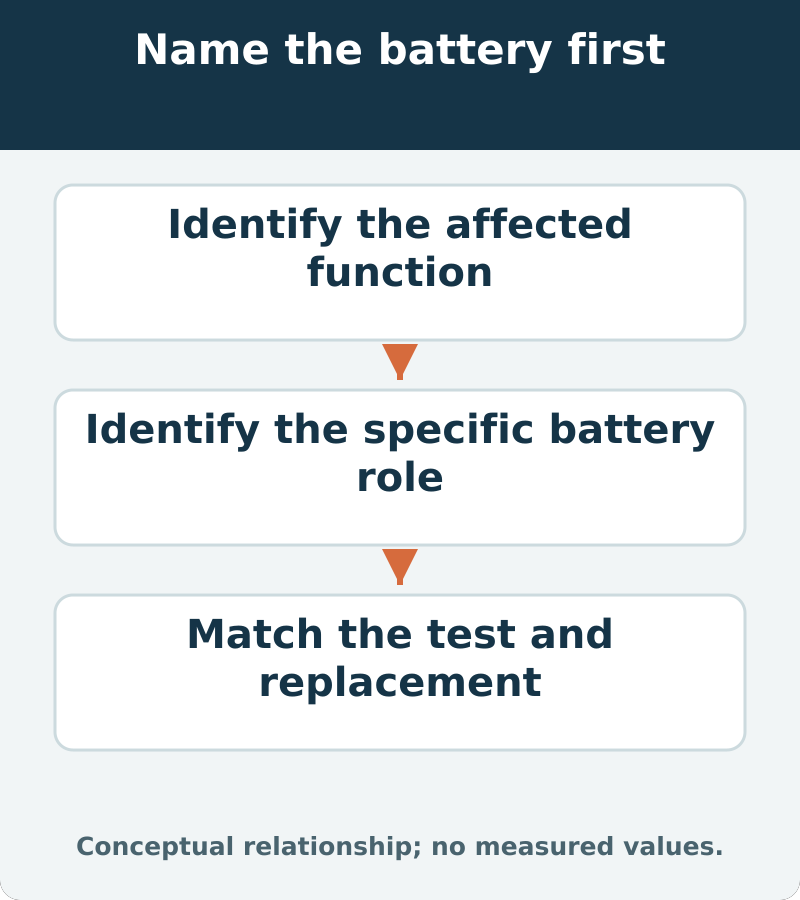
Start by asking the repairer to name the battery, not just say the hybrid battery. A clear estimate should connect the affected function, the identified energy store, the test result and the setup work. Without that identification, two battery quotes may describe entirely different repairs.
In this guide
Does this mean the high-voltage battery has failed?
Not necessarily. Start/stop availability is a function, while the high-voltage traction battery is one component within a much larger electrical system. The symptom alone does not tell you which component has failed.
The distinction matters when reading an alarming diagnostic label or comparing estimates. Ask what evidence points to the specific battery being proposed for replacement. A statement that the vehicle is a plug-in hybrid is not that evidence.
At the same time, do not treat this case as reassurance that every hybrid warning is minor. Any additional warnings or abnormal starting behavior need assessment in their own right. The useful starting position is neither a traction-battery verdict nor a promise of an inexpensive auxiliary-battery cure.
Which battery was actually tested?
The test report should identify the battery by its role and the vehicle-specific component information, then state how it was assessed. That makes the result meaningful without requiring the owner to open a compartment or interpret a loose printout.
Ask whether the test was appropriate for the fitted battery and its condition. A generic tester result without component identification can be difficult to connect to a repair quote. The historical account does not provide enough specification detail to select a replacement or a test setting from the article alone.
You also do not need to buy a tester to ask this question. The immediate decision is whether the diagnosis and proposed part refer to the same battery in your particular vehicle.
In the ALLDATA published case, this X5 needed an extended start-button press and had disabled start/stop with 21A515. The auxiliary battery failed the reported load assessment. Replacing that battery and registering it with the engine electronics restored start/stop operation. The account does not supply a battery part number or complete hybrid-system assessment.
Why the fault code still needs the vehicle configuration
A fault code is most useful when read with the module reporting it, the vehicle configuration and the applicable diagnostic procedure. A search result that shares the code number is not a substitute for that context.
For this X5, keep the xDrive40e identity visible in the service conversation. Do not silently transfer an explanation from a different powertrain or assume that every F15 has the same battery arrangement and setup needs. Ask how the diagnosis was matched to your vehicle.
The roles diagram is conceptual: propulsion energy, low-voltage support and the particular diagnosed auxiliary role should not be collapsed into one label. It is not a drawing of battery locations, access points or cable routes, and it provides no authorization to inspect high-voltage components.
What belongs in the replacement quote?
A useful quote separates four things: the identified replacement, the labor needed to install it safely, any required registration or configuration and the functional assessment afterward. That lets you compare scope rather than only the headline price.
Ask how compatibility was established for the fitted vehicle. Do not order from physical size alone or assume that an unspecified battery in an old repair story matches a currently advertised part. Chemistry, capacity and other requirements need the correct component information; this case does not supply them.
If two estimates differ, first check whether they refer to the same battery and include the same setup work. A lower number is not a meaningful comparison when one quote describes a different subsystem or leaves necessary work out.
Does a new battery finish the setup?
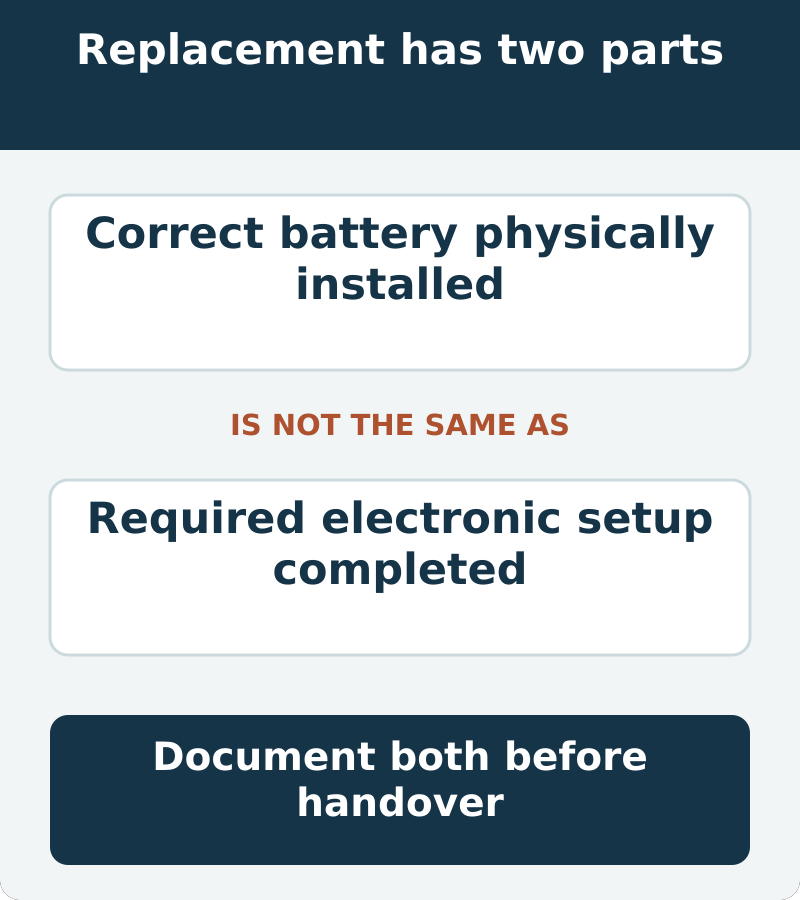
Not always. The physical replacement and the required electronic setup are distinct completion items. Ask what the exact service procedure requires and whether it was completed with suitable equipment.
Do not confuse a cleared code with documented registration. The service record should say what setup was performed, rather than leave the owner to infer it from the absence of a warning. Conversely, registration is not a way to repair a battery that has failed the appropriate assessment.
Hybrid work also needs clear boundaries. Do not access orange cables, traction-battery enclosures or high-voltage connectors. Even a low-voltage job can have vehicle-specific isolation and setup requirements, so this discussion is not a battery-disconnection or replacement procedure.
What should work when the vehicle comes back?
Ask for an explanation of starting behavior and start/stop availability under suitable conditions after the work. The exact operating requirements still apply; the feature need not activate on every occasion merely because a battery has been replaced.
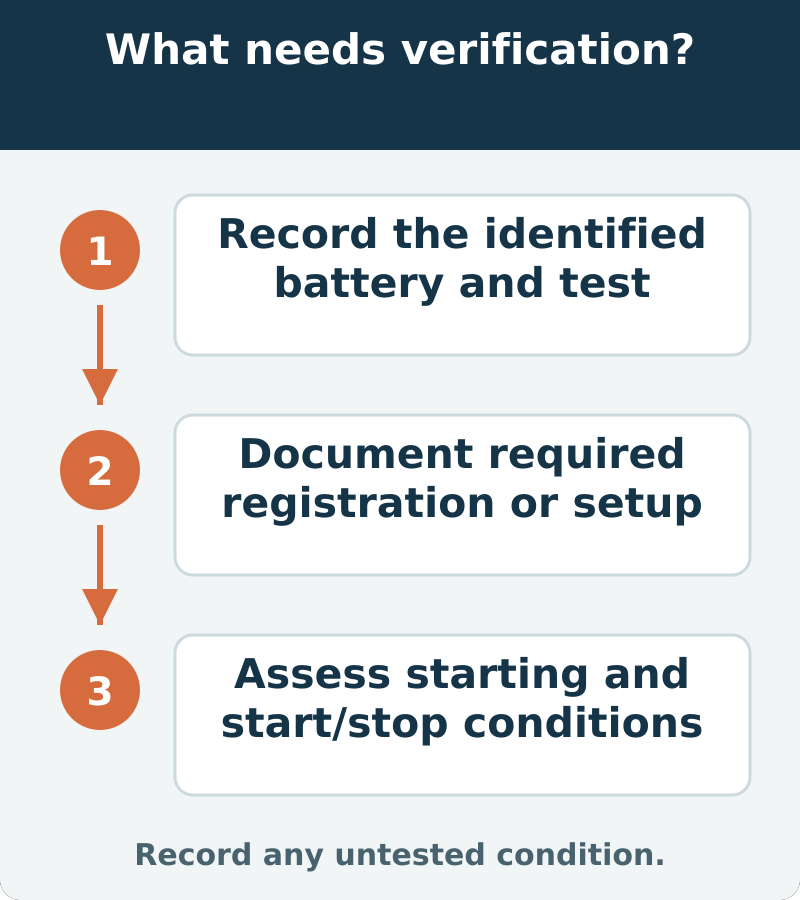
Have the workshop distinguish a successful check from any untested conditions or remaining warning. The published auxiliary-battery outcome supports a specific diagnosis on the reported car, not a complete health certificate for its hybrid system or yours.
Keep the battery identity, test finding and setup entry together in your records. If the complaint returns, those details are more useful than an invoice that says battery replaced. They show which subsystem was addressed and prevent the next discussion from restarting with an ambiguous hybrid-battery label.










Comments 0
Questions, fixes, and real-world diagnostic notes from readers.
Be the first to share a diagnostic result or ask a follow-up question.