
BMW 528 B48 Coolant Loss: Oil Filter Housing and Pipe Connector Repair

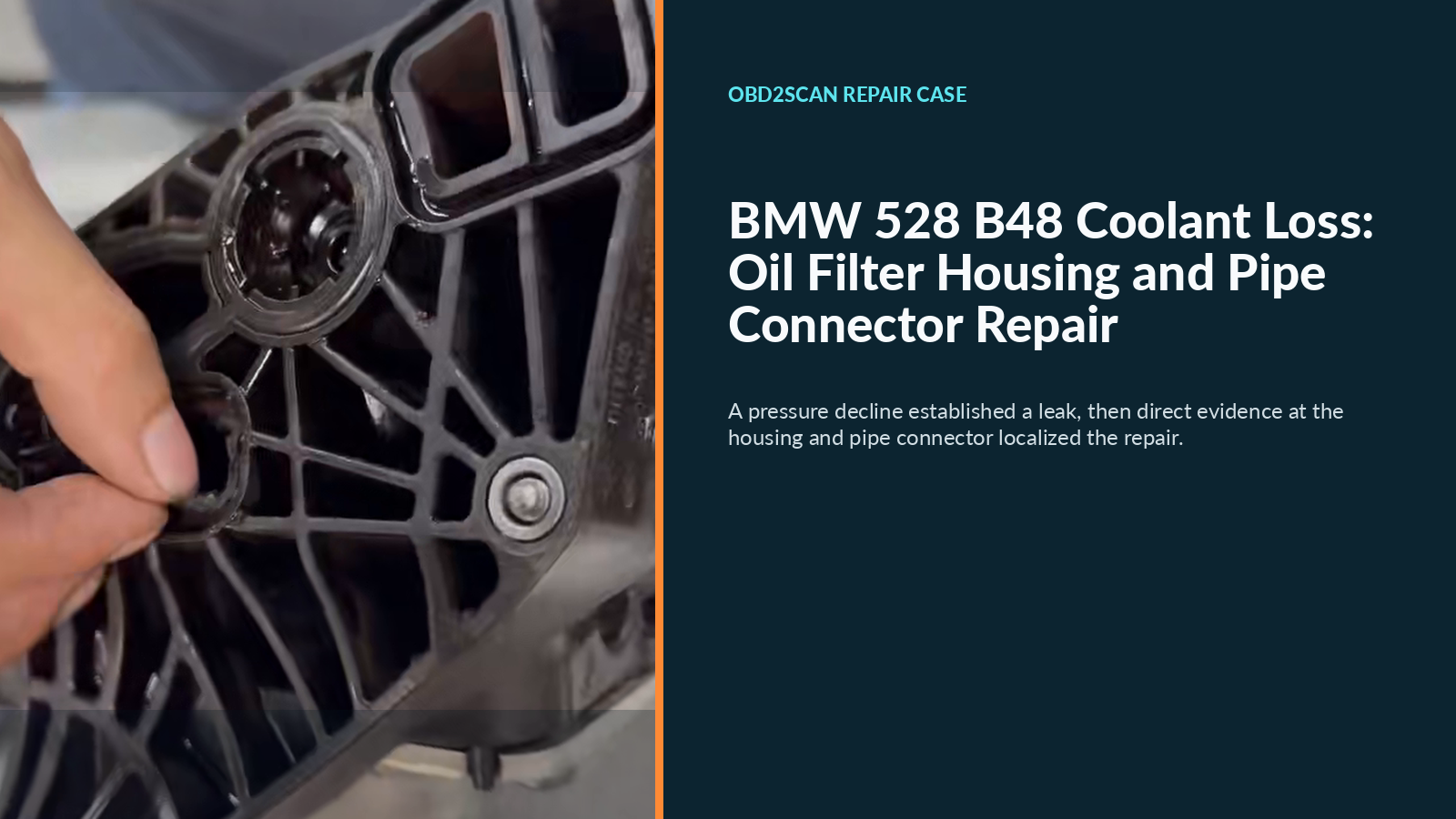
This BMW 528 with a B48 2.0-liter turbo engine and 130,000 km repeatedly warned that coolant was low. Coolant had been added several times in roughly a month, and a sweet heated-coolant odor was present, yet there was no obvious puddle. A pressure loss and dried deposits led under the intake area to two confirmed leak paths: the oil-filter-housing interface and a cracked coolant-pipe connector at the cylinder block.
The case contains one identity conflict: its page calls the vehicle a 2017 model, while the video overlay calls it a 2018 model. The exact VIN/build record must resolve that difference. This article therefore does not use a model year to select parts, test values, or procedures.
Case at a glance
| Item | Case detail |
|---|---|
| Vehicle | BMW 528, G38, B48 2.0T; 130,000 km |
| Model year | Conflicted: 2017 on the case page, 2018 in the video overlay |
| Driver complaint | Repeated low-coolant warning, several top-ups, heated-coolant odor, no obvious puddle |
| First test result | Small pressure decline under the workshop’s selected cooling-system test condition |
| First confirmed leak | Oil filter housing-to-block coolant interface |
| Second confirmed leak | Aged, cracked coolant-pipe connector at the cylinder-block opening |
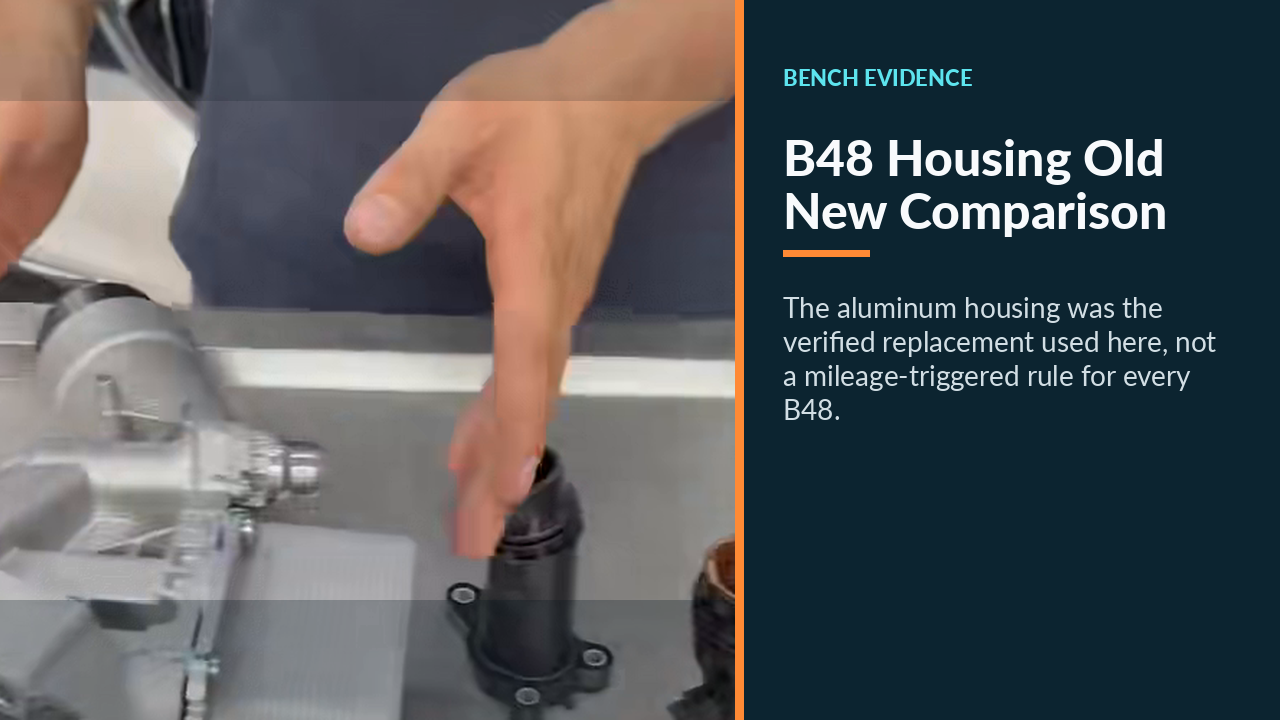
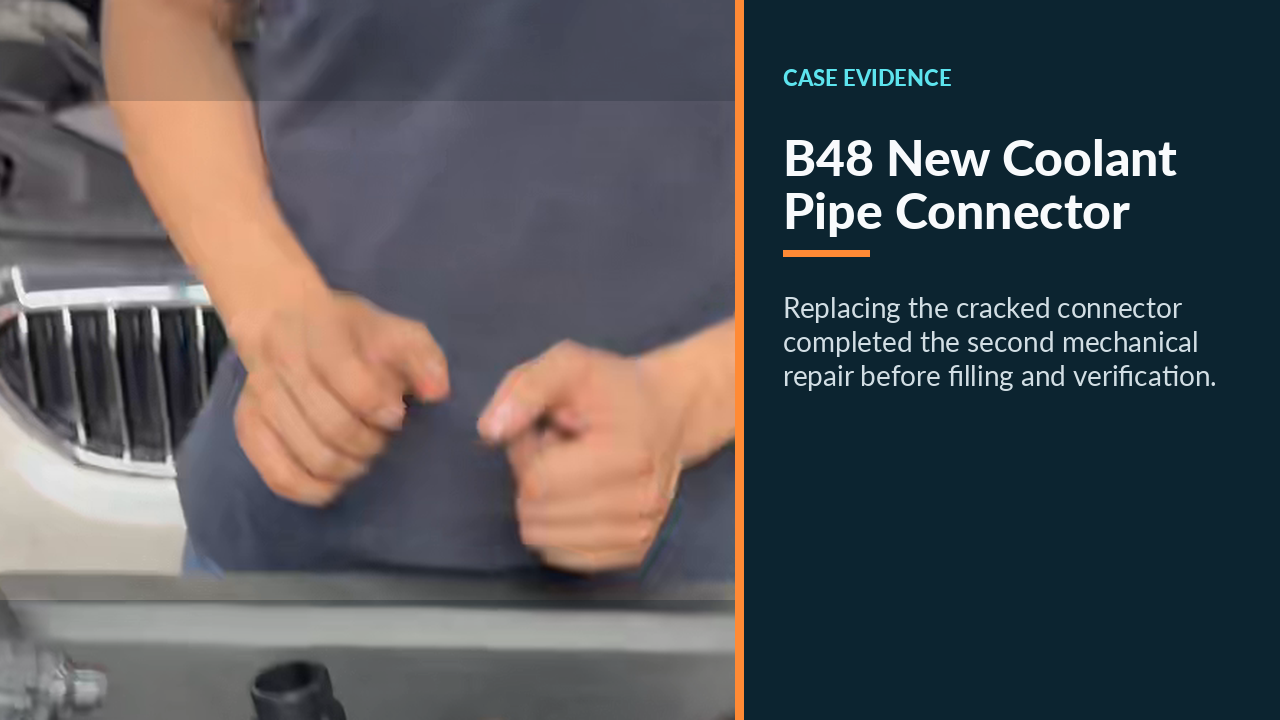
| Repair | Broken connector remnants removed; interfaces cleaned; applicable aluminum housing, connector, and seals installed |
| Restoration | Vacuum hold, specified-coolant fill, electronic-pump bleed routine |
| Verification | Reported 20 km road test with temperature observation; both repaired areas dry on return |
If a temperature warning is active, steam is present, or coolant is leaving quickly, stop safely and arrange professional help. Never open a hot or pressurized cooling system.
Why the missing puddle did not clear the cooling system
A small hidden leak can evaporate on hot engine surfaces or collect in a concealed area before reaching the ground. That made the warning history, repeated top-ups, odor, and dried residue more useful than a clean parking space.
The workshop’s pressure test showed a small decline, supporting a physical sealing loss under that test condition. The case record provides a test value, but it is not reused here: the exact pressure, adapter, starting temperature, and observation method must match the VIN-specific procedure and the equipment in use. A falling gauge says the connected system lost sealing; it does not identify the component.
The first leak finding was not the end
Inspection beneath the intake area found dried coolant deposits at the original plastic oil filter housing-to-block interface. That physical trail supplied the first component-level finding.
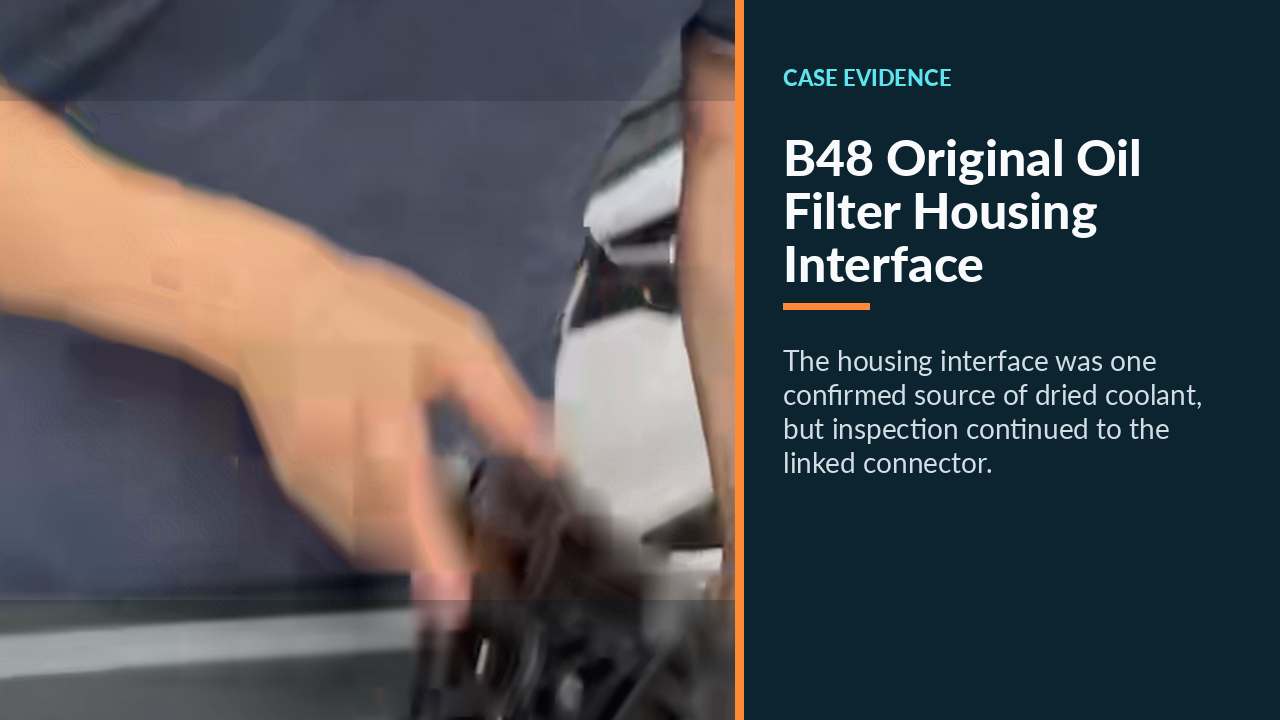
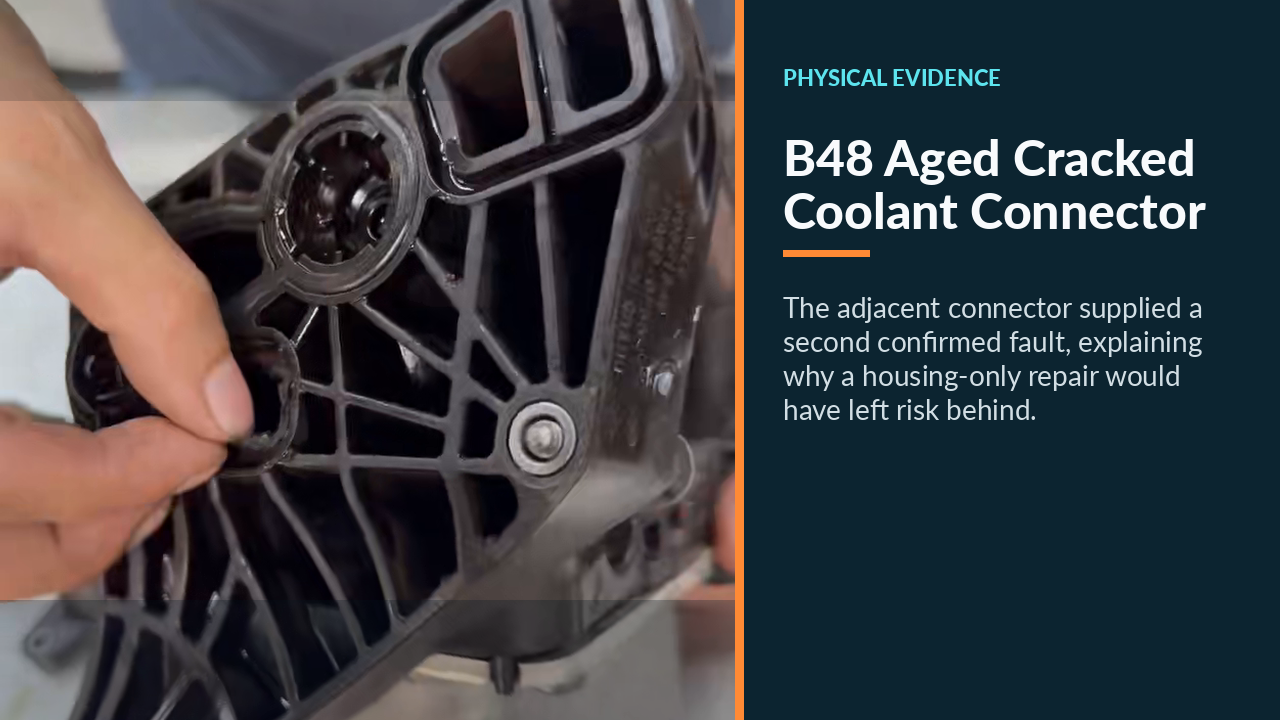
Stopping there could have left a second aged connection in place. The adjacent plastic coolant-pipe connector had cracked and partly broken at the block opening. The housing and connector were therefore recorded as two confirmed repair paths, not one leak plus an automatic “while you are there” sale.
The second fault was at the coolant connector
The video close-up shows degraded plastic around the connector, while the case page describes fatigue cracking. Because broken material remained at the aluminum block opening, extraction had to protect the sealing surface and keep debris out of open passages.
The 130,000 km reading is context, not a replacement interval. Heat cycling and age can inform inspection, but another B48 at the same mileage may leak somewhere else—or not leak at all. Pressure loss plus a fresh or dried path, not a round odometer number, justified this repair.
Repairing both confirmed paths
The reported repair sequence was:
- Let the cooling system cool, preserve the residue path, and confirm sealing loss with the applicable test.
- Remove the required intake-side components while protecting wiring, oil passages, coolant openings, and mating surfaces.
- Remove the failed housing and carefully extract broken connector remnants without cutting into the aluminum block interface.
- Clean and inspect the sealing faces without removing material unnecessarily.
- Confirm the replacement housing, connector, seals, and hardware by VIN/build data.
- Install the applicable aluminum-alloy housing and new coolant connector using the current BMW tightening sequence and values.
- Restore every disturbed connection before filling and bleeding the cooling system.
The case record reports a torque wrench and BMW procedure but publishes no VIN-safe fastener values or transferable part numbers. “Metal” does not override application, seal geometry, alignment, or installation accuracy.
Restoring the cooling system
After both mechanical repairs, the workshop reports a vacuum-hold stage, filling with the specified coolant, and the electronic coolant-pump bleed routine. Those are separate restoration actions: holding vacuum screens the assembled system under that method, filling replaces lost fluid, and bleeding removes air according to the vehicle procedure.
When the reservoir opening, adapter, compressed-air source, 12 V supply, and vehicle procedure are compatible, an AUTOOL SC301 cooling-system tester and vacuum filler can support a vacuum-hold screen and vacuum-assisted fill. The available record does not say it was used here. It cannot locate either leak, choose the replacement parts or coolant, substitute for BMW pressure-test specifications, or perform the electronic bleed routine.
Road test and return inspection closed both repairs
The case reports a 20 km road test while engine-temperature behavior was monitored. Back at the workshop, the oil filter housing area and coolant connections were inspected again and remained dry. That pairing matters: an operating check challenges the system with heat and circulation, while the return inspection checks the actual work sites.
For a similar repair, also follow the exact vehicle procedure for coolant level recheck after cooling and for any follow-up inspection. The available record does not publish a universal wait period or temperature target, so none is invented.
The transferable lesson
Repeated coolant loss without a puddle still deserves a measured sealing test and a residue-path inspection. On this car, the first confirmed housing leak sat beside a second cracked connector. Finding both, repairing both, restoring the coolant circuit, then combining a road test with a dry return inspection produced the closure. The evidence chain—not the B48 badge, 130,000 km, or an upgrade slogan—is what makes the case useful.








Comments 0
Questions, fixes, and real-world diagnostic notes from readers.
Be the first to share a diagnostic result or ask a follow-up question.