
2010 Volvo XC60 Blower Runs With the Key Out: Separate the Command From the Motor

Quick answer: A blower that keeps running may be obeying an unwanted command. Check the control signal as well as the power stage before replacing the blower motor.
If an electrical area becomes hot or smells abnormal, obtain immediate assistance. Ask for safe battery-preservation advice while the car awaits diagnosis; permanent fuse removal is not a repair.
Appropriate passive measurements can help distinguish the command path from motor supply. A meter such as the AUTOOL DM301 can assist, but the expected signal and shutdown behavior must come from the vehicle’s service information.

In this guide
Record how long it runs after shutdown
The first useful observation is not just “the fan stays on,” but what happens over time. Does it stop on its own, change speed or continue until someone intervenes? Is the sound definitely the cabin blower? Note what ordinary parking revealed without leaving a suspect circuit operating unattended to create a longer record.
The technician needs that sequence to compare the complaint with the system’s intended behavior. Different vehicle functions can have different shutdown strategies, so an immediate key-off expectation should not be imposed without checking the application. At the same time, an explanation involving normal after-run behavior needs evidence that it actually matches what this vehicle is doing.
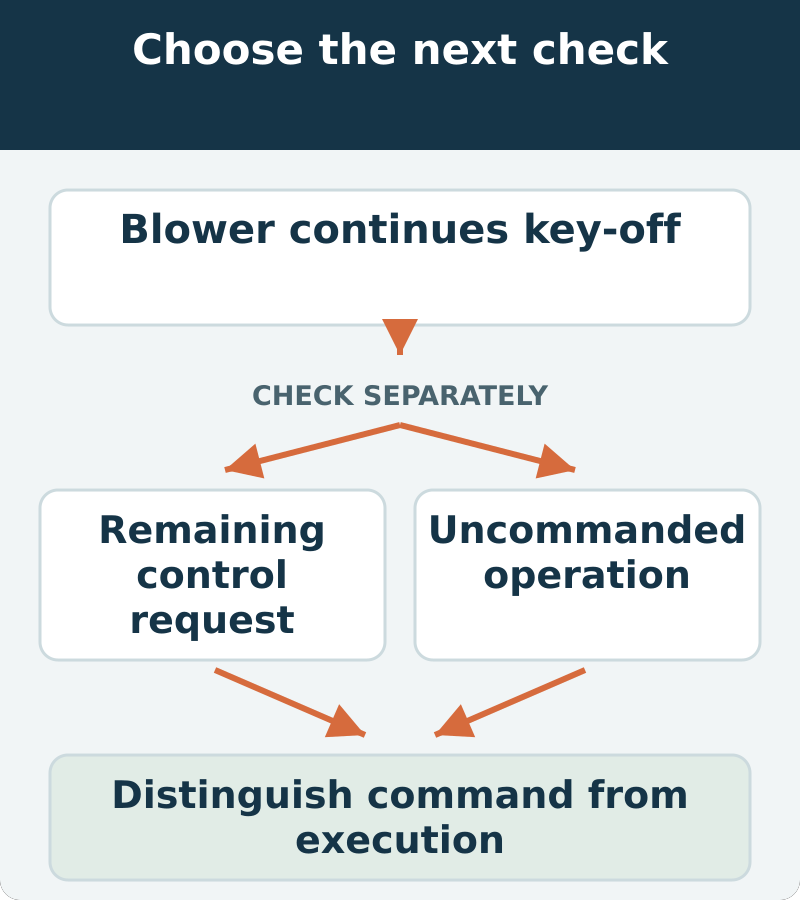
The motor and its command are separate questions
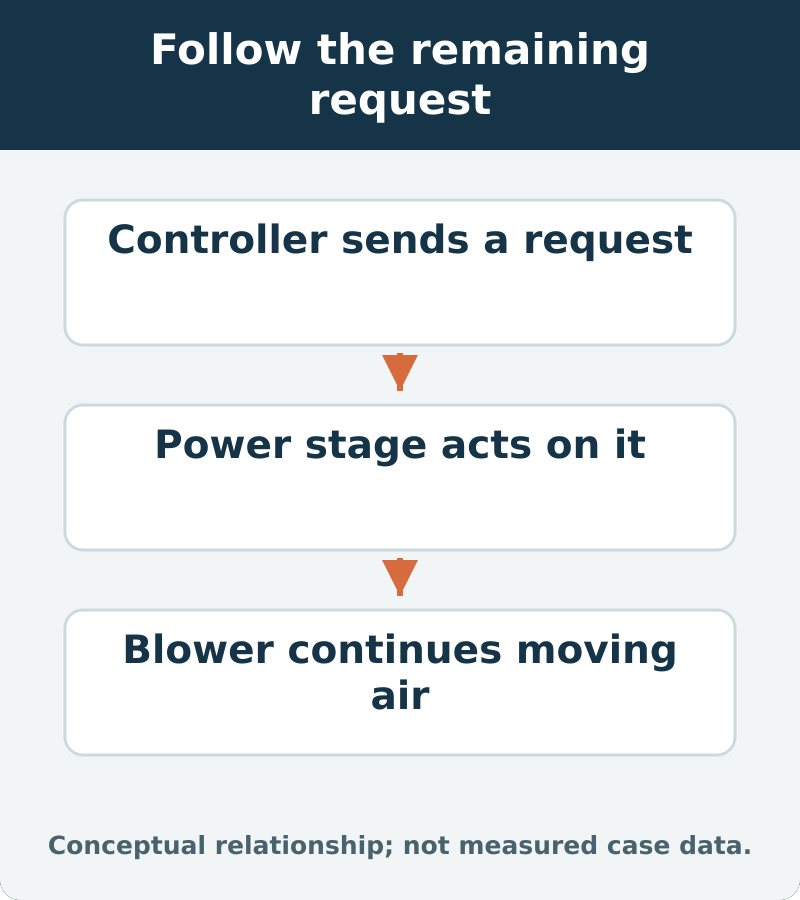
A motor can run because its power path is being held on unintentionally, or because it is receiving a request that should no longer be present. Those possibilities may look identical from the seat. Separating command from execution helps choose which part of the system to investigate next.
In ALLDATA’s XC60 case, the blower on a 2010 AWD 3.0L vehicle continued with the ignition off. The control line remained energized, and isolating the climate controller stopped the fan. Controller replacement restored normal on/off behavior. The account gives no final parked-current measurement or established reason for the controller failure.
What isolation changed in this case
An isolation test changes a relationship in the system. If the symptom stops, the result identifies something about that relationship; it does not automatically describe every component’s internal health. The test must be designed and interpreted using the correct architecture and expected response.
Ask what the isolation result ruled in, what it ruled out and what supporting checks justified the final repair. A fan stopping after a disconnection is not a universal module-condemnation rule. The removed connection may carry a command or another requirement, and relevant supplies, grounds or external influences may still need assessment before a replacement is approved.
Keep normal after-run behavior in view
The distinction between intended and unintended operation rests on the vehicle’s specified strategy and the observed sequence. A generic statement that every blower must stop the moment the key is removed is too broad. So is a blanket reassurance that a running fan is always drying the ventilation system normally.
The workshop should compare duration, state and command information with the correct application. If the complaint falls outside the intended behavior, the diagnostic route can proceed from that mismatch. If it matches a normal function, the owner deserves a clear explanation of what to expect and which changes would justify another visit, rather than an unexplained dismissal of the concern.
Do not end the repair at a stopped fan
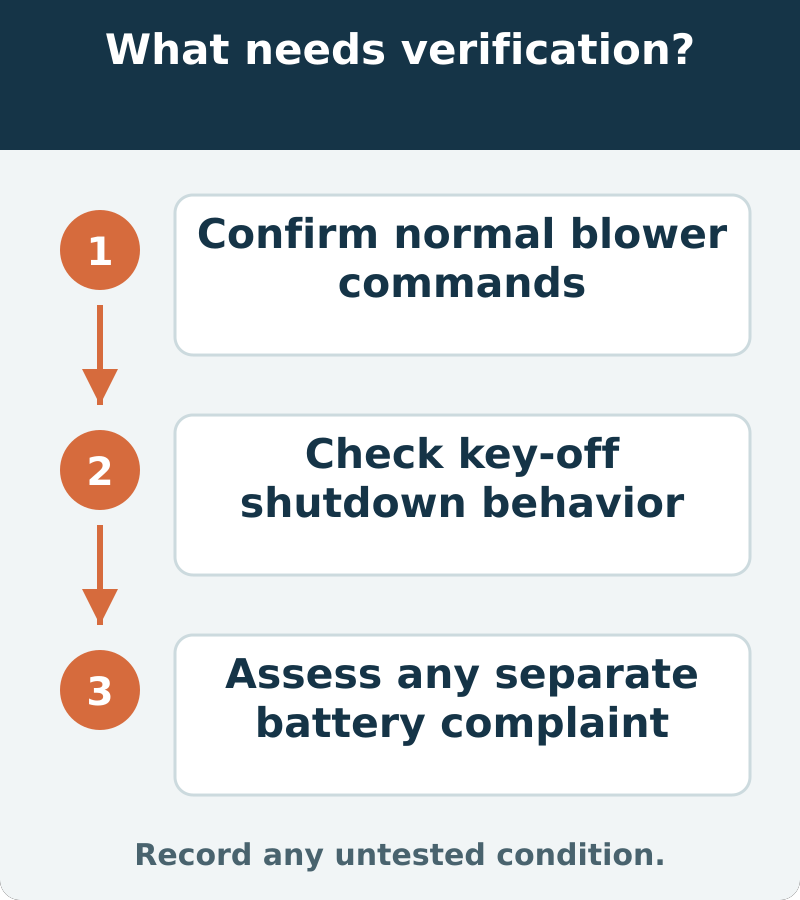
A fan that finally stops is encouraging, but it does not prove that every battery-related concern has been resolved. If the vehicle also suffered discharge while parked, that complaint needs the appropriate battery and parked-electrical assessment. Silence at the vent is not a substitute for a current measurement that was never made.
The repair should also preserve normal climate operation. Removing power permanently may quiet the symptom while disabling a function the driver needs. Ask whether the finished vehicle has been checked in its normal assembled state and whether any temporary battery-preservation measure has been removed or clearly documented before collection.
Verify climate operation and the parked battery
Have the technician confirm normal blower control, the relevant shutdown sequence and final fault status. Where battery discharge was part of the complaint, request the results of the separate checks used to assess it. The record should distinguish those measurements from a simple observation that the fan was no longer running.
If the problem returns, note the safe observations and contact the workshop before repeated discharge adds another repair. The central lesson is to ask two questions instead of one: why is the motor being kept in operation, and has the completed repair restored both normal climate behavior and the vehicle’s required parked condition?








Comments 0
Questions, fixes, and real-world diagnostic notes from readers.
Be the first to share a diagnostic result or ask a follow-up question.