
Mercedes GLC260 Idle Vibration: Sagged Engine and Transmission Mounts Replaced

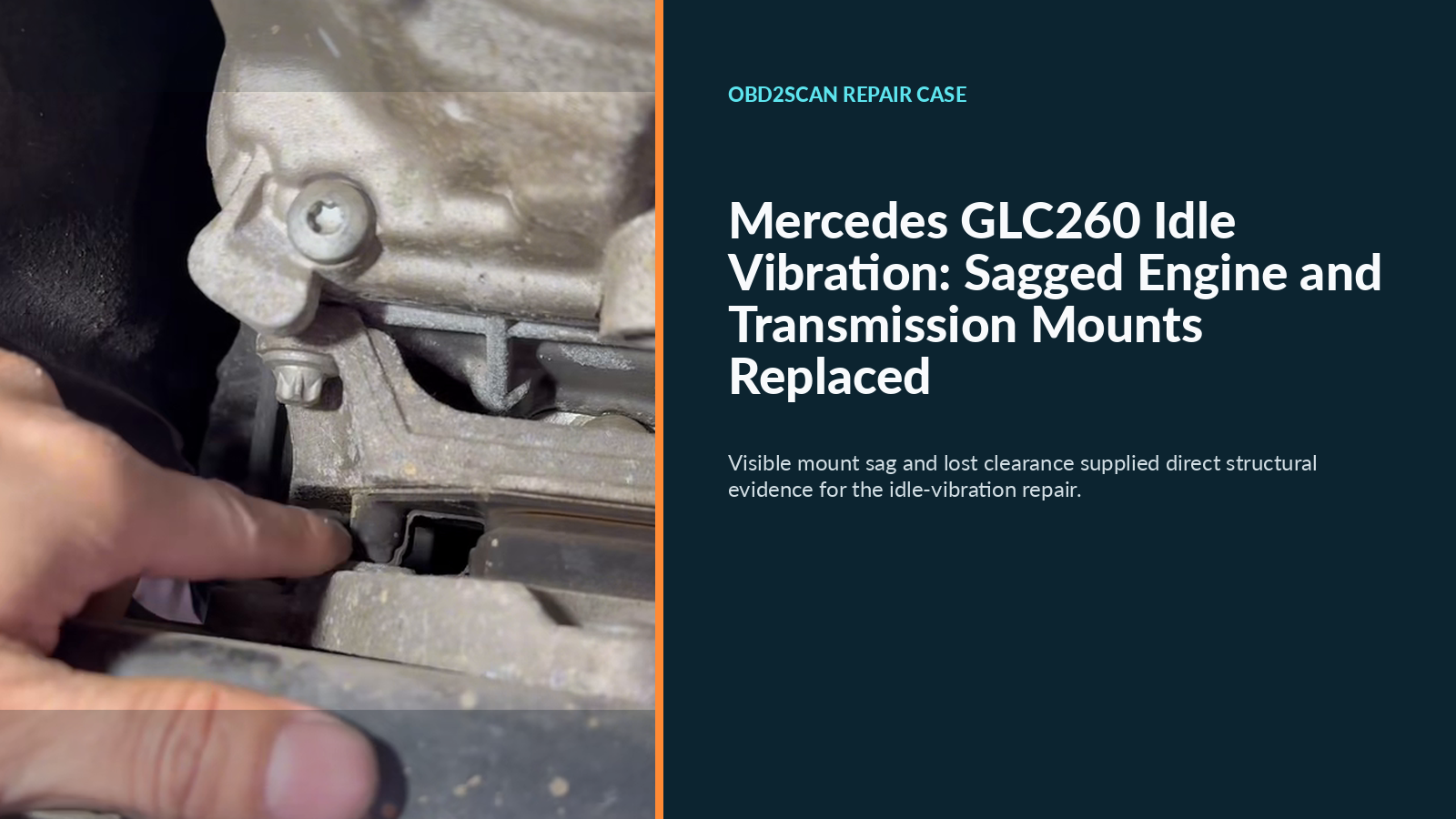
A Mercedes-Benz GLC260 came in; the available record does not report its model year, engine, chassis code, or mileage. The owner’s complaint was a slight vibration felt at idle rather than a reported warning light or fault code. Inspection confirmed deteriorated, sagged engine and transmission mounts; the shop replaced all three powertrain support points, checked for exhaust-system interference, and reported a quiet idle on the final cabin recheck.
Case at a glance
| Item | What this case records |
|---|---|
| Vehicle | Mercedes-Benz GLC260; model year, engine, and chassis code not reported |
| Mileage | Not reported |
| Complaint | Slight vibration felt in the cabin at idle |
| Confirmed fault | Deteriorated engine and transmission mounts, with visible sag and lost clearance/contact |
| Repair | Complete three-point powertrain mount set replaced |
| Restoration | Exhaust-hanger loading and adjacent powertrain/exhaust interference checked |
| Verification | Driver-seat idle recheck addressed the original complaint; the case record reports that the vibration was no longer apparent, with no quantified measurement or road-test record |
The mild complaint needed physical evidence
There was no recorded no-start, warning lamp, diagnostic trouble code, or unstable engine-speed measurement. The driver simply felt a slight tremor while the vehicle idled. A sensation in the steering wheel or seat can come from poor engine running, a component touching the body, or a support that is no longer isolating normal engine motion.
The shop therefore moved from the cabin to the underside rather than declaring a failed part from the sensation alone. The video shows the raised vehicle and a light directed around the powertrain support areas, turning a subjective complaint into a search for a physical vibration path.
Lost clearance was the turning point
The case record identifies both the engine and transmission mounts as deteriorated, but its strongest evidence is more concrete. Close views locate the transmission support and show another mount sitting low enough to lose clearance against the neighboring structure.
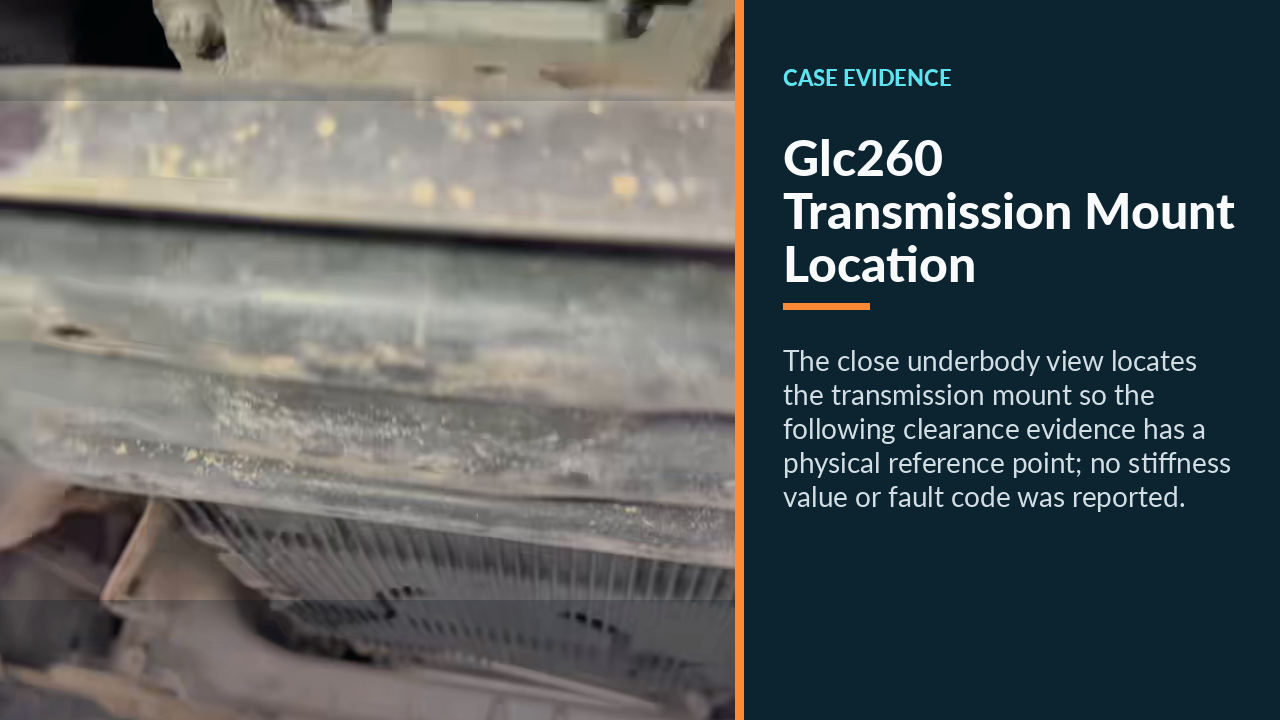
That contact changes the diagnostic picture. A mount is supposed to carry the powertrain while limiting how much vibration reaches the body. Once it sags and allows a rigid or nearly rigid contact path, ordinary powertrain motion can be felt much more directly in the cabin. The visible relationship therefore supported the mount diagnosis; the complaint alone did not.
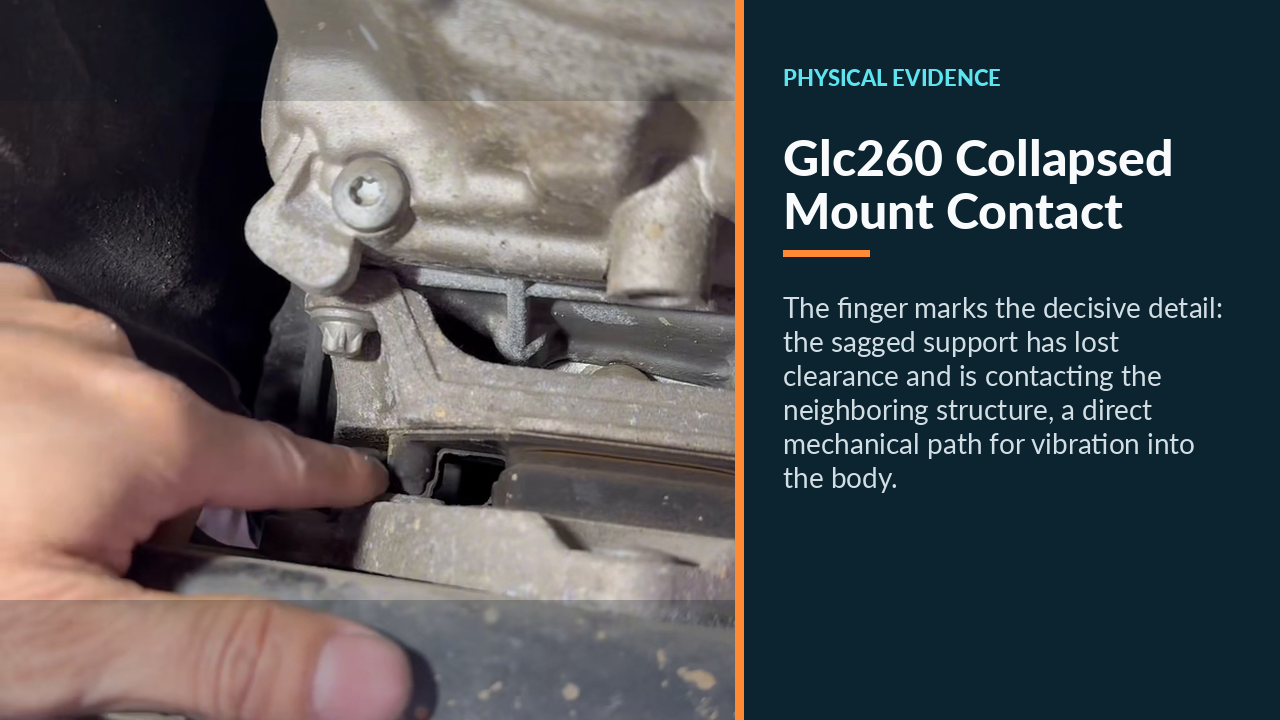
This distinction also limits what the case can say. The record does not include cylinder-balance data, fuel-trim values, ignition results, or a fault-memory report, so it cannot establish a universal shortcut such as “steady idle always means mounts.” Here, the confirmation came from the condition and position of the supports on this vehicle.
Three support points defined the repair boundary
The workshop replaced the three-point support set shown in the case, described as the engine and transmission mounts. That scope is a fact about this job, not a rule for every similar complaint. The case record provides no part numbers, measured mount heights, or before-and-after stiffness test, so none should be inferred from box labels or vehicle appearance.

The major operation was supporting the powertrain, removing the old supports, installing the replacement set, and reassembling the disturbed areas. This is the hard stop for an owner-level inspection: do not loosen mount fasteners or work beneath the vehicle unless it is secured on approved lifting equipment and the powertrain is supported at the exact approved points. The lift points, support method, fastener sequence, and torque values must come from service information for the exact vehicle; they were not reported in this case.
Reassembly included a neighboring-system check
Replacing mounts changes the supported position of the engine and transmission. The case record documents a check of exhaust-hanger loading and confirms that the powertrain/exhaust path was not left in contact after reassembly. That is restoration work, not a second diagnosed fault: no damaged exhaust hanger was reported or replaced.
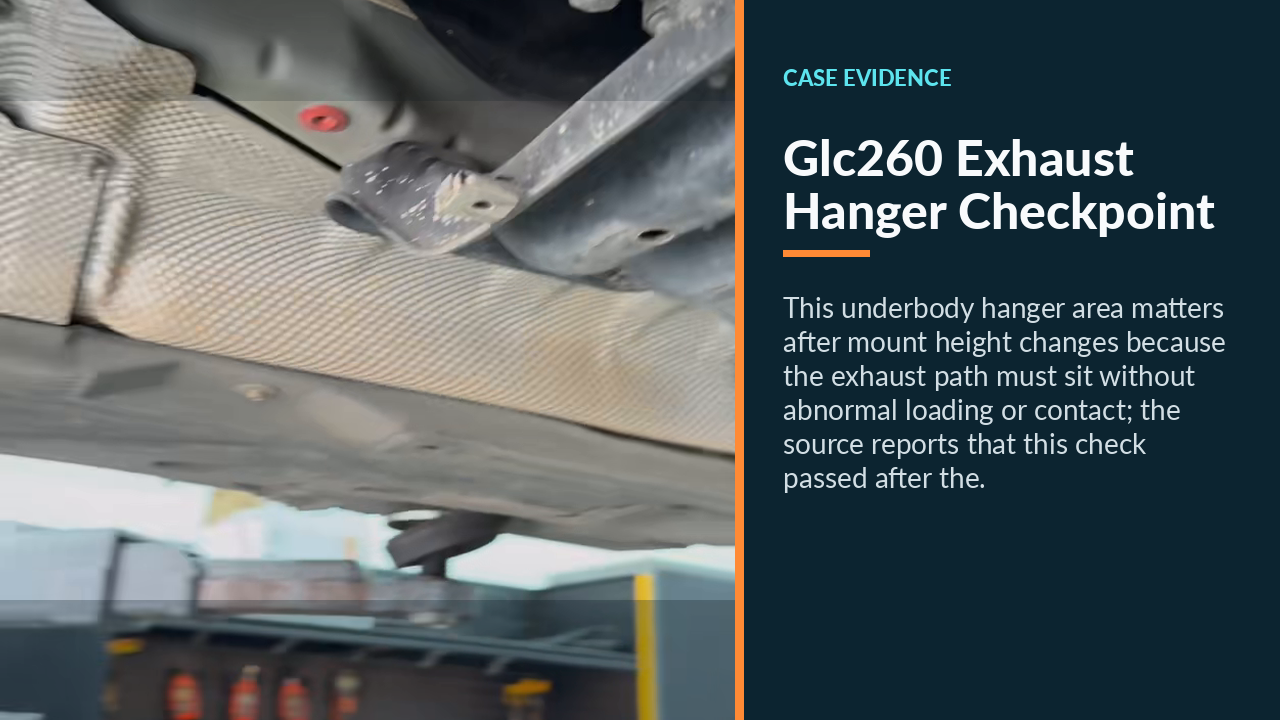
The distinction is useful. The sagged mounts explain why the three supports were replaced. The hanger and interference check explains how the workshop made sure the repaired support geometry had not created another vibration path during restoration.
The last check returned to the steering wheel
Verification returned to the original place the symptom was noticed: the driver seat at idle. The video shows hands on the steering wheel during the result segment, and the case record reports that the idle felt quiet with the previous tremor no longer apparent. Combined with the underbody interference check, that is a valid staged result because it challenges both the complaint and the repaired area.
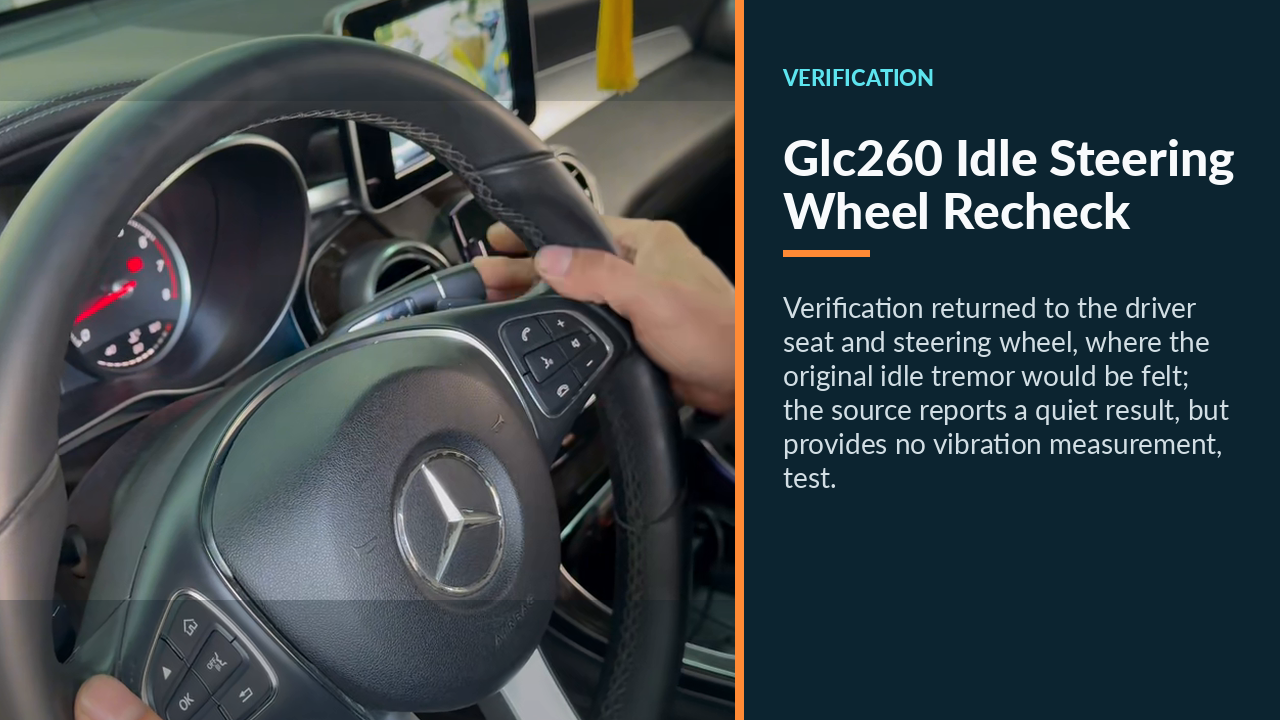
This was a qualitative idle recheck, not a published accelerometer reading or durability test. No road-test distance, test duration, or later owner follow-up was reported. Those omissions prevent a stronger long-term claim.
A first-check sequence for another idle tremor
For a similar vehicle, first reproduce the vibration in the exact condition the driver describes and note where it is felt. Next, establish whether the engine itself is running evenly using appropriate vehicle data and basic running-quality checks. Then inspect every powertrain support for sag, torn material, leakage where applicable, lost clearance, or contact with the body. Finally, inspect nearby exhaust brackets and shields for a separate contact path before deciding which parts are justified.
This GLC260’s answer was a visibly sagged engine-and-transmission mount set, followed by a successful interference check and driver-seat idle recheck. Do not copy that parts decision to another car unless its own running-quality checks and physical mount evidence lead to the same conclusion.










Comments 0
Questions, fixes, and real-world diagnostic notes from readers.
Be the first to share a diagnostic result or ask a follow-up question.