
2015 Audi Q7 P0018: What an Oil-Service Improvement Means Before a Timing-Chain Estimate

Quick answer: A correlation code deserves proper investigation, but oil condition and level belong near the beginning. Improvement after correcting them is useful evidence, not a measurement of chain wear.
An oil service and a timing-chain replacement are not competing opinions of equal scope. One may correct an essential starting condition; the other requires evidence of a deeper fault. If a Q7 improves after oil-related work, accept that improvement for what it demonstrates without treating it as either a chain-health certificate or an excuse to ignore a returning warning.
In this guide
What does the code actually ask you to investigate?
A correlation fault directs attention to a relationship the control system evaluates. It does not measure chain wear directly or provide a complete mechanical diagnosis on its own. Ask what the code means for the exact engine and which checks support the proposed next step.
This matters when a large estimate arrives early. The right response is not automatically to reject it, but to request the evidence between the warning and the repair. That evidence may justify deeper timing work. It may also identify a prerequisite that should be corrected before the more involved investigation can be interpreted reliably.
Why the basic oil check earns its place
Oil level, condition and the recorded service specification deserve attention before assuming that a complex timing complaint begins with failed hardware. Bring the maintenance history and describe any prior warning or consumption concern. Do not guess an oil grade from another Q7 engine.
The basic check also has a safety boundary. An oil-pressure warning, rattling or severe misfire requires prompt stop-running assessment. Fresh oil is not permission to keep an unhealthy engine running to see whether it cures itself. The workshop should decide which checks are safe and whether recovery is appropriate before any performance comparison is attempted.
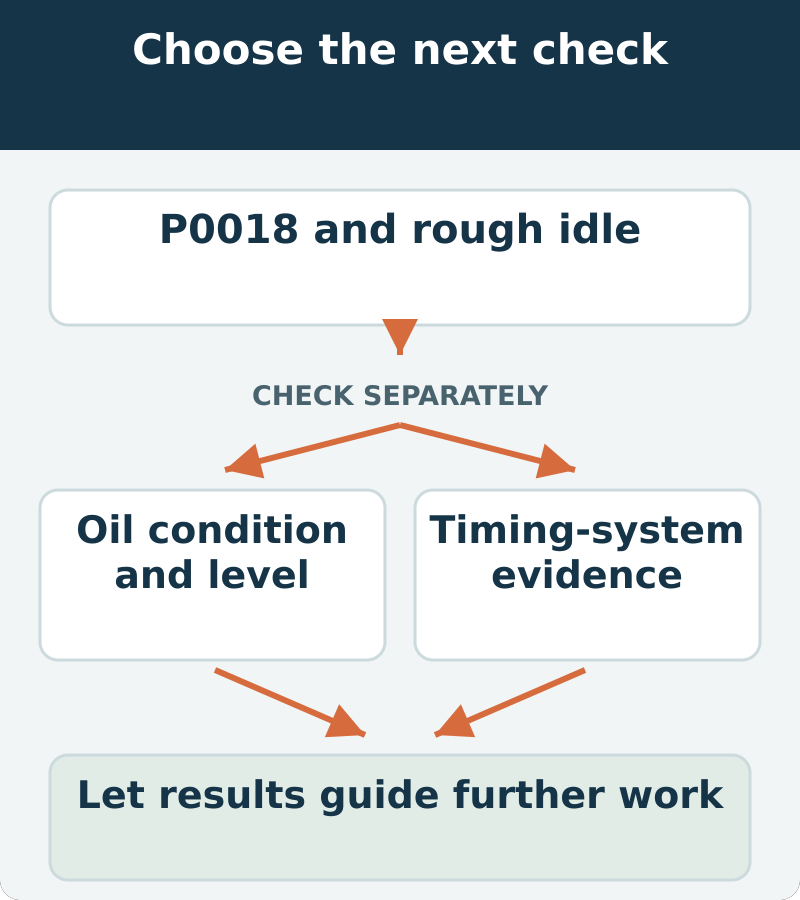
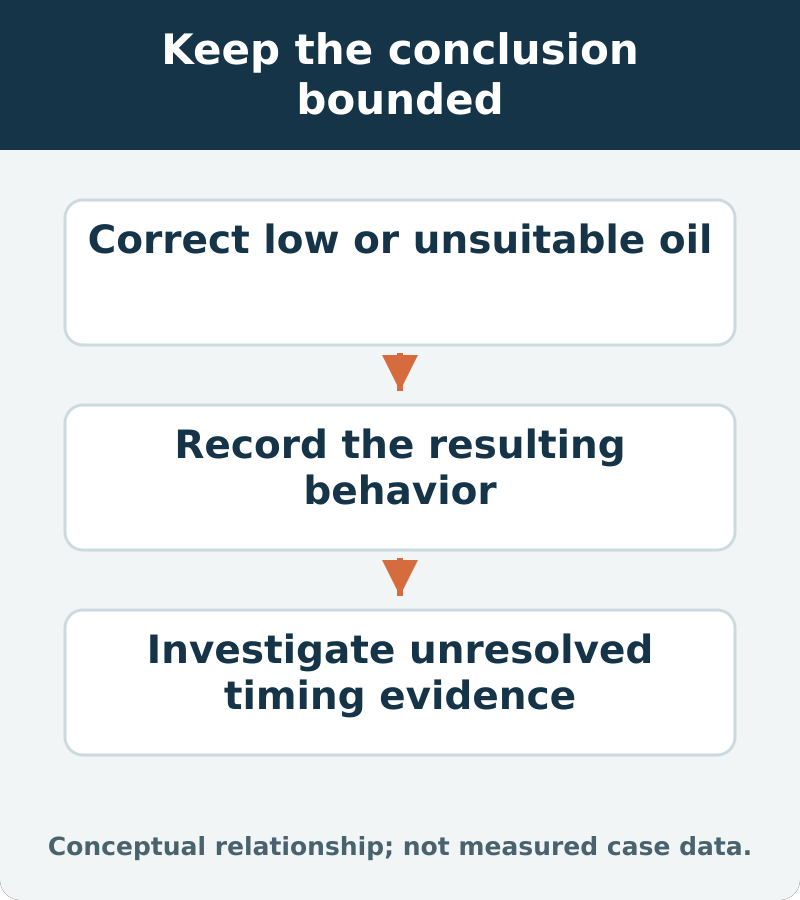
In the published ALLDATA case, this Q7 had rough idle and P0018. Before deeper timing tests, the technician found low, dirty oil. An oil/filter service and reported road check restored smooth idle without a returning warning. No cam/crank captures, chain measurements or longer follow-up are included.
A better idle is one result, not every result
Evidence has different reach:
| Observation | What it supports |
|---|---|
| A basic requirement was corrected | The original starting condition changed. |
| Idle quality improved | Operation improved during that assessment. |
| A relevant timing measurement meets specification | That measured relationship met the applicable criterion. |
The first two observations do not automatically establish the third. Likewise, a short test without a returning warning does not reveal every component’s remaining life. Ask the technician to keep these statements separate. It makes a favorable early result useful without giving it more authority than the test actually earned.
When a timing-chain estimate becomes justified
A major timing estimate should explain the specific findings that support it and the work needed to address them. Ask whether relevant prerequisites were established and which measurement, inspection or applicable procedure led to the proposed scope.
Do not insist that an oil-service improvement disproves a mechanical concern if later evidence contradicts that conclusion. Equally, do not accept a chain diagnosis solely because the code is associated with timing. The decision should move with the evidence. If you seek a second opinion, provide the original warning, the oil-related findings and the results after correction so the next repairer can assess the whole sequence.
Ask why the oil was low
Correcting a low level leaves a useful maintenance question: why was it low? The answer may require history, inspection or monitoring appropriate to the vehicle. It should not be invented from the appearance of the drained oil or from a single repair story.
Ask the shop how level will be checked and what change should prompt a return visit. Follow the vehicle’s prescribed method rather than creating your own interval or threshold. Avoid a flush or additive as an automatic follow-on purchase. The purpose is to understand and maintain the required condition, not add another treatment without an identified need.
Keep the next decision tied to recurrence or measurements
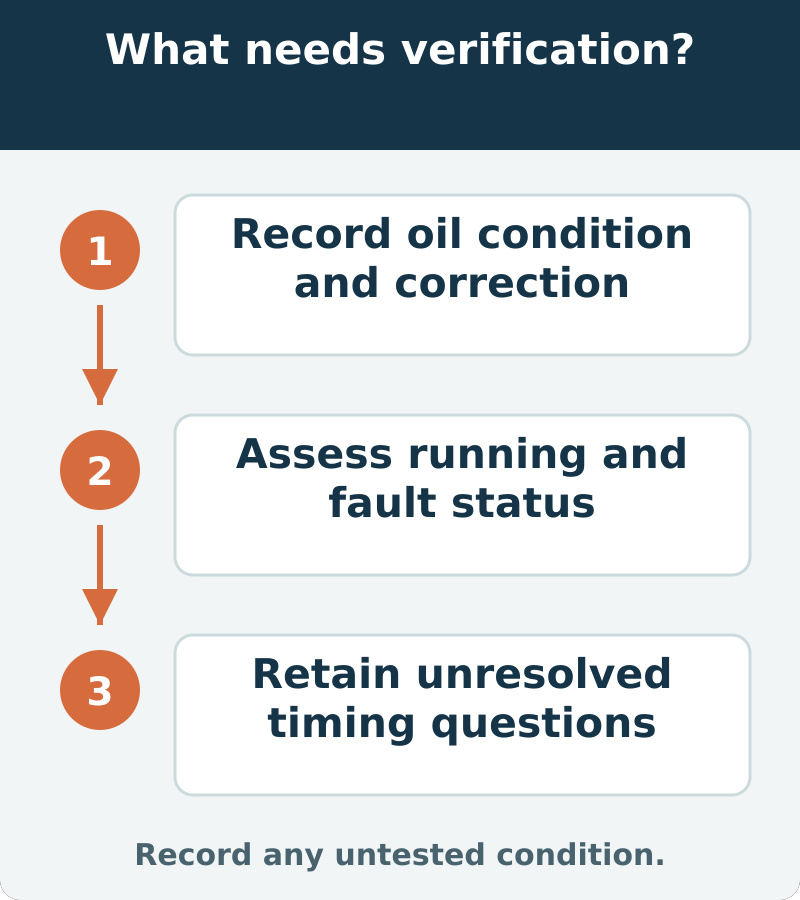
At handover, record the corrected condition, the observed improvement and any unresolved timing question. If the workshop recommends further assessment, ask what finding or recurrence will trigger it. That gives you a plan without pretending every uncertainty has already been eliminated.
Keep new symptoms and warnings intact for the next visit rather than clearing them first. A return of the complaint can provide information the initial short test did not. The useful position is neither “it only needed oil” nor “it must need chains.” It is a staged decision in which basic requirements are established and deeper work is justified by what remains.





Comments 0
Questions, fixes, and real-world diagnostic notes from readers.
Be the first to share a diagnostic result or ask a follow-up question.