
2020 Mercedes E300 A/C Stopped Cooling: Seized Compressor and Circuit Flush

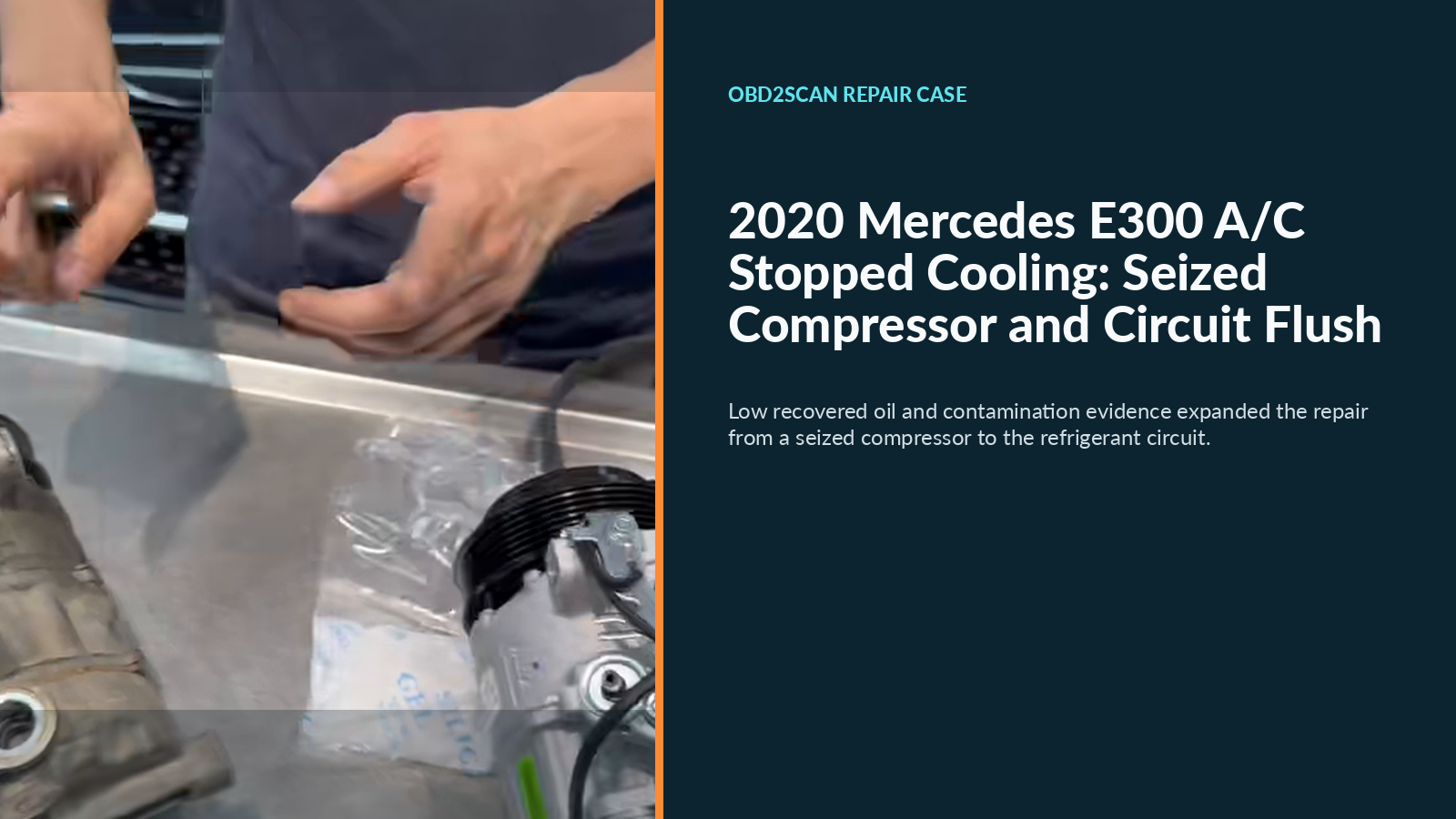
A 2020 Mercedes-Benz E300 (W213) with the M264 engine—mileage not reported—arrived with no air-conditioning cooling; when the compressor mechanically locked, its load could stall the engine. Inspection confirmed a seized, internally scored compressor, very little recovered refrigerant oil, and metal contamination in the drier rather than a simple low-charge complaint. The shop replaced the compressor and drier, flushed the high-pressure circuit and condenser, restored oil and refrigerant after evacuation, then recorded about 5°C at the center vent at idle with normal compressor cycling and no abnormal engine load.
Case at a glance
| Item | This vehicle |
|---|---|
| Vehicle | 2020 Mercedes-Benz E300; W213 chassis; M264 engine |
| Mileage | not reported |
| Complaint | A/C did not cool; compressor lock could overload and stall the engine |
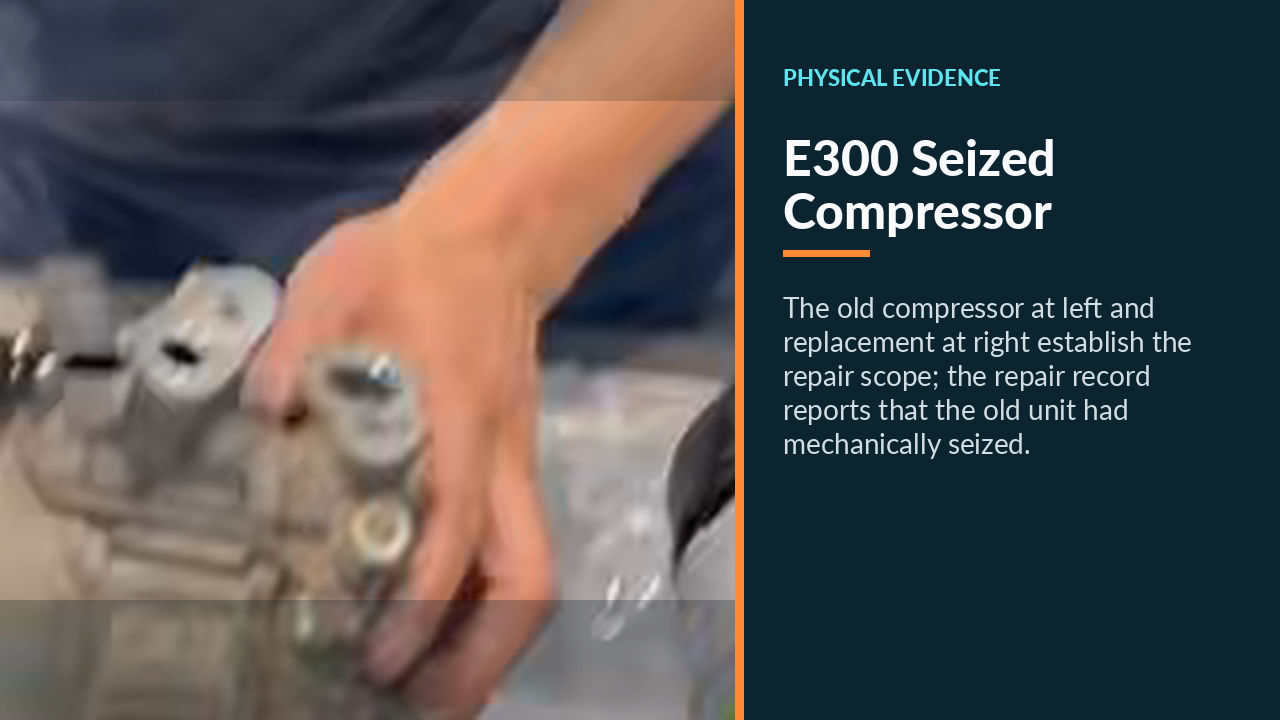
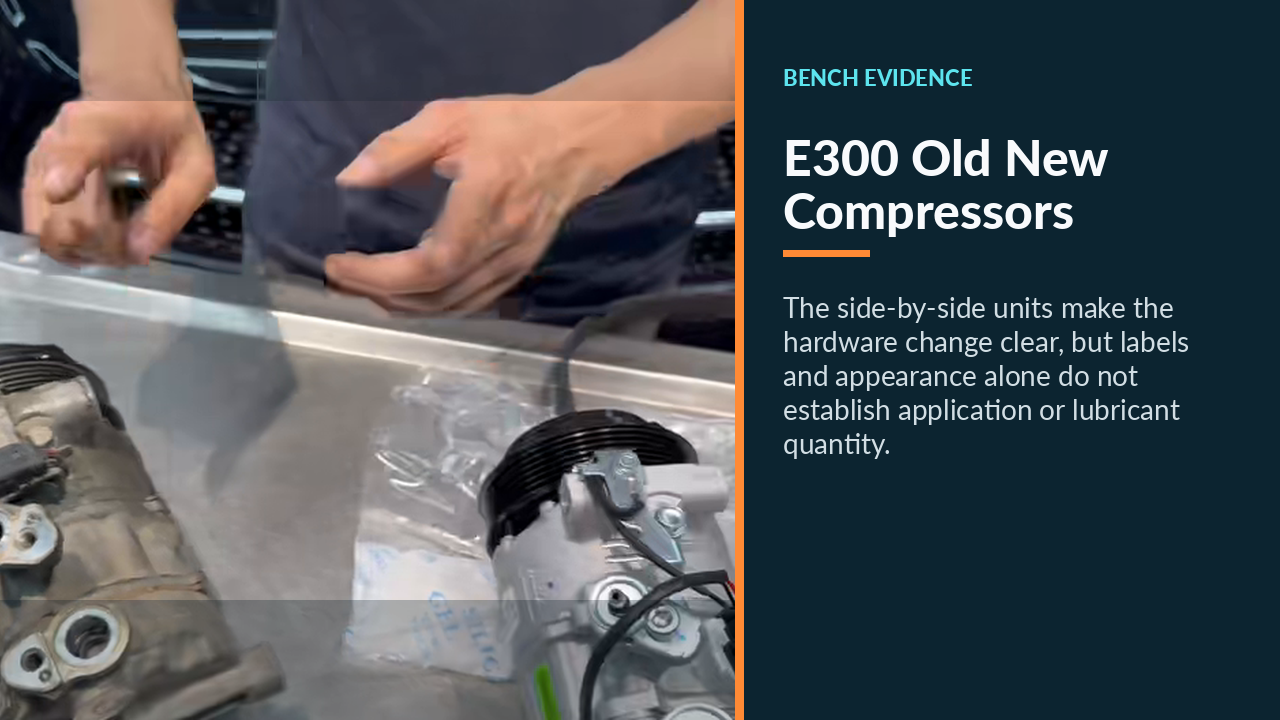
| Confirmed fault | Mechanically seized/scored compressor, with very low recovered oil and metal in the drier |
| Repair | Replace compressor and drier; flush high-pressure circuit and condenser |
| Restoration | Restore specified PAG oil, evacuate for at least 20 minutes, charge specified refrigerant mass |
| Verification | About 5°C center-vent air at idle; normal compressor cycling; no abnormal engine vibration or overload |
The exact refrigerant identity and mass, PAG oil grade and quantity, component part numbers, flush agent, pressure readings, and mileage are not published. They should be selected from the underhood label and exact-vehicle service information, not inferred from the model year.
The stall changed the complaint from cooling to mechanical load
A cabin that blows warm air can point toward a lost charge, airflow problem, sensor, control command, valve, or heat-exchanger issue. This E300 added a sharper clue: the compressor did not merely fail to cool. Its mechanical lock imposed enough load to stop the engine.
That behavior moved the question away from “How much refrigerant should be added?” and toward “Can the compressor turn normally, and has its failure contaminated the circuit?” The removed unit was reported seized and scored internally. That was the confirmed fault.
Less than 20 mL changed the question
The shop then drained the removed compressor and reported recovering less than 20 mL of oil. That observation mattered because refrigerant oil circulates to lubricate the compressor; the case record attributed the scoring and seizure to inadequate lubrication. It did not publish the system’s correct total oil quantity, however, so the below-20 mL recovery is evidence from this car, not a refill specification for another E300.
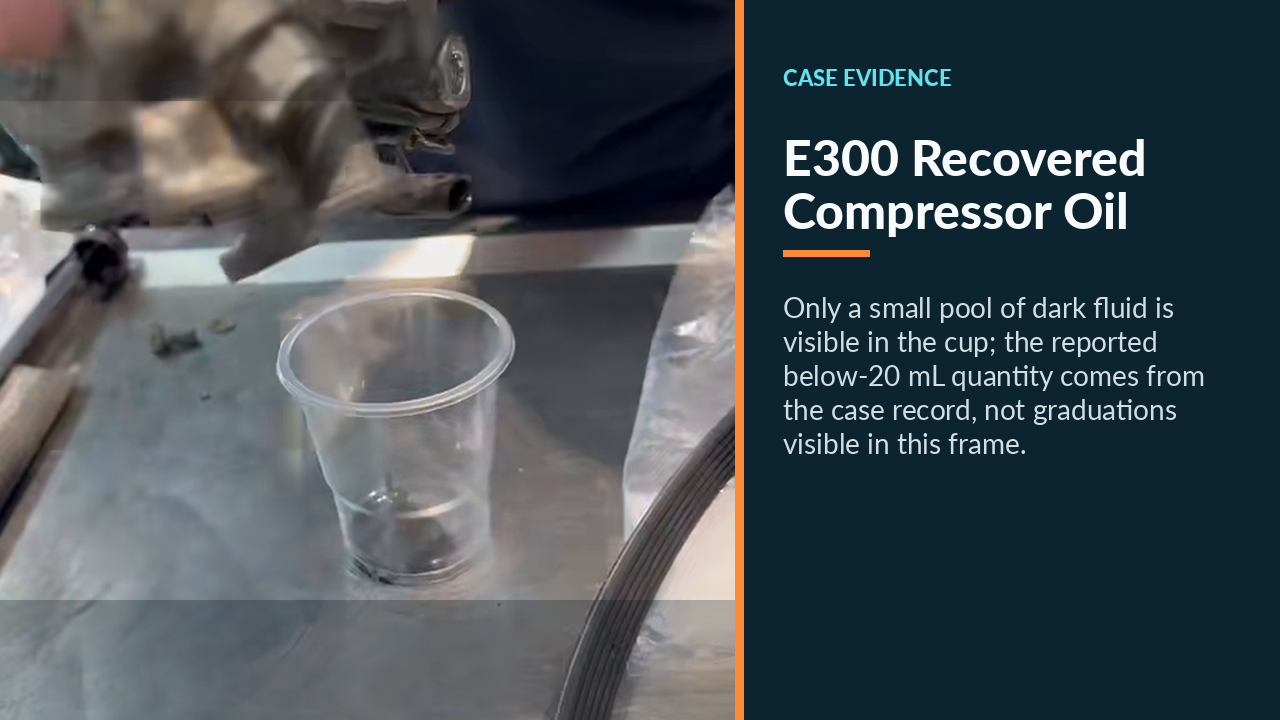
The sequence separates suspicion from confirmation. Warm air was the complaint. Engine stalling under compressor load was a strong mechanical clue. The seized/scored unit confirmed compressor failure. The low oil recovery helped explain the damage, but the next inspection determined whether replacing that unit alone was enough.
Metal in the drier expanded the repair boundary
The drier contained visible metal powder. That finding changed the repair decision because debris had traveled outside the failed compressor. The available record therefore did not present the drier as an optional maintenance add-on: its contamination connected it directly to the failure event.
The actual hardware scope was still bounded. The compressor and drier were replaced. The high-pressure circuit and condenser were flushed to remove degraded oil and metallic residue. The record does not say that every hose, evaporator, valve, or heat exchanger was replaced, and this case cannot establish that every W213 compressor failure needs an identical parts list.
Replacement began with cleaning the circuit
Installing the new compressor into a contaminated circuit would have left the evidence from the drier unanswered. The shop addressed the high-pressure side and condenser before completing installation, then fitted the replacement compressor and drier and reassembled the opened connections.
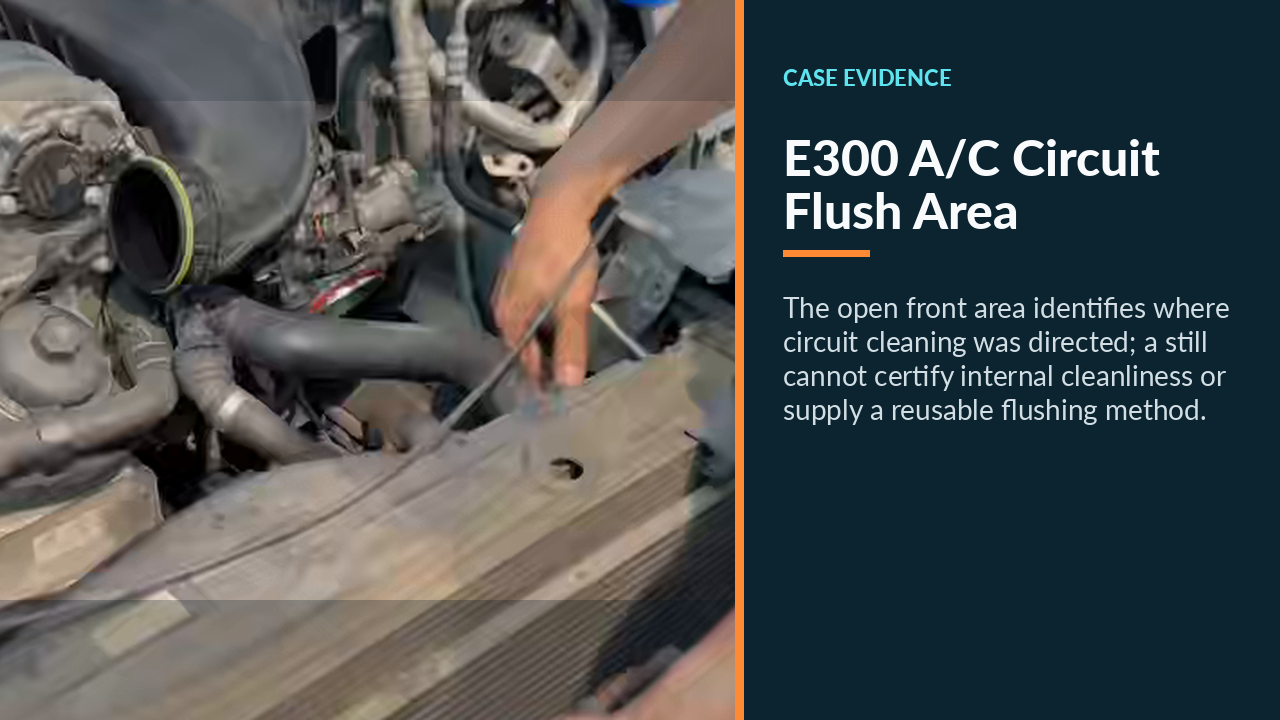
This is professional refrigerant work, not an improvised rinse. Refrigerant must be identified and recovered before a circuit is opened. Ventilation, eye and skin protection, contamination control, compatible equipment, and the exact Mercedes procedure matter. Stop if refrigerant identity, pressure state, flush method, oil accounting, or component compatibility is uncertain. Before opening a contaminated A/C circuit, the AUTOOL LM708 refrigerant recovery machine can recover refrigerant in a controlled step and support evacuation and recharge after the compressor, drier, and flush work are complete.
Restoration had three inventories to put back
Closing the fittings was not the end of the job. The case record documents three restoration actions: add the specified PAG oil, evacuate the circuit for at least 20 minutes, and charge refrigerant to the vehicle-specified mass. Evacuation removes air and moisture and provides a controlled stage before charging; it does not choose the oil or refrigerant specification.
The missing quantities matter. Oil retained in replaced parts, oil removed during flushing, compressor shipping oil, and the vehicle’s service procedure all affect oil accounting. Likewise, refrigerant is charged by the specified mass, not by copying a pressure from another vehicle. This article provides neither guessed quantity.
Verification matched the original failure
The post-repair check addressed both sides of the complaint. At idle, center-vent temperature was reported at about 5°C, demonstrating restored cooling under the stated condition. Compressor engagement and cycling were reported normal, while the engine showed no abnormal vibration or overload—the behavior that directly challenged the earlier stall event.
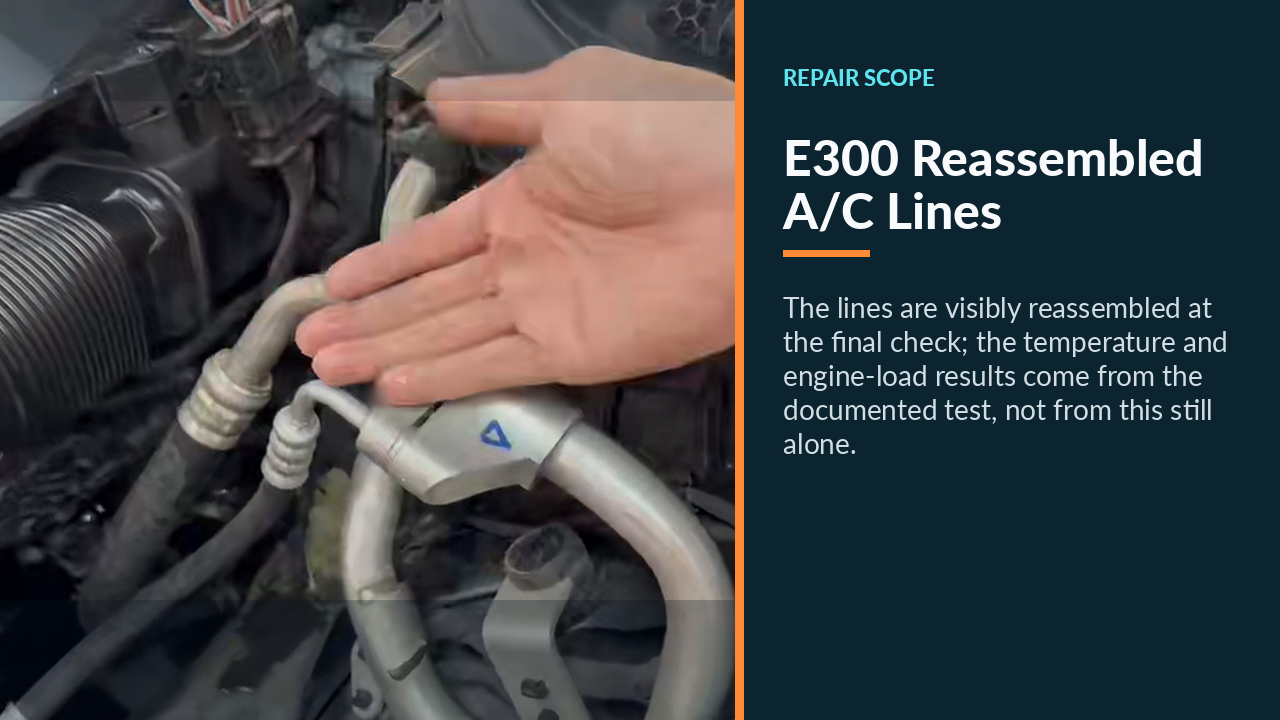
Those are real post-repair functional observations, so the repair has a verification result rather than a simple “work completed” statement. The available record does not report a road-test distance, timed leak hold, pressure chart, humidity, ambient temperature, or later follow-up. A returning loss of cooling, abnormal compressor load, noise, or oil/refrigerant leakage would trigger a new leak check and performance diagnosis rather than an automatic repeat of this repair.
What transfers to the next no-cool car
Start with the symptom, then observe compressor behavior before treating a warm vent as a charge request. If mechanical seizure is confirmed, inspect the recovered oil and downstream components for debris before setting repair scope. Keep failed-part replacement, contamination cleanup, lubricant/refrigerant restoration, and verification as four distinct decisions. On this E300, that chain justified a compressor-and-drier repair with circuit flushing; without comparable seizure and contamination evidence, another no-cooling car may need a completely different answer.








Comments 0
Questions, fixes, and real-world diagnostic notes from readers.
Be the first to share a diagnostic result or ask a follow-up question.