
2020 Mercedes E300 P06DA00: Oil-Contaminated Oil-Pump Solenoid Circuit Repair

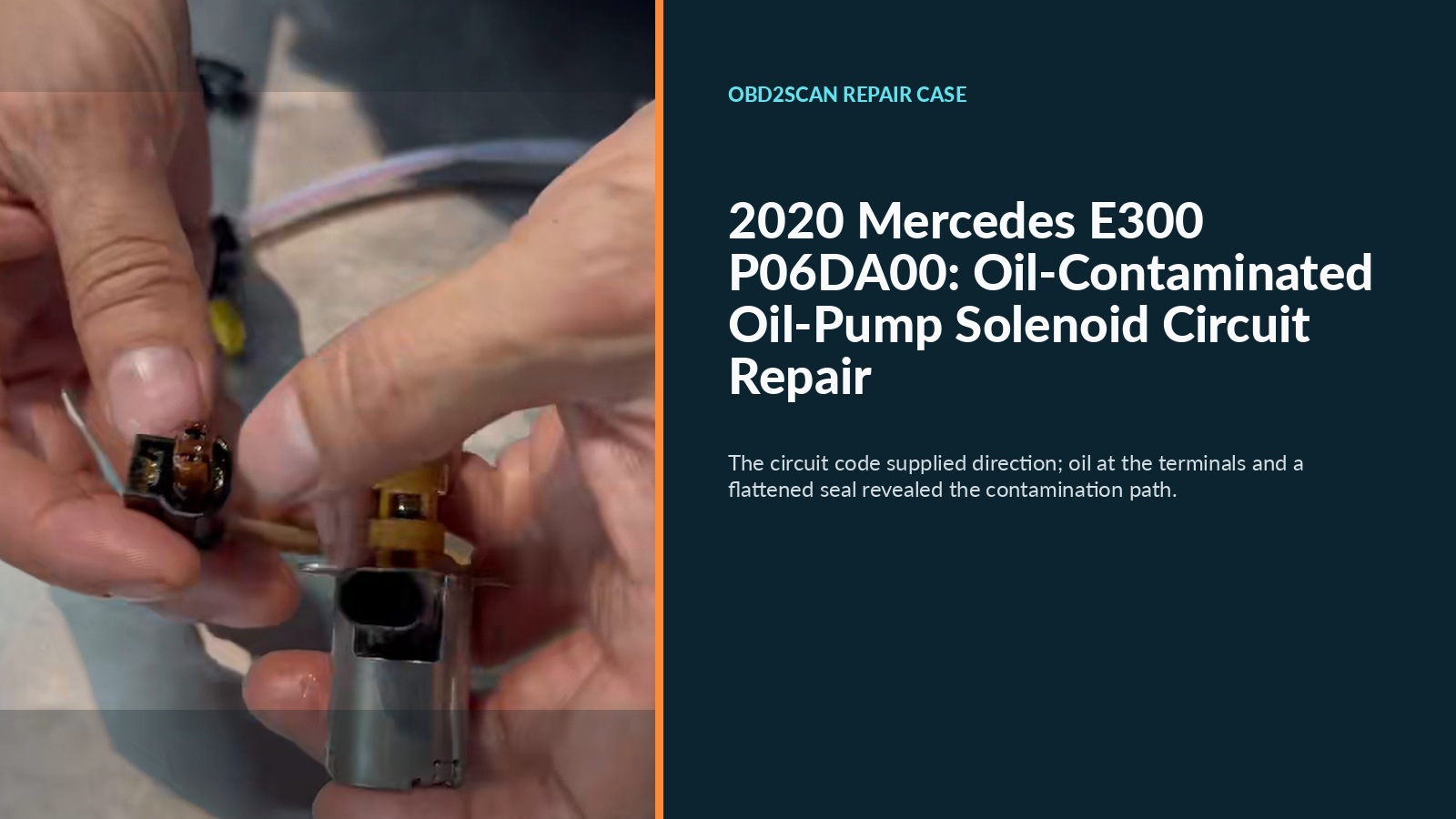
The case record describes a 2020 Mercedes-Benz E300 with an M274 engine and 120,000 km on the odometer; the chassis and market version were not reported. It arrived with the engine warning lamp continuously illuminated and P06DA00 stored for an open oil-pump valve actuation circuit. The workshop traced oil from a leaking oil-pump control solenoid into its connector and harness, then replaced the solenoid and anti-siphon lead, cleaned the downstream terminals, resealed the lower oil pan, and reported that the lamp went out and the code did not return during the initial check.
Case at a glance
| Item | What this case reports |
|---|---|
| Vehicle | 2020 Mercedes-Benz E300; M274 engine; chassis, market and VIN not reported |
| Mileage | 120,000 km |
| Complaint | Engine warning lamp continuously on; P06DA00 stored |
| Confirmed fault | Failed internal sealing at the oil-pump control solenoid allowed oil into its pins and short lead, contaminating the electrical connection |
| Repair | Lower oil-pan access; solenoid and revised anti-siphon lead replacement; downstream terminal cleaning; pan-interface preparation and resealing |
| Restoration | Oil pan reinstalled and stored fault history cleared; oil specification, refill quantity and level-setting method not reported |
| Verification | Lamp off and P06DA00 absent during the initial recheck; switching at idle and higher load reported normal, with no values or long-term follow-up published |
The code pointed to a circuit; the oil pointed to a path
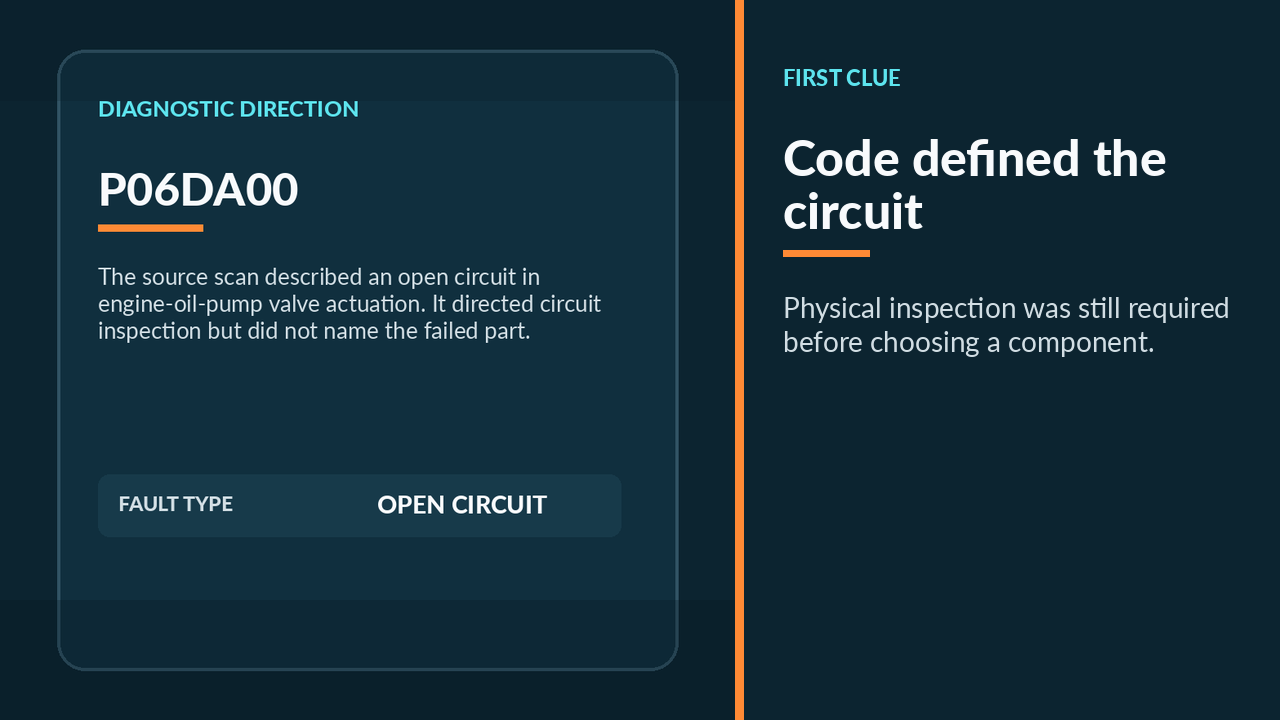
P06DA00 was a useful starting direction because it described an open oil-pump valve actuation circuit. It was not, on its own, a verdict against the solenoid. A similar electrical record could still require checks of the connector, short lead, downstream harness, supply, control side and the actuator itself. The available record does not publish voltage, current, resistance, continuity or load-test results from this E300, so none are added here. Because P06DA00 describes a circuit fault, the MRCARTOOL B550 circuit analyzer can quickly compare power, ground, continuity, and solenoid response while the oil-contamination path is inspected separately.
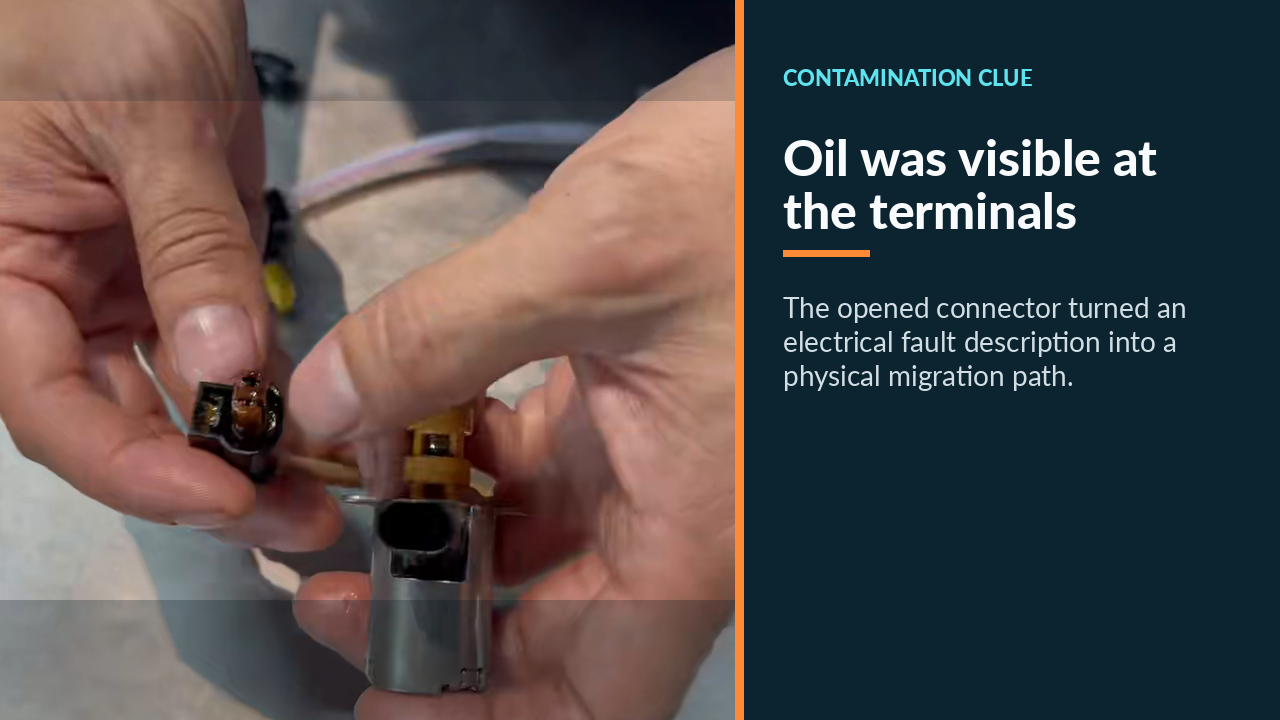
The diagnostic turn came when the connection was opened. Oil was visible inside the solenoid-side connector and around its terminals. That observation gave the electrical fault a physical route: the case record reports that oil escaped through failed internal solenoid sealing, entered the pins and then traveled along the short lead by capillary action. Residual oil at a downstream connection could interfere with terminal contact even after the original leak source was removed.
The seal condition connected the two clues
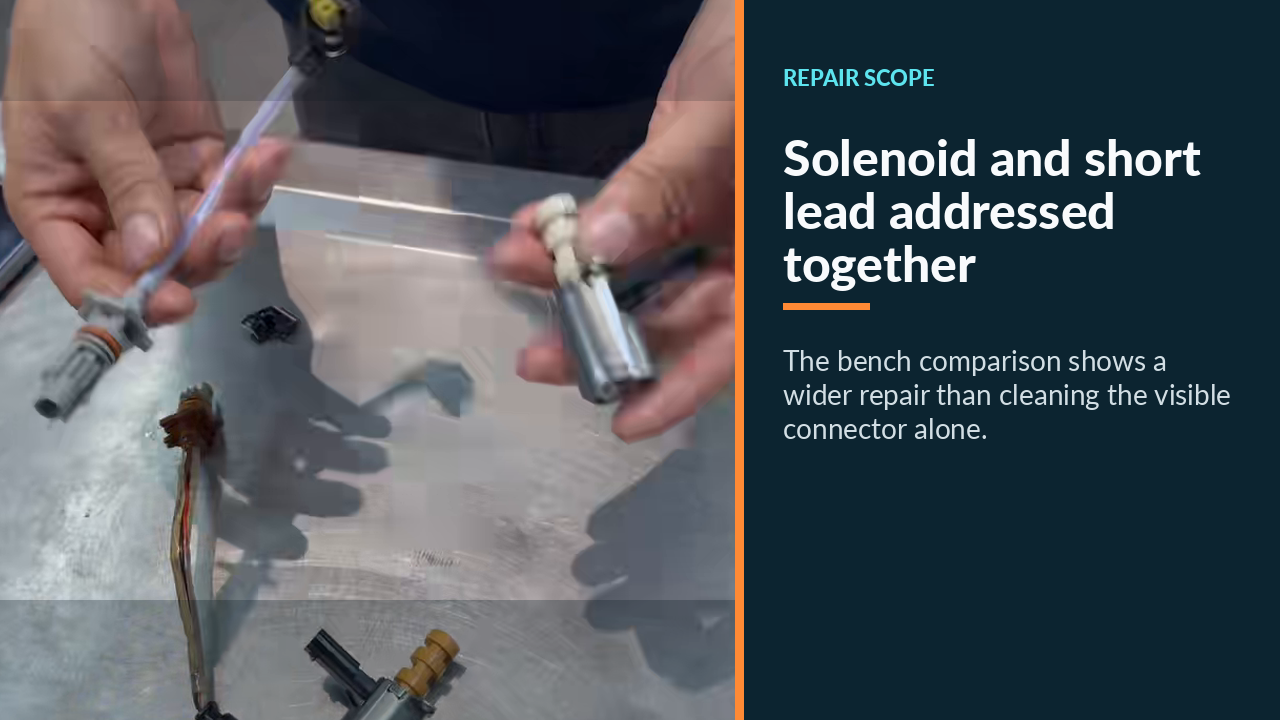
The removed lead supplied another clue. In the video, the technician points to a flattened sealing ring. It provides no compression measurement or life limit, but it sits where the case record found oil moving from the solenoid into an electrical connection.
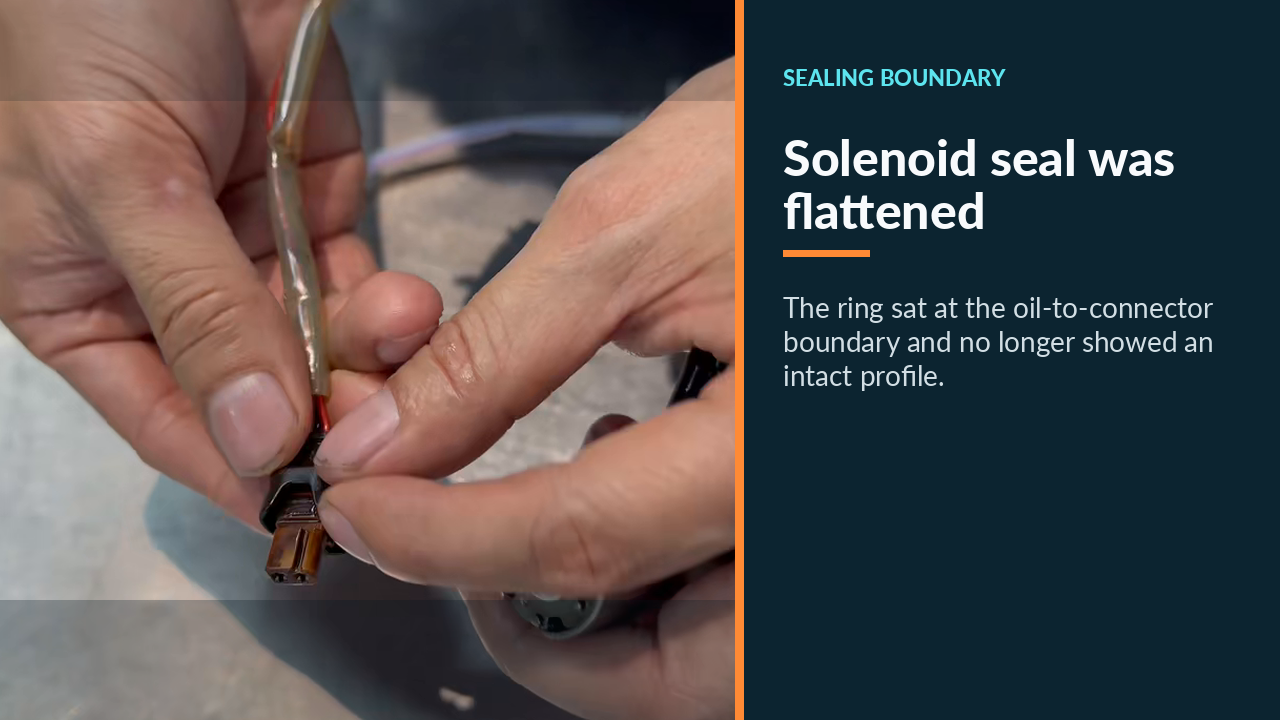
This is the important distinction between suspicion and confirmation. The DTC made the circuit a candidate. Visible oil at the terminals, the seal condition and the teardown account supported a leaking solenoid-and-lead path as the confirmed fault in this vehicle. The case record attributes the open-circuit state to degraded connector contact, although it does not publish a measured contact-resistance value.
The repair followed the contamination route
The workshop did not stop at clearing the code or cleaning the easiest plug. It removed the lower oil pan for access and replaced the oil-pump control solenoid with an original-equipment component. The short lead was also replaced with the revised anti-siphon design described in the case record. At the other end of the path, the external main-harness terminals were electronically cleaned to remove the remaining oil film.
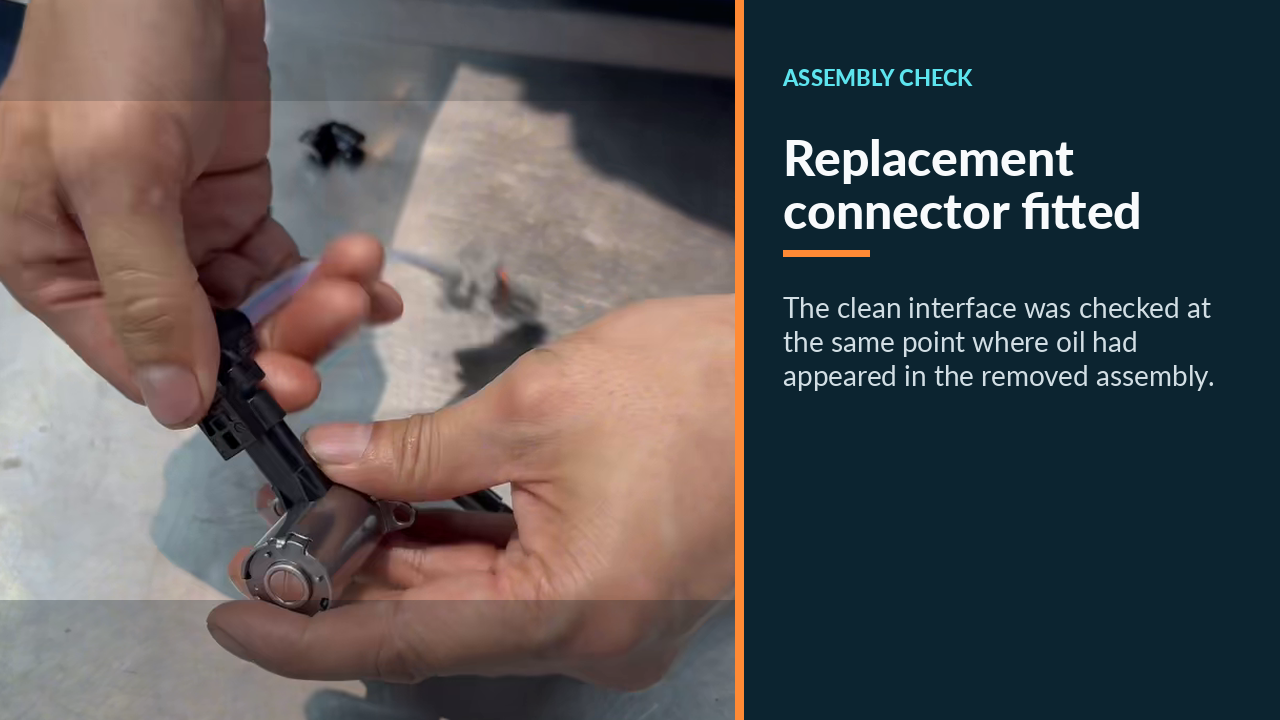
Opening the lower oil pan turns this into professional under-vehicle and lubrication-system work. Secure lifting and support, oil containment, clean working practices, correct parts and vehicle-specific service information are prerequisites; stop before this operation if those are not available. The case record provides fastener and sealant figures, but the bounded evidence package does not include VIN-matched OEM information, so this case narrative does not present those numbers as instructions.
Restoration closed the system before diagnosis resumed
After the component work, the oil-pan joint was cleaned and degreased, then resealed and reinstalled. That sealing-interface preparation was a restoration task, not proof of the electrical root cause. Likewise, cleaning the main-harness terminals addressed contamination that had traveled away from the source; it did not replace the leaking solenoid repair.
The stored fault history was cleared only after reassembly. Because the available record does not report the engine-oil specification, refill quantity or level-setting method, those details remain not reported. They should be obtained from service information matched to the exact vehicle rather than inferred from this short case.
Verification was meaningful but short-term
The first post-repair check returned to the original complaint. The case record reports that the engine warning lamp was off after fault clearing and that P06DA00 did not trigger again during the workshop check. It also reports normal oil-pump pressure-switching logic at idle and under higher load. No data values, scan capture or observation duration are provided, so that second statement remains a reported result rather than a reproduced measurement.
This qualifies as staged verification: the warning and stored circuit fault that brought the E300 in were challenged after repair and were absent at that stage. It is not an extended durability result. No road-test distance, repeat-drive count, later leak inspection or follow-up scan is reported.
A first-check order for a similar warning and code
For a similar vehicle, first preserve the exact code and status before clearing anything. Identify the engine, chassis and market configuration, then inspect the oil-pump solenoid connector and both ends of its short lead for fresh oil, stained terminals or damaged sealing. If oil is present, trace the path in both directions; if it is dry, continue electrical testing of the circuit using the correct wiring and service data. Confirm the cause before selecting parts, then restore every opened interface and challenge the original warning/code under appropriate operating conditions.
This E300 supports that sequence, not a universal P06DA00 parts list. A dry connector, different circuit measurements, another engine configuration or a code that returns after cleanup would require a different diagnosis.









Comments 0
Questions, fixes, and real-world diagnostic notes from readers.
Be the first to share a diagnostic result or ask a follow-up question.