
2021 Mercedes-AMG GLC 43 Air-Suspension Sag: High-Pressure Line Leak Repair

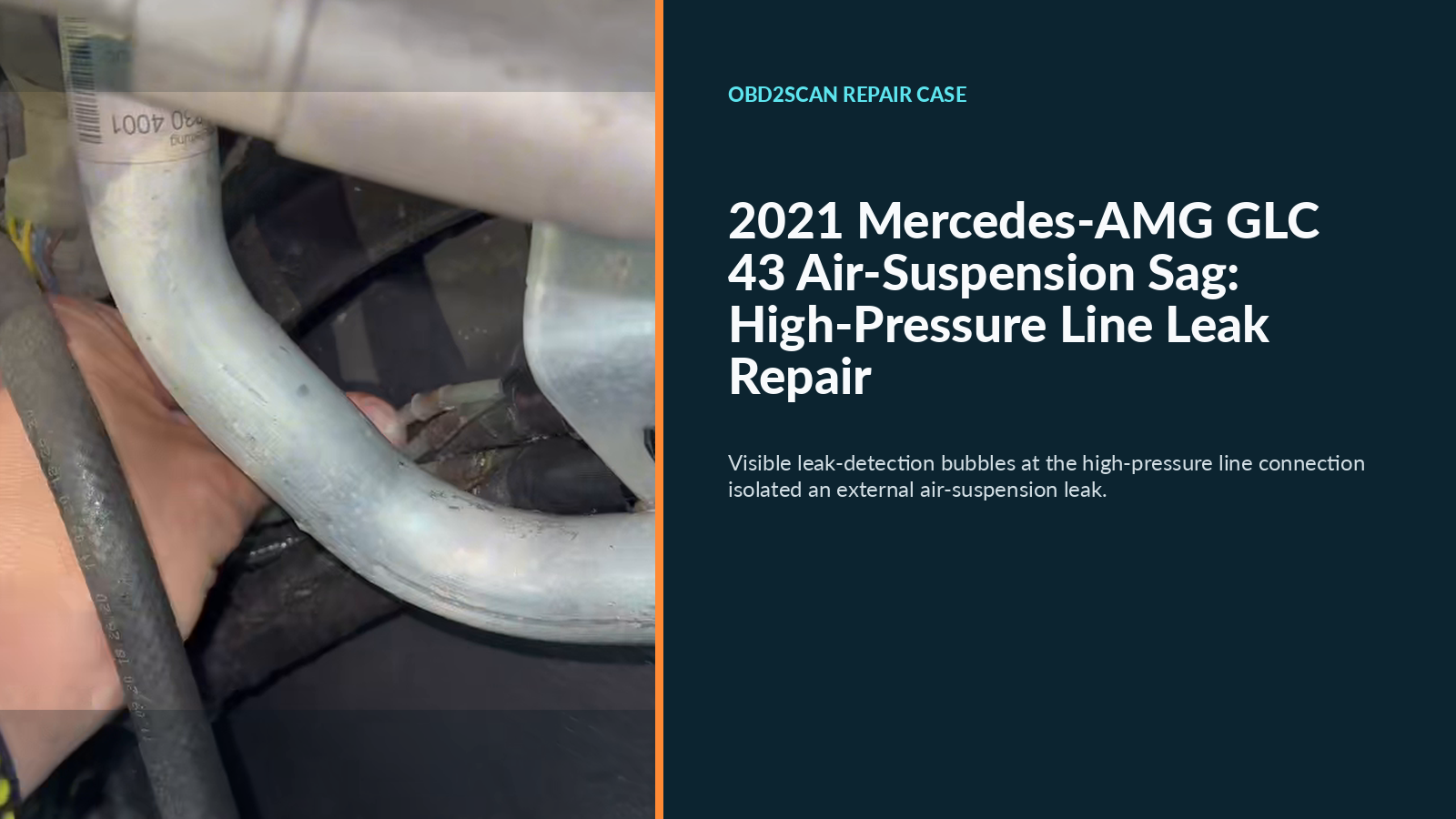
This 2021 Mercedes-AMG GLC 43 X253 with 60,000 km developed a pronounced one-sided front-axle sag while parked. Leak-detection liquid produced visible activity at a high-pressure line connection, while the workshop reported that the air-spring bellows held and the distribution valve was not internally leaking. The failed line was replaced and routed without stress, AIR BODY CONTROL height restoration was completed, and the case record reports zero static height loss over 24 hours plus normal dynamic suspension-mode operation.
The available record does not report engine, VIN/build data, system pressure, depressurization value, leak-test pressure, line part number, insertion depth, or exact calibration target. None is inferred from the video.
Case at a glance
| Item | Case detail |
|---|---|
| Vehicle | 2021 Mercedes-AMG GLC 43 X253; 60,000 km; engine not reported |
| Driver-visible symptom | One side of the front axle settled noticeably lower while parked |
| Leak-location evidence | Detection-liquid activity at the high-pressure line connection |
| Reported exclusions | Air-spring bellows held; distribution valve not identified as internally leaking |
| Confirmed fault | Heat-aged PA pressure line had a microcrack at its connection end |
| Repair | Application-correct heat-resistant line installed, sealed, and routed without residual stress |
| Restoration | AIR BODY CONTROL service mode, height-history clearing, level/inclination calibration |
| Static verification | Record reports zero height loss over 24 hours |
| Dynamic verification | ADS mode changes normal; compressor cycling substantially reduced |
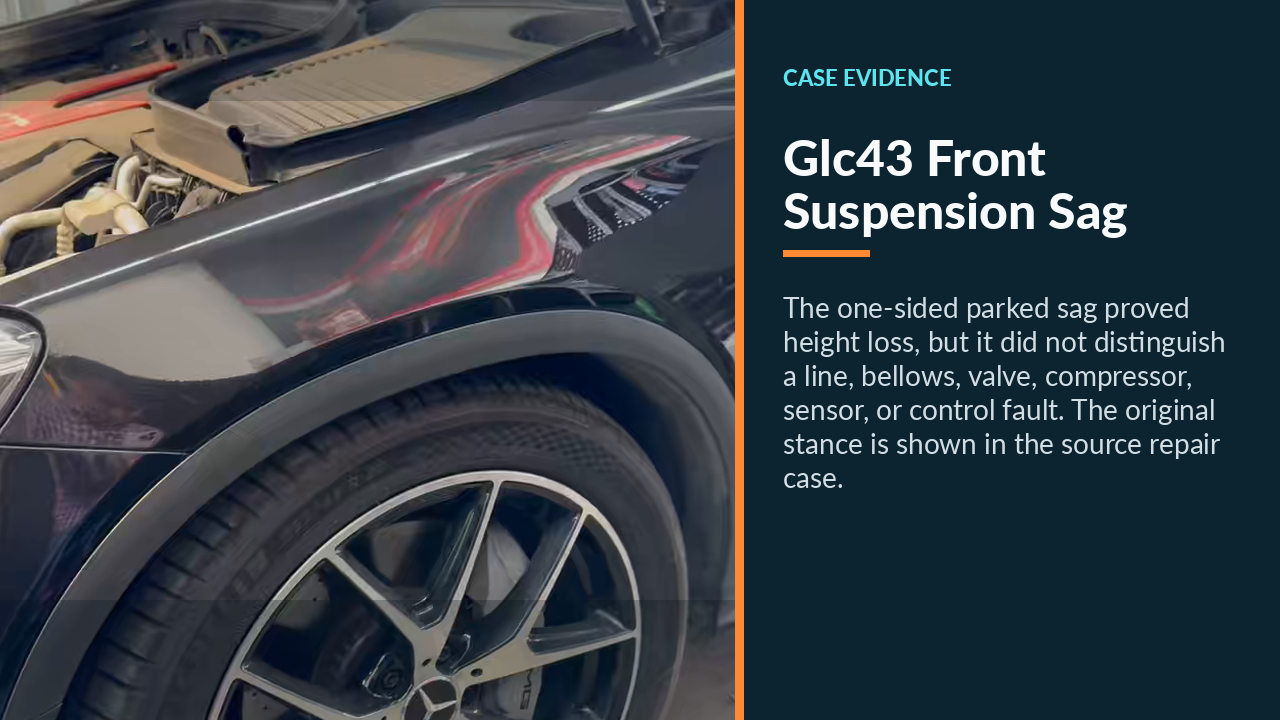
A low corner identified a system, not a part
An air-suspension corner can settle because gas escapes externally, migrates internally through a valve, or is not managed correctly by a compressor, check valve, reservoir, height sensor, wiring, or control function. The low front side narrowed the system and location but did not justify an air-strut assembly. After the leak area is isolated and the vehicle is safely supported, the AUTOOL PT680 air-suspension pressure tester can help compare compressor or line pressure and verify restoration without treating ride height alone as proof of a failed compressor.
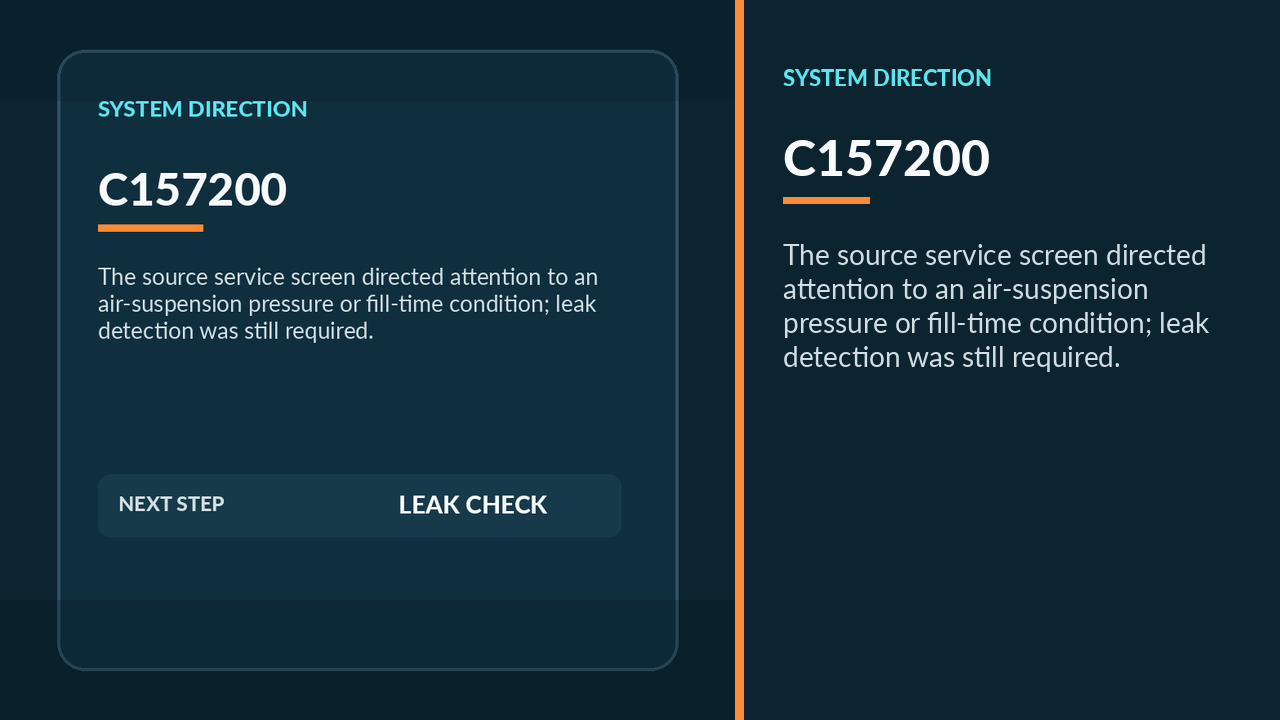
The workshop combined electronic context with physical testing. AIR BODY CONTROL diagnostic/service information was accessed, but no screen value alone was treated as the leak point.
Detection liquid isolated the pipe connection
Detection liquid applied at the pneumatic connection produced visible activity at the line end. That observation localized an external leak at the pipe/port area. The case record also reports that the air-spring bellows retained air during its check and that the distribution valve was not found internally leaking.
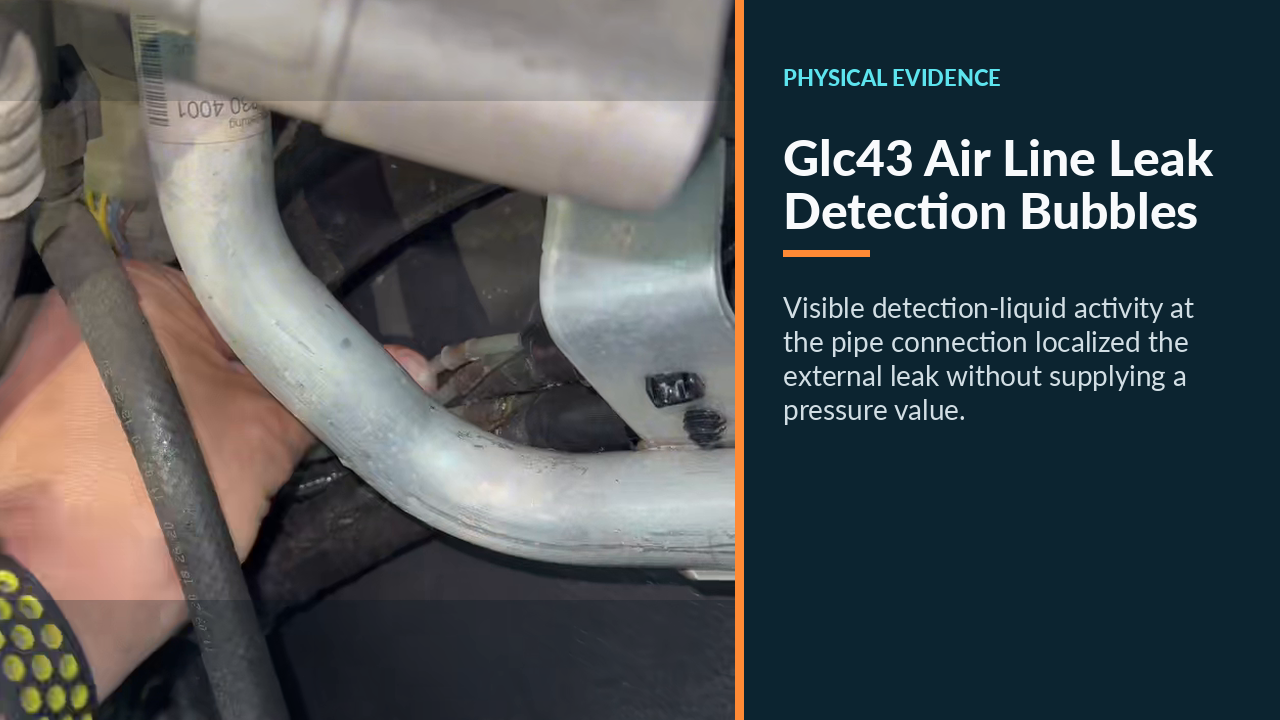
The line material was reported heat-aged and microcracked near the connection. Heat-cycle history can explain why that location deserved inspection, but it does not prove every GLC 43 line fails at 60,000 km. The observed leak activity—not mileage—made this a line-level repair.
The repair stayed at the failed line
The old line and a heat-resistant replacement selected for this vehicle were compared before installation. Because the bellows and valve checks did not support their replacement, the repair did not expand into an air strut, distribution valve, or compressor.
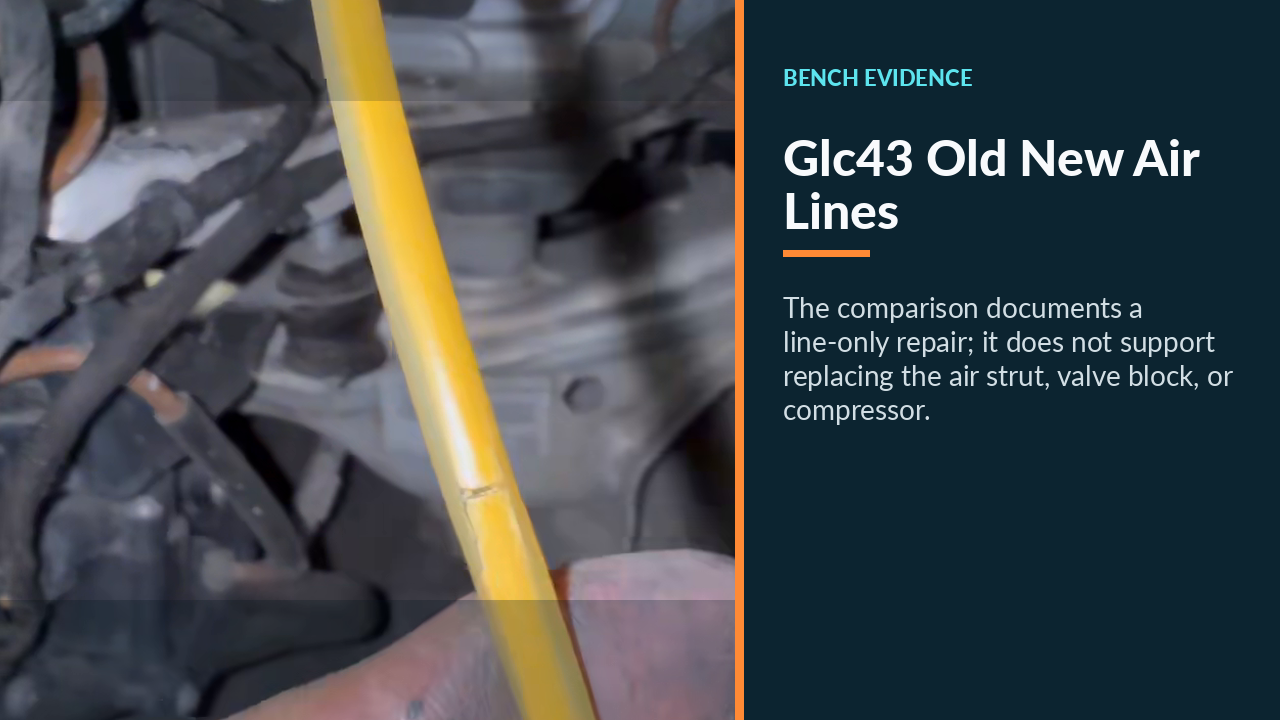
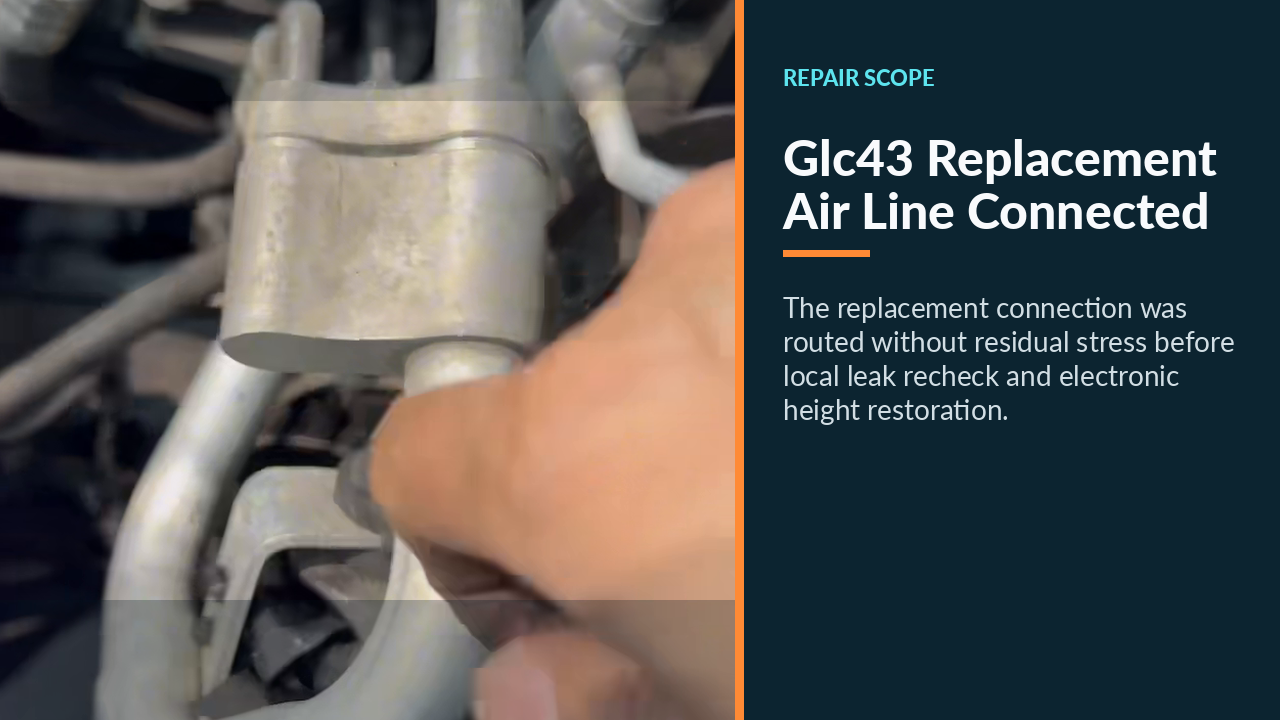
Connection condition mattered as much as the tubing. The seal received the specified assembly protection, and the new line was seated and routed without twist, residual pull, or an avoidable hot-contact path. Route must remain safe across applicable suspension and powertrain movement, not only while the car is stationary on a lift.
This is stored-pressure and crush-hazard work
Air suspension stores compressed-gas energy and can change vehicle height without warning. Never rely on the pneumatic system to support the vehicle, and stop if the mechanical support, system pressure state, or exact service mode is uncertain. Improper line release can cause injury; uncontrolled body movement can crush a person working near the suspension or underbody.
Exact support points, depressurization, line release and insertion, seal/lubricant selection, routing clearances, leak-test condition, height targets, and calibration steps must come from exact-VIN Mercedes service information. No pressure or height value is supplied here. Mercedes-Benz USA’s official manuals route includes the 2021 GLC and AMG owner manuals, but workshop repair data still controls pneumatic service.
Physical repair required electronic restoration
After the connection was sealed and locally rechecked, AIR BODY CONTROL service mode was used, stored height-deviation history was cleared, and level/inclination calibration was completed to the applicable factory target. A leak-free connection without restored height control would leave the original system complaint only partly addressed.
The case record provides a generic height tolerance but does not publish the complete measuring method, reference points, load state, surface condition, or exact calibration procedure. This article therefore reports the calibration event, not a transferable number.
Static hold and dynamic operation closed the repair
The parked complaint required a time-based check. The case record reports that the closed system showed zero height loss over a 24-hour static observation. That result directly challenges the original one-sided settling condition without inventing a pressure reading.
The vehicle was also checked dynamically. ADS mode changes operated normally, and compressor cycling was reported substantially reduced during operation. Exact drive route, ride-height measurements, and compressor cycle counts are not published.
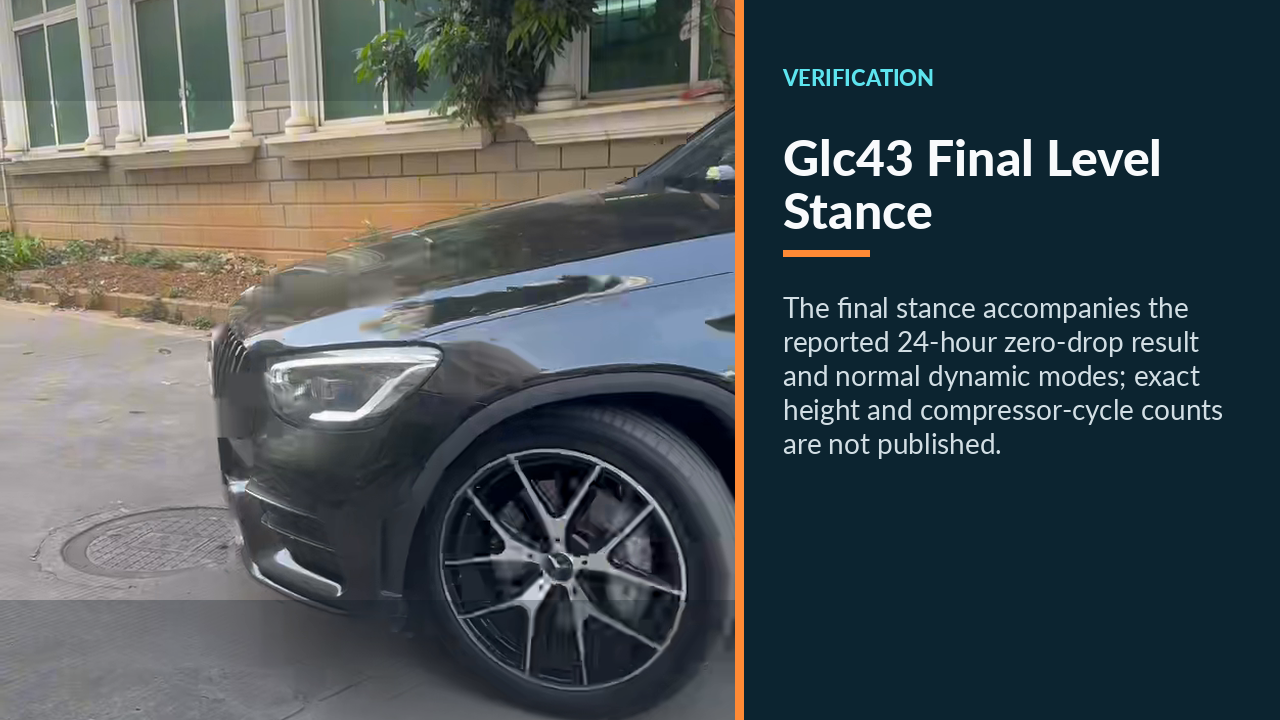
Static height retention and dynamic function together support Q10=2: one tests the parked trigger, while the other tests control response after calibration. If sag returns, record which corner moves and how quickly, rescan the system, repeat safe leak localization, and test the bellows, lines, valve paths, reservoir, compressor/check valve, sensors, and control evidence instead of repeating this line repair automatically.
What transfers to another air-suspension sag
Measure and record the stance, then separate external leakage from internal migration and control faults. Use the exact service mode and mechanical support, localize the leak safely, verify competing components before choosing scope, and install the correct line or component without stress. Restore codes and height calibration, then pair a time-based parked-height check with dynamic mode observation. That chain—not the AMG badge or a cheaper part—is what made the line-only repair defensible.








Comments 0
Questions, fixes, and real-world diagnostic notes from readers.
Be the first to share a diagnostic result or ask a follow-up question.