
2022 Mercedes S 450 P04427A: Leaking Purge Valve Replaced

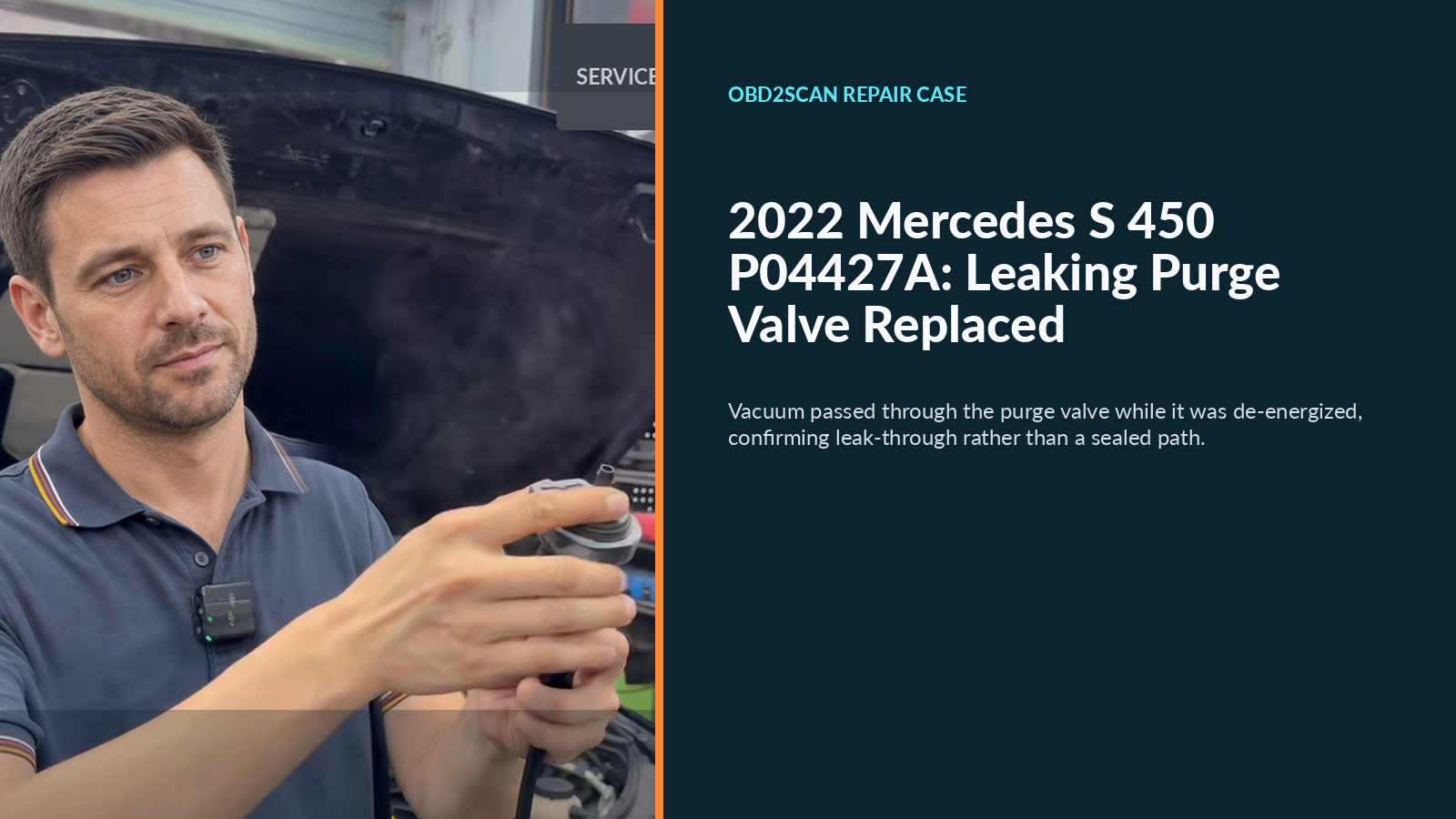
This 2022 Mercedes-Benz S 450 (W223) had 100,000 km; engine details were not reported. Its check-engine light was on with P04427A, and it sometimes cranked longer when restarted hot. The confirmed fault was EVAP purge valve Y58/1 leaking through while de-energized; the valve assembly was replaced, historical ME faults were cleared, and the reported EVAP function test, self-check, lamp status, and fuel-trim behavior all returned acceptable results.
Case at a glance
| Item | This vehicle |
|---|---|
| Vehicle | 2022 Mercedes-Benz S 450, W223; engine not reported |
| Mileage | 100,000 km |
| Complaint | Check-engine light and occasional extended cranking on a hot restart |
| Recorded code | P04427A, reported as an EVAP small-leak fault |
| Confirmed fault | Purge valve Y58/1 did not seal with zero voltage applied |
| Repair | Replaced the OEM purge-valve assembly |
| Restoration | Cleared historical ME faults with XENTRY |
| Verification | EVAP function test met the stated pressure-hold criterion; fuel trim was near zero, the light was off, and self-check passed |
P04427A was the invitation, not the verdict
The code placed the investigation in the fuel-vapor control system. It did not say whether the leak was at the fuel-cap seal, a hose, the charcoal-canister plumbing, the purge valve, or another part of the circuit. That distinction mattered because replacing a valve from the code alone would have skipped the evidence that made this case useful.
Longer hot restarts were a second clue, but they did not prove the valve was responsible. The task was to narrow the system, then test the suspected valve in a state where it should seal.
If liquid fuel or a strong fuel odor is present during any EVAP investigation, stop work, keep ignition sources away, ventilate the area, and have the vehicle tested by qualified service personnel.
The first split: plumbing leaks versus a valve that would not shut
The case record reports a smoke check through the fuel system that found no secondary leak at the canister lines or fuel-cap seal. That result narrowed the field, but it was not used as proof by exclusion. The valve still needed its own check. With the purge valve closed and the EVAP system prepared to the specified test state, the FXTUL EVAP smoke leak detector can make a small leak path visible before the purge valve, lines, or canister are replaced.
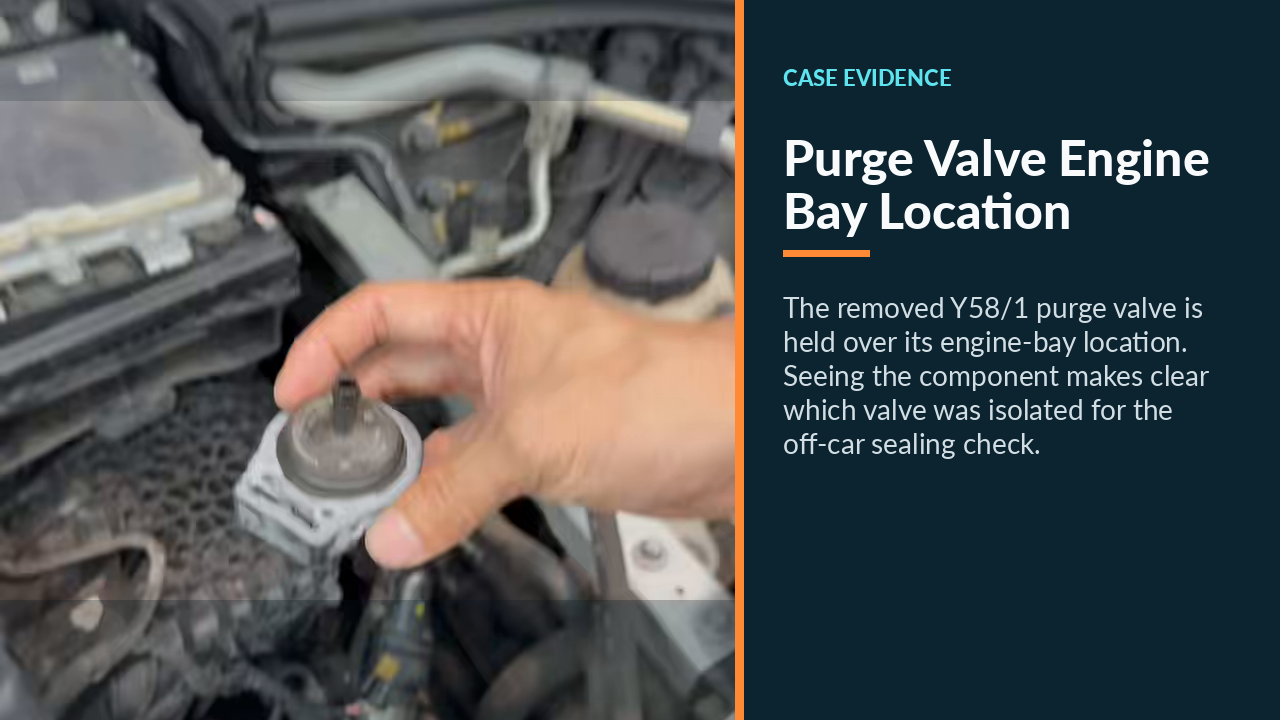
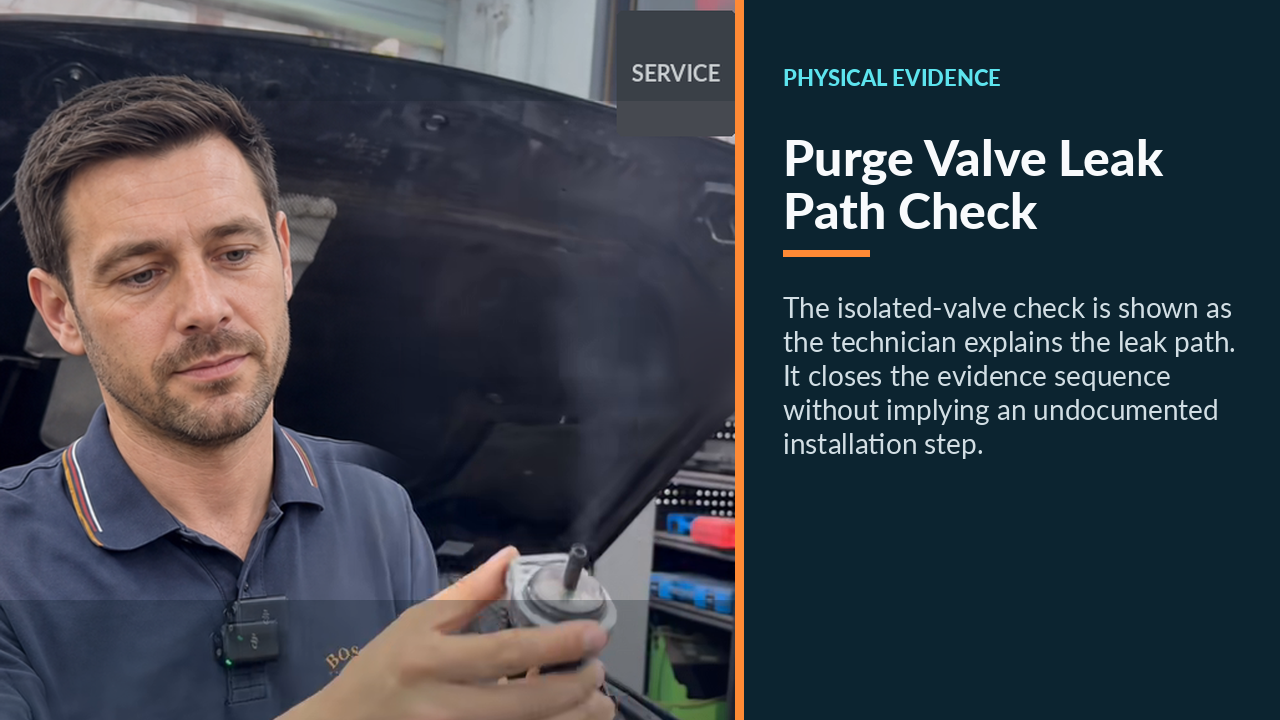
Purge valve Y58/1 was removed and isolated from the surrounding plumbing. That step turned a large-system leak question into a specific sealing question: would this valve block passage when no electrical command was present?
Smoke-machine pressure, adapters, and the model-specific procedure were not reported. The useful fact is the sequence: the named areas showed no other leak, then the valve was tested separately.
Zero volts became the deciding test
The removed valve was connected to a vacuum pump for a sealing check. With zero voltage applied, its passage should have remained closed. Instead, the case record reports through-flow or vacuum leakage in that de-energized state.
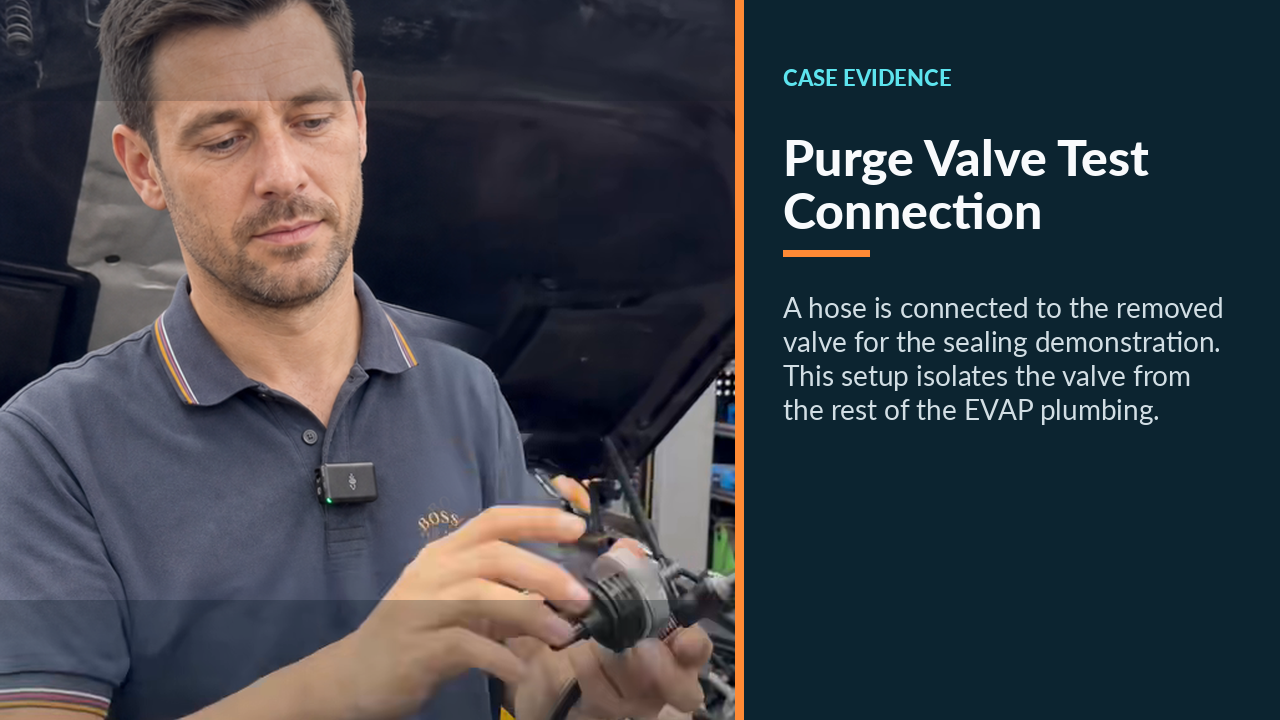
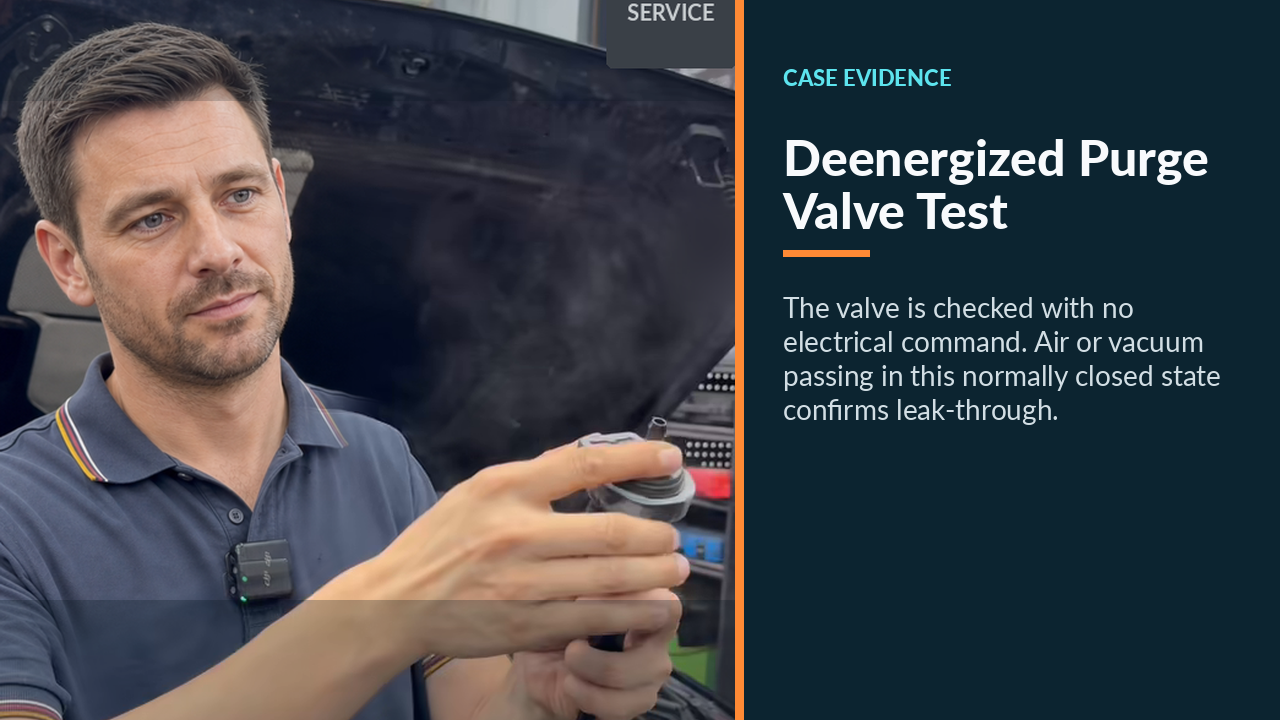
This was the diagnostic turning point. P04427A and hot-start behavior were clues; leakage through the isolated, unpowered valve was confirmation. The case record proposed seal fatigue or foreign material as possible mechanisms, but no teardown proved either. The confirmed finding stops at failed sealing.
Replacement stayed inside the evidence
The recorded repair was replacement of the purge-valve assembly with an OEM valve. The connected hoses were to be checked for swelling or cracks, but the available record does not say that a hose was replaced. It also does not provide a VIN-specific part number, fastener torque, electrical waveform, or detailed access and installation sequence.
The failed valve was replaced. There is no basis to present hose renewal, canister replacement, wiring repair, or software work as completed on this S 450.
Restoration made the repair testable
After the hardware repair, historical ME engine-control faults were cleared with XENTRY. Clearing codes restored the system for a new check; it was not proof by itself.
The case record reports that the EVAP function test forced the vacuum-pump simulation and evaluated the pressure-hold curve. It says the curve was within its 0.5 mm equivalent-leak criterion. This is a reported case result, not a universal setting or a procedure to copy onto another Mercedes without the correct service information.
The checks that challenged the original fault
Several post-repair results are recorded: idle fuel-trim correction fluctuated near zero, the check-engine light was off, and the system self-check passed. Together with the EVAP function-test result, these form a valid staged verification of the leak repair.
One limit remains important. The available record does not document repeated hot restarts, a drive-cycle distance, or long-term follow-up. The article therefore does not claim that a separate hot-start challenge or extended ownership interval was completed. The documented result is the EVAP function test, lamp status, self-check, and observed fuel-trim behavior—not a permanent guarantee.
A first-check order for another EVAP small-leak case
For a similar vehicle, start by recording the exact complaint and codes, then inspect the cap seal and accessible EVAP plumbing before isolating a component. If the broader system check points toward the purge path, test whether the valve seals in its specified uncommanded state. Replace it only when the fault follows the valve rather than the surrounding lines.
After repair, restore the control unit as required and run the applicable EVAP function test. Also challenge the original owner complaint: on a car that arrived with extended hot cranking, repeat controlled hot restarts and record the result. That last step is a recommendation for a comparable diagnosis; it was not documented as completed.
This S 450’s answer was a de-energized purge valve that leaked through. The same code or symptom elsewhere can still come from a cap seal, hose, canister plumbing, electrical control, or another EVAP fault, so confirmation must come from that vehicle’s own test sequence.








Comments 0
Questions, fixes, and real-world diagnostic notes from readers.
Be the first to share a diagnostic result or ask a follow-up question.