
2017 Mercedes GLC 300 M274: Belt-Drive Repair and Preventive Thermostat Case

A 2017 Mercedes GLC 300 (W253, M274) with 140,000 km came in with a light rustling noise from the front of the engine during cold starts, with no warning light. Inspection found a cracked accessory belt, weakened tensioner action and rough, noisy pulley operation; the belt, tensioner, idler and overrunning alternator pulley were replaced. The thermostat was changed at the same visit as a separate preventive decision, after which the cooling system was refilled and bled and a 20 km road test found no belt vibration or returning noise.
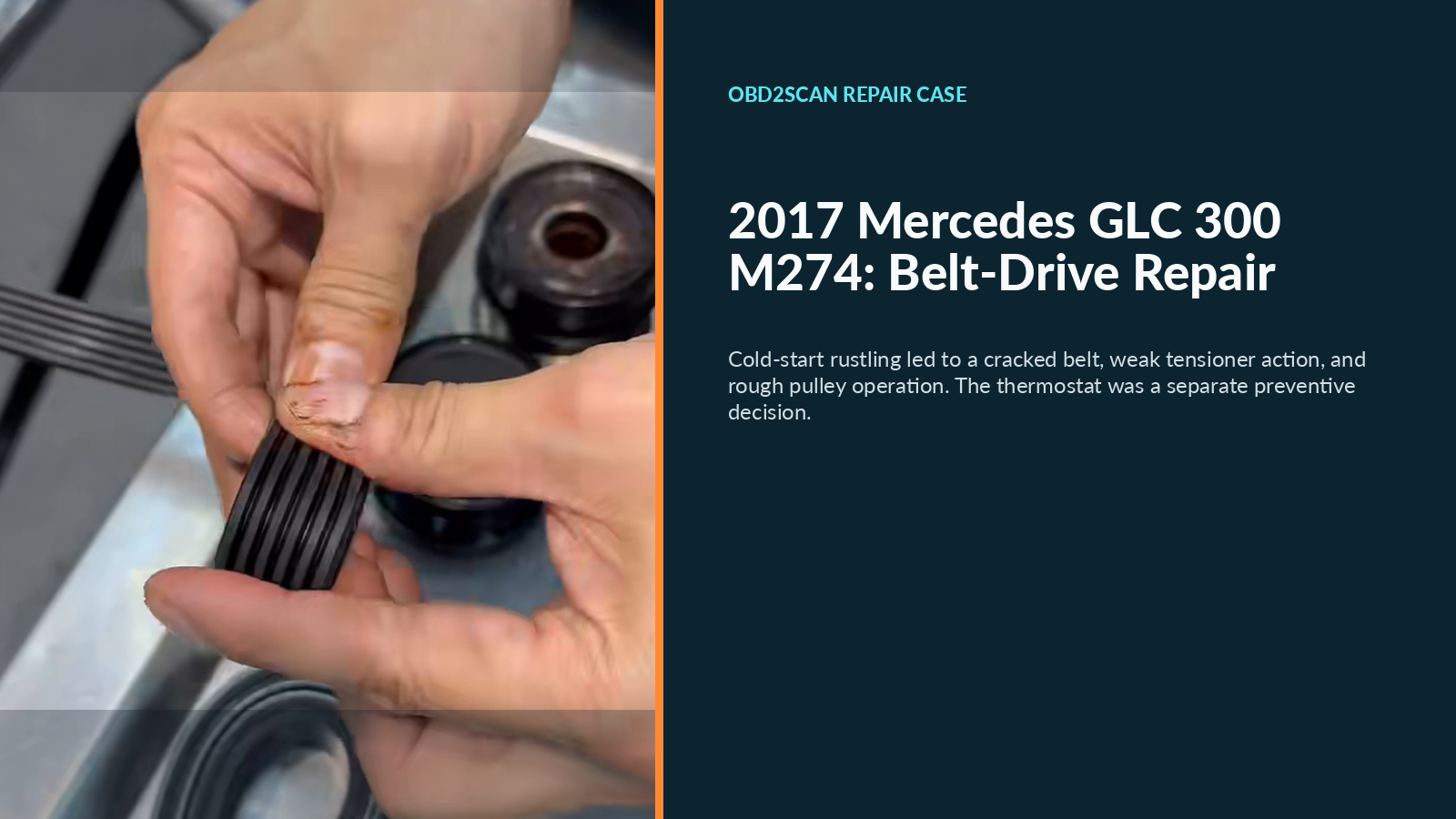
Case at a glance
| Item | Case detail |
|---|---|
| Vehicle | 2017 Mercedes-Benz GLC 300, W253 chassis, M274 engine |
| Mileage | 140,000 km |
| Driver complaint | Light mechanical rustling at the front of the engine during cold start |
| Warning state | No warning lamp reported |
| Confirmed drive findings | Belt surface cracking, weakened tensioner response and rough/noisy pulley operation |
| Drive-system repair | Belt, tensioner, idler and overrunning alternator pulley replaced |
| Separate maintenance decision | Thermostat replaced preventively while related access was available |
| Result reported in the case | 20 km road test with no drive vibration or abnormal noise |
Why this case has two different decisions
The accessory-drive work was based on observed wear and functional findings. The thermostat replacement was not presented with the same direct failure evidence: it was an elective preventive job based on age, mileage and shared access during the larger service.
That distinction matters. A useful case record should tell the reader which parts were proven faulty and which were approved as preventive maintenance instead of turning everything on the invoice into one diagnosis.
How the belt-drive fault was confirmed
The first inspection was performed around the condition in which the complaint occurred: a cold start. With the engine off, the belt showed visible transverse cracking. After the belt was removed using the applicable service procedure, the tensioner response was found to be weak and the idler and overrunning alternator-pulley area produced mechanical roughness or friction noise during inspection.
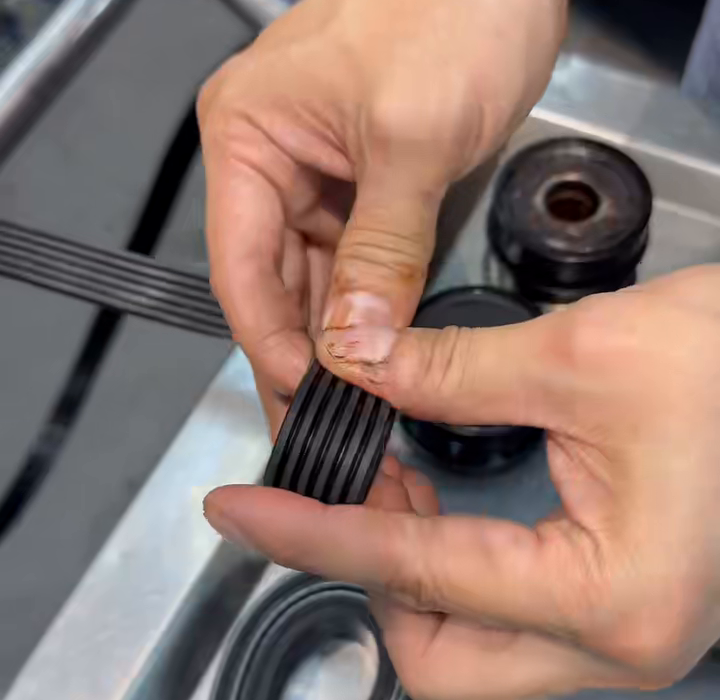
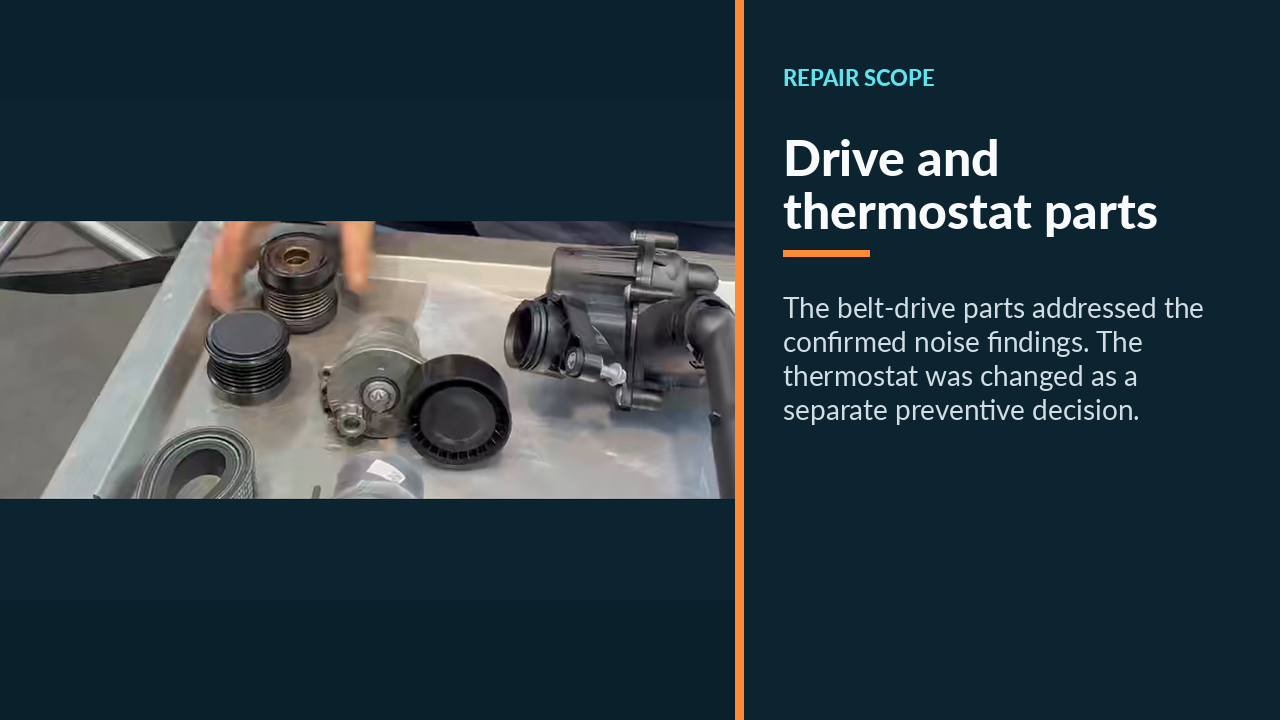
The recorded findings supported replacing more than the belt alone because the drive components influencing belt control and pulley rotation also showed problems. This is different from replacing a complete kit solely because the odometer reached a round number.
What was replaced in the accessory drive
The workshop removed the worn components, cleaned the mounting areas and installed the applicable multi-rib belt, belt tensioner, idler and overrunning alternator pulley. Exact pulley direction, belt routing, holding tools, fasteners and torque values must come from the current service information for the vehicle.
The practical sequence was:
- Record the cold-start noise before warming the engine.
- Inspect the belt path, rib condition, edges, alignment and contamination.
- Isolate the drive using the approved procedure.
- Check tensioner damping and each pulley or driven component independently.
- Replace the components supported by the recorded findings.
- Reassemble the correct belt route and verify alignment before starting.
Do not reach into a running belt drive. Stop the engine if the belt is tracking off a pulley, fraying, smoking, contacting another component or causing a charging or temperature warning.
Why the thermostat was changed at the same visit
The case record describes the thermostat as a preventive replacement chosen because the vehicle had reached 140,000 km and the front-engine access was already open. It does not document a thermostat fault code, an external thermostat-housing leak or a failed regulation test before removal.
That makes this an access-and-risk decision, not proof of thermostat failure. On another GLC, the owner and workshop could reasonably approve the drive repair while leaving a functioning thermostat in service. If preventive replacement is proposed, the estimate should show the extra part, coolant work, labor saved through shared access and the added scope as a separate line.
Cooling-system restoration
Because the thermostat replacement opened the cooling system, the workshop refilled with the specified coolant and ran the applicable bleed process. An AUTOOL SC301 cooling-system tester and vacuum filler can support a vacuum-hold screen and vacuum-assisted refill here when the reservoir opening, adapter, compressed air and 12 V supply are compatible. It cannot diagnose pulley noise, assess bearing condition or prove that a preventive thermostat replacement is necessary.
How the result was checked
After reassembly, belt routing and alignment were checked before the engine was run. The case then records a 20 km road test while the workshop monitored the belt drive and cooling behavior. The drive remained free of the previous rustling noise and showed no reported belt vibration.
The post-repair check for a similar job should close both work orders independently: normal belt tracking and noise behavior for the drive system, plus a dry cooling system, completed bleed routine and stable cold coolant level for the thermostat work.
The transferable lesson
This case supports replacing a worn drive set because several drive components had recorded findings. It does not establish 140,000 km as a universal replacement interval, and it does not convert the preventive thermostat choice into a confirmed thermostat failure. Keeping those two decisions separate makes the case more useful to both the vehicle owner and the workshop.










Comments 0
Questions, fixes, and real-world diagnostic notes from readers.
Be the first to share a diagnostic result or ask a follow-up question.