
2019 Mercedes C200 W205 Losing Refrigerant Monthly: Leaking Evaporator Replacement

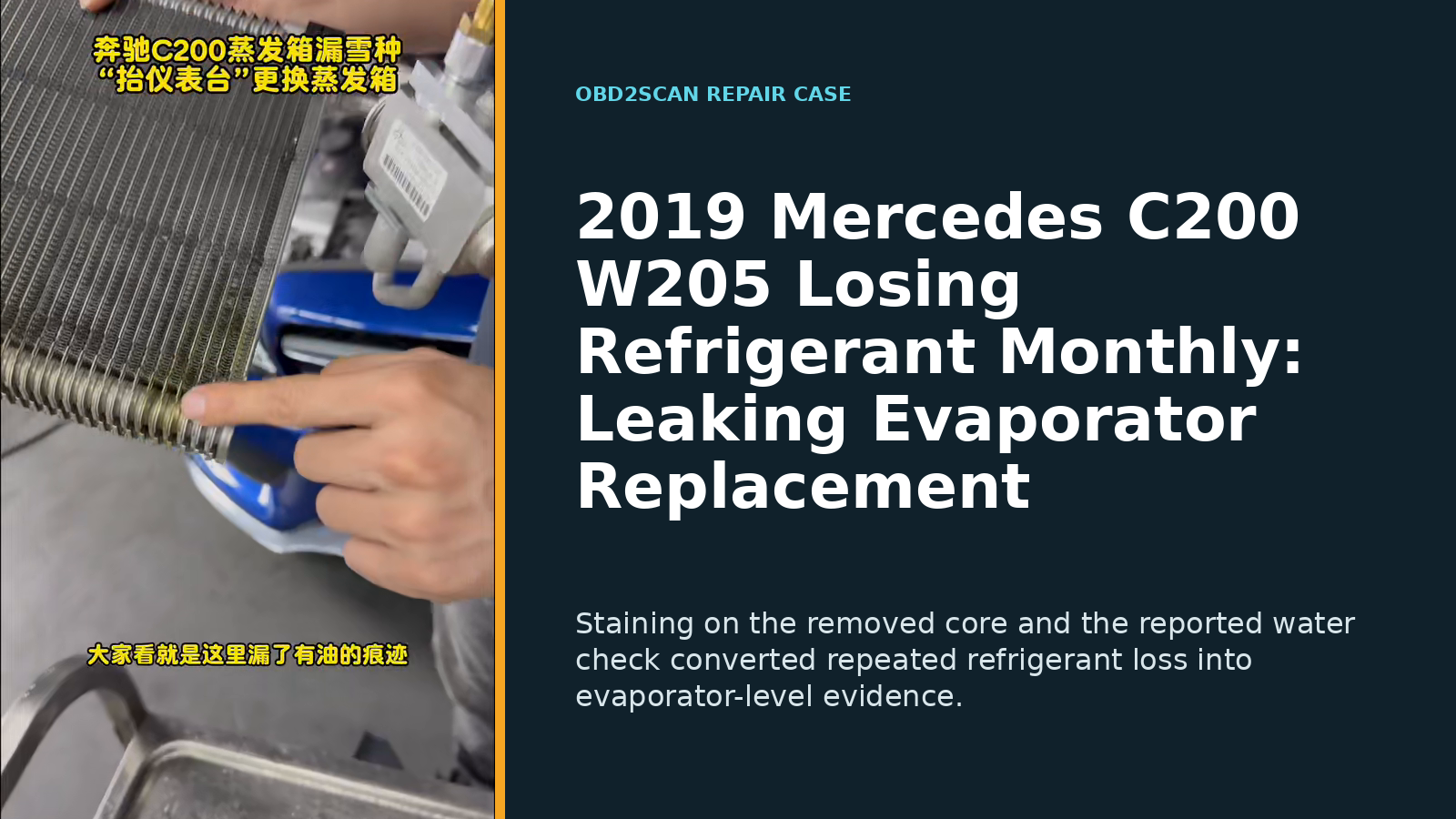
This 2019 Mercedes-Benz C200 (W205) had covered 85,000 km. Its A/C became weak again after each refrigerant service, with the latest charge lasting only about one month, and the owner also noticed a musty or chemical odor when switching the system on. The leak was confirmed at the evaporator; the dashboard was removed, the evaporator and expansion-valve seals were replaced, the system was restored, and immediate sealing, cooling, cabin-function, and rattle checks passed.
Case at a glance
| Item | What this case reports |
|---|---|
| Vehicle | 2019 Mercedes-Benz C200, W205 chassis; engine not reported |
| Mileage | 85,000 km |
| Complaint | Weak A/C; a refrigerant charge lasted about one month; musty or chemical odor at switch-on |
| Confirmed fault | Refrigerant leak at the evaporator; the source attributes the core damage to corrosion and pinholes |
| Repair | Dashboard and HVAC housing access, evaporator replacement, and new expansion-valve sealing rings |
| Accompanying work | Blower dust, A/C pipes, and condensate drain cleaned; these were not identified as root causes |
| Restoration | Cabin reassembled, circuit evacuated, and the source-reported 630 g refrigerant charge installed |
| Verification | Reported 20-minute vacuum hold, 5.3°C vent reading, cabin-function check, and rough-road rattle check; no later one-month retention result was reported |
The one-month refill clock changed the question
Refrigerant had already been added, cooling returned, and the useful period shortened to roughly one month. That repeat interval made “add refrigerant again” an incomplete response and moved leak localization ahead of another charge.
The odor was a supporting clue, not the confirmation. It justified attention to the HVAC case and drain, but did not identify a leaking metal core. Component-level evidence mattered because reaching the evaporator would disturb much of the cabin.
The removed core supplied the turning point
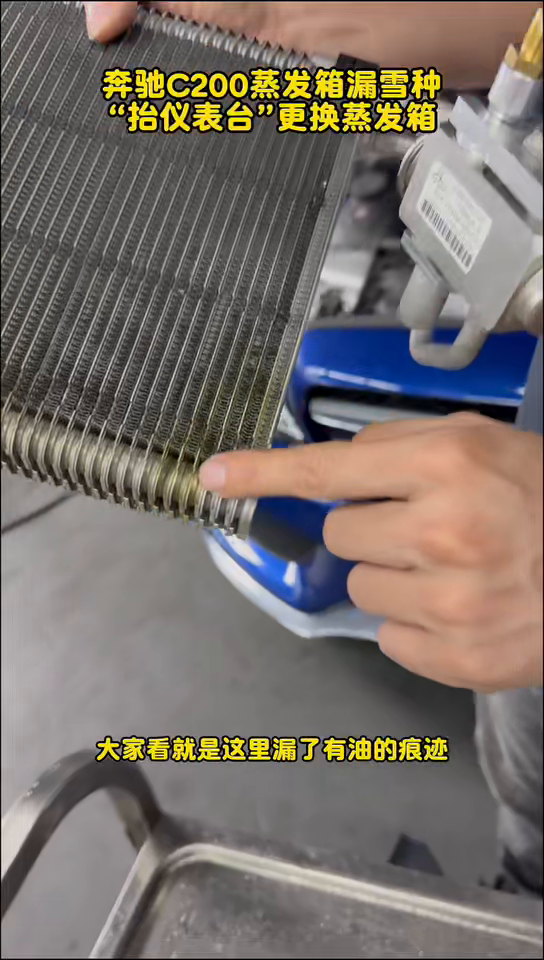
The source identifies the evaporator as the leak location and attributes the failure to corrosion and small openings in the aluminum core. The removed evaporator carries dark, oily-looking staining across its lower fins. That trail supports the location but does not measure the leak.
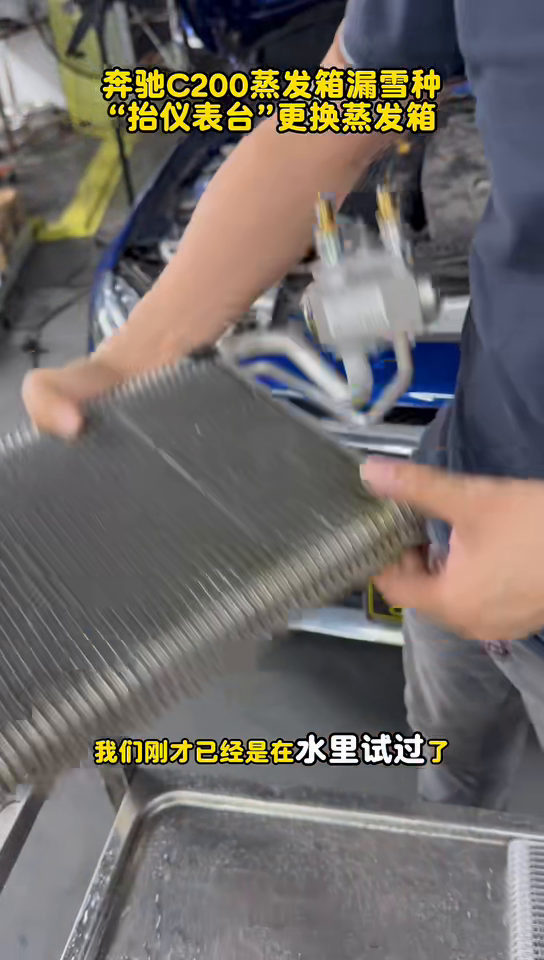
The old core was then checked in water, according to the source and the video’s narration. This off-car check is the decisive separation between suspicion and confirmation in the recorded sequence: repeated loss and odor directed attention inward, the marked removed core localized the fault, and the water check supported replacing that core. No refrigerant DTC, electronic scan result, or leak-rate value was reported.
Reaching the evaporator meant opening the cabin
The evaporator sits inside the HVAC housing behind the dashboard. The workshop removed cabin trim, the dashboard, the cross-car support beam, and the HVAC housing assembly to reach it. Electrical connectors were labeled and the harness routing was preserved for reassembly. The source does not provide fastener torque values or a VIN-specific workshop procedure, so those details do not belong in a transferable step list.
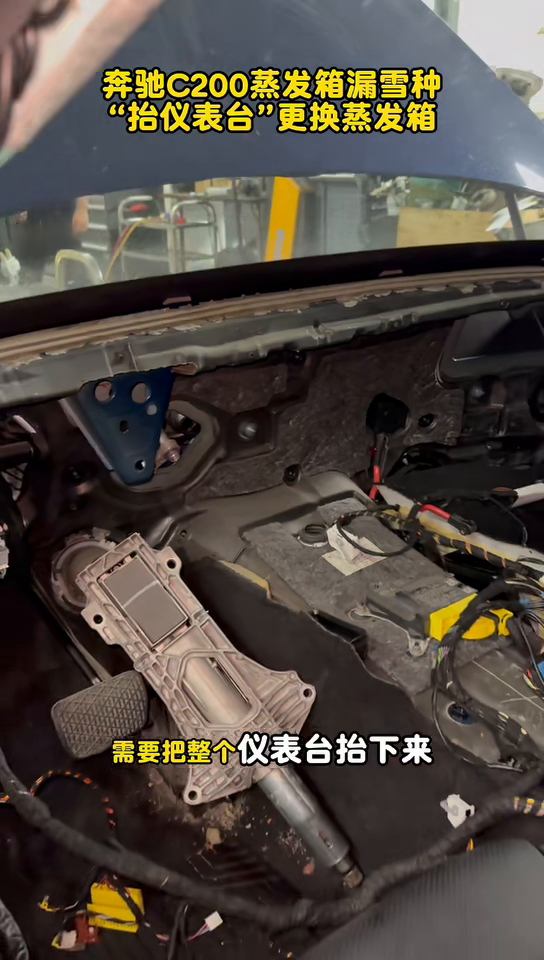
This is the practical stop boundary. Refrigerant recovery needs suitable equipment, while dashboard removal affects wiring, restraints, controls, and structural fasteners. An owner can document the refill interval and request leak-localization evidence; refrigerant handling and deep cabin disassembly belong with a properly equipped repair facility following the exact vehicle procedure.
One confirmed repair and three accompanying tasks
The workshop replaced the leaking evaporator. Expansion-valve sealing rings were renewed while the circuit was open. The blower was cleaned, and the A/C pipes and condensate drain were also cleaned before the housing went back together.
Those tasks were not one cause. The evaporator evidence answered the monthly loss. New seals protected disturbed joints, while blower and drain cleaning addressed access-time maintenance. The source did not identify those areas as additional leak causes.
Reassembly then returned the labeled connectors and harnesses to their routed positions, followed by the beam, dashboard, controls, vents, and trim. Closing the cabin was part of the repair result because a cold vent would not excuse a disconnected function, an uneven panel, or a new dashboard rattle.
Verification happened in stages
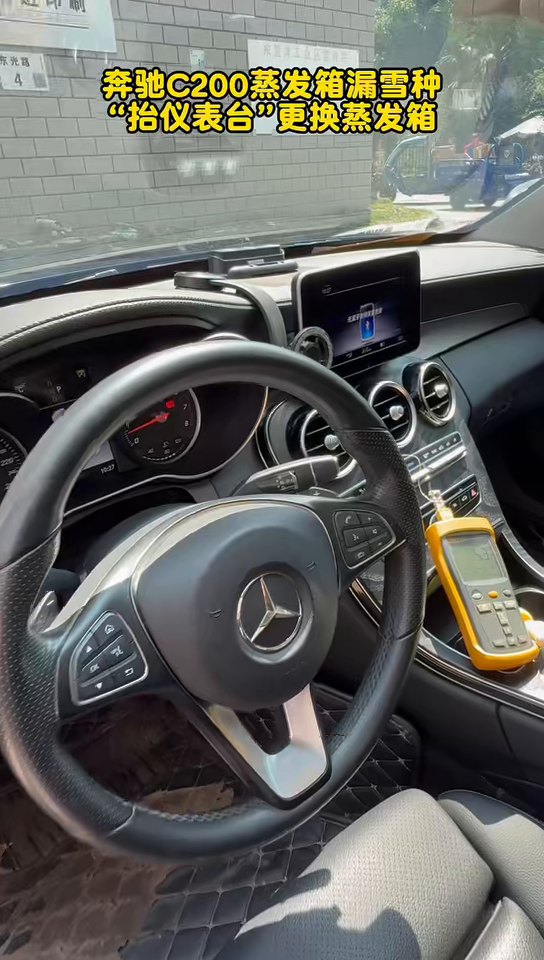
Before charging, the source records evacuation to -0.9 bar and a 20-minute hold with 0.05 bar variation. It also reports that 630 g of refrigerant was installed for this vehicle. These are case records, not universal W205 specifications; the vehicle label and exact service information remain the authority for another car.
Cooling was then challenged at idle at a reported ambient temperature of about 30°C. The case page records outlet air between 4°C and 6°C, and the video shows 5.3°C at a center vent. The workshop also checked control operation, panel fit, and dashboard noise on rough-road vibration. Together, the hold, measured cold output, and reassembly checks form a valid immediate staged verification.
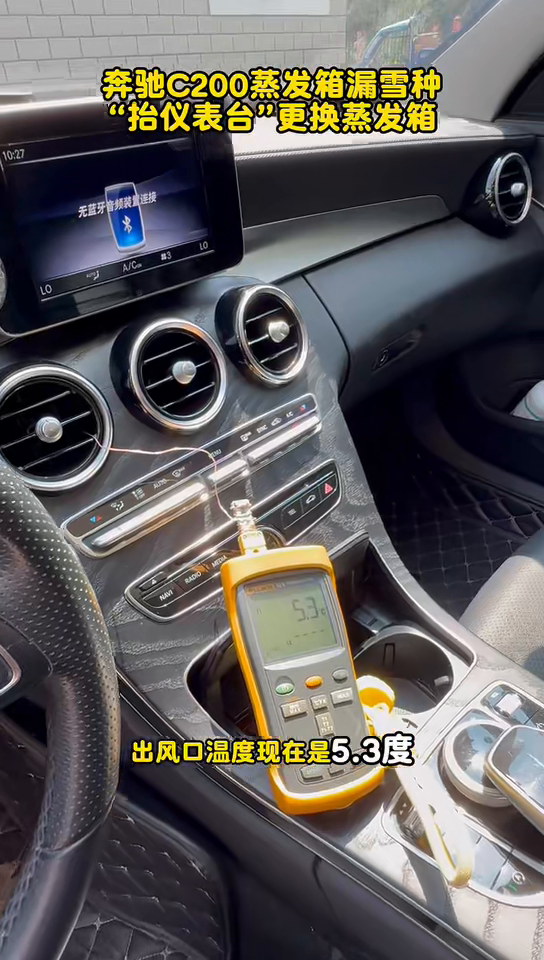
That last boundary is important because the original complaint developed over about one month. The published case gives no return inspection after the same interval, so the immediate result is transparent and useful without being presented as a long-term retention test.
What to check first on another repeat-loss complaint
Start with the timeline: record how quickly cooling fades after a known, correctly performed service. Next, confirm that refrigerant is actually being lost rather than treating weak airflow or poor compressor performance as a leak. Localize the loss with an appropriate inspection before authorizing component replacement, and require stronger evidence before approving dashboard-level access. If the evaporator is confirmed, keep the leak repair separate from sensible access-time seal or cleaning work. Finally, verify sealing before charging, then challenge cooling output and every cabin function disturbed by the repair; schedule a later retention recheck when the original symptom took weeks to return.
This vehicle’s answer was a leaking evaporator. Similar weak cooling or odor on another C200 can still come from a different leak, airflow fault, compressor problem, or control issue, so the part choice should follow that car’s evidence rather than this case’s outcome.



Comments 0
Questions, fixes, and real-world diagnostic notes from readers.
Be the first to share a diagnostic result or ask a follow-up question.