
Ford Fiesta No-Start With Fuel-Pressure Codes: The Sensor Was Reporting a Supply Failure

Quick answer: A low rail-pressure reading can accurately report missing fuel supply. This Fiesta needed supply-pump diagnosis, not the pressure sensor replacement initially suggested.
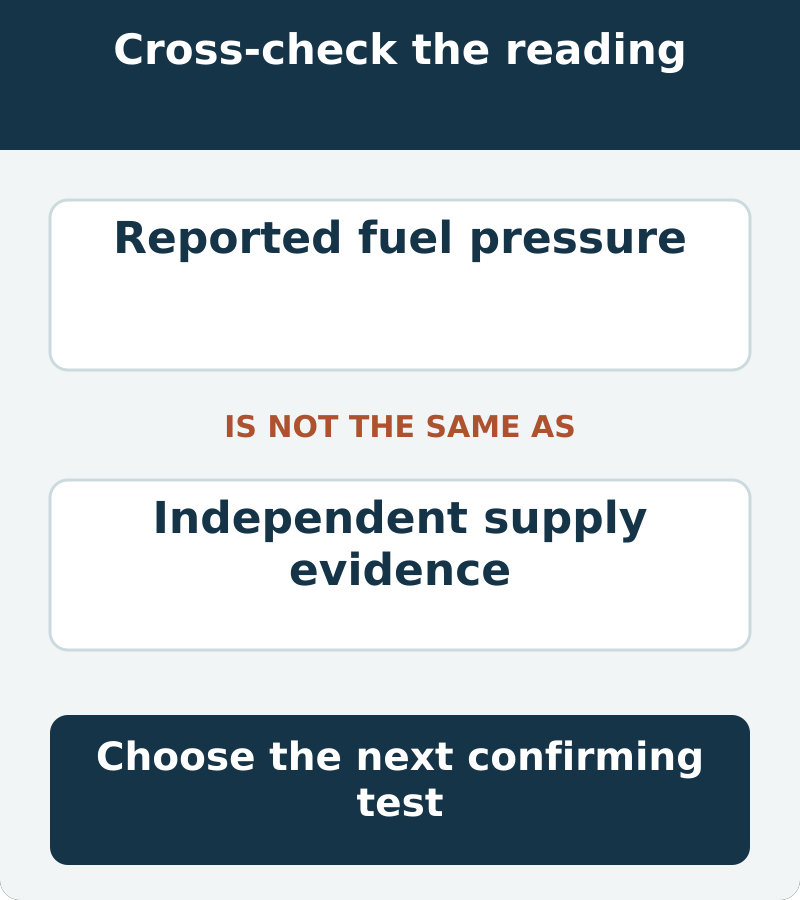
A code that mentions fuel pressure does not automatically make the pressure sensor the next purchase. First ask whether the reported pressure is wrong—or whether the sensor is accurately describing a fuel supply that has failed.
A separate pressure check can help answer that question. A tester such as the AUTOOL PT635 is an option only for a compatible low-pressure connection, fuel type and measuring range. It must not be connected to a direct-injection or common-rail high-pressure line.
Fuel-system connections and pressure relief are professional work. Stop repeated starting attempts if there is a fuel smell, visible leakage or another unsafe condition, and arrange diagnosis without improvising relay jumpers or opening fuel lines.
In this guide
Should you buy the pressure sensor first?
The Fiesta in Edward Grigg’s workshop case arrived with that recommendation. Independent checks found near-zero rail-pressure data, no identified sensor electrical fault, and accessible fuse/relay checks that passed. Supply-pump current was 17 A against the technicians’ anticipated 6–7 A, while a separate supply-side check found no delivery pressure. Authorized tank removal exposed a seized pump. The replacement’s current capture was compared with the failed unit. The article does not identify the Fiesta’s year or engine.
That missing configuration matters. The case is a lesson in checking evidence, not a service specification for every Fiesta. Its current figures must not become a universal threshold, and its unnamed codes should not be silently replaced with familiar code numbers.
If your car has similar symptoms, request the actual codes, their status and the relevant data before agreeing to the named part. The shop should be able to explain what would distinguish a faulty measurement from a genuine lack of supply.
Two measurements before difficult access
Electrical demand and physical delivery answer different questions. Measuring one does not make the other unnecessary. A pump circuit can consume current without delivering the required fuel; a plausible pressure reading at one operating moment can miss an intermittent electrical problem.
The useful comparison is made under matched conditions. Record what commanded the pump, whether the reading was taken at initial activation or during continued operation, and where the pressure was measured. Without those details, two apparently contradictory numbers may simply describe different tests.
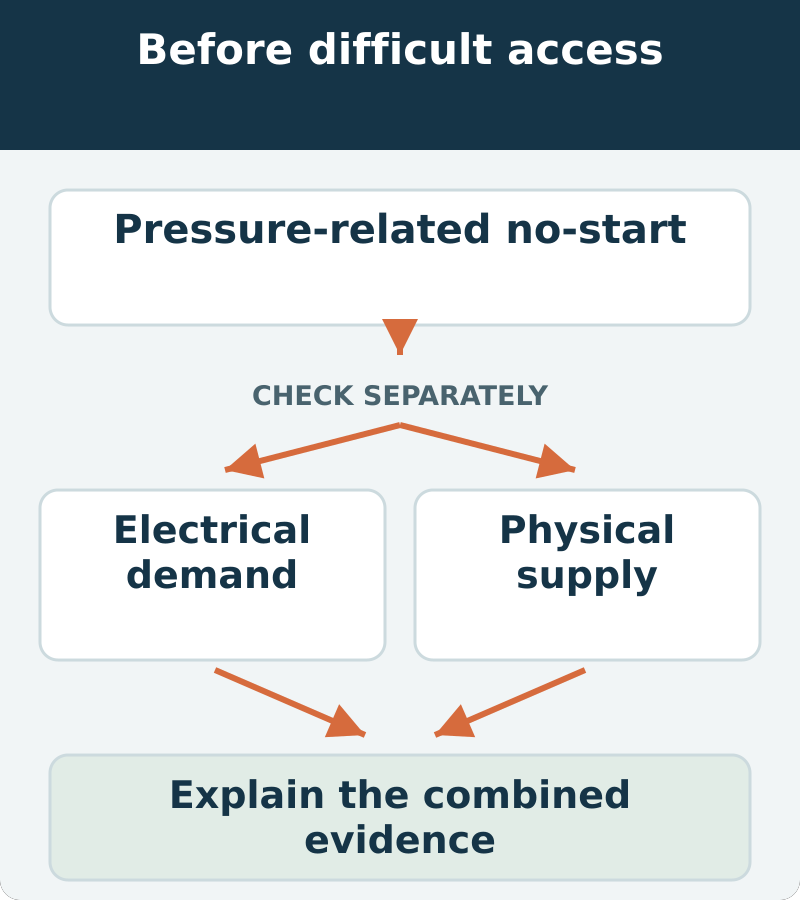
This is especially valuable when access is expensive. A measurement taken at a safe, accessible point can help decide whether further dismantling is justified. It should not be sold as a magical substitute for every inspection behind the tank.
High current needs an explanation
An unexpectedly high current reading is a reason to investigate the load, not an automatic diagnosis of a seized motor. Supply voltage, command strategy, measurement timing, circuit condition and mechanical or hydraulic resistance all affect how the result should be interpreted.
Delphi’s pump scope-testing guidance treats current information as a complement to pressure and flow checks. It also notes that increased demand can involve restrictions. That is why a technician should compare the result with the applicable specification and related measurements instead of using one amp number as a parts verdict.
Ask what competing explanation remains and which check would distinguish it. The answer might justify further electrical testing, examination of the supply path, or access to the pump. It should identify the uncertainty that the next step is meant to resolve.
The evidence worth paying to uncover
Before authorizing difficult access, ask for a concise explanation of the working hypothesis. What has been measured? Which accessible checks passed? What specifically must be inspected after the component becomes reachable?
A useful authorization separates diagnostic access from automatic replacement. Finding a connection problem, damaged line or unexpected contamination may change the work required. The shop should explain how it will contact you if the exposed evidence does not match the initial expectation.
This also gives the removed component a purpose beyond demonstrating that a new part was fitted. Where appropriate, ask for the recorded physical finding and its relationship to the earlier measurements. Photographs can document what was found; they cannot replace the pressure or electrical test that led there.
Keep the low-pressure and high-pressure tests separate
“Fuel pressure checked” is not a complete test description on a system with different pressure stages. The inlet supply to a high-pressure pump is not the same measuring point as the rail it feeds.
The technician must identify the fuel system before selecting a gauge, adapter, relief procedure or connection. A kit with many adapters does not establish that every line is safe to open or within the instrument’s range. The right response to missing vehicle information is to obtain it—not to try whichever fitting appears to fit.
For the owner, the practical question is simple: which side was tested, under what condition, and against which application requirement? That makes the invoice understandable without turning it into a hazardous how-to.
Ask for a before-and-after record
After repair, request the relevant supply checks under comparable conditions, safe leak verification and the required starting and fault-status checks. Record what changed and whether the original complaint could still be reproduced.
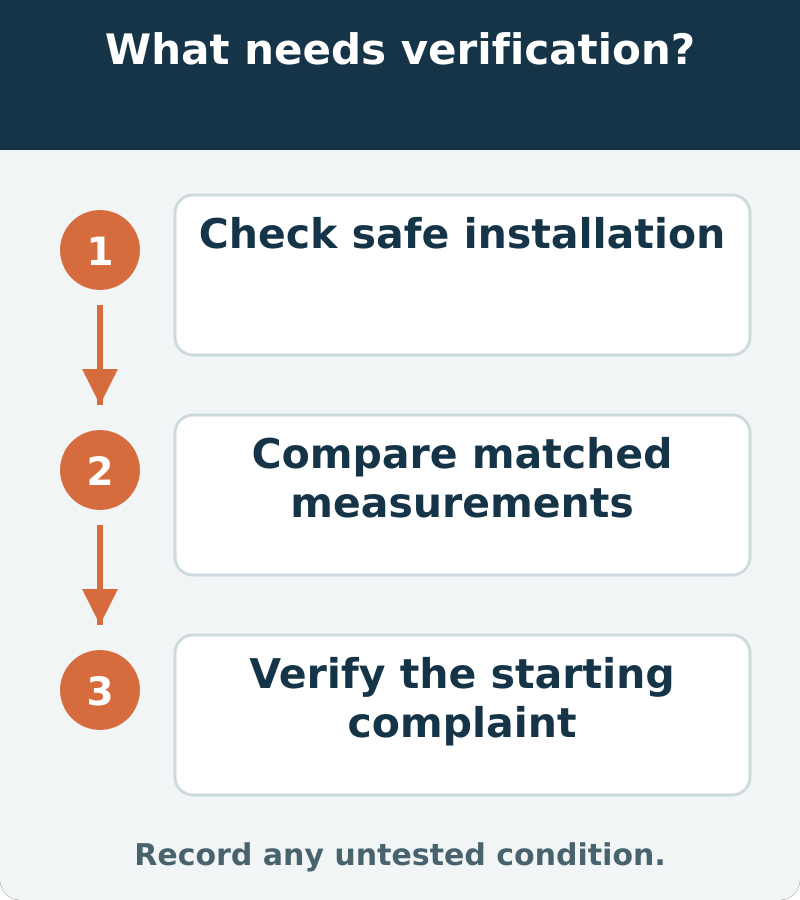
A saved trace is useful only when its test conditions are known. A successful start is useful too, but it does not by itself establish every operating requirement. If a check was not performed, keep that limit visible. The strongest repair explanation links the complaint, the measurements, the physical finding and the verified result without asking a fault-code description to do all four jobs.






Comments 0
Questions, fixes, and real-world diagnostic notes from readers.
Be the first to share a diagnostic result or ask a follow-up question.