
2016 Ford Transit Overcharges and the Gauges Drop: Inspect the Charging Feedback Path

Quick answer: Overcharging can disrupt several instruments at once. Confirm the voltage safely, then investigate charging control and its supply paths before condemning every affected module.
Battery heat, swelling or an unusual odor calls for stopping and immediate professional assistance. Never disconnect a battery with the engine running or repeat an alternator unplug-and-rev shortcut.
A suitable meter helps establish whether an electrical-supply problem is present. The AUTOOL DM301 can support passive voltage measurement; the correct charging targets and control tests must come from the identified Transit system.

In this guide
Stop the excessive voltage first
When several warnings appear together, the temptation is to scan and clear them one by one. If the supply is excessive, protecting the battery and electronics takes priority over repeated operating experiments. A workshop should establish a safe test plan before allowing the vehicle to continue exposing its systems to the abnormal condition.
Tell the service adviser which warnings and gauge changes appeared together and whether the battery showed any distress. Do not repeatedly run the van merely to obtain a photograph of the dashboard. A record of observations already made is useful; creating another potentially damaging event is not required to make the complaint credible.
Several warnings can share one supply problem
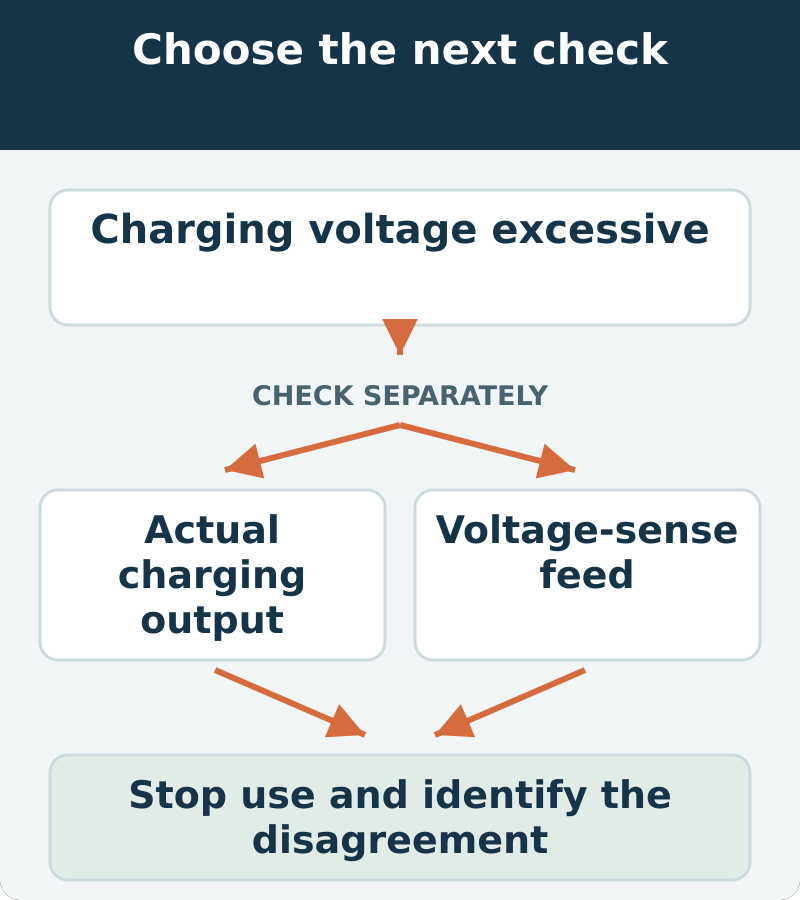
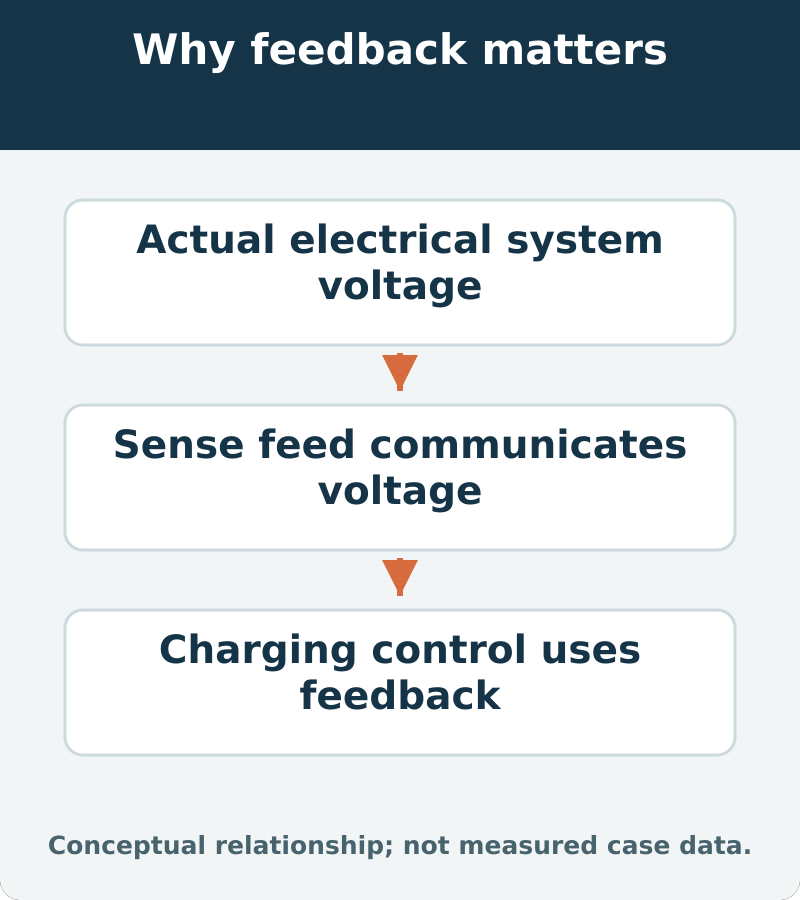
ALLDATA’s Transit report describes a 2016 150 3.7L with excessive charging voltage, warnings and gauges dropping. A controlled alternator assessment redirected attention to a feed. The fuse was intact, but wiring to a connector was open. Repairing that path restored charging and instrument behavior; no final voltage log was published.
The pattern suggests checking the shared electrical environment before declaring several modules independently defective. It does not prove every warning on another van is secondary. Save the original fault information, correct the supported supply problem and then determine which symptoms or entries remain. That sequence preserves evidence without turning a shared-cause hypothesis into a blanket dismissal.
The fuse passed but the path did not
A fuse can be intact while a connection or wire farther along the route is open. The fuse’s condition therefore cannot certify the entire feed. The meaningful question is whether the required electrical support reaches the intended point under the appropriate test conditions.
This is a useful distinction when an owner has already checked the obvious protection device. That check was not pointless; it simply answered a smaller question. Ask the technician to identify the part of the route that remained unverified and the finding that localized the interruption. A clear path description is more useful than another broad statement that all the fuses look good.
What a controlled alternator test can separate
A specified control test can help distinguish an alternator’s response from the external information or support it receives. The interpretation depends on the system’s architecture and expected behavior in that test state. There is no single default-voltage rule that should be imposed on every alternator.
Do not recreate the source account’s connection changes as a driveway procedure. Disconnections made at the wrong time or on the wrong system can create hazards and misleading results. The workshop should use the current service method and explain what the response established, including which external paths still required investigation before a component replacement could be justified.
A wire repair must preserve circuit protection
Restoring an interrupted route is not simply a matter of making a new connection between two convenient points. The approved repair must preserve the intended circuit protection, conductor requirements, routing and environmental durability. A shortcut that makes the voltage appear normal can still leave the vehicle incorrectly protected.
Ask what damaged section was identified, what method was used and whether nearby damage or a reason for recurrence was found. If the cause remains unknown, the record should say so. Avoid treating a wire-overlay description from another vehicle as a universal how-to; the exact endpoints and protection relationships must come from the correct diagram and repair standard.
Check charging and the affected electronics together
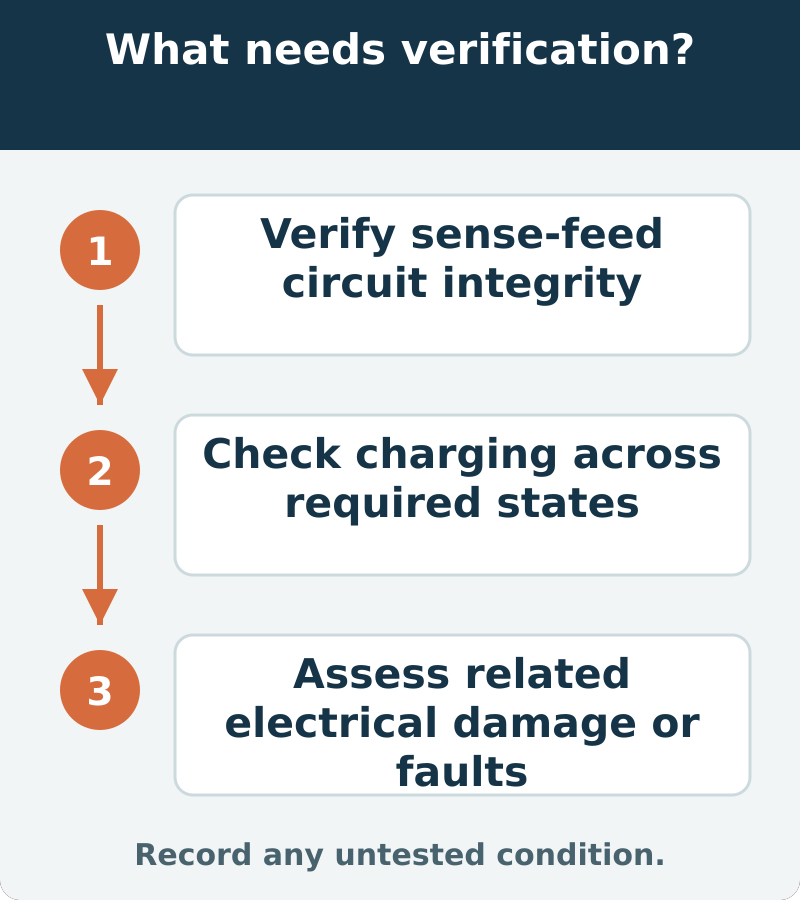
Final verification should include the permitted charging assessment, the original instrument behavior and the relevant fault status. Because excessive voltage can affect more than the charging complaint, any battery or electronic concerns identified during the inspection need their own resolution rather than being assumed cured when the gauge recovers.
At collection, request the actual findings and remaining limitations, not an invented universal target number. If warnings recur, stop safely and report the sequence. The central decision is to restore a trustworthy electrical supply and feedback path first, then reassess individual systems with that foundation in place. Several warning lamps do not automatically justify several replacement modules.










Comments 0
Questions, fixes, and real-world diagnostic notes from readers.
Be the first to share a diagnostic result or ask a follow-up question.