
2005 Audi A4 G28 Signal Faults: Check How the Sensor Is Mounted

Quick answer: A speed-sensor code can involve the sensor’s installed relationship to its target. A mounting change is justified only by applicable service information and matching evidence.
Unpredictable stalling makes this a recovery-and-inspection problem, not a reason to keep driving until another code appears. Do not remove a spacer or alter sensor clearance from an online case alone.
The workshop needs electrical evidence alongside an installation check. A meter such as the AUTOOL DM301 can support appropriate passive voltage measurements; it does not establish bulletin eligibility or prove that a sensor-to-target relationship is correct.

In this guide
The signal depends on its surroundings
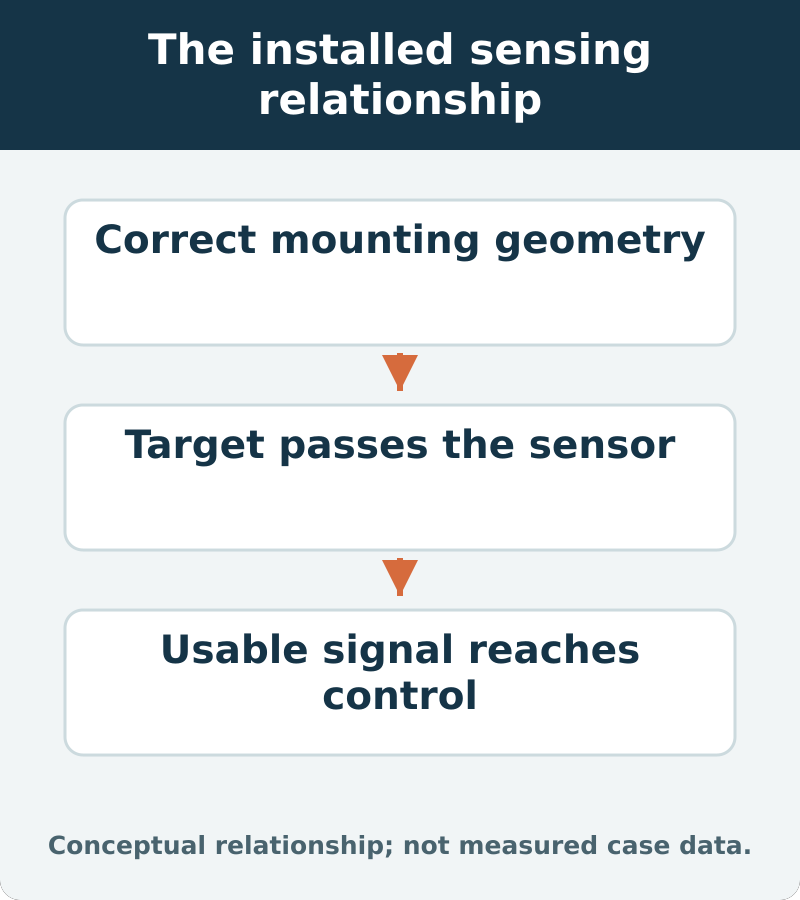
Think of an engine-speed sensor as one participant in a measurement, not a self-contained answer. Its target must pass in the intended relationship, the mounting must locate it correctly, and its circuit must carry information the controller can use. Replacing the participant does not necessarily repair the relationship.
That is why a code description containing “sensor” should open a diagnostic route rather than a parts order. Ask whether the workshop is investigating loss of information, implausible information or a documented installation condition. Those questions can lead to different checks even when the driver’s experience is simply an engine that stops unexpectedly.
What this Audi account actually supports
ALLDATA’s Audi A4 case describes intermittent stalling with P0321 and P0322 on a reported 2005 Quattro 3.0L. A consultant identified service information concerning a speed-sensor spacer. The specified mounting correction was followed by a road test without stalling or returning codes. The account contains no before-and-after signal captures.
This supports considering applicable installation guidance. It does not establish a spacer-removal rule for every A4, nor show that every electrical alternative was independently excluded. If your engine identification or installed arrangement differs, the connection to this particular repair may end before any hardware is touched.
Four questions before using a bulletin
Ask the service adviser to make the applicability check visible on the estimate:
- Does the vehicle identification and engine configuration fall within the document’s scope?
- Does the installed component arrangement match the condition the document describes?
- Do the complaint and diagnostic findings fit, rather than just one familiar code?
- Is this the current instruction, including any superseding information or accompanying checks?
These are eligibility questions, not paperwork for its own sake. A correctly performed operation from the wrong procedure is still the wrong operation. A useful estimate can identify the applicable document and proposed inspection without promising that a known repair will inevitably solve an intermittent fault.
A new sensor can repeat an installation problem
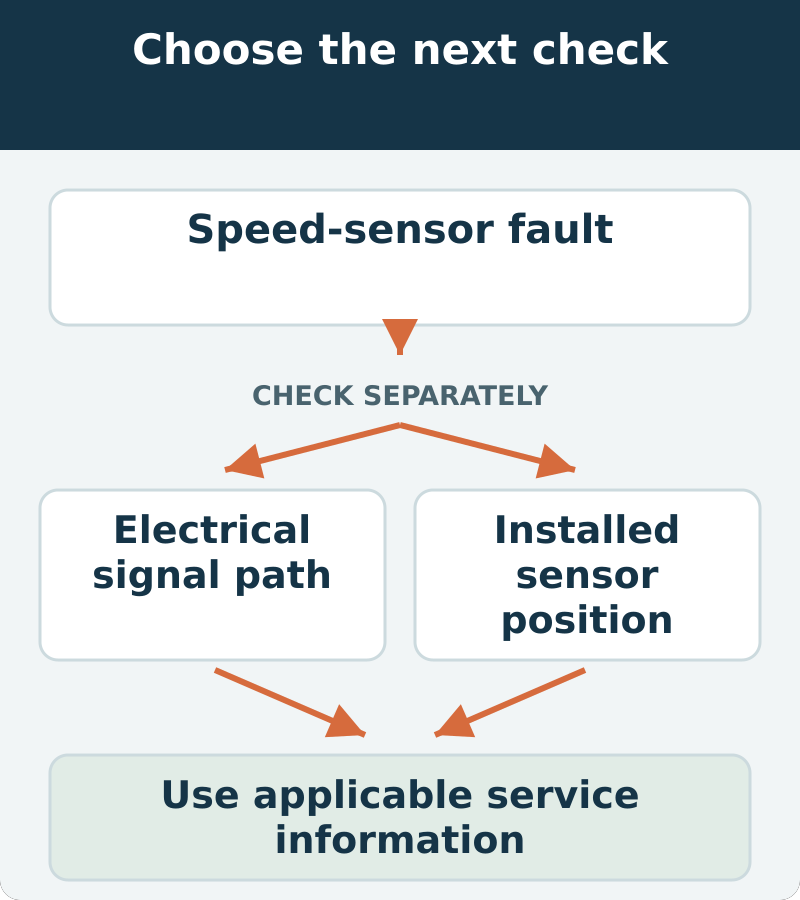
If a replacement occupies the same incorrect position, the original difficulty may remain. Conversely, a correctly mounted sensor can still have a circuit or component fault. Installation and electrical condition therefore belong on parallel lines of the assessment; neither is a substitute for the other.
For an owner facing a repeat visit, the helpful question is not “Was the new part defective?” It is “What was verified about the installation and circuit when that part was fitted?” Keep the previous part number and invoice available. They give the next technician something specific to check without treating a replacement history as proof against the earlier shop.
What electrical testing can and cannot settle
A reading has value only with its location, operating condition and expected behavior attached. “It had voltage” is not a complete signal assessment. Equally, a normal static check does not recreate every condition under which an intermittent signal can disappear. The required instruments and connection methods depend on the identified sensor system.
Ask the workshop which observation would separate its remaining explanations. It may need a captured event, an installation inspection or a circuit test specified in the repair information. Avoid requesting one preferred test simply because a tool can perform it. The purpose is to distinguish possibilities, not to accumulate reassuring readings unrelated to the stall.
Retest the failure without recreating a road hazard
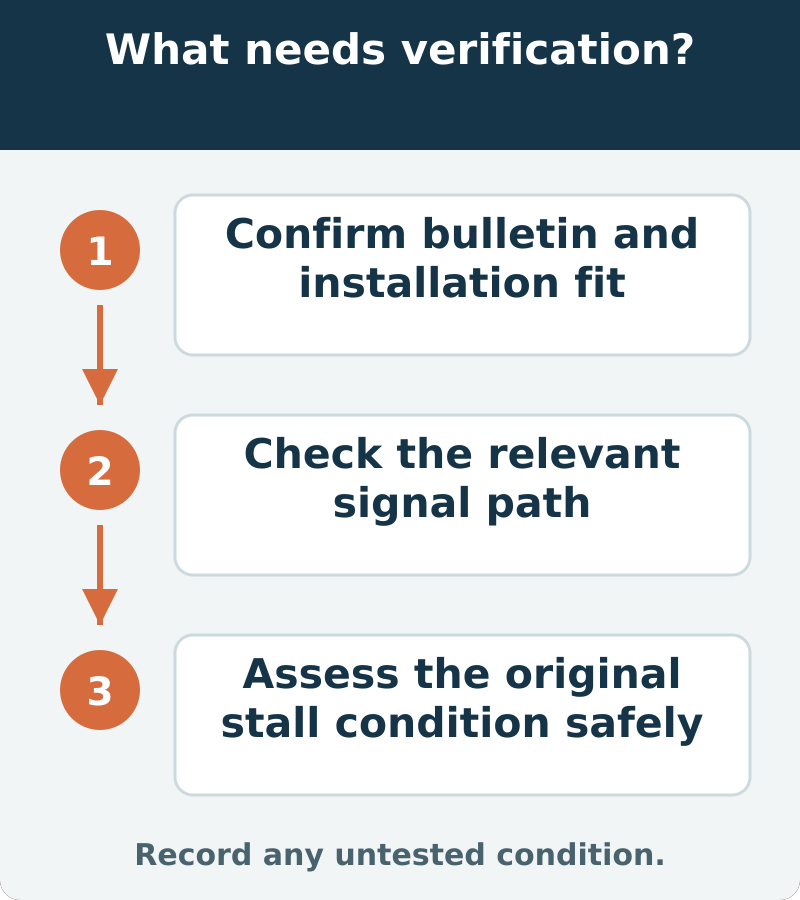
A repair record should connect the original complaint to the checks completed afterward. That includes the relevant fault status, the permitted functional evaluation and whether the conditions associated with the original failure could safely be assessed. Clearing memory alone does not show that the engine-speed information has become dependable.
An intermittent problem also needs an honest handover: what was verified today, what could not be reproduced, and what the owner should do if it returns. Do not deliberately create a dangerous stall to collect evidence. Record circumstances only when safely stopped, arrange assistance, and give the workshop the information needed to resume from the last supported conclusion.










Comments 0
Questions, fixes, and real-world diagnostic notes from readers.
Be the first to share a diagnostic result or ask a follow-up question.