
Mercedes E200 Accessory Noise: A Seized Alternator Overrunning Pulley Confirmed


A Mercedes-Benz E200 came in with a rattle from the accessory drive and conspicuous belt movement at idle or as engine speed changed. The available record does not state its year, chassis, engine or mileage. After the belt-drive components were separated and the alternator pulley’s one-way function was checked, the pulley was confirmed seized. The workshop replaced the alternator overrunning pulley (OAP); afterward the noise disappeared and the belt ran steadily.
Case at a glance
| Stage | Case finding |
|---|---|
| Complaint | Accessory-drive rattle and unstable belt motion |
| Early possibilities | Tensioner, idler, driven accessory, alternator bearing or OAP |
| Confirmation | Pulley no longer performed its required one-way overrunning action |
| Repair | OAP replaced with the correct holding/removal arrangement |
| Verification | Rattle gone and visible belt motion stabilized |
The moving belt turned sound into a visible clue
Noise location in a crowded engine bay can be misleading. The first useful detail here was that the sound accompanied unusual belt behavior. Watching from outside the moving envelope helped connect the complaint to the accessory drive, while still leaving several pulleys and accessories under consideration.
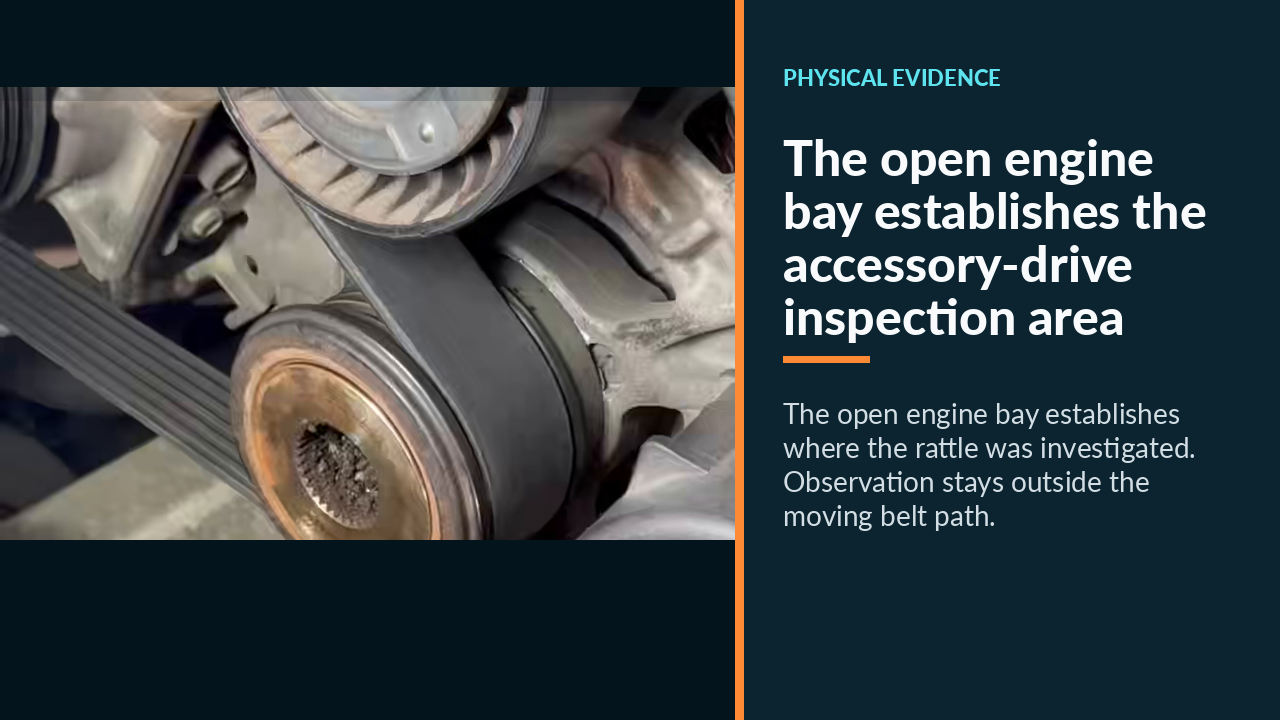
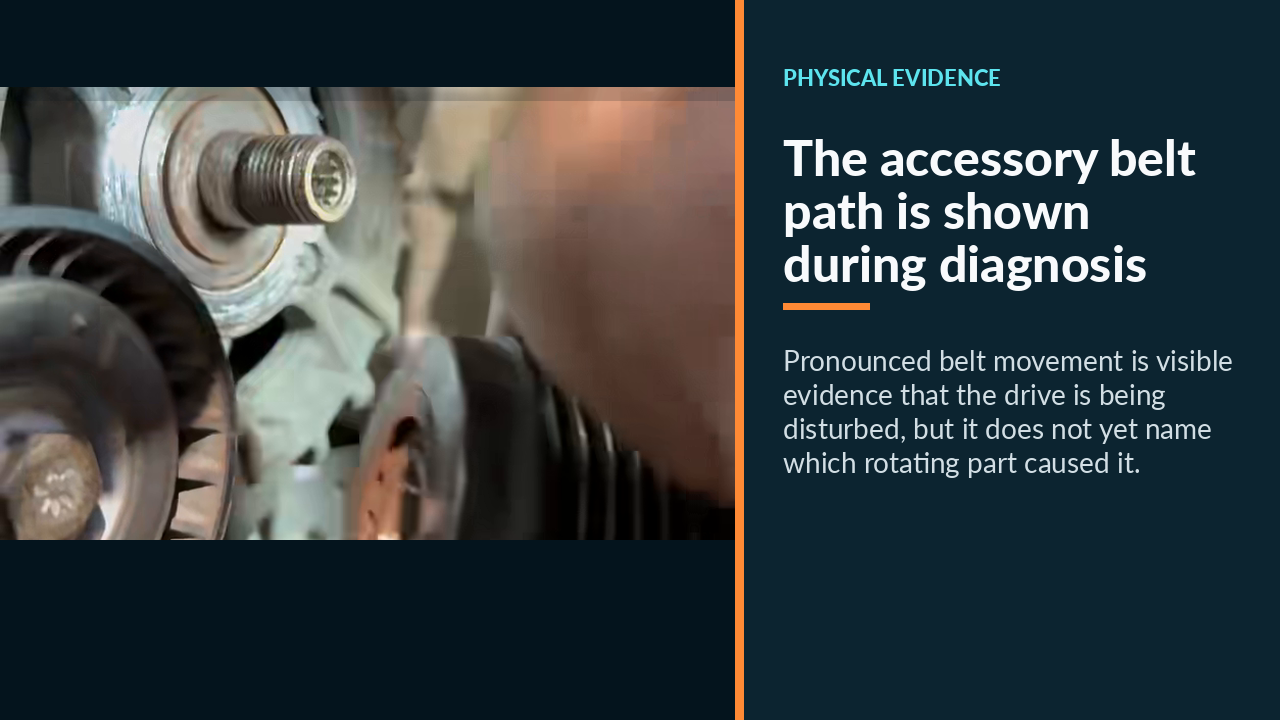
An overrunning alternator pulley is not simply a solid wheel. Its internal clutch is intended to transmit drive in one direction while allowing relative overrun in the other, smoothing alternator inertia during engine-speed changes. When it locks in both directions, that inertia is fed back into the belt and tensioner. The resulting flap or rattle can resemble a weak tensioner.
Stop the drive before asking the pulley the decisive question
Hands-on confirmation began only after the engine was off, restart was prevented and the belt was made safe according to the vehicle procedure. No hand, tool or loose clothing belongs near an operating belt. With the drive isolated, the alternator rotor and pulley can be held and evaluated in the directions specified for that design.
the record’s useful conclusion is functional rather than statistical: this pulley was seized. A claim that one part causes a fixed percentage of all E200 belt noises would not help diagnose the next car, so no such percentage is carried into this guide.
Directional action separated the OAP from neighboring suspects
With the pulley removed or properly held, a healthy overrunning mechanism should behave differently in its drive and freewheel directions as defined by its manufacturer. This unit did not provide the required action. That finding made the OAP the confirmed fault instead of leaving the case at “noise near the alternator.”
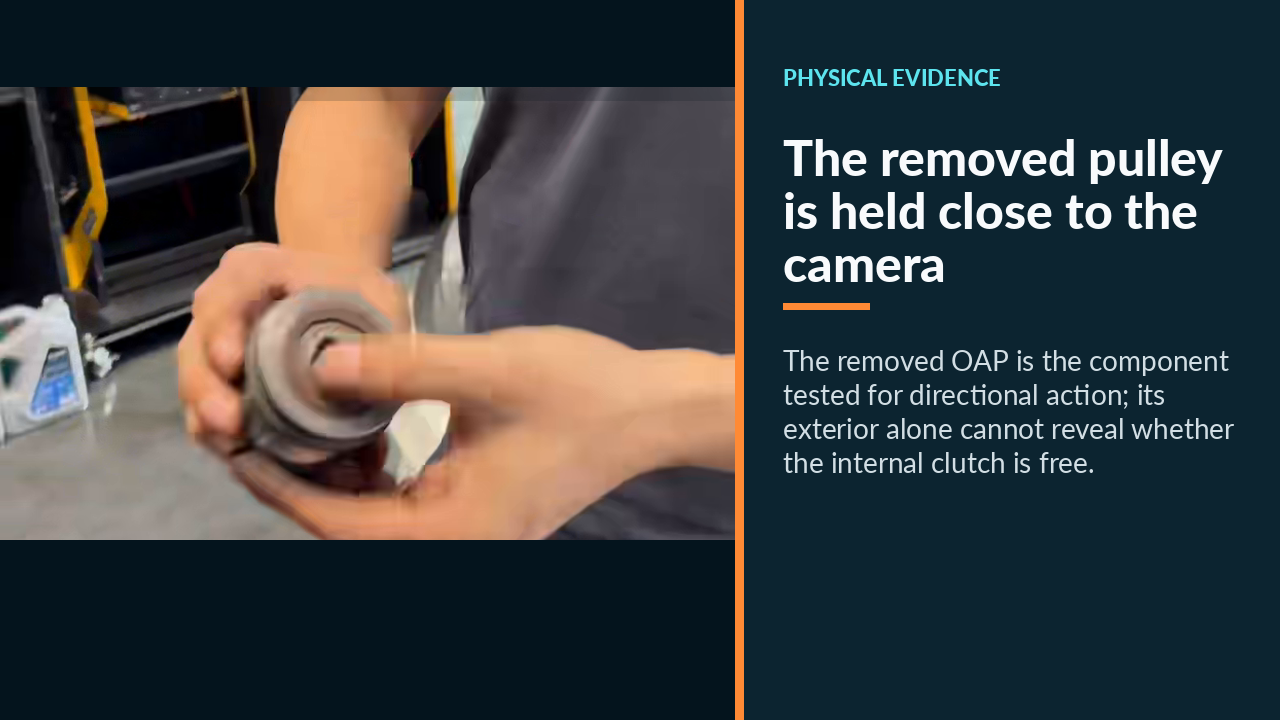
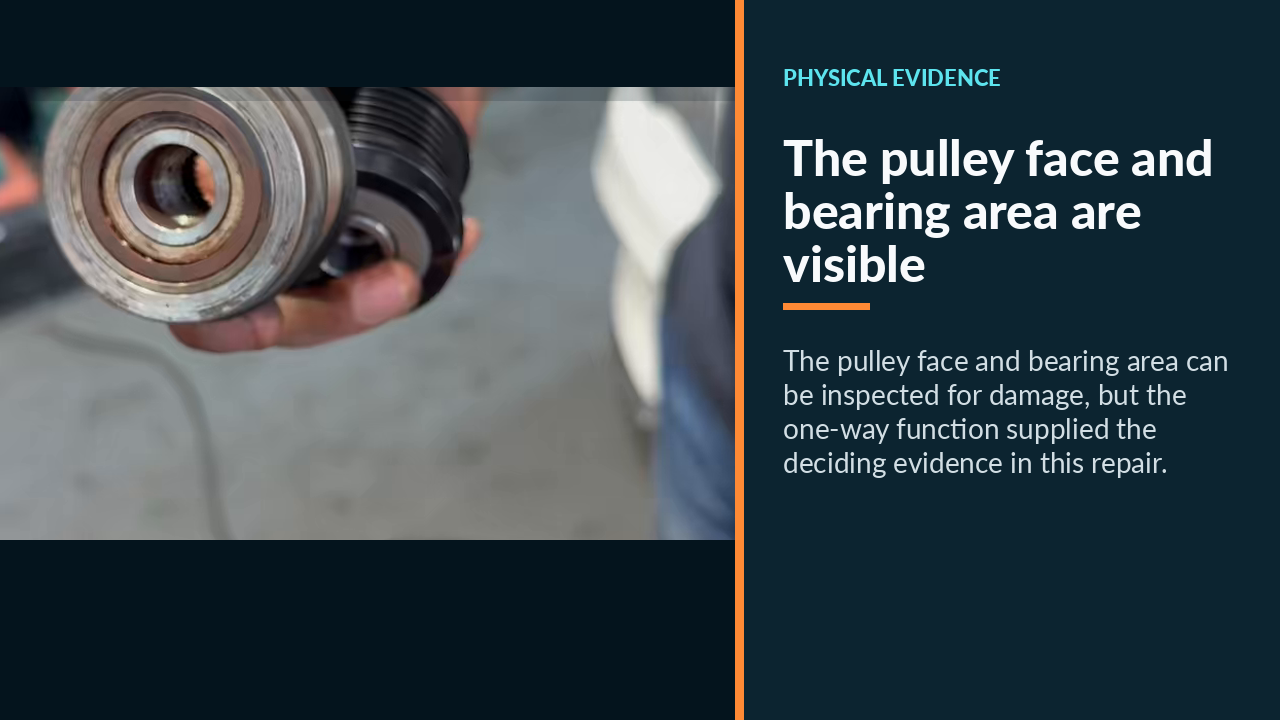
This also explains why a bearing-only theory did not carry the decision. A rough alternator bearing can make noise, and an idler or tensioner can fail, but those possibilities do not account for a pulley that has lost its designed one-way behavior. On another car, each rotating component still deserves inspection after belt removal rather than assuming this result.
The special tool held the shaft while the OAP was renewed
The workshop replaced the pulley using an appropriate tool arrangement that holds the alternator shaft while the OAP is released and tightened. Improvised impact or counter-holding methods can damage the shaft, fan, winding or new pulley. Installation direction, cap, tool profile and torque must match the exact alternator and current service information; the available record does not provide a transferable value.
Before refitting the belt, the practical repair includes checking belt ribs, tensioner travel, idlers and alignment. A contaminated, cracked or heat-damaged belt should not be treated as new merely because the original noise source has been found.
Before-and-after belt behavior closed this diagnosis
With the accessory drive restored, the reported rattle disappeared and belt movement became stable. Those two checks challenge both parts of the opening complaint: sound and motion. A charging-system check and observation through idle and controlled speed changes are sensible final steps whenever the alternator drive has been disturbed, although the available record does not give numeric charging data or a road-test interval.
Use the sequence from this E200 when a similar rattle follows engine-speed changes: observe the belt safely, isolate the drive, inspect every rotating member, and test the OAP’s specified directional action. Replace this pulley only when that function is wrong. A quiet belt with a normally overrunning pulley should send the investigation toward alignment, tensioner, idler, accessory bearings or another noise source.










Comments 0
Questions, fixes, and real-world diagnostic notes from readers.
Be the first to share a diagnostic result or ask a follow-up question.