
BMW 328 Weak A/C: Three Clues Confirmed Internal Compressor Wear

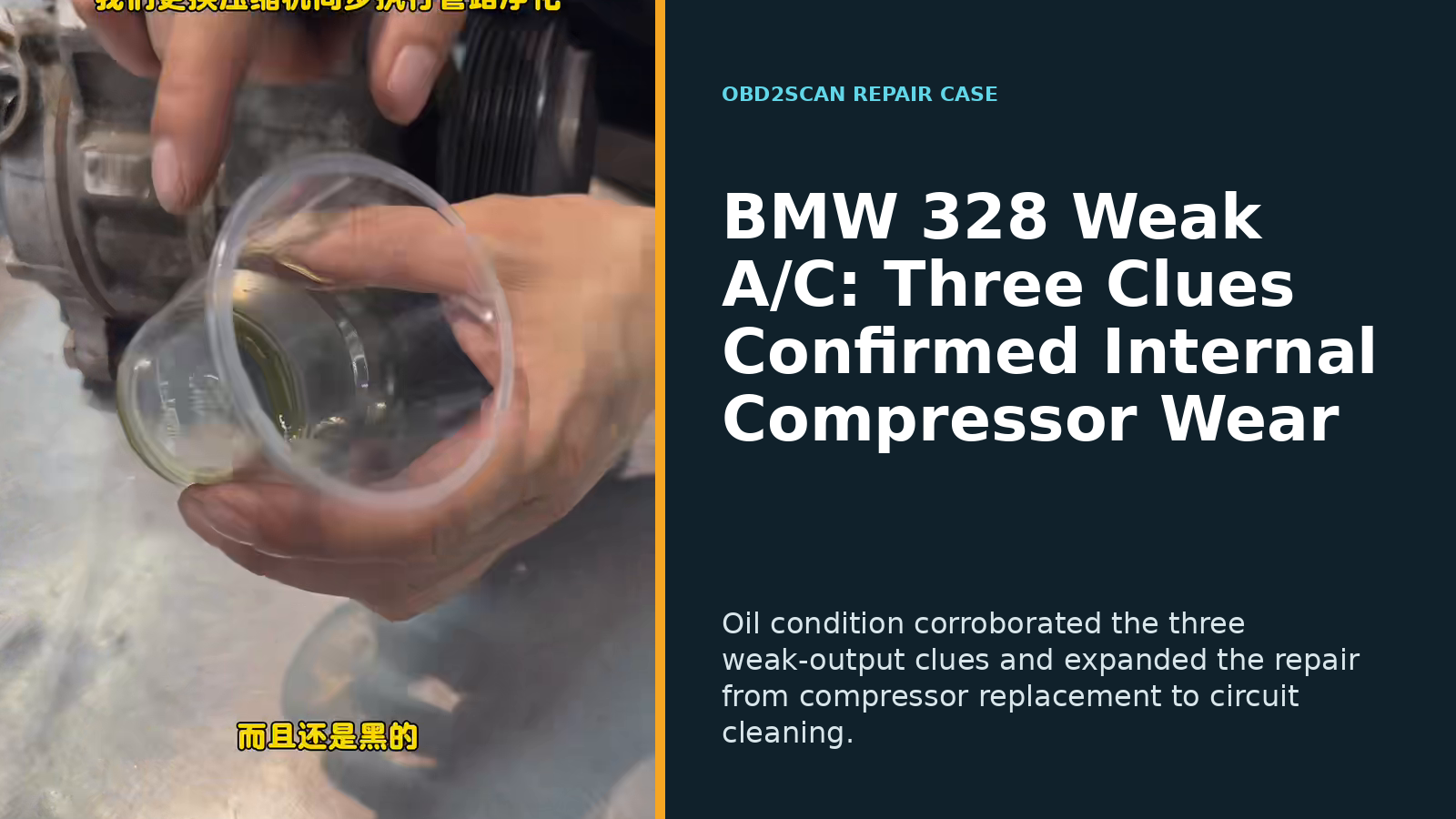
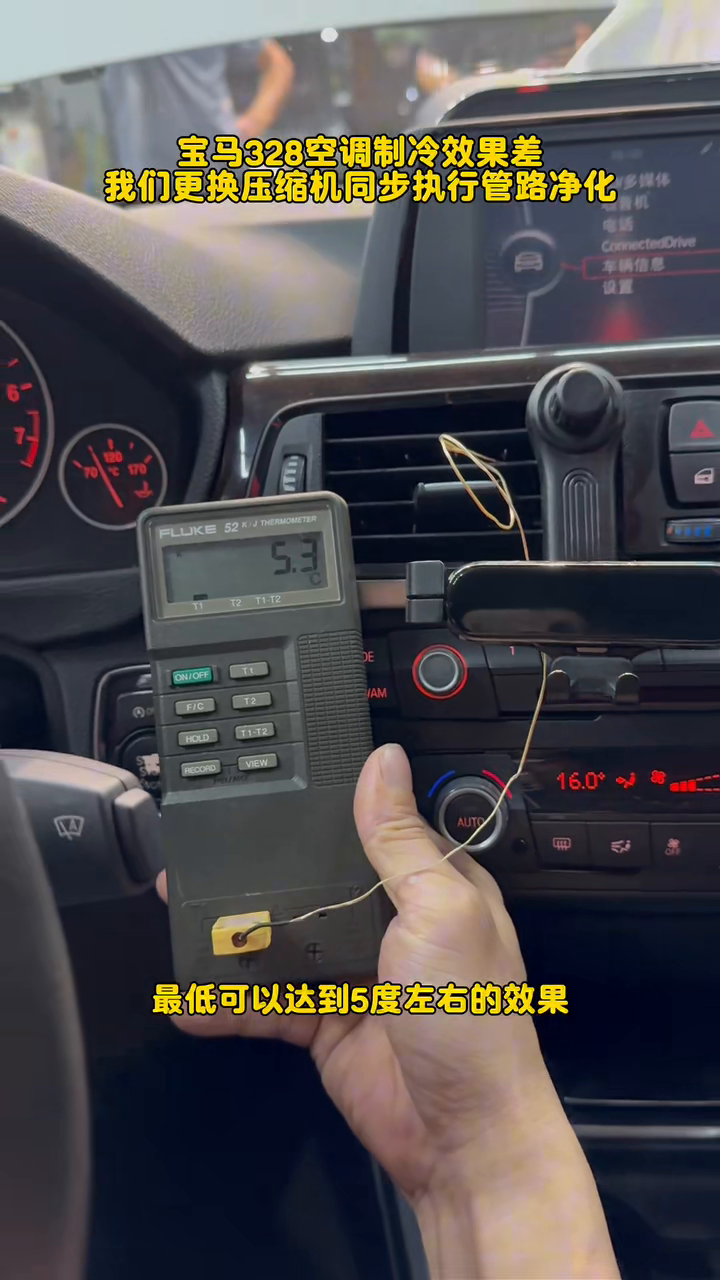
A BMW 328 from the F30/F35 family with 96,000 km arrived with weak air conditioning; its model year and engine were not reported. The outlet sat near 16°C at idle, high-side pressure rose slowly, and a light compressor-area noise was present; dark oil drained from the compressor then corroborated internal wear rather than proving it by color alone. The workshop replaced the compressor, flushed the full circuit until the discharge was clear, renewed disturbed seals, evacuated and recharged the system, and measured about 5.3°C at the outlet in a static check.
Case at a glance
| Item | This BMW 328 |
|---|---|
| Vehicle | BMW 328, F30/F35 family |
| Year / engine | Not reported |
| Mileage | 96,000 km |
| Complaint | Weak A/C |
| Diagnostic clues | About 16°C at idle; slow high-side build; light compressor-area noise |
| Corroborating observation | Dark oil drained from compressor |
| Confirmed fault | Internal compressor wear |
| Repair | Compressor replaced; refrigerant circuit flushed until clear; seals renewed |
| Restoration | Evacuated and recharged from exact-vehicle data |
| Verification | About 5.3°C at outlet, static only |
Weak cooling needed more than one clue
An idle outlet near 16°C established that the system was cooling poorly, but temperature alone could reflect charge, airflow, heat load, control behavior or compressor output. The pressure response narrowed the field: the high side built too slowly for the recorded condition. A light mechanical noise near the compressor added a third, independent sign that the pump itself was struggling.
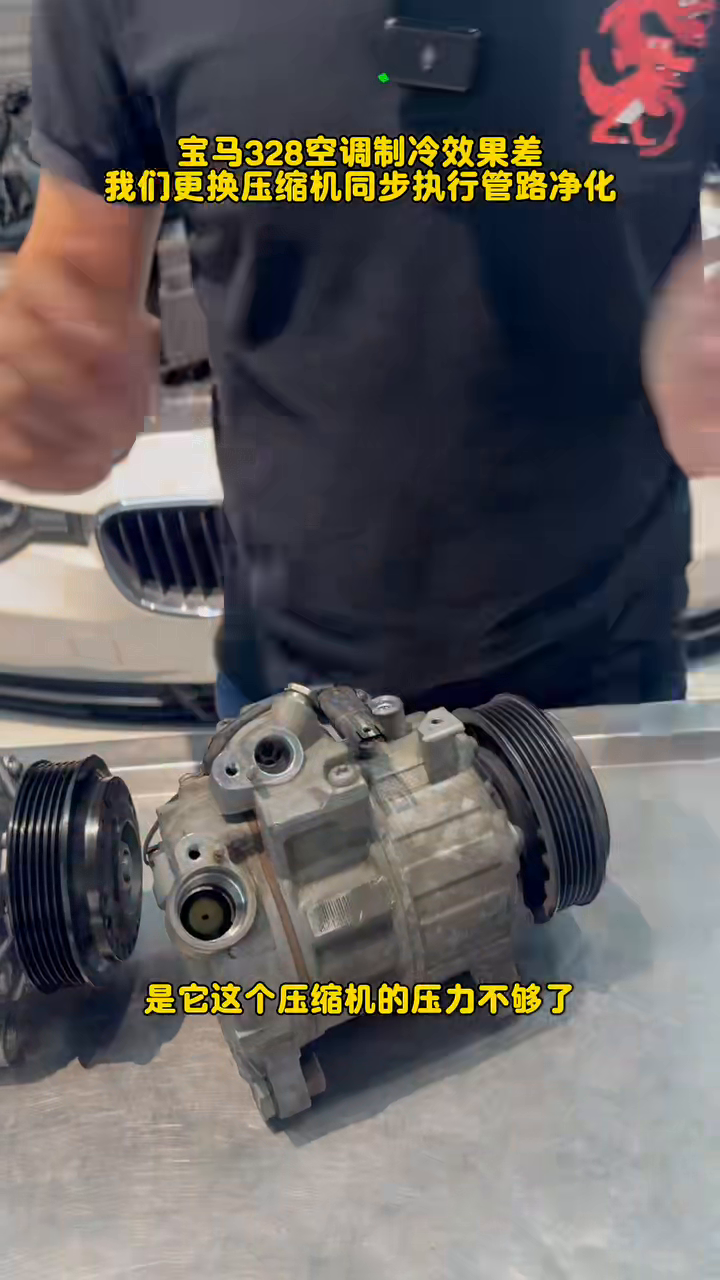
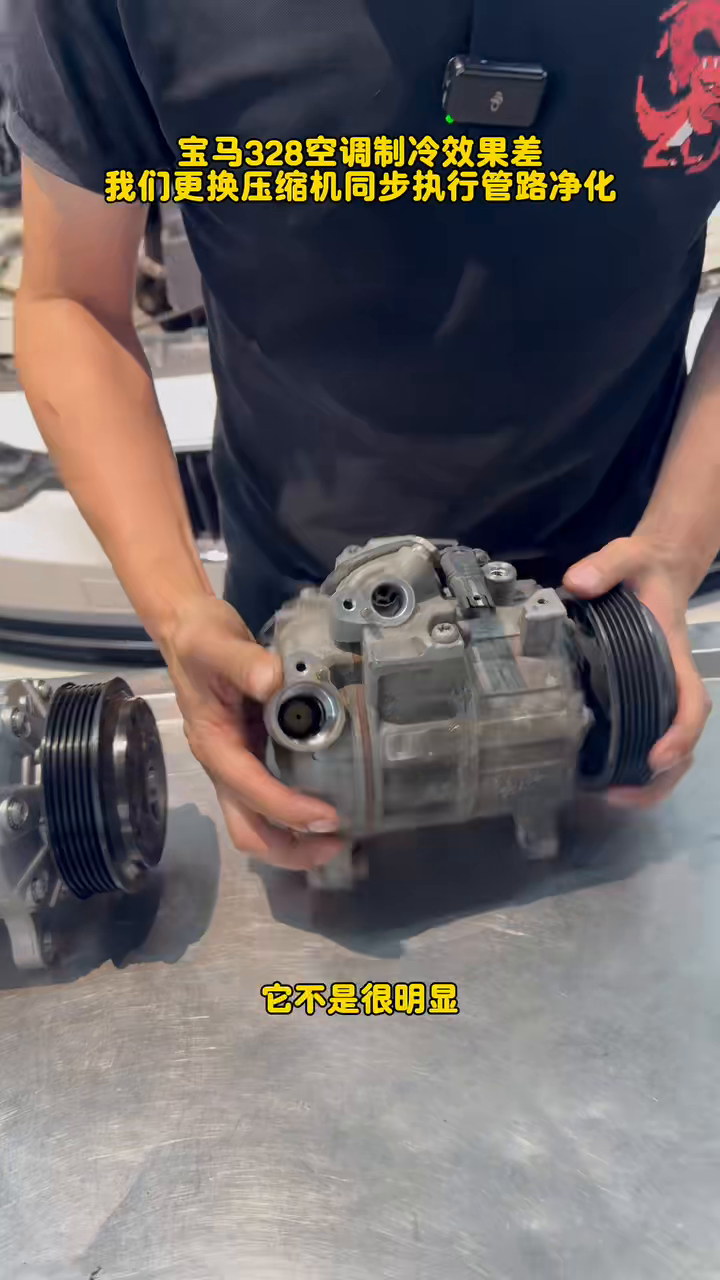
At this stage, internal wear was suspected but not yet reduced to a single visual finding. The compressor oil inspection supplied the corroborating evidence.
The oil mattered because the other evidence already pointed inward
Oil draining from the removed compressor appeared very dark. In this case, that condition agreed with reduced pressure development, weak outlet performance and noise, supporting the conclusion that the compressor had worn internally and circulated contamination.
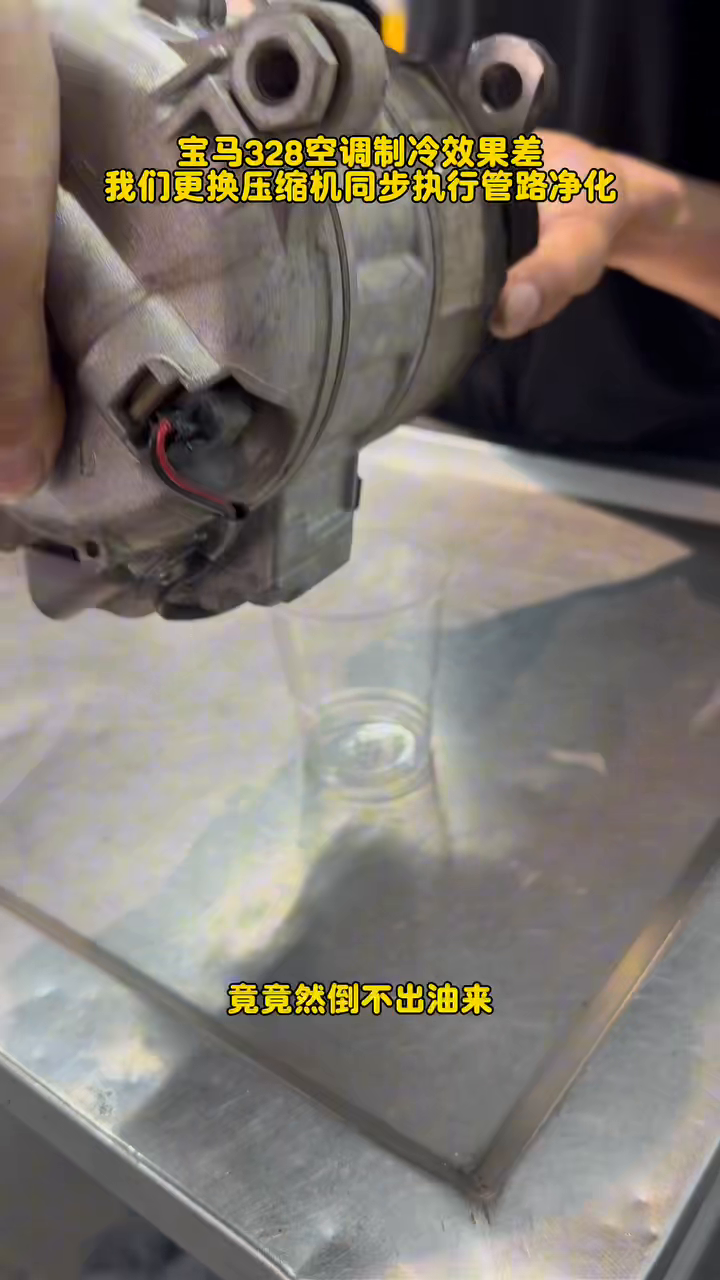
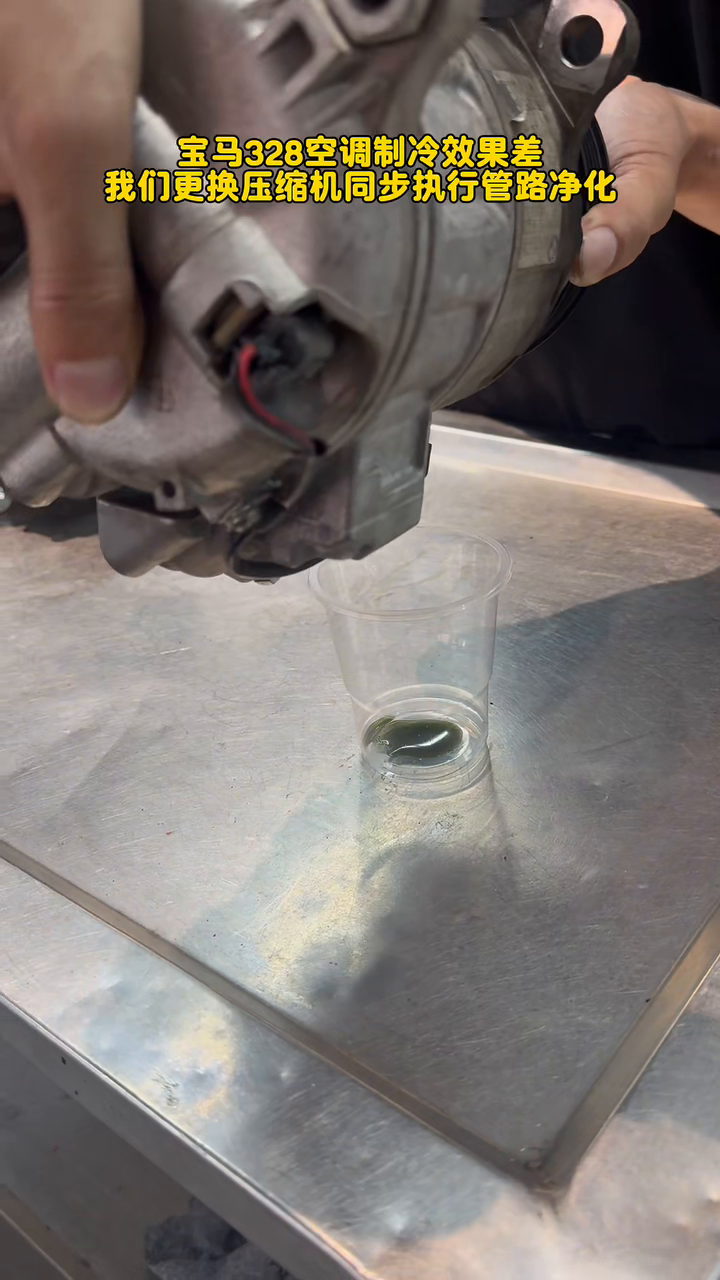
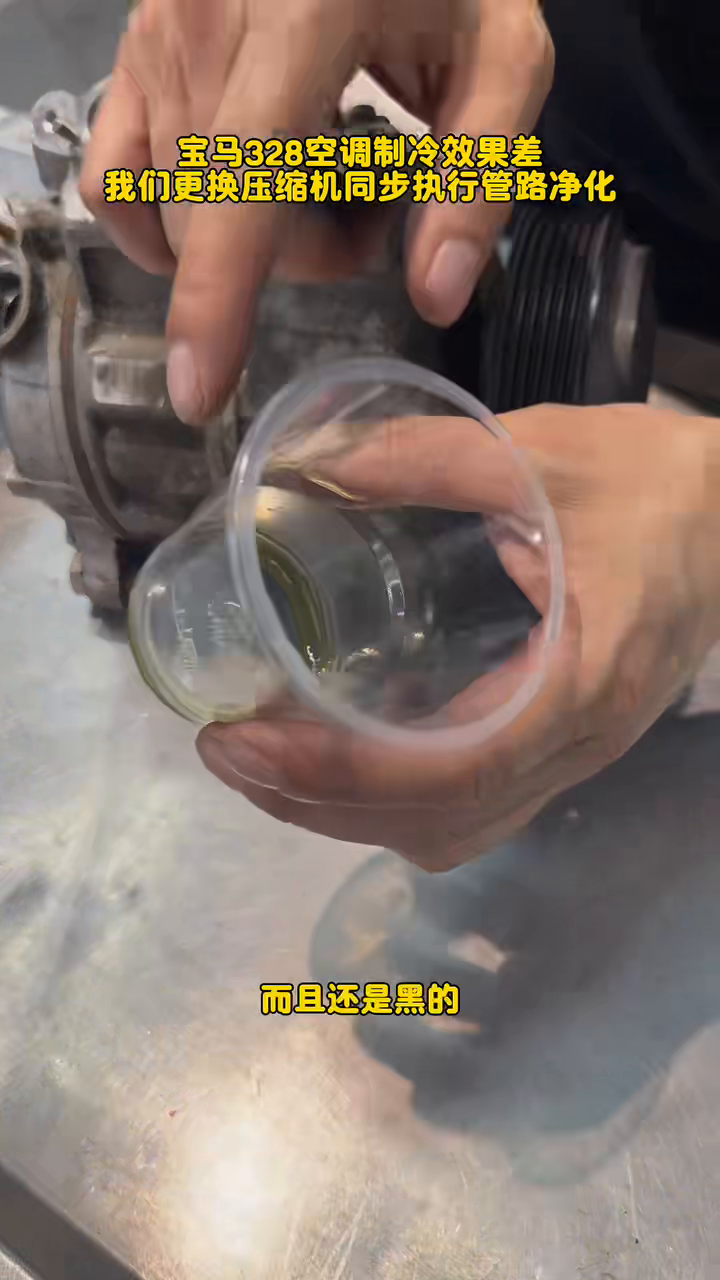
That distinction keeps suspicion and confirmation honest. “Weak A/C” did not automatically mean compressor. The combined temperature, pressure behavior, noise and oil condition justified the compressor decision in this vehicle.
Replacing the pump was only half of the contamination repair
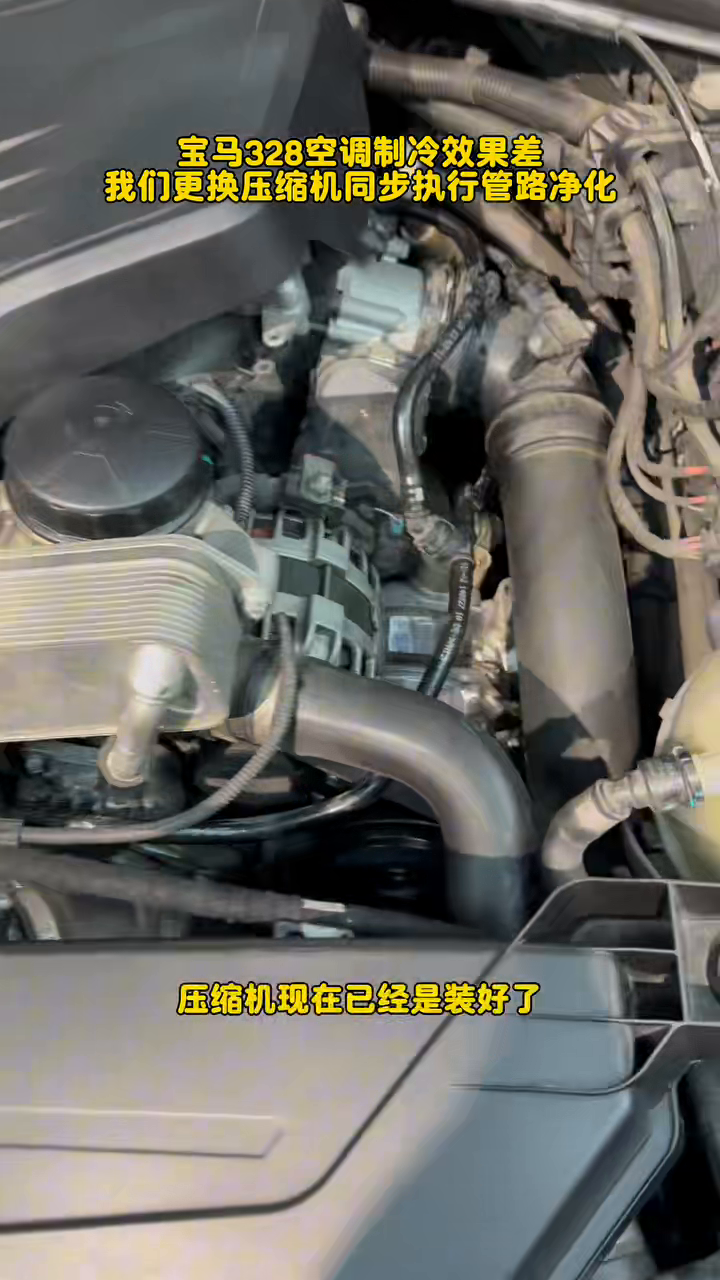
The worn compressor was replaced, but the shop also flushed the refrigerant circuit repeatedly until the outgoing fluid was clear. That step addressed contamination outside the removed unit rather than sending a clean replacement into a dirty circuit. Opened joints received new seals before reassembly.
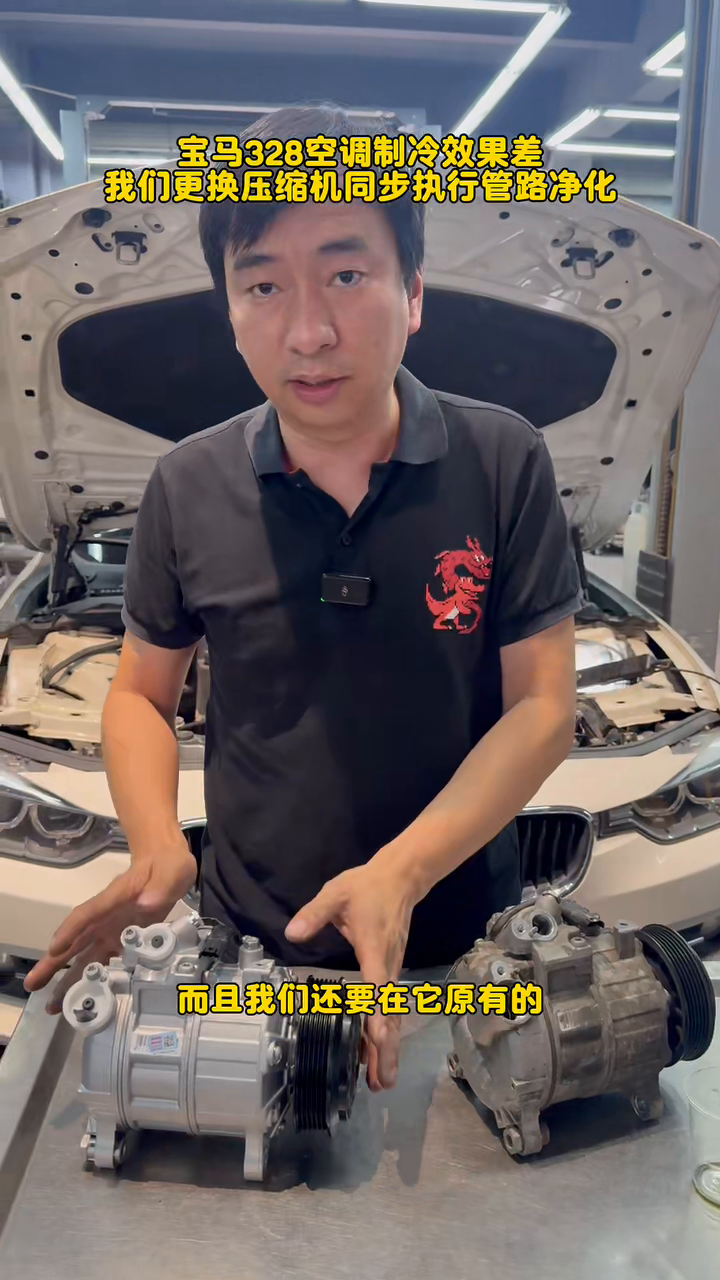
The source does not report flush chemistry, direction, component-specific restrictions, oil quantity or acceptance criteria beyond clear discharge. Those details must come from the exact system procedure; some components may require replacement rather than indiscriminate flushing.
The final number is useful—but not portable as a specification
After reassembly, the system was evacuated and recharged. Because the year and engine are unresolved, the source’s application-specific charge and tightening figures are deliberately not carried into this article; refrigerant type, charge mass, oil balance and fastener values must come from the exact vehicle label and service information.
The outlet display later showed about 5.3°C, a clear improvement from the reported 16°C idle complaint. No road result, ambient condition, blower setting, extended heat soak or later contamination check is reported, so this closes the stationary workshop condition only.
For another BMW with weak A/C, record outlet temperature and system pressures under known conditions, listen for abnormal compressor behavior, and inspect recovered oil only as part of that evidence chain. Do not copy this compressor-and-flush repair when pressure behavior points to charge, airflow or control problems, or when oil condition does not support internal contamination.


Comments 0
Questions, fixes, and real-world diagnostic notes from readers.
Be the first to share a diagnostic result or ask a follow-up question.