
Mercedes E200 W211 Valve-Cover Oil Leak: Sealant Used Only at T-Joints

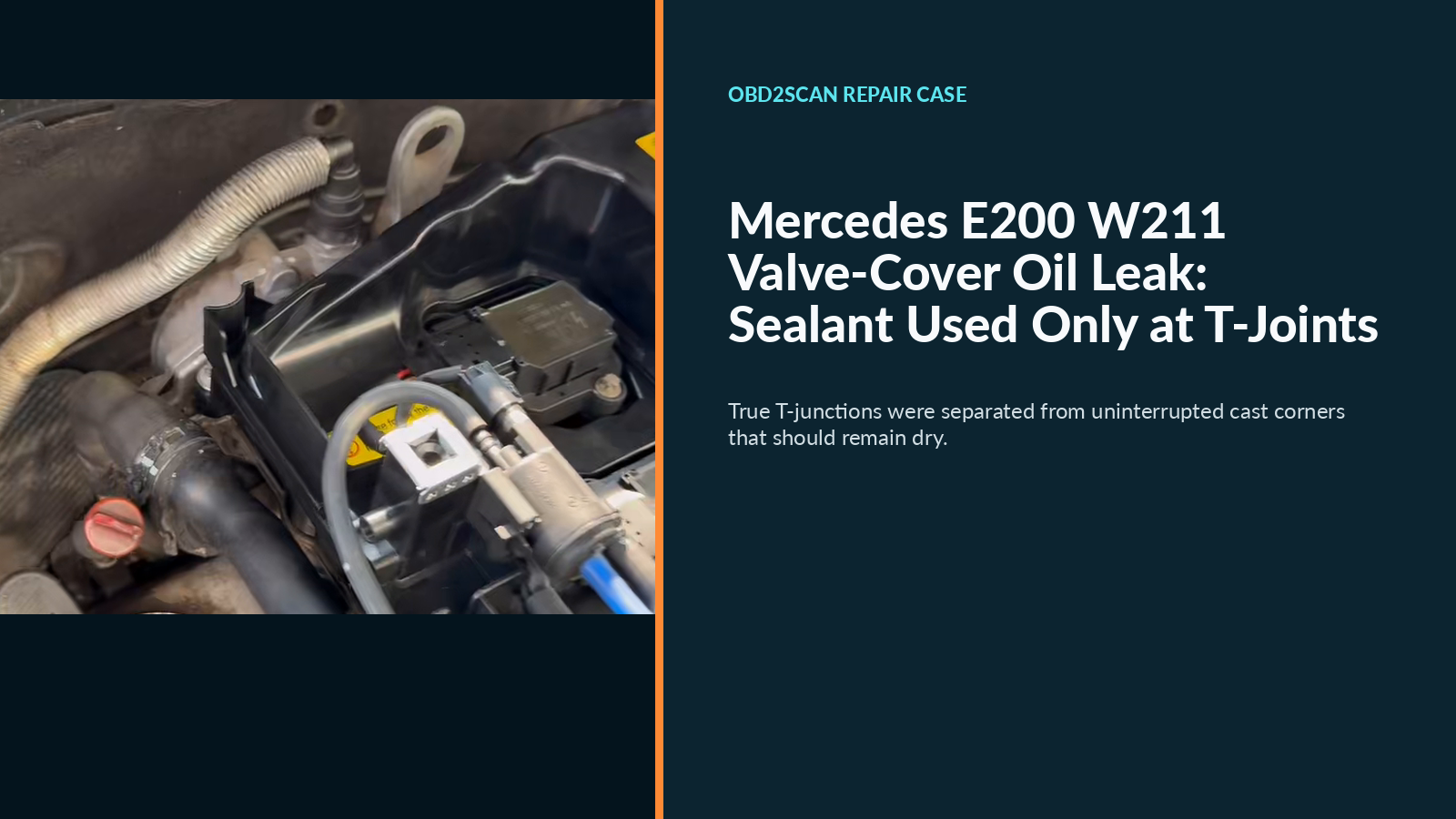
A Mercedes-Benz E200 W211 with an M271 engine (year and mileage not reported) was repaired for oil leakage around the valve-cover sealing area. The case record attributed the active leak to a hardened cover gasket and treated indiscriminate sealant as a repeat-leak risk. The sealing surfaces were cleaned, a small amount of sealant was applied only where the cylinder head meets the front cover, uninterrupted areas were installed dry, and a full warm-up ended with no fresh seepage or burnt-oil odor.
Case at a glance
| Item | This vehicle |
|---|---|
| Vehicle | Mercedes-Benz E200, W211, M271 |
| Year/mileage | Not reported |
| Problem | Valve-cover perimeter oil leak and burnt-oil concern |
| Confirmed finding | Hardened gasket/sealing loss at the upper-engine cover area |
| Repair | Remove residue, degrease surfaces, renew seal, use sealant only at actual T-junctions |
| Verification | Full warm-up; no fresh oil at cover edge or plug wells and no burnt-oil odor after cleanup |
Junction geometry decided where sealant belonged
This case was not solved by applying more sealant. The useful distinction was between a true joint—where the cylinder-head surface crosses the front/chain-cover seam—and an uninterrupted cast surface. A small amount of suitable sealant was used at the T-joint because several components meet there. Smooth corners without a seam were left dry so the gasket could seat evenly.
Spreading sealant around the entire perimeter can create raised sections, squeeze-out and uneven compression. The case therefore used the shape of the mating surface to control application rather than treating every corner alike.
Surface preparation established a clean baseline
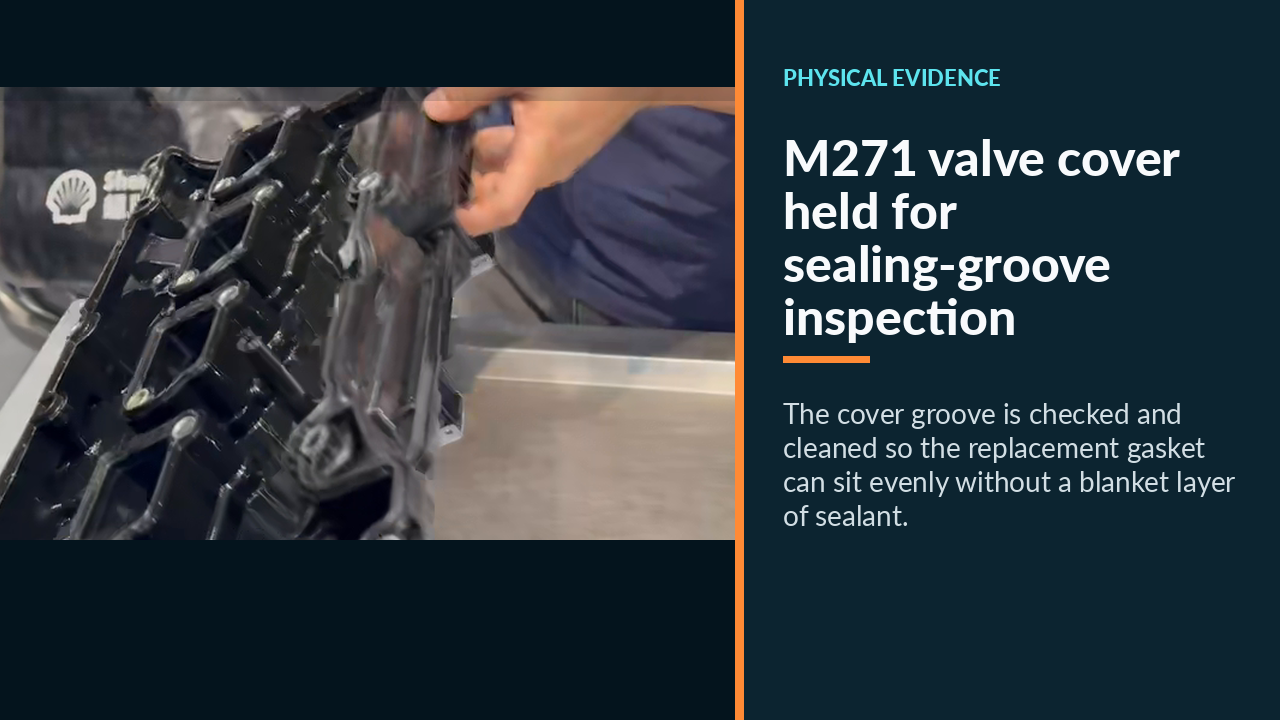
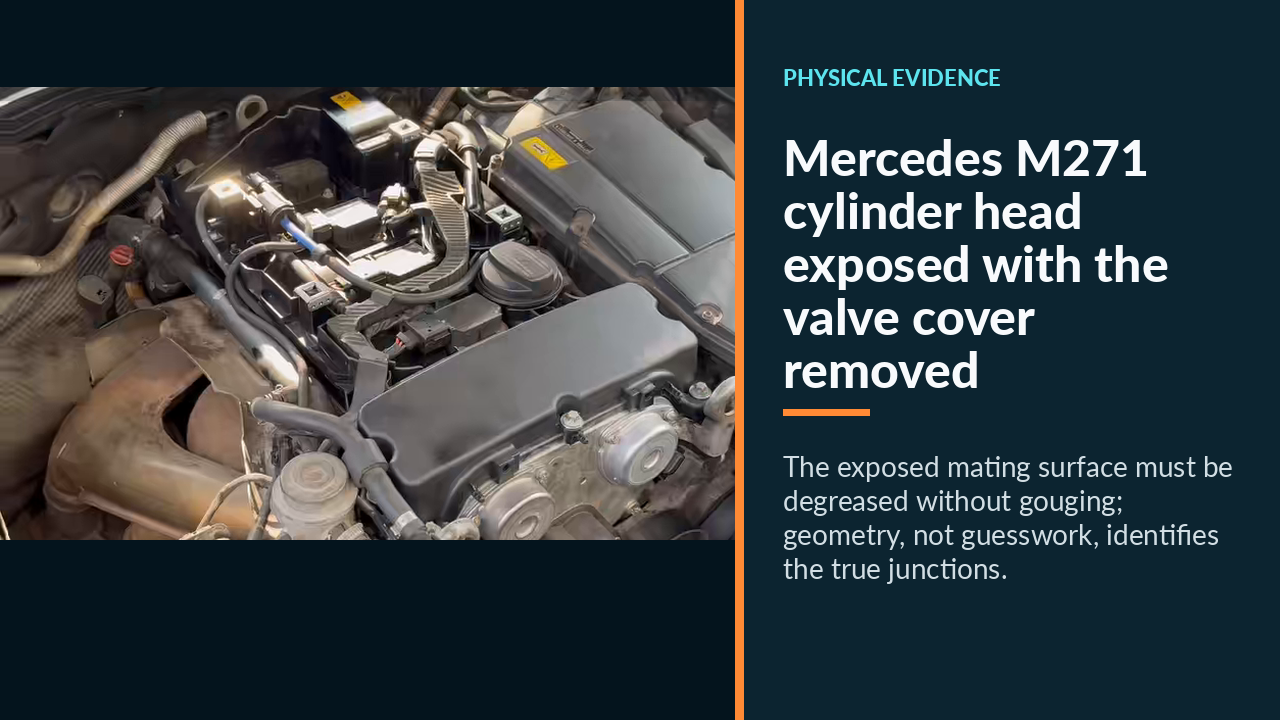
After the cover was removed, old gasket and sealant residue were cleared without gouging the aluminum sealing face. The surface was degreased so oil could not interfere with the new seal, and the cover/sealing track was inspected before reassembly. Open engine areas needed protection from debris during that work.
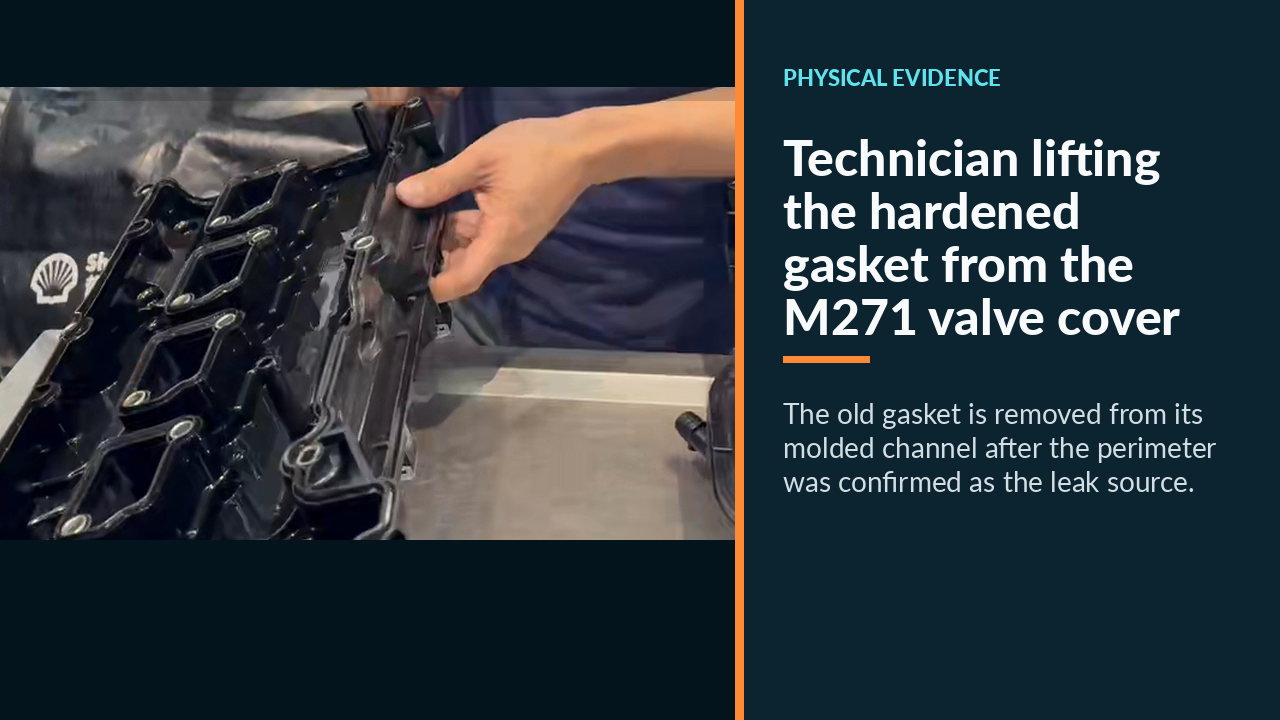
The case record identifies gasket hardening as the failure mode, but it does not report a cover flatness measurement, crankcase-pressure test or exact leak-dye result. Those are useful checks if a repeat leak, cracked cover or abnormal crankcase pressure is suspected; they are not rewritten as completed work here.
Even seating mattered more than a copied torque number
The gasket was placed without twisting, the cover was lowered without disturbing the T-joint sealant, and fasteners were reportedly tightened in a center-out cross pattern. The case record documents 9 N·m, but the year, exact variant and fastener/service-data context are incomplete. For that reason, this case does not publish 9 N·m as a transferable specification.
Use the current Mercedes procedure for the exact engine and confirm whether any seals, fasteners or ignition components require renewal. The engine should be cool before disassembly, and oil must be kept away from ignition connectors and hot exhaust surfaces.
Cleaning the leaked oil was part of verification
Residual oil can continue to smoke or smell after the leak is repaired, making a successful seal appear to have failed. The case record reports cleaning oil from the surrounding hot areas before bringing the engine to normal operating temperature.
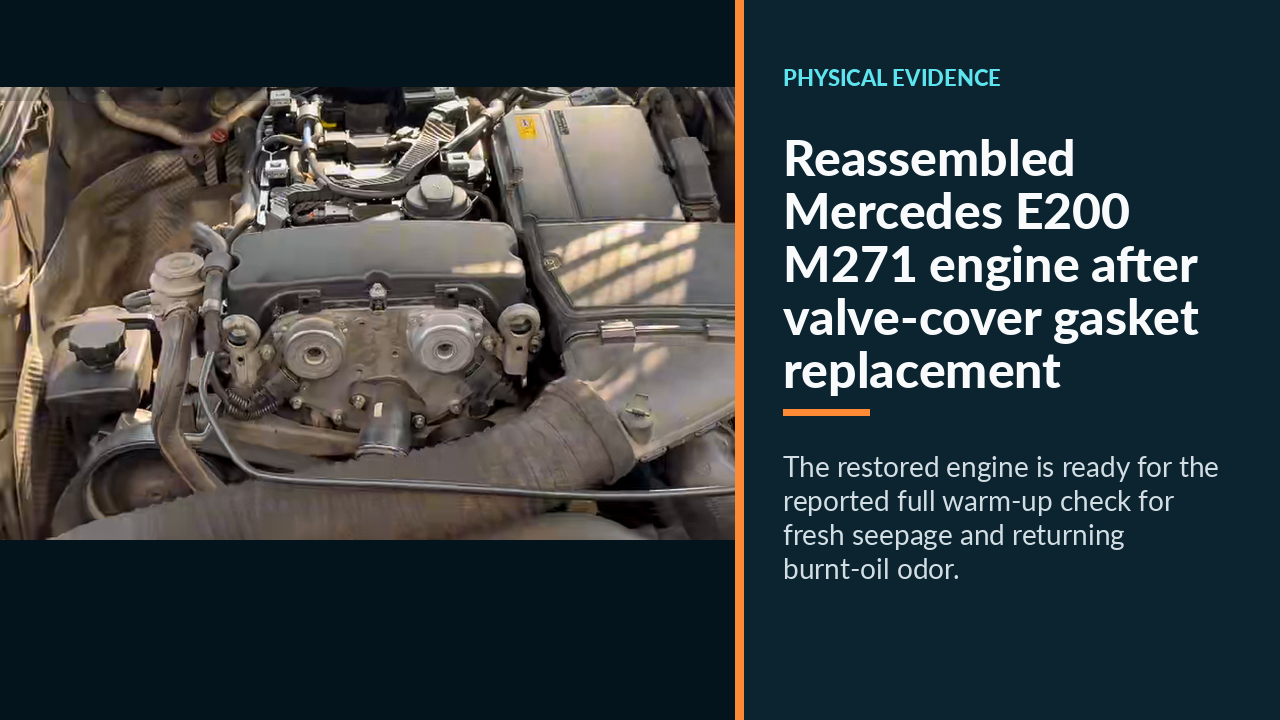
After warm-up, the perimeter and spark-plug wells were inspected. No fresh sweating was reported, and the burnt-oil odor did not return during that check. This provides a new dry baseline and challenges the heat-related symptom, although the available record does not document a later road test or multi-day reinspection.
What another W211 oil leak should prompt
First clean enough to trace the highest fresh wet point. Check the cover perimeter, plug wells, front-cover junctions and nearby ventilation plumbing before naming the gasket. If the leak returns after correct sealing, inspect cover condition, mating-surface damage and crankcase pressure rather than adding more sealant.
The lesson from this E200 is placement, not a universal recipe: sealant belongs only where the exact service procedure calls for it. Other upper-engine leaks can run along the same surfaces, and another M271 may need different parts or additional diagnosis.
Surface geometry decided where sealant belonged
A molded gasket is designed to seal the continuous valve-cover perimeter. Extra sealant spread around that entire path can prevent the gasket from seating evenly, squeeze material toward the engine and complicate the next repair. The limited exception in this M271 case was the true T-joint, where the cylinder head and front cover create a change in mating surfaces. A small, correctly placed amount bridges that junction; uninterrupted cast corners remain dry.
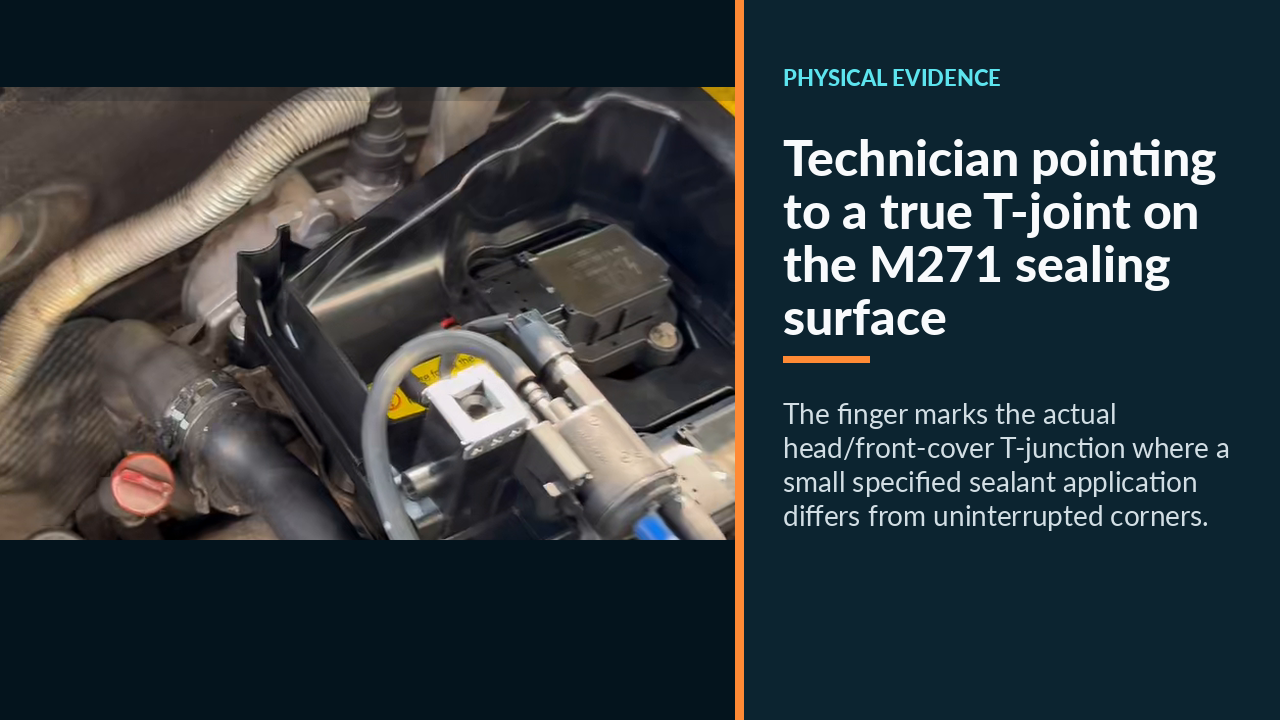
Preparation was therefore more important than quantity. The cover and head surfaces were cleaned without gouging them, old material was removed from the junctions, the gasket was kept in its groove, and oil was cleared from hot exhaust-area surfaces before warm-up. The case record mentions a tightening value, but year and exact variant are not complete enough to transfer it; sequence and torque must come from current W211/M271 service information.
Warm-up checked both seepage and the owner-visible odor
After even reassembly, the engine was brought through a full warm-up. The case record reports no fresh oil at the repaired perimeter and no returning burnt-oil smell. That static hot check is appropriate for a leak that appeared near heated components, though a later cold inspection would add confidence after the gasket has completed a thermal cycle.
On a similar E200, clean and trace the highest fresh wet point before removing the cover. Oil from a breather connection, front-cover joint or another upper-engine source can travel along the same edge. This repair applies when the valve-cover gasket path is confirmed and the cover itself is serviceable; it is not a reason to coat every visible corner with sealant.









Comments 0
Questions, fixes, and real-world diagnostic notes from readers.
Be the first to share a diagnostic result or ask a follow-up question.