
BMW SOS Assistance Unavailable: Water-Damaged TCB Module Replacement

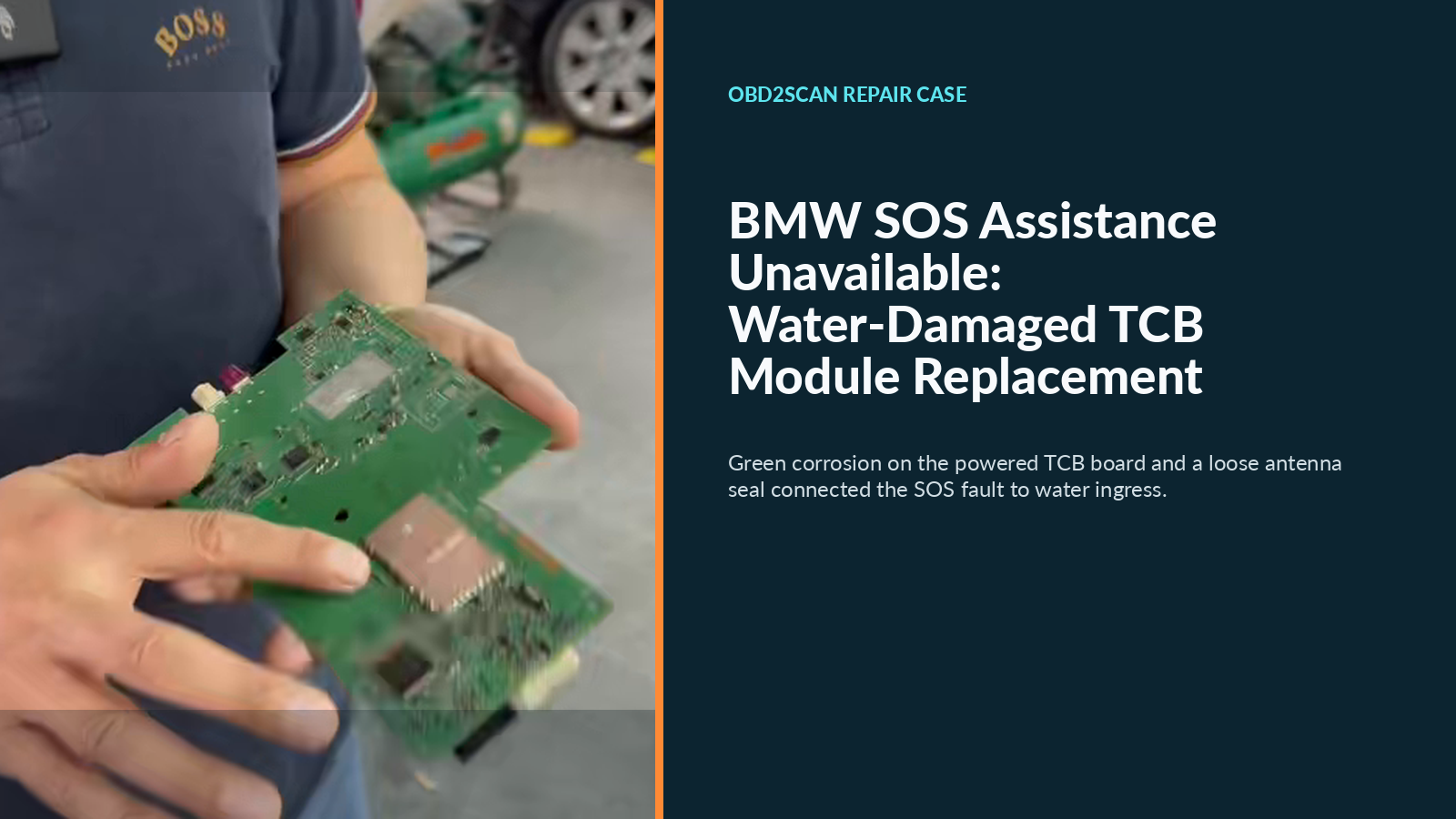
This BMW’s year, model, engine or chassis code, and mileage were not reported. The owner’s complaint was a persistent emergency-call assistance warning, with SOS and other connected services unavailable. Inspection confirmed water entry at the roof antenna, severe TCB telematics-module and connector corrosion, and a repair that required a replacement module, leak-source resealing, online setup, and final leak and SOS-function checks that were reported normal.
The case matters because the vehicle remained unrepaired for about ten days after the water event. A TCB contains a backup battery, so wet circuitry can stay energized even when the car is parked. Here, that delay turned a roof seal problem into extensive electrochemical damage rather than a simple “replace the small battery” job.
Case at a glance
| Item | This BMW |
|---|---|
| Vehicle | BMW; year, model, engine/chassis code, and mileage not reported |
| Complaint | Persistent SOS/emergency-call assistance warning; connected services unavailable |
| Initial clue | TCB communication was abnormal and water had reached the module area |
| Confirmed fault | Failed roof-antenna sealing allowed water to corrode the powered TCB board and connector |
| Repair | Replace the TCB, clean and dry the connector, and reseal the antenna base |
| Restoration | Online programming, coding, and FSC certificate import for telematics activation |
| Verification | Spray leak check, service-data review, cleared warning, and successful SOS communication-path test |
Corrosion, not the warning, set the repair scope
An SOS warning does not identify one failed part. It can follow loss of power, a weak backup battery, network or antenna trouble, a connector problem, or failure inside the telematics module. The reported ISTA result in this case was abnormal communication with the TCB or an internal hardware finding, which justified access and inspection but did not by itself prove that a new module was the only answer.
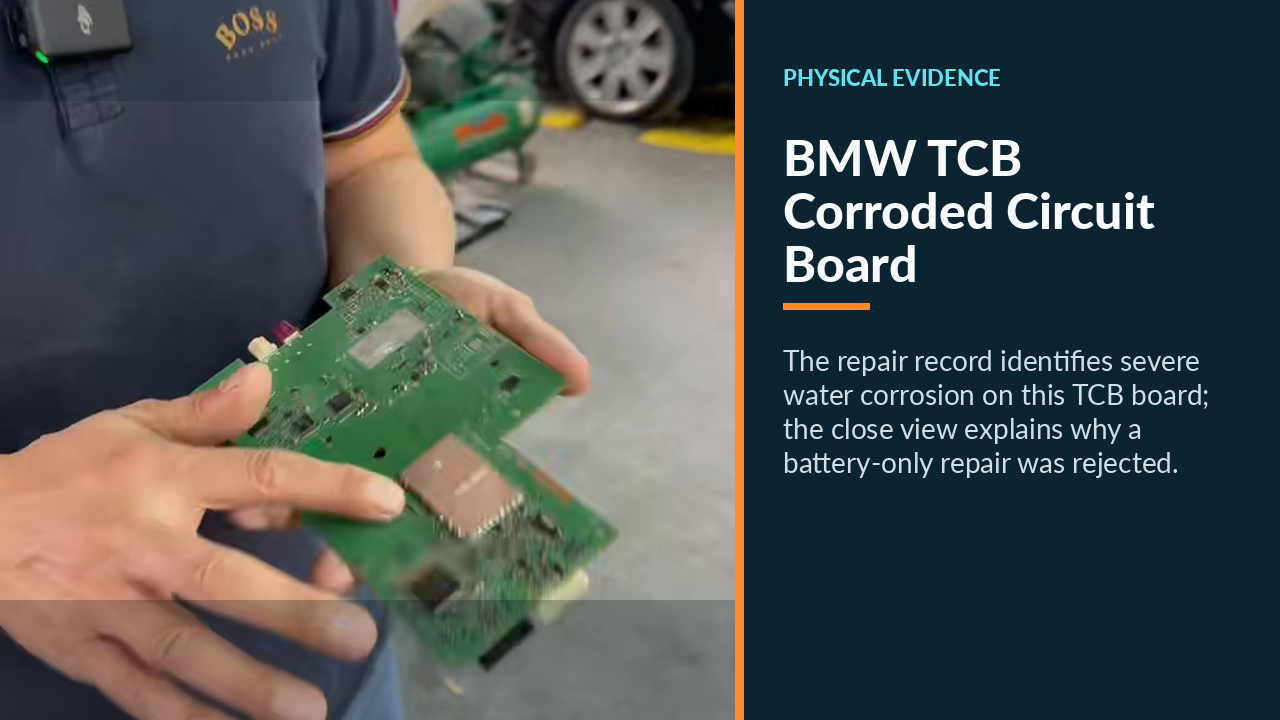
The decisive evidence appeared inside the unit. The case record documents extensive corrosion on the TCB circuit board, oxidized connector pins, and damaged board connections after the ten-day delay. The technician had considered work around the power section, but the damage was too broad for a sensible battery-only or component-level repair. That is the turning point: an alert and a communication result raised candidates; visible water damage across the powered electronics confirmed the failed assembly.
The leak path was above the failed electronics
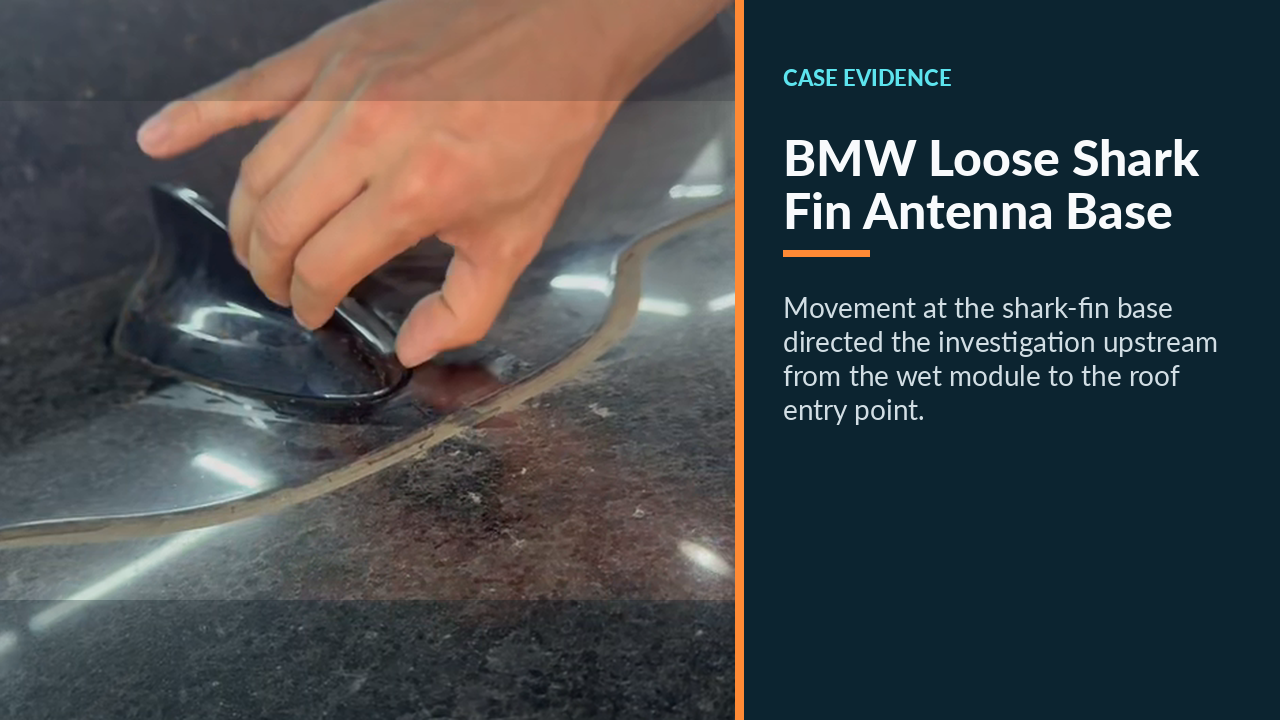
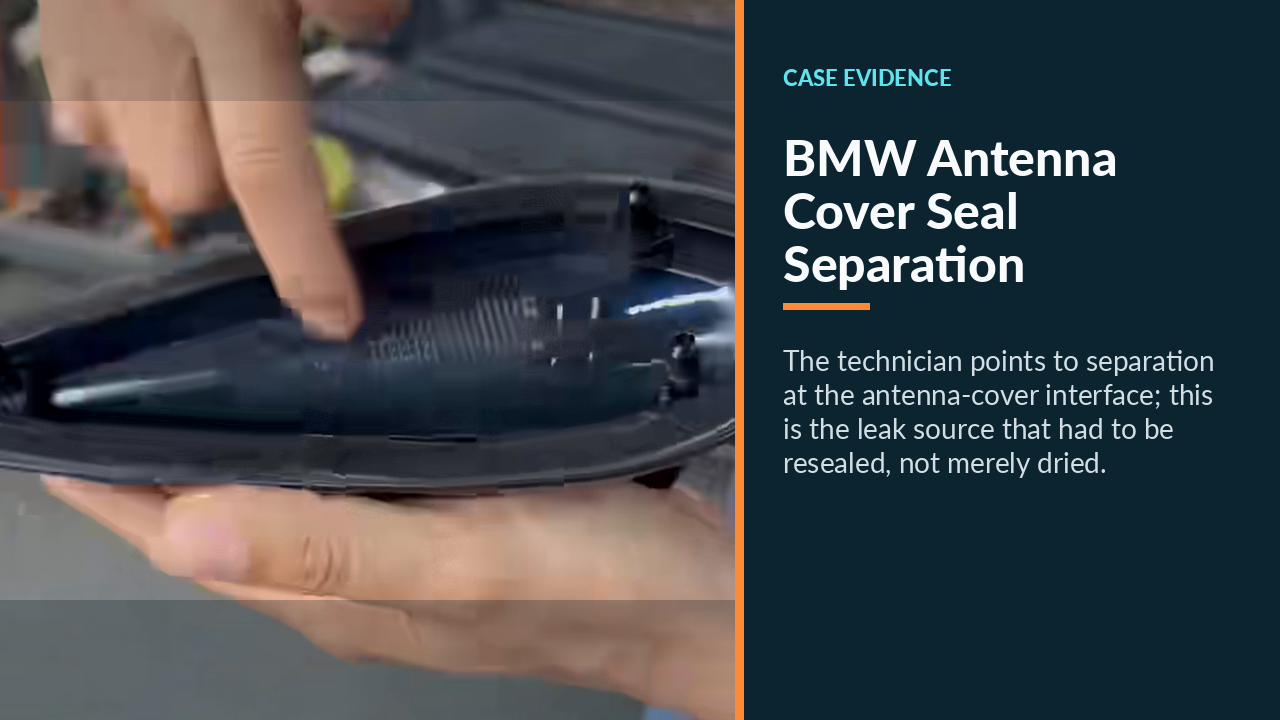
Replacing a wet TCB without finding the water path would leave the next module exposed. Attention therefore moved upward to the shark-fin antenna on the roof. The housing could be moved at its base, and inspection showed separation in the antenna-cover/sealing interface. That connected the module damage to a specific entry point instead of treating the moisture as an unexplained cabin event. For roof channels and connectors that cannot be seen directly, the AUTOOL SVB303 automotive borescope can provide a quick visual inspection for moisture tracks or corrosion before trim removal is expanded.
The case record attributes the escalation to continued power from the internal backup battery while water remained present. That explanation fits the observed corrosion, but it does not supply pin-level measurements or a corrosion rate. The useful conclusion is practical: once water reaches powered electronics, prompt isolation and inspection can change the eventual repair scope.
Module replacement was only half the repair
The complete TCB was replaced. The affected harness connector was cleaned, dried, and treated for oxidation as needed, while the roof antenna base received renewed sealing. Those actions belong to one repair: the module addressed the failed electronics, connector remediation restored its interface, and resealing removed the condition that damaged it.
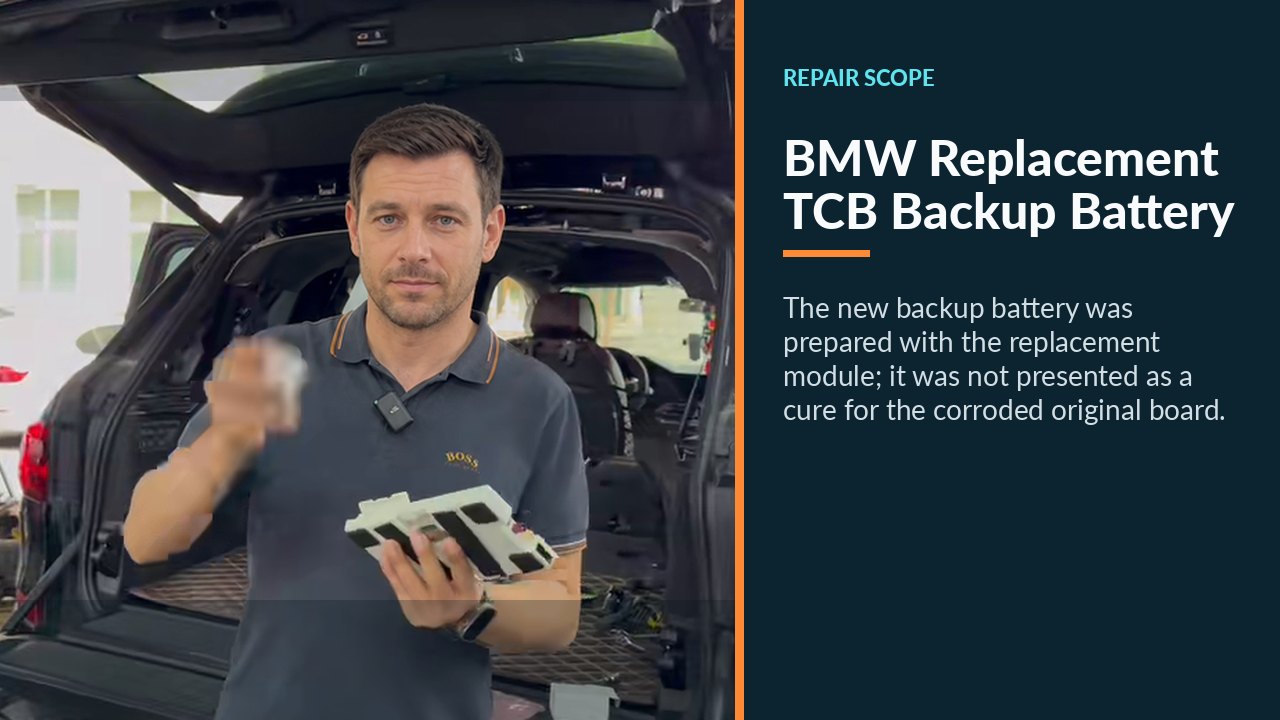
The available record does not report the TCB generation, part number, sealant specification, fastener values, or exact trim-removal and low-voltage disconnection sequence. It does report that the replacement required online programming, coding, and FSC certificate import so GPS and cellular services could be activated. Those operations require exact-vehicle BMW service information, approved programming access, and stable electrical support; they are not recoverable as a safe tutorial from the video.
Verification challenged both the leak and the complaint
The post-repair check covered two separate failure paths. First, a spray test was reported at the resealed antenna base with no renewed water entry. Second, service-state checks showed the connected-driving service and backup-battery operation normal. The instrument warning cleared, and an SOS-button test confirmed that the emergency-call communication path worked.
That is meaningful post-repair verification because it challenges the original complaint rather than stopping when the replacement module powers up. The available record does not report spray duration, water volume, cellular signal thresholds, or a long-term follow-up, so none are implied here. What it does report is a staged result: leak path closed, module data normal, warning absent, and the SOS path functional.
A first-check sequence for another SOS warning
For a similar BMW, begin by recording the exact warning and which connected functions fail. Next, scan every relevant control unit and preserve communication and power-supply results before clearing anything. Inspect the roof antenna, headliner area, TCB housing, and connectors for fresh moisture, looseness, staining, or green oxidation. If water is present, stop continued energization, follow the exact vehicle’s safe isolation procedure, and locate the entry point before selecting a module. After repair, challenge the seal with a controlled leak check, confirm module communication and service status, and perform the complaint-matched SOS function test where local procedure permits it.
This case should not be copied as a universal TCB-replacement rule. A weak backup battery, power or network fault, antenna problem, connector defect, or service-provisioning issue can produce a similar warning, and the unreported year, model, TCB generation, and part number prevent direct parts or programming transfer to another BMW.








Comments 0
Questions, fixes, and real-world diagnostic notes from readers.
Be the first to share a diagnostic result or ask a follow-up question.