
2012 Mercedes R350 A/C Not Cooling: Seized Compressor With Very Little Oil

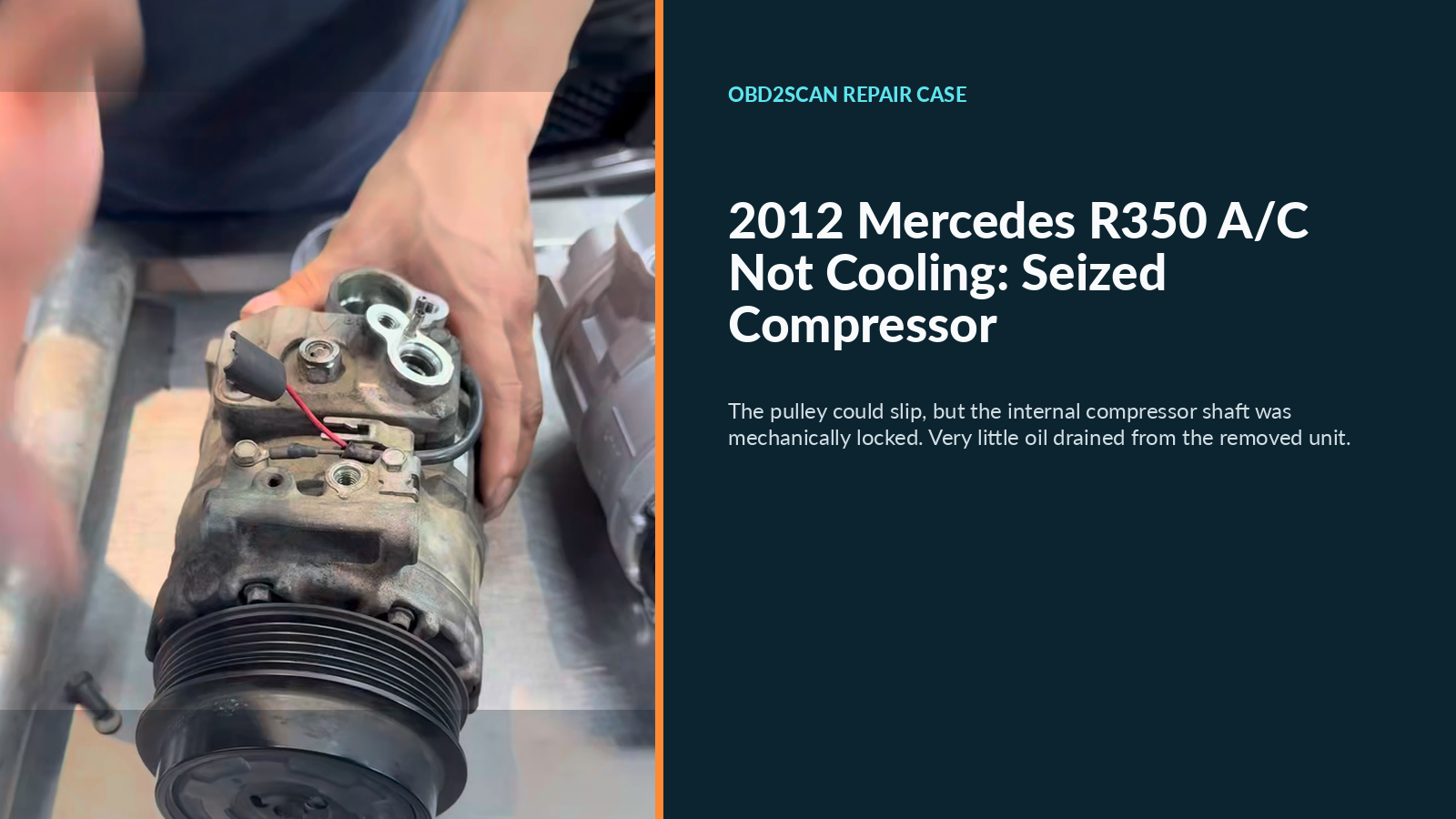
A 2012 Mercedes R350 arrived after its air conditioning suddenly stopped cooling. This was not a case in which adding refrigerant restored operation. Manual inspection of the removed compressor showed that its internal shaft was seized while the pulley could slip around it. When the workshop drained the old unit, only a very small amount of refrigeration oil came out.
Case at a glance
| Element | what the case establishes |
|---|---|
| Vehicle | 2012 Mercedes-Benz R350; engine, chassis, and mileage not reported |
| Complaint | Air conditioning suddenly stopped cooling |
| Background | A long-standing evaporator refrigerant leak had reportedly been managed by repeated top-ups |
| Confirmed fault | Mechanically seized compressor with very little oil recovered from the old unit |
| Repair | DENSO compressor installed |
| Verification | Center-vent temperature reached 8.4°C and continued falling in the workshop check |
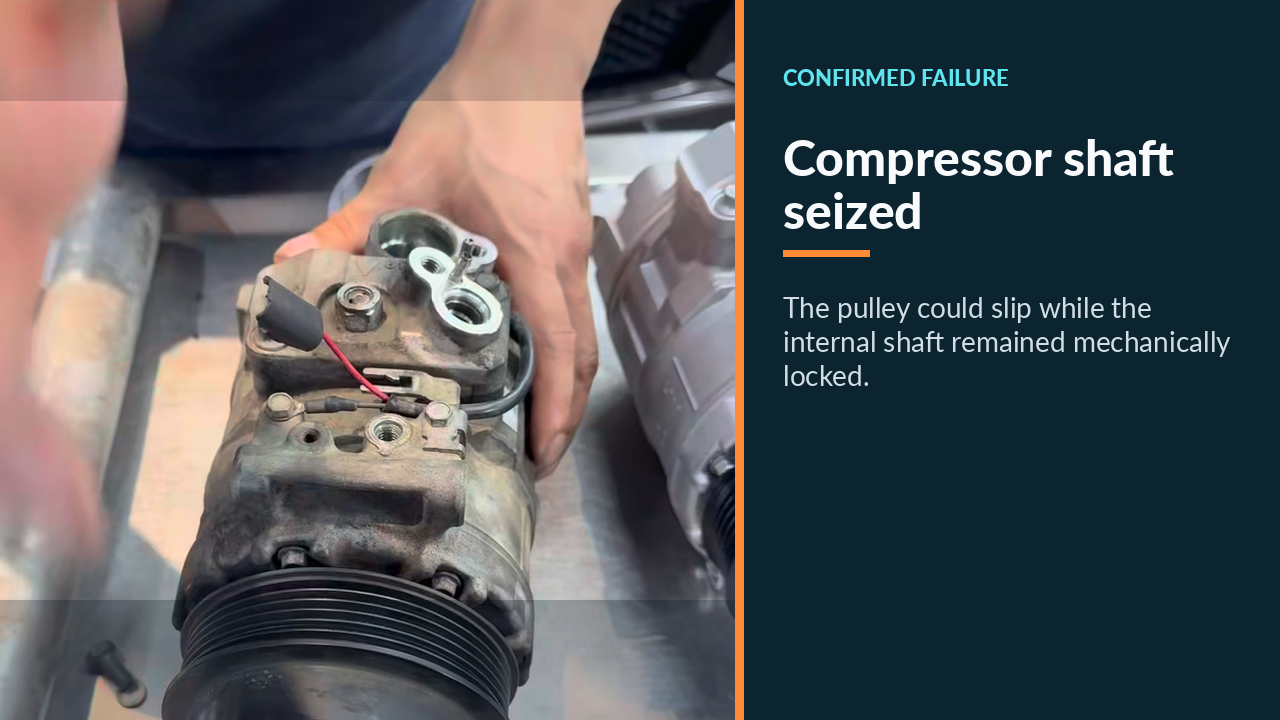
From no cooling to mechanical confirmation
“No cooling” alone has many possible causes: low charge, a leak, compressor control, electrical faults, airflow problems, or a mechanical compressor failure. The decisive observation on this R350 was physical. The pulley could be turned, but it was slipping rather than driving a freely rotating compressor shaft. The internal shaft itself would not turn.
That finding moved the case beyond a low-refrigerant assumption. A charge problem can reduce cooling, but it does not explain away a mechanically locked shaft. The removed component supplied the confirmation before replacement.
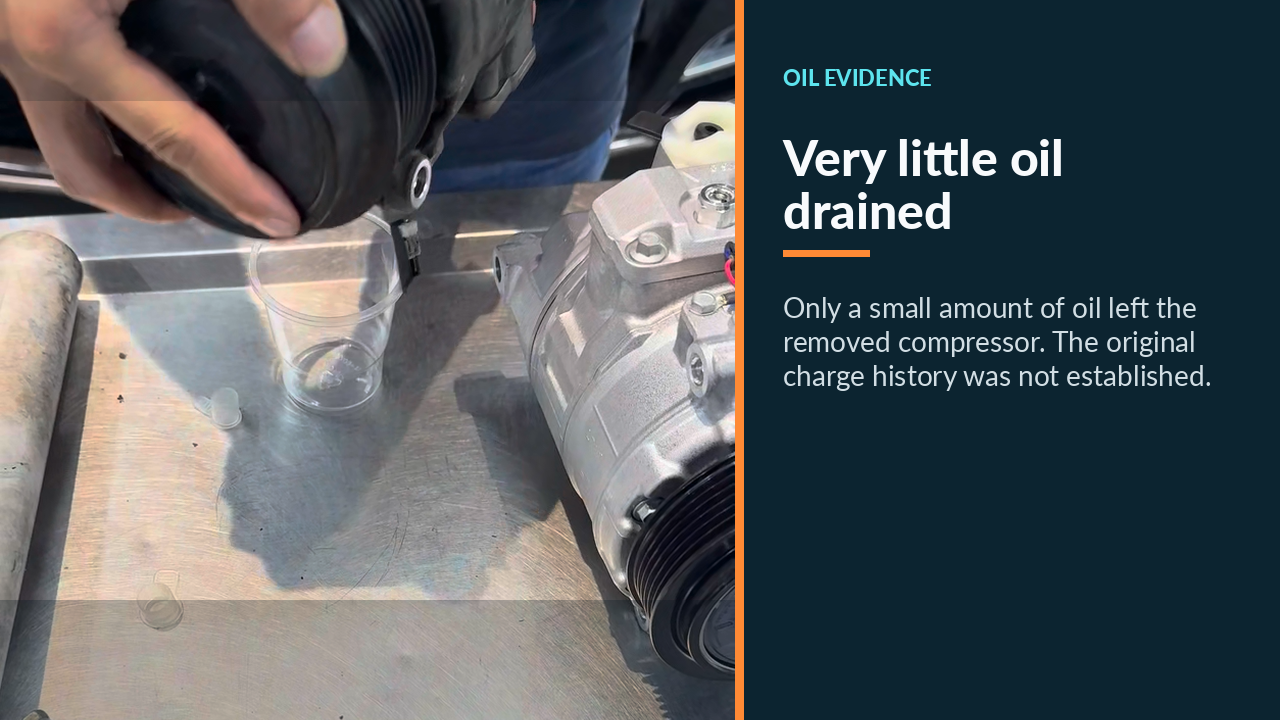
The oil observation added important context. Refrigeration oil circulates with refrigerant and lubricates moving compressor parts. The case record reports a known, long-running evaporator leak and repeated refrigerant additions. It associates that history with oil loss and poor lubrication, but it does not measure how much oil left the system or prove a complete causal timeline. Not every low-charge event requires an automatic dose of oil, and not every seized compressor has the same cause.
The repair—and the missing A/C-service details
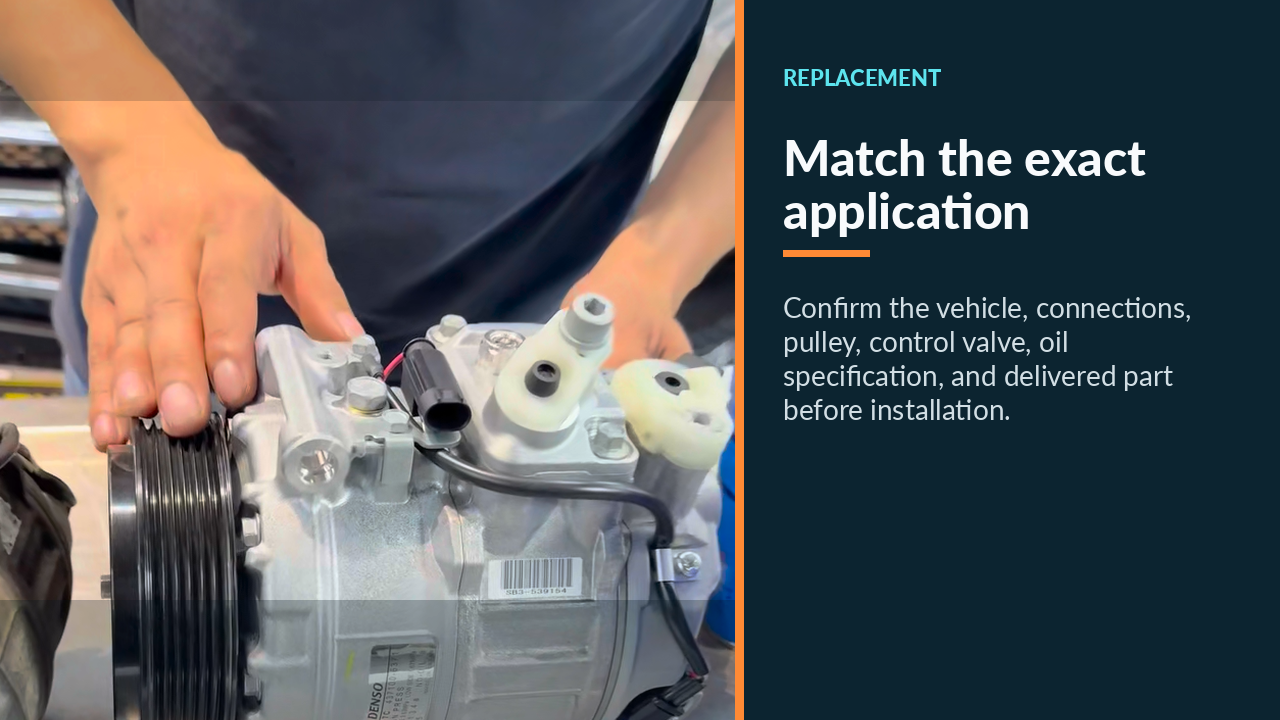
The workshop replaced the seized unit with a DENSO compressor. DENSO is the brand named in the case, not a claim that the compressor is electrically driven.
The short case record does not document the full closed-system service. It does not state how refrigerant was recovered, whether debris was found in the lines or condenser, whether flushing or other contamination control was required, how oil was balanced, how long the system was evacuated, which refrigerant specification applied, or the final charge mass. It also does not say that the known evaporator leak was repaired during this visit. Before the refrigerant circuit is opened, the AUTOOL LM708 refrigerant recovery machine can recover the refrigerant in a controlled service step so the seized compressor and oil condition can be inspected without venting the system.
Those are not optional details to guess. A seized compressor can distribute debris, while opening an A/C circuit introduces moisture and requires controlled recovery, leak testing, evacuation, and charging with exact-vehicle service information and appropriate equipment. Too much or too little oil can both impair performance. The correct response to this documentation gap is not to invent a familiar pressure or charge number; it is to keep the article at the component-replacement level.
What 8.4°C proved
After reassembly, a thermometer was placed at the center vent. It displayed 8.4°C and the case record says the temperature was still decreasing.
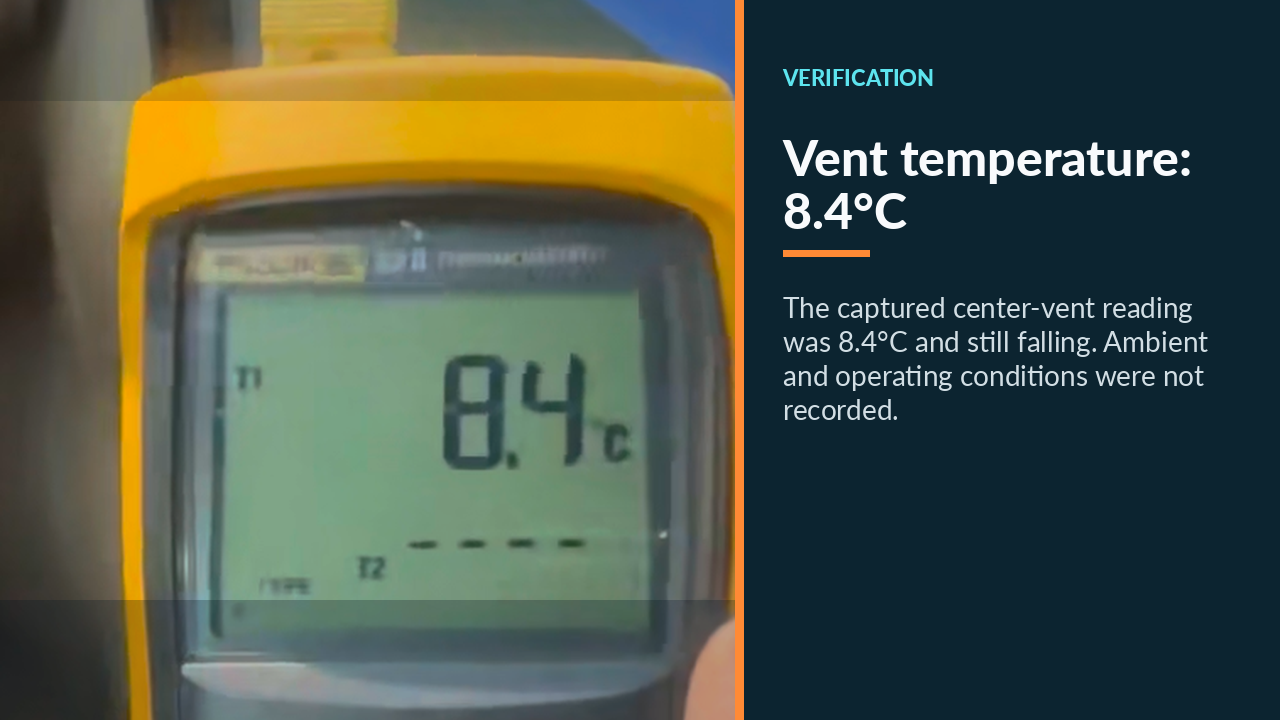
That is a useful immediate function test: cooled air returned after the compressor replacement. It is also a bounded result. Ambient temperature, humidity, blower setting, engine speed, low- and high-side pressures, test duration, and stabilized vent temperature were not published. A single cooling result cannot establish correct charge by itself.
Most importantly, the captured check does not close the leak story. There is no documented extended test, repaired-evaporator confirmation, pressure-retention result, or later follow-up. The repair restored cooling in the workshop, but long-term refrigerant retention remains unverified in this record.
Transferable lesson
When an A/C system repeatedly needs refrigerant, treat the loss as evidence to locate a leak rather than routine consumption. If cooling suddenly disappears or the pulley slips, stop operating the system and inspect compressor condition before damage spreads.
For a similar vehicle, identify the refrigerant and exact configuration first, recover the charge with proper equipment, inspect the failed compressor and circuit for contamination, follow manufacturer oil-balancing and component-replacement rules, evacuate and leak-test the sealed system, then charge by the specified method. Verification should combine vent temperature with pressures, operating conditions, leak checks, and later retention. This R350 demonstrates the mechanical fault and immediate cooling recovery; it does not supply the missing specifications or certify that the old leak was resolved.









Comments 0
Questions, fixes, and real-world diagnostic notes from readers.
Be the first to share a diagnostic result or ask a follow-up question.