
2022 Dodge Challenger Window Will Not Drop After Door Repair: Is the Door-Open Message Arriving?

Quick answer: A frameless window cannot respond to a door opening that its controller does not recognize. Check the door-state input before repeating calibration.
Do not force the door closed against incorrectly positioned glass. Keep hands clear and have the latch, glass and door fit assessed before further operation.
If diagnostic data points toward the latch-input circuit, passive voltage checks can help locate the missing information. The MRCARTOOL B550 can assist at approved test points, while a compatible scan tool is needed to see the controller’s door-state information.
In this guide
The glass is waiting for an event
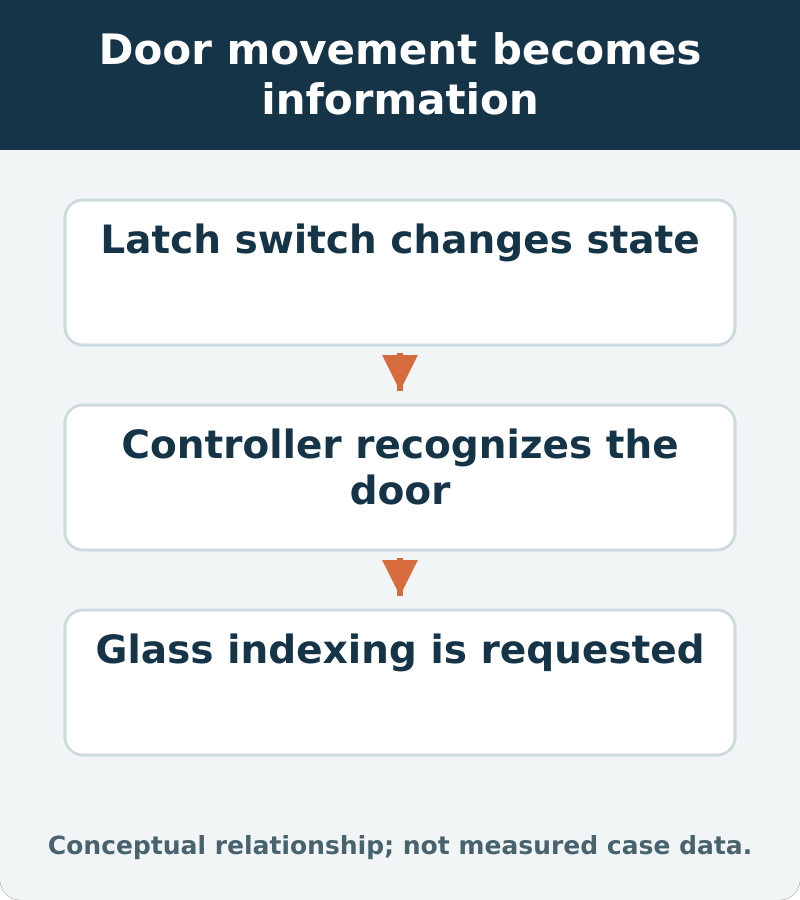
The short movement of a frameless window is easy to regard as a tiny version of ordinary window operation. But an automatic response also needs a trigger. The physical event occurs, the system recognizes it, a command follows and the mechanism moves. A failure at the recognition stage can leave a functioning mechanism apparently unresponsive.
This gives the diagnosis a useful first question: is the glass unable to move, or is the expected automatic movement never being requested? Those are different problems. The distinction helps prevent a motor replacement from being used to solve an information problem that the new motor would inherit unchanged.
What the door repair changed
ALLDATA’s Challenger report describes a 2022 car whose passenger-window drop stopped working after door replacement. Calibration did not help, and no codes were present. The door-ajar input stayed unchanged as the door moved. Replacing the latch assembly containing the switch restored the feature.
Recent work is a useful starting point because it identifies parts and connections that were disturbed or exchanged. It does not prove careless workmanship. Preserve the repair history and identify what was reused, replaced or adjusted. That turns “it happened after the repair” into a practical inspection scope without making an accusation the available evidence cannot support.
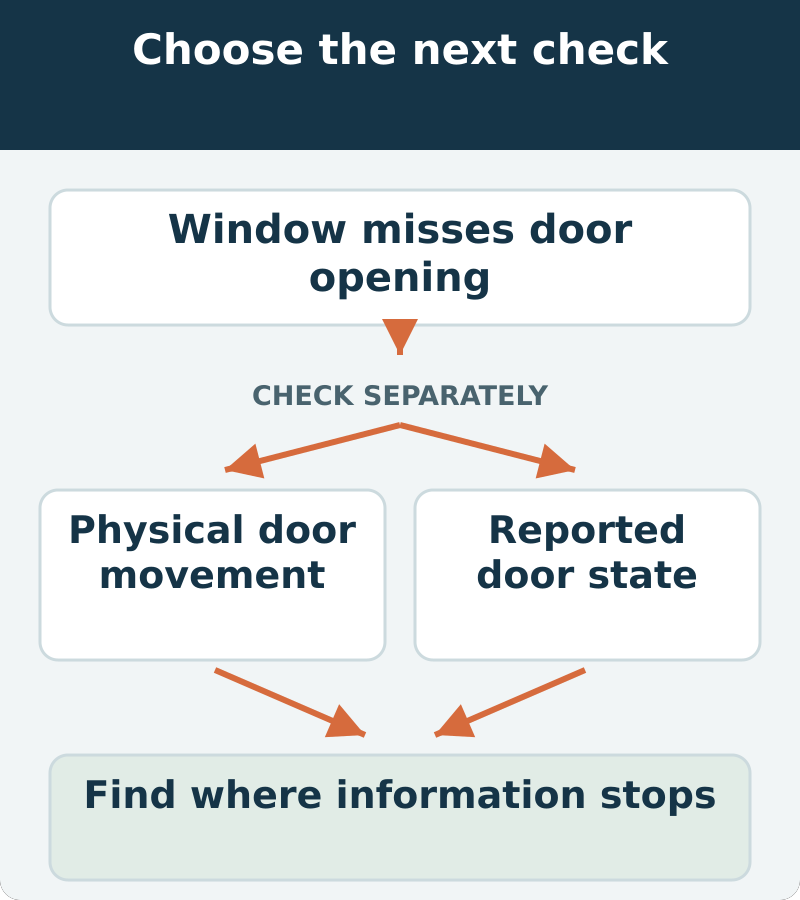
Watch the message before judging the motor
Why use live information when no fault code is stored? Because a code list and a current state display answer different questions. The absence of a recorded fault does not tell you that every expected event is reaching the controller. A state observation can expose a mismatch between the door’s physical position and the information being received.
The comparison must use the correct parameter for the vehicle and a safe service setup. A state that does not change narrows attention to the sensing and reporting route; it does not automatically prove the switch itself is defective. Mechanical actuation, connections and the relevant input circuit still need consideration before a component is condemned.
Calibration cannot replace a missing input
Calibration or initialization establishes information the system needs about its operation. It is not a substitute for a working event input. Repeating it without understanding why the feature remains inactive can consume time while leaving the actual failure untouched.
A useful stopping rule is to ask what evidence makes another calibration attempt reasonable. Was a prerequisite previously missing and now restored? Does the applicable procedure call for it after a corrected installation? If nothing relevant changed, the next step should address the unresolved condition rather than repeat the same operation in the hope of a different result. This is especially important when abnormal glass position risks damage at the door seal.
Keep latch fit and wiring in view
A latch is both part of the door’s physical closure and, in the relevant arrangement, part of its information path. A repair review therefore needs more than a screen check. Correct fit, secure connections and the appropriate component application must agree with the electronic observations.
What should appear on the repair record? The finding that localized the problem, the component or connection corrected and any required setup afterward. Avoid generic latch adjustment or wire-bridging instructions. Door retention and glass clearance deserve the exact vehicle procedure, and a workaround that changes a displayed state may interfere with other functions that rely on the same information.
Close the door without losing the safety checks
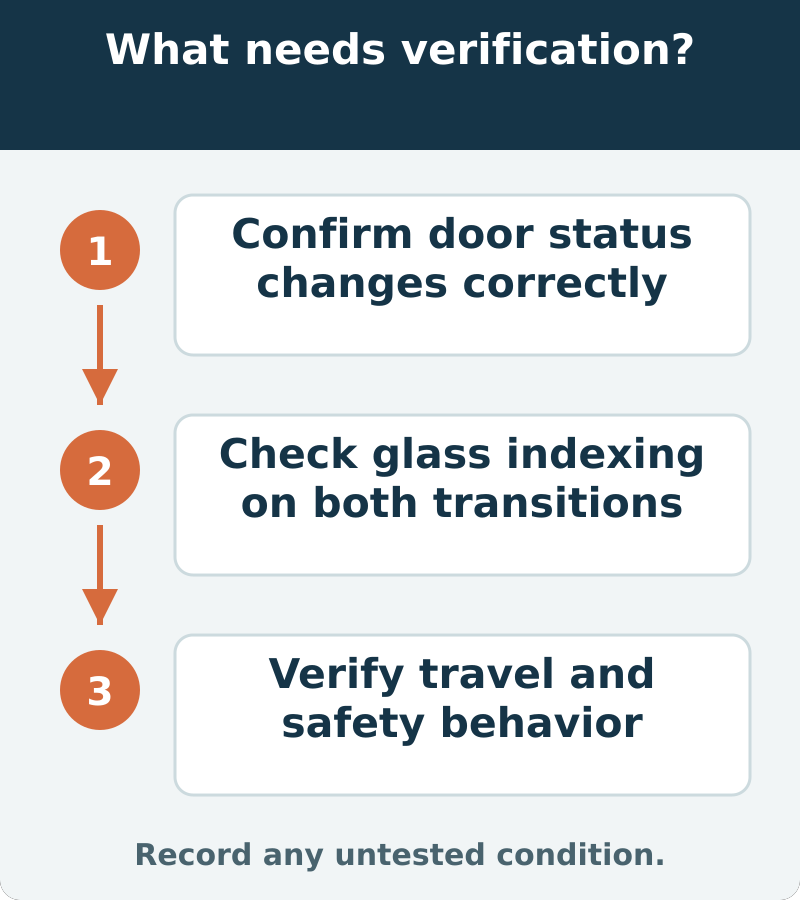
The final assessment should follow the complete event: normal door operation, recognized state, expected glass response and correct closure. It should also include the applicable window functions and protection checks after the door has been fully reassembled. Do not test glass protection with a body part.
Before taking the car away, ask the technician to explain any remaining fit or operating limitation. A window that drops once is encouraging, but the owner’s problem includes being able to open and close the door normally without catching the glass. Verification should address that whole experience, not just the single movement that first drew attention to the fault.








Comments 0
Questions, fixes, and real-world diagnostic notes from readers.
Be the first to share a diagnostic result or ask a follow-up question.