
2009 Mazda Tribute Lacks Power With No Codes: A Small Obstruction Changed the Airflow Reading

Quick answer: A sensor may report a distorted input without setting its own fault code. Inspect the sensing environment before deciding the sensor electronics need replacement.
Before replacing an airflow sensor, look at the environment it is trying to measure. A camera can help inspect a concealed passage without touching delicate parts; the AUTOOL SVB308 offers articulating visual access. Use it only where access is permitted with the engine disabled. It cannot tell you whether the reported airflow is quantitatively correct.

In this guide
No code does not clear the airflow measurement
A successful scan without stored faults is useful, but it does not certify every measurement under every operating condition. A vehicle can perform poorly while the available fault criteria have not produced a code. The complaint still deserves assessment.
Describe when power is missing: a hill, a normal acceleration request or another condition you already experienced. Do not repeat a dangerous merging or overtaking situation to generate a warning. The workshop needs a safe test plan and the relevant operating data. An empty code list should narrow the available evidence, not end the discussion with a claim that nothing can be wrong.
What is being measured can change what is reported
A sensor’s electronics and its sensing environment are separate parts of the measurement problem. Contamination or an obstruction near a sensing area can affect what the system reports without requiring the electronics themselves to have failed.
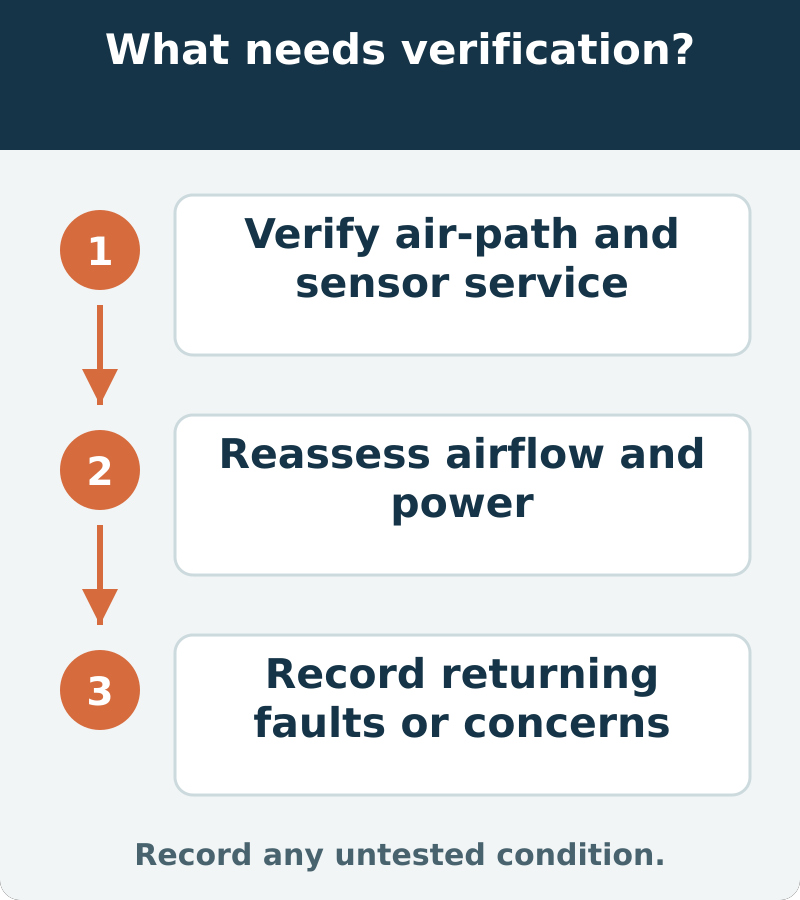
This is why an inspection can be worthwhile before another part is ordered. It is also why a striking physical discovery must be followed by an appropriate reassessment. A photograph of debris establishes that something was present; it does not quantify its effect on airflow. The useful conclusion comes from connecting the finding, a permitted correction and the subsequent operating result, without inventing missing measurements.
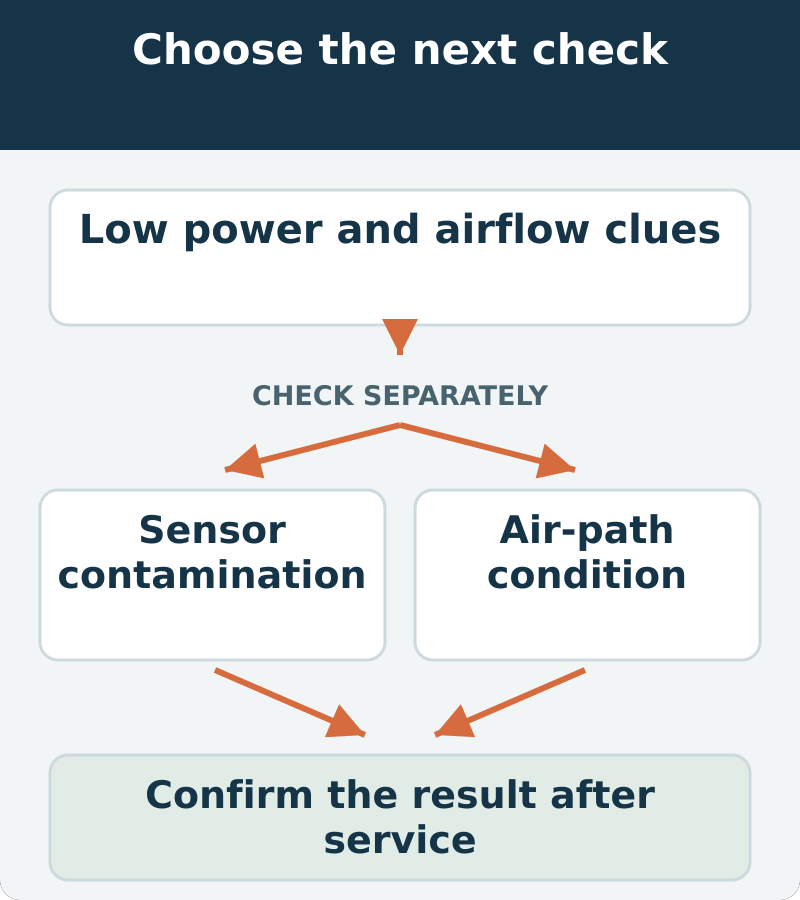
In the published ALLDATA case, the Tribute lost power under demand without stored faults. Fuel-trim observations changed after adaptations were reset, and abnormal airflow data directed inspection to the MAF. A trapped insect was removed and approved cleaning restored normal trims and power in the reported test. No before/after airflow values are published.
Record adaptations before resetting them
A reset changes the diagnostic starting point. Learned corrections and the conditions in which they were obtained may be useful information, so ask the repairer to preserve the relevant record before clearing or resetting anything.
The original case describes a change in observations after reset. That is context, not a recommendation to begin every low-power investigation by erasing adaptations. A technician should know why a reset is required and how the resulting information will be interpreted. Owners should avoid repeated clearing in the hope that the engine will relearn around an unresolved fault. It can make the next visit less informative without correcting the cause.
Inspect without damaging the sensing element
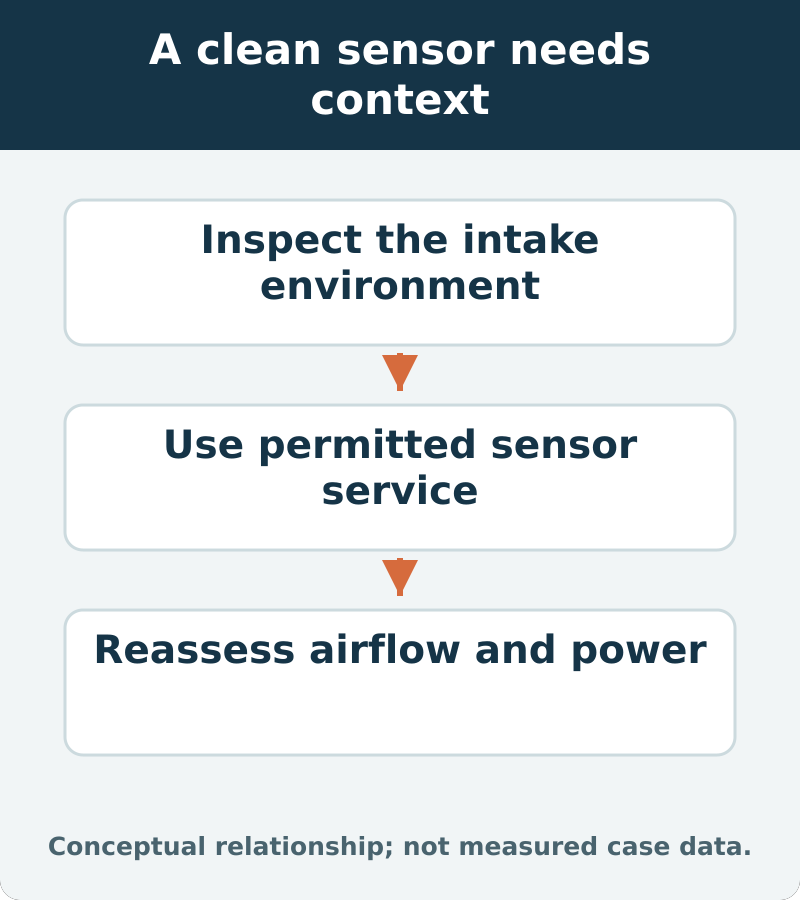
A delicate sensing element should not become the target of a probe, brush or finger simply because something nearby looks dirty. The correct access and handling procedure matters. Opening an intake carelessly can introduce debris or create a new sealing problem.
Ask for an inspection that identifies the location and respects the component’s service limits. A camera image may help document what can be seen, but an engine must not be run with a camera in the intake or with unsafe access left open. The illustration shows the idea of an affected sensing environment, not the Tribute’s exact sensor construction or a photograph of the original insect.
Clean only when the method permits it
Cleaning is a service decision, not a universal substitute for replacement. The method and material must be permitted for the specific component. A generic solvent, an aggressive spray or physical wiping can create damage rather than improve the measurement.
If the workshop proposes cleaning, ask what supports it and how the result will be checked. If replacement is proposed, ask what indicates the part itself is unserviceable. These questions keep the choice tied to evidence. A low initial cost is not a benefit if an unsuitable cleaning method destroys a sensor that was otherwise functioning, just as a new sensor is not a cure for an unresolved surrounding problem.
Check the air path that protects the sensor
The completed job should include the appropriate intake reassembly and assessment of the conditions that protect the sensing area. Ask whether anything about filtration, fit or the surrounding passage needs attention, without assuming the repair story establishes a particular entry route.
Then return to the driver’s complaint and the relevant data. The original report does not publish exact before-and-after airflow values, so none should be manufactured for this comparison. Keep the findings and correction in the service history. The practical lesson is small but useful: before condemning an instrument, consider whether its environment has changed what it is able to measure.









Comments 0
Questions, fixes, and real-world diagnostic notes from readers.
Be the first to share a diagnostic result or ask a follow-up question.