
Maybach S480 Body Vibration: Collapsed Hydraulic Engine Mounts Replaced

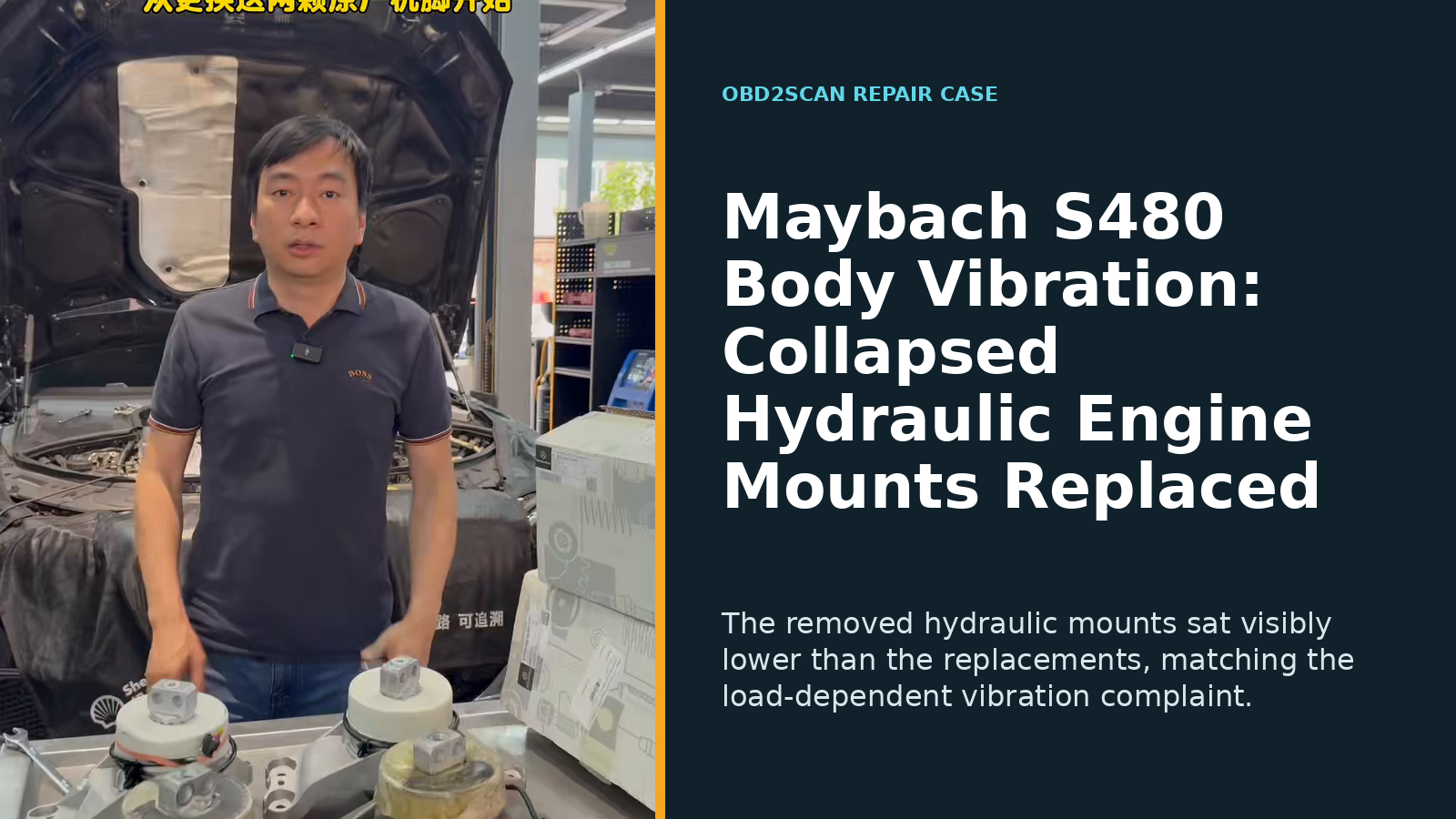
A Mercedes-Maybach S480 with an M256 engine and 200,000 km came in with body and cabin vibration; its model year and chassis are not reported. The vibration was associated with powertrain load, and the removed hydraulic mounts sat visibly lower than the replacements. Both mounts were replaced and the source reports that cabin quietness returned, although it provides no measured vibration value or documented road-test result.
Case at a glance
| Item | This Maybach |
|---|---|
| Vehicle | Mercedes-Maybach S480; year and chassis not reported |
| Engine | M256 |
| Mileage | 200,000 km |
| Complaint | Body/cabin vibration associated with powertrain load |
| Confirmed fault | Aged, collapsed hydraulic engine mounts |
| Repair | Both hydraulic mounts replaced with original-specification parts |
| Restoration | Locators seated, powertrain stress released, build-specific fasteners finalized, access parts refitted |
| Verification | Source reports restored quietness; stationary load-check method described, but no measurement or road-test record |
The vibration changed under load
Vibration was the entry complaint, not the diagnosis. A rough-running engine, an exhaust contact, a misaligned accessory or a mount can all reach the body. The source’s useful discriminator was load: the cabin response was considered while the powertrain reacted against its mounts, rather than judging the car only at an unloaded idle.
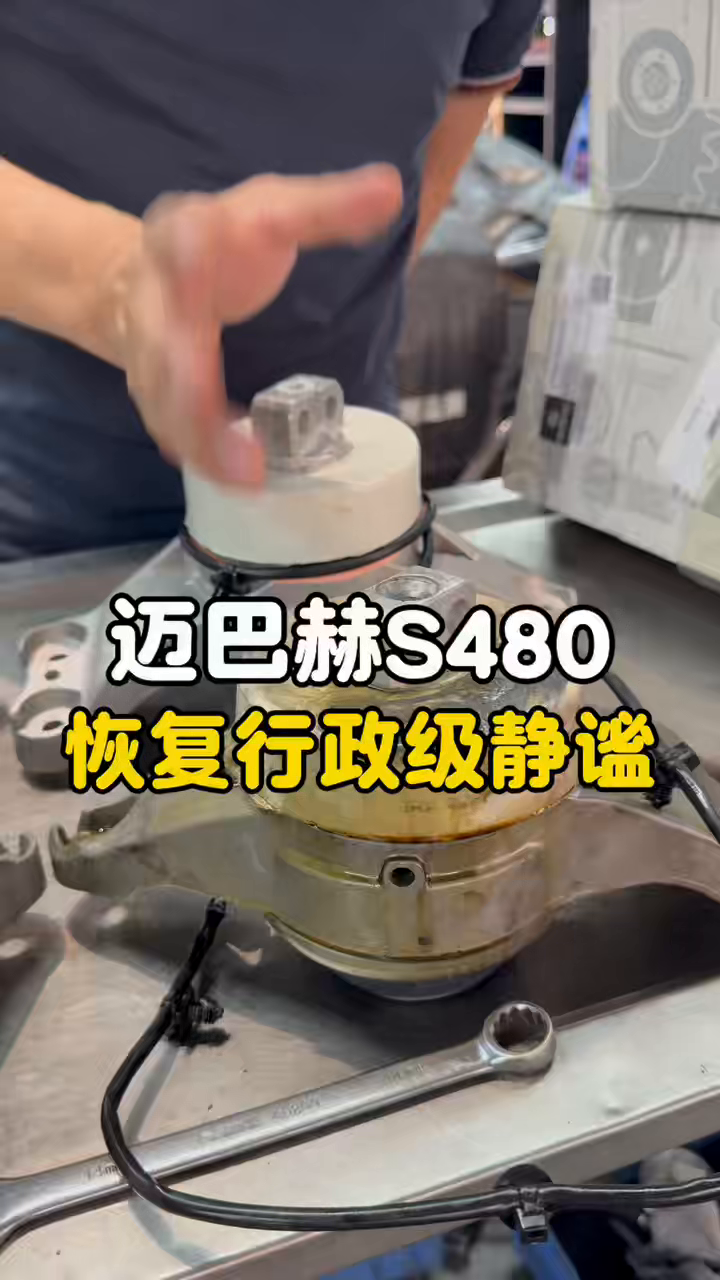
The source describes a D-range, brake-held stationary check as the relevant loading condition. That is a professional workshop task: the vehicle must be secured, nobody should stand in its path, and the powertrain must not be loaded beyond the applicable procedure. The case does not publish an improvised owner test.
Height comparison turned wear into repair evidence
Once removed, the old hydraulic mounts were placed with replacement units. The old units’ reduced height was visible, matching the loss of isolation under load. That comparison was more specific than age or mileage alone: 200,000 km raised suspicion, while collapse supplied the component evidence.
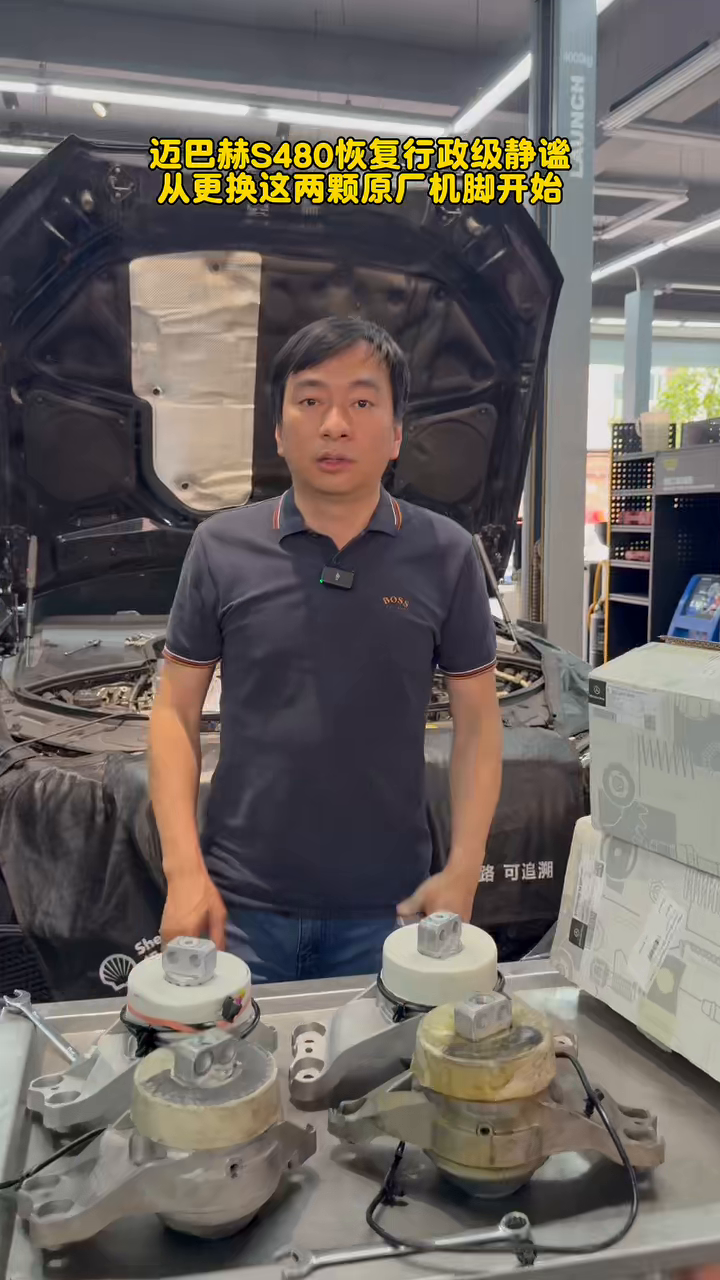
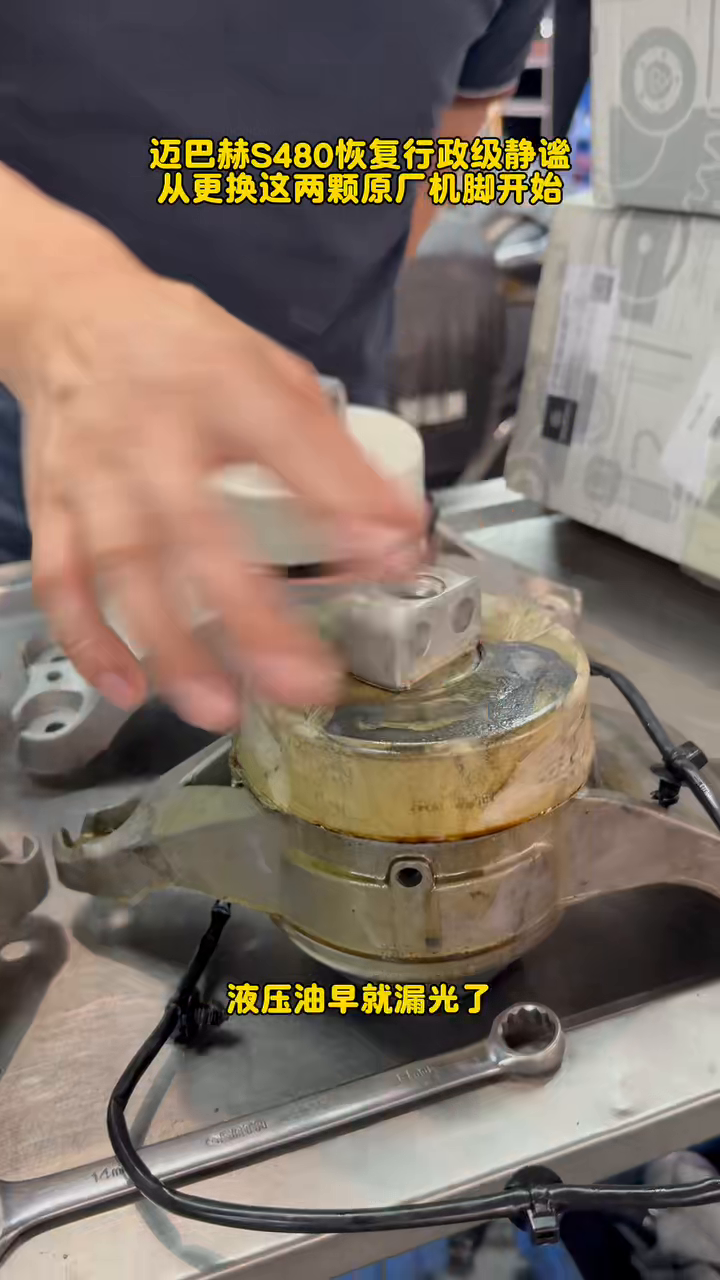
No measured heights or hydraulic leakage quantity are reported. The article therefore does not convert the visual comparison into a universal specification. Nor does it repeat the source’s proposed fastener numbers, because the year and chassis needed to validate them are absent.
Access required supporting the powertrain
Replacing an engine mount changes how the powertrain is supported. The media shows the engine bay opened for access and the mount area exposed. Before a mount is released on a similar S480, a qualified technician must use the exact lifting/support locations and current service information for that build; a generic jack placement is not a safe substitute.
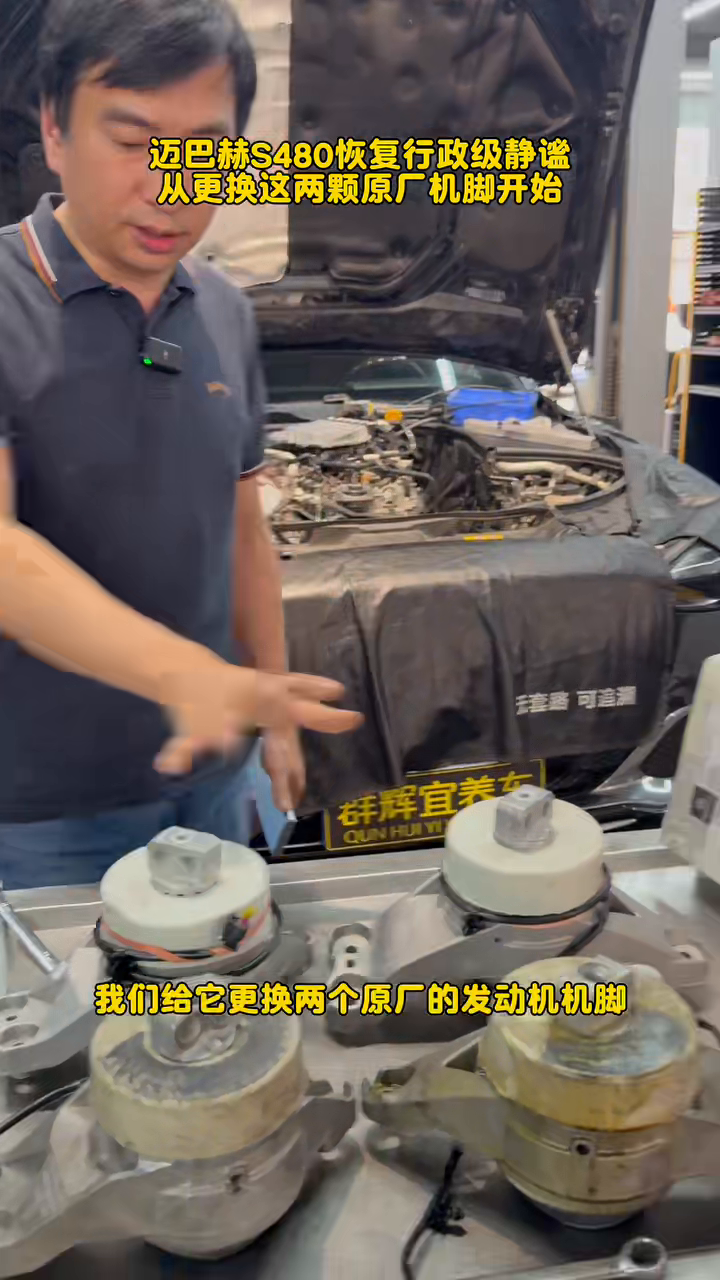
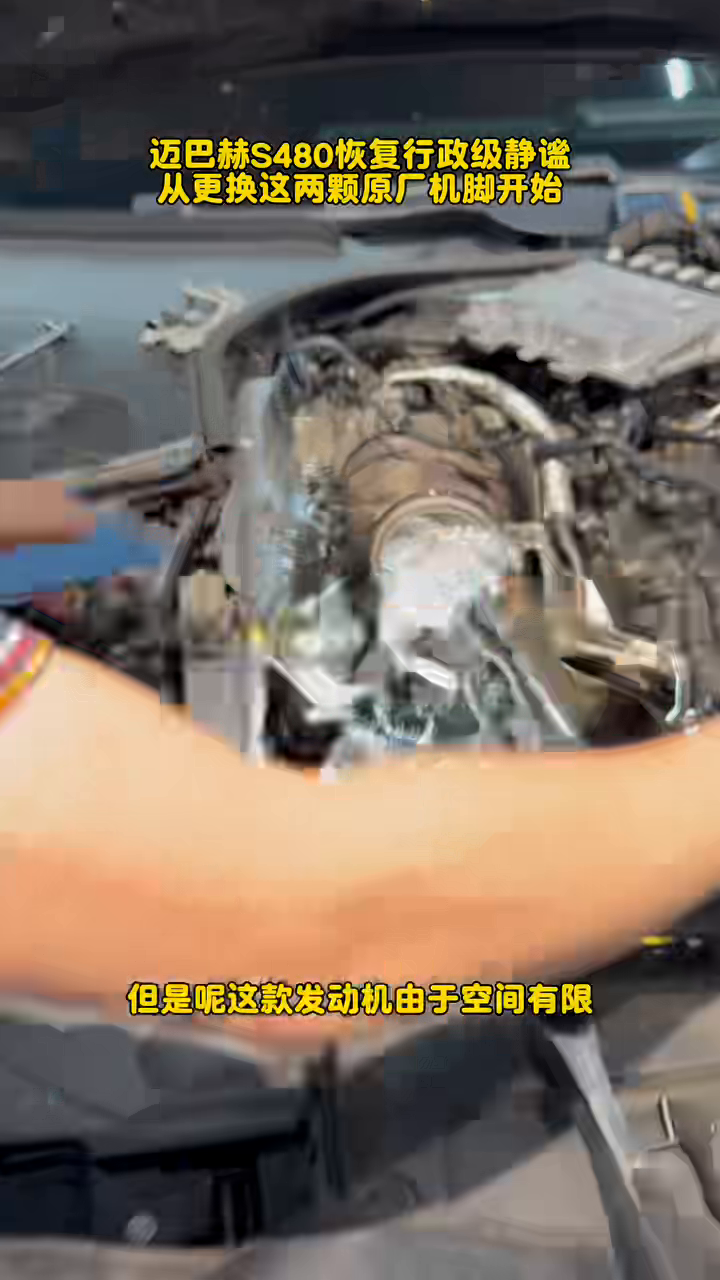
The reported repair replaced both hydraulic mounts with original-specification units. The source also calls for checking the heat shield above the mount. That is a relevant installation observation because a missing or displaced shield changes the new part’s environment, but the media does not establish a heat-shield fault in this car.
Mount seating mattered as much as part choice
A new mount can transmit vibration if it is cocked, its locating feature misses the seat, or fasteners are finalized while the powertrain is held out of its natural position. The source reports seating the locating pins, allowing the assembly to settle, then finalizing the fasteners to applicable data before replacing the removed covers and access pieces.
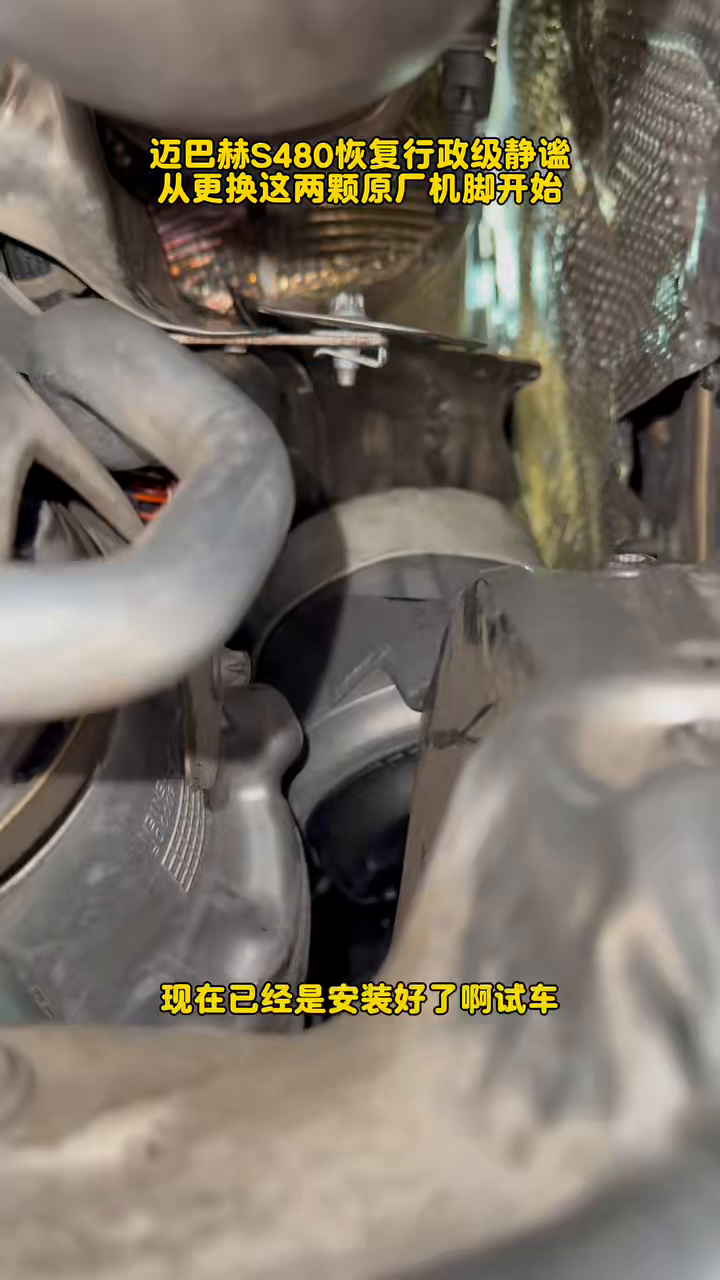
The exact mount part numbers, one-time fasteners, tightening sequence and torque/angle specifications remain build-specific and are not reported. Using those missing values from another S-Class would be an unsafe shortcut.
The reported quiet return and its limit
The reassembled engine bay is shown and the source says the Maybach’s quietness returned after mount replacement. It also identifies the original load condition as the verification touchpoint. What is absent is a before/after measurement, a recorded D-range result, a road route, or a hot-soak repeat.
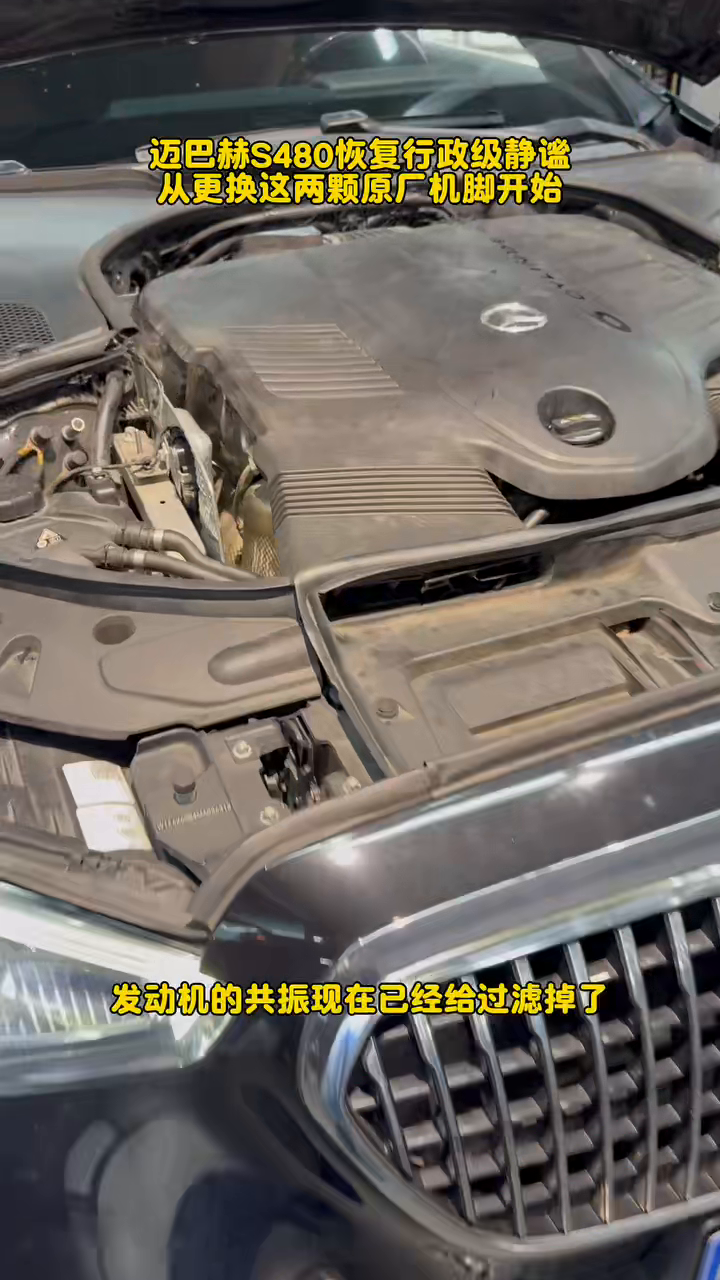
That makes the result a bounded static outcome, not a guarantee that every vibration source on a 200,000 km car has been removed. A stronger closeout would compare the original cabin touchpoint in Park and loaded Drive, confirm no exhaust or hose contact, and repeat the check warm; a road evaluation would add evidence if the complaint also occurred in motion.
Use the load pattern, not the badge
For another vehicle, first record when the vibration appears: unloaded idle, Drive with the brake held, acceleration, a specific engine speed, or road speed. Then compare engine operation, contact points and mount condition under the relevant state. A load-linked change plus proven mount collapse supports this repair direction.
Do not replace mounts merely because the car is an S480 or has high mileage. Without the same load pattern and physical mount evidence, the cause may lie in engine combustion, an exhaust contact, a driveline component or another body path.









Comments 0
Questions, fixes, and real-world diagnostic notes from readers.
Be the first to share a diagnostic result or ask a follow-up question.