2011 Chevy Malibu Runs Rough With P0011 and P0014: Look Beyond the Airflow Codes

Quick answer: Several sensor-related codes can describe the effects of one mechanical-control problem. This Malibu had heavily contaminated cam-actuator screens and oil passages.
Several codes do not necessarily mean several unrelated failed parts. With cam-timing and airflow complaints together, organize the evidence before ordering sensors. Stop operation for an oil-pressure warning, severe running problem or abnormal mechanical noise.
Where inspection leads to a safely accessible hidden area, an articulating camera such as the AUTOOL SVB308 can help document visible contamination with the engine disabled and cool. It cannot certify an oil passage is clear or measure oil pressure.
The aim is to explain how the observations fit together. It is not to blame the owner for a maintenance history that the available evidence may not establish.

In this guide
Five codes do not automatically mean five failed parts
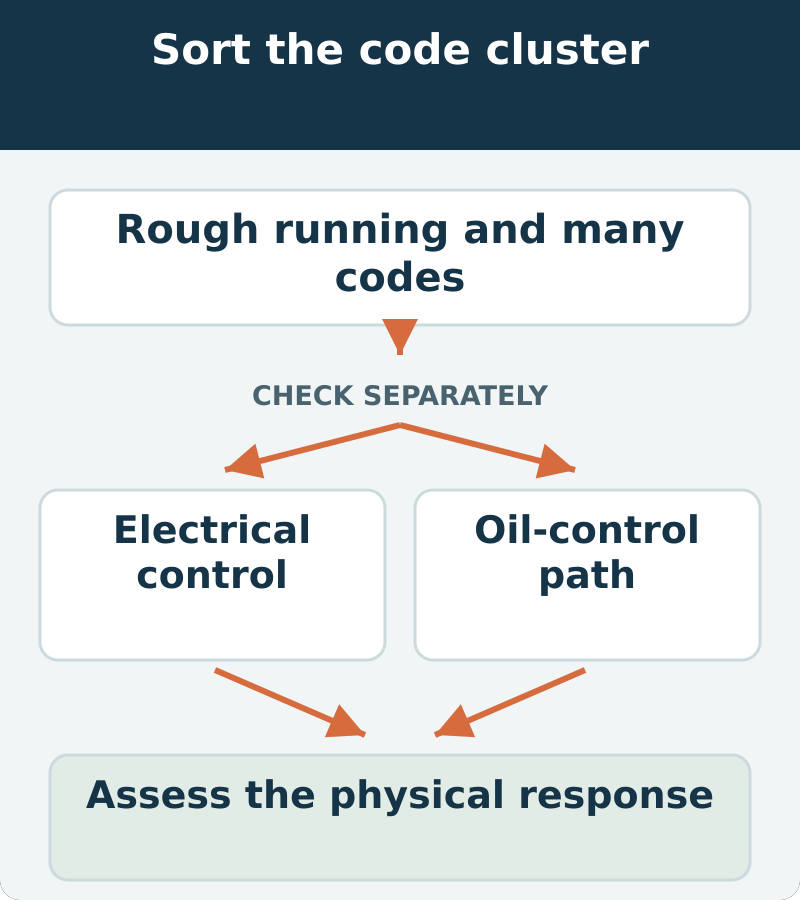
Begin by preserving the full scan report and the conditions of the rough-running event. Separate active findings from stored history, and note any work already attempted. Code order on a display is not necessarily the right order for diagnosis.
For a cluster involving cam timing and airflow, ask which checks can establish the underlying operating condition. A sensor may be reporting the effects of another problem, but that possibility must be investigated rather than assumed.
Do not buy one part for each code description. A better first authorization is a defined assessment that explains which observations belong together and which may require separate branches.
What inspection added when live data could not
ALLDATA’s 2011 Malibu 2.4L account includes P0011, P0014, P0068, P0101 and P0106. Fuel pressure was normal, but the engine would not run long enough for useful cam-position comparison. Sludge was found at the actuator-solenoid screens and oil passages; control-circuit checks passed. Passage cleaning, both solenoid replacements and an oil change were followed by normal road operation with the MIL off.
The account links a set of findings to a reported repair. It does not establish that all airflow codes on every Malibu are secondary, or provide a universal cleaning procedure for any engine showing deposits.
Follow the oil-controlled movement
Cam control is a physical response as well as an electrical request. The oil-control path and the commanded movement need to meet their requirements before a comparison of requested and observed timing can be interpreted confidently.
Desired and actual values are useful only when the test can be performed under conditions that make them meaningful. An engine that cannot sustain the required operation may leave that comparison incomplete.
Record the limitation instead of treating absent data as a pass. The technician should explain what can be inspected or measured safely before another operating attempt, and which question will still need to be revisited afterward.
This avoids a common documentation problem: a blank field or unavailable PID being read later as “nothing wrong.” Not measured, not supported and measured normal are three different results.
Cleanliness is part of the repair, not a cosmetic extra
A solenoid has an electrical role and works within a physical oil-control system. A successful circuit check does not examine everything oil must pass through. Visible contamination, in turn, does not establish every electrical function of the installed component.
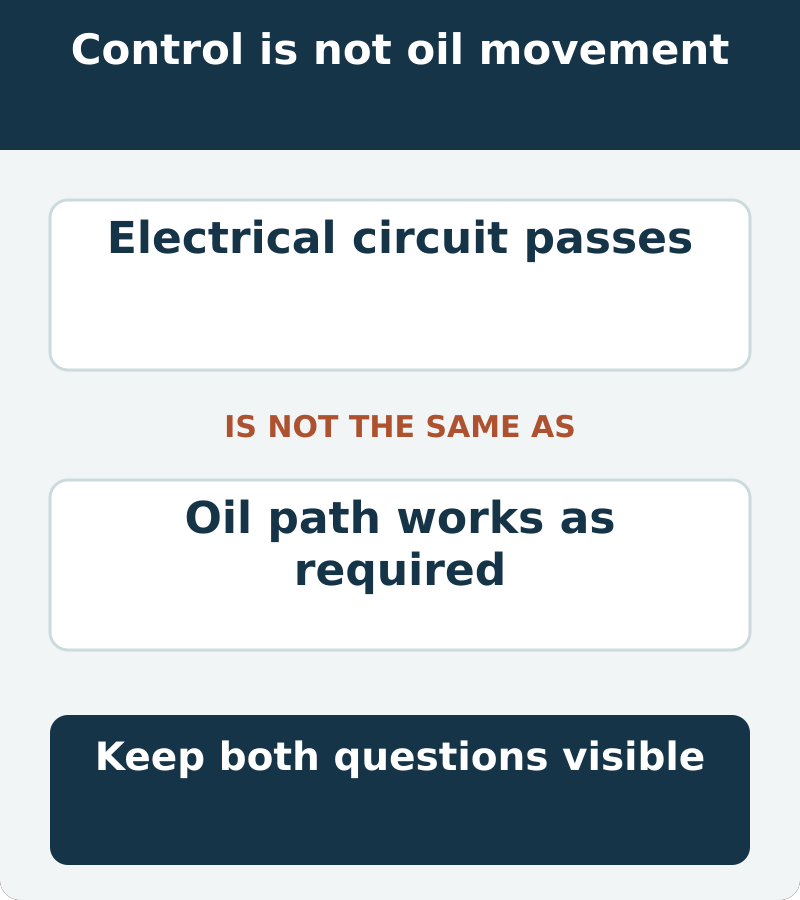
Ask what was actually seen and where. A clearly identified photograph of an accessible screen can document its condition. It cannot prove that all downstream passages are clear or that the complete timing mechanism is healthy.
Cleaning and inspection must follow the applicable service method. Do not introduce compressed air, solvent or a generic flushing treatment into an engine simply because another case mentions sludge. Moving contamination without a controlled procedure can leave a different problem elsewhere.
What would make you investigate further?
Deposits are a finding. Their full cause and history require separate evidence. Ask the workshop what is known about the oil specification, level, condition and previous service, and which facts remain unavailable.
Keep the proposed repair and the maintenance plan distinct. One addresses the established failure; the other should reflect the vehicle’s requirements and observed condition. Neither needs an unsupported accusation about how the car was treated.
Before approving work, request an explanation of scope: which parts failed assessment, what cleaning is supported, and what checks will follow. If further mechanical inspection may become necessary, agree on the decision point rather than approving an undefined sequence of treatments.
It is also reasonable to ask what would change the diagnosis. If the electrical checks fail, or the timing response remains wrong after the accessible problem is addressed, the investigation should follow that new evidence instead of insisting the published story must fit.
Ask for a running check and an oil-care plan
The proposed acceptance check should cover correct assembly, required oil-system checks and the previously incomplete operating assessment when safe. Review fault status and the rough-running complaint separately from the fact that new parts were installed.
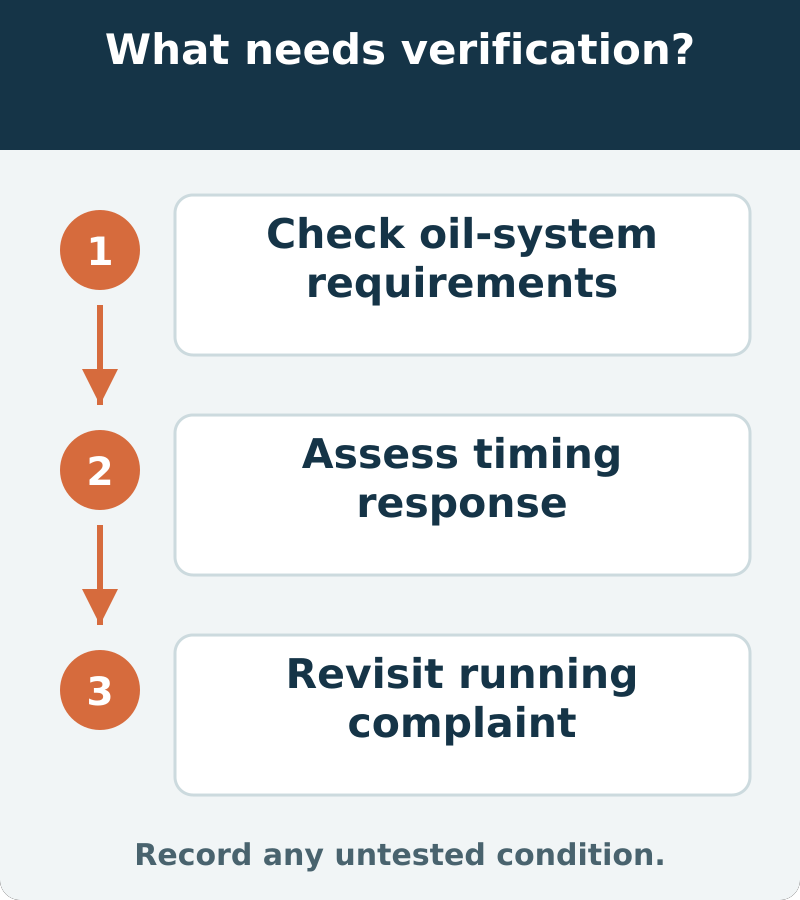
If a previously unexplained code returns, preserve its new conditions. Do not automatically repeat the same cleaning or assume a different sensor must now be due. The repair record should show which requirement was restored and what evidence supports the vehicle’s present behavior.








Comments 0
Questions, fixes, and real-world diagnostic notes from readers.
Be the first to share a diagnostic result or ask a follow-up question.