
2019 Ram 1500 Brake Pedal Is Sometimes Hard: Good Assist at Idle Is Not Enough

Quick answer: Intermittently hard braking needs a safety assessment even if the pedal feels normal in the workshop. Check the supplementary assist system rather than relying on one idle test.
Inconsistent brake effort is a stop-use concern. Arrange professional recovery and inspection; do not drive a public-road test to make the pedal go hard again.
Electrical circuit assessment can help locate an assist-pump supply fault. A MRCARTOOL B550 can support permitted passive voltage checks, but it does not measure braking performance or certify that assist is adequate.

In this guide
Do not wait for the pedal to stay hard
An intermittent safety problem does not become acceptable because it briefly disappears. The driver cannot rely on a favorable workshop moment to predict the next braking event. Tell the service adviser that the concern is changing pedal effort, and agree on safe transport before bringing the truck in.
Describe the circumstances already observed: whether the change was sudden, whether a warning appeared and whether it occurred after starting or during normal travel. Do not collect more examples by continuing to drive. The workshop can use the history to choose the specified assessment without requiring the owner to reproduce an unsafe condition first.
Why an idle check can miss the complaint
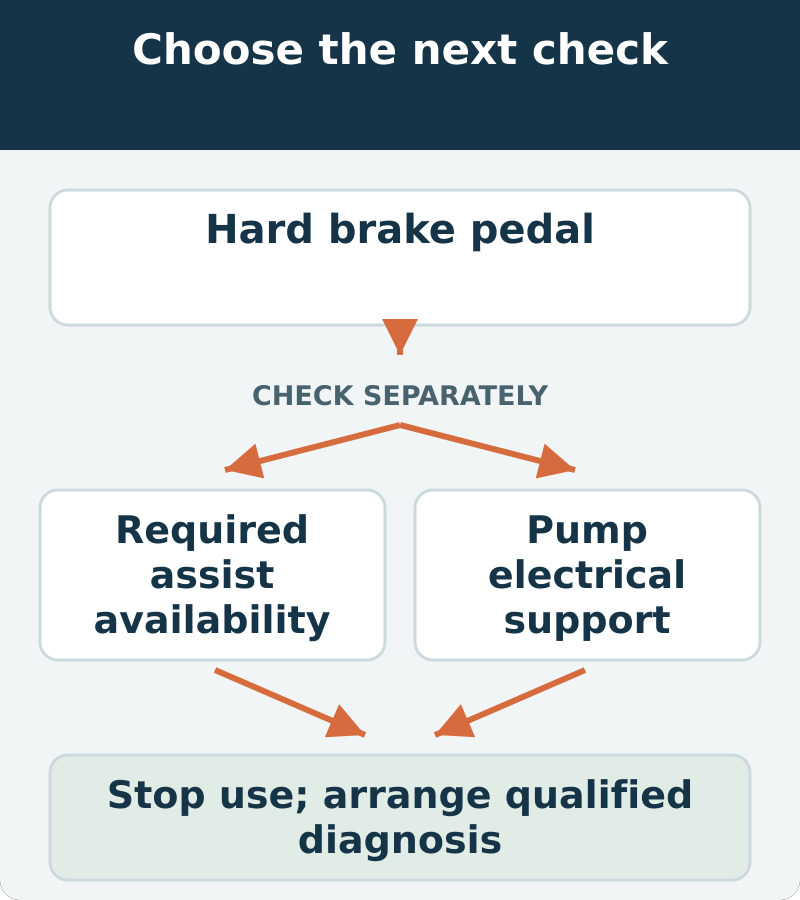
A system may have more than one contributor to an assisted function, and their importance can vary with operating conditions. A satisfactory result in one state therefore does not establish that every required contributor works. The relevant architecture and diagnostic procedure determine what else must be checked.
ALLDATA’s Ram account describes intermittent hard pedal effort and C1252-92 on a 2019 5.7L truck. The pump-supply fuse opened again after replacement. Pump isolation removed the short indication, and a factory pump replacement restored operation without another opened fuse. Full vacuum, current and stopping-performance records were not published.
A fuse that opens again is telling you something
A fuse is a protective device, not a consumable to keep replacing until the symptom disappears. When it opens again, the relevant circuit needs diagnosis. Installing a larger fuse or bypassing protection can turn an unresolved fault into additional electrical damage or a more serious hazard.
The useful repair question is why the protected path is drawing or conducting abnormally under the assessed condition. That requires the correct circuit information and test method. The owner does not need a fuse location from an online case to pursue the right action: stop repeated replacement attempts and have the protected circuit and associated component evaluated professionally.
What pump isolation supports
An isolation result narrows the system by changing a defined relationship. If an abnormal indication disappears when a branch is isolated, attention can focus on that branch and what it contains. The result should still be interpreted with the circuit design and any required supporting checks, rather than treated as a universal shortcut to a component verdict.
Ask the workshop what finding localized the problem and whether the relevant wiring and connections were assessed. A precise explanation can justify a repair without publishing unsafe jumper procedures. It also prevents a replacement from being exposed to an unresolved external problem that happened to share the isolated path.
Before approving the replacement
The estimate should explain the supported fault, the correct replacement application and the checks required after installation. Brake-assist work deserves a completion plan before the part is fitted. Ask what will establish that the original intermittent concern has been addressed and what would prevent the truck from being released.
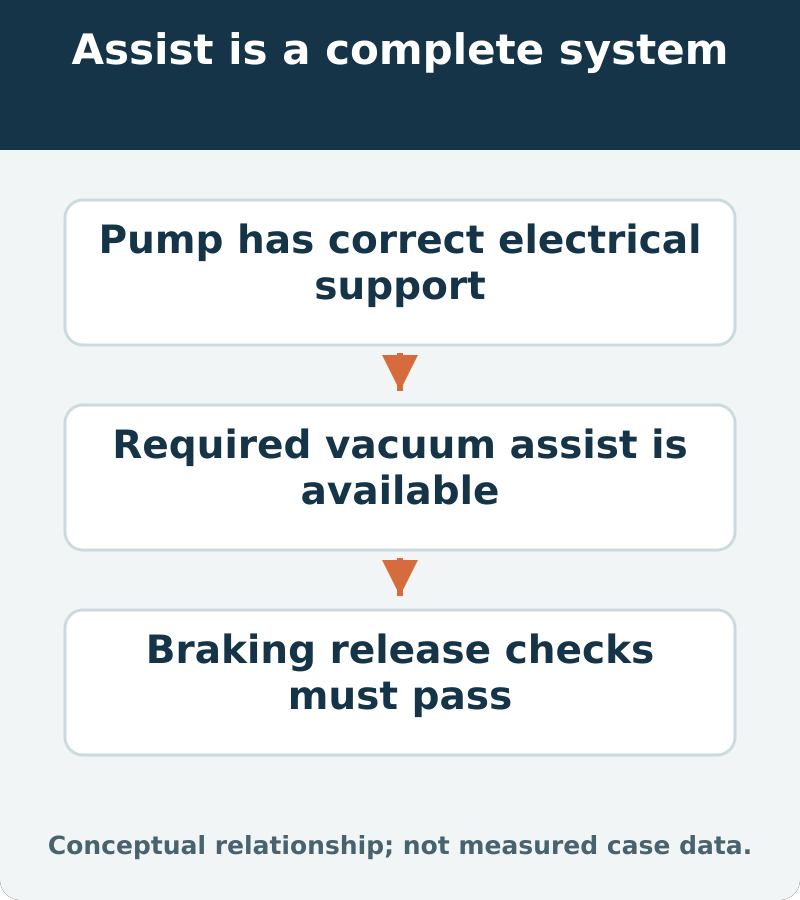
Separate the electrical finding from a complete brake-system conclusion. A meter result can be important without answering how the vehicle’s assist performs. If another brake concern is identified, it needs its own assessment rather than being absorbed into the pump story. This article does not provide a hydraulic repair procedure or a substitute for the specified safety checks.
Release requires a brake-assist check, not just a new fuse
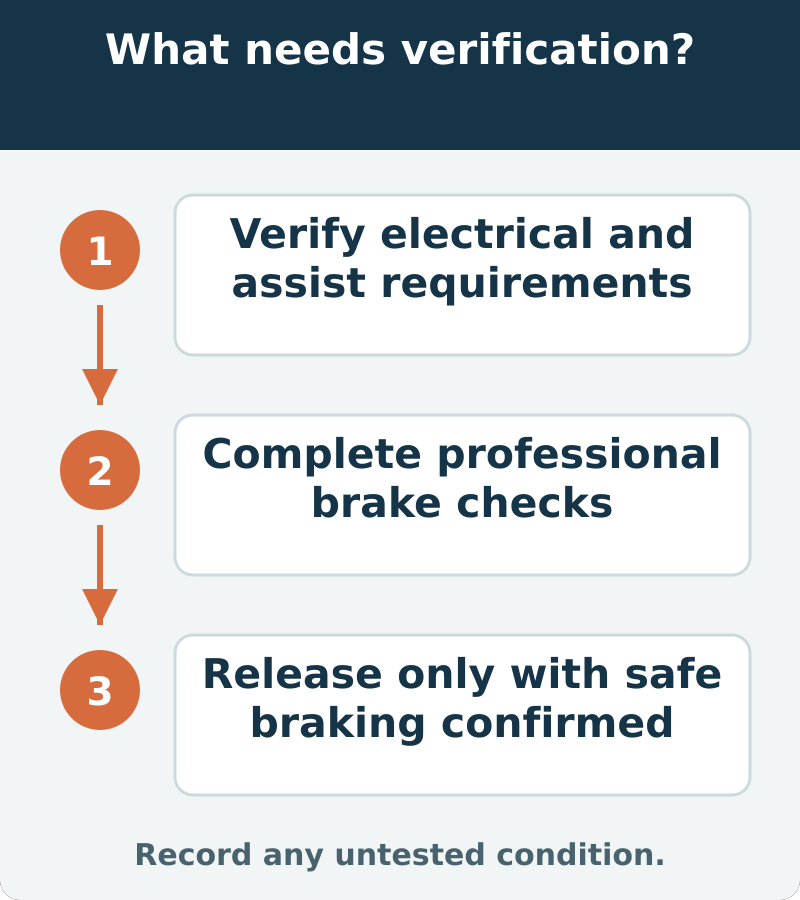
A fuse that remains intact after repair is one encouraging electrical result. It is not, by itself, proof that the required braking assistance is available. The technician must complete the applicable assist and brake-system verification using safe service procedures, and document the relevant fault status and outcome.
Before collection, request that completion record and clarification of any remaining limitation. If pedal effort becomes abnormal again, stop safely and arrange recovery rather than relying on a previous successful test. The central answer is deliberately direct: intermittent hard braking warrants action now, and the repair is complete only when the relevant safety function—not merely its electrical protection—has been checked.










Comments 0
Questions, fixes, and real-world diagnostic notes from readers.
Be the first to share a diagnostic result or ask a follow-up question.