
BMW X1 Hybrid No Heat After PTC Replacement: Control-Board Compatibility Was the Missing Clue

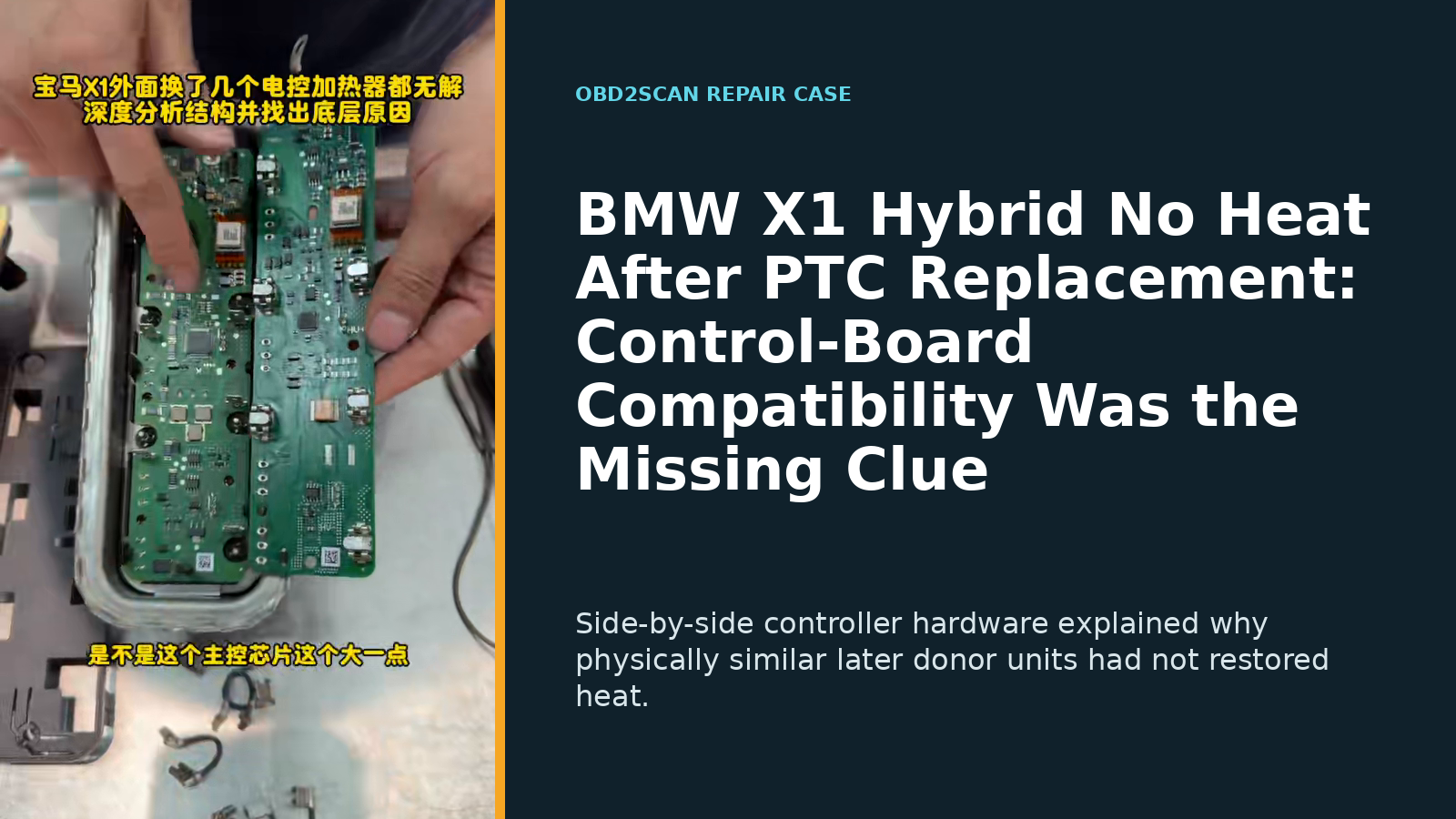
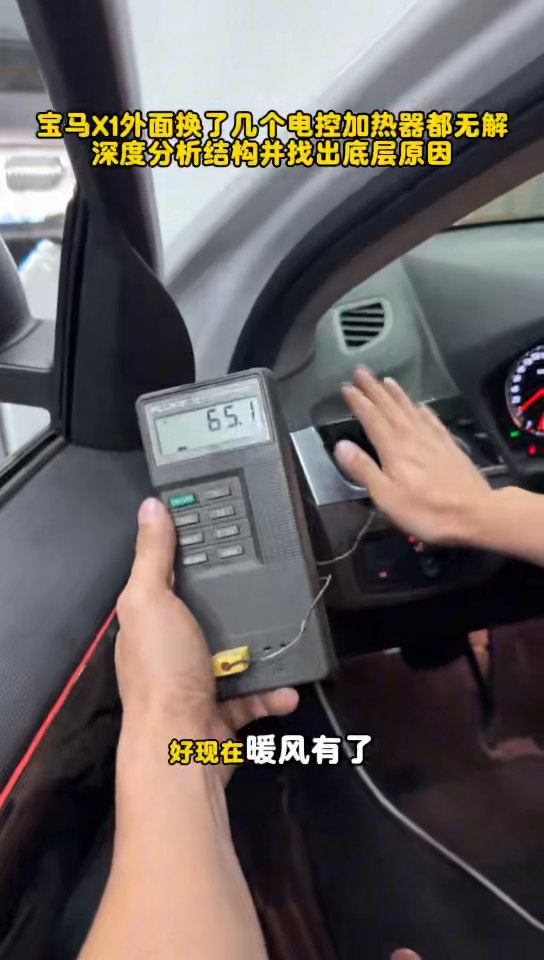
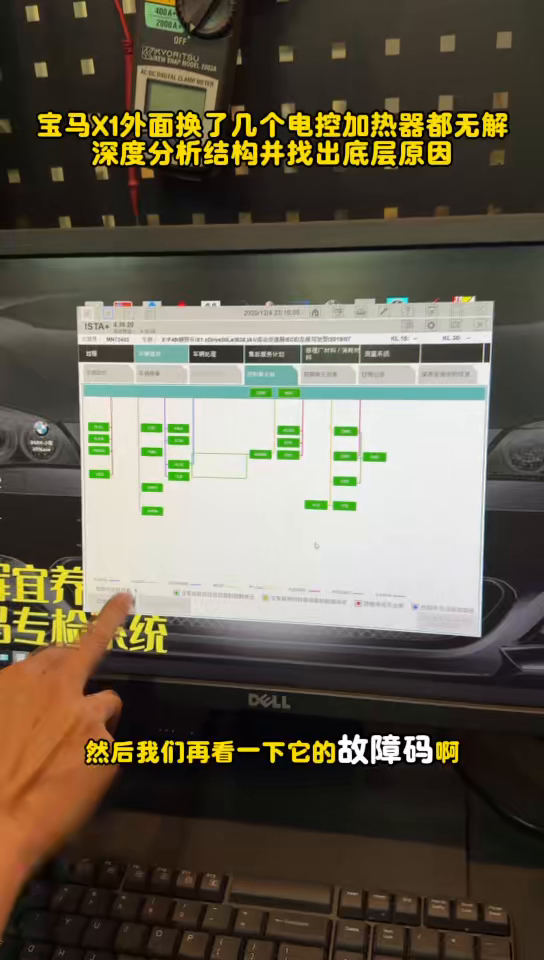
A BMW X1 hybrid—described only as an older high-spec configuration—arrived with no cabin heat after several replacement PTC electric heaters had failed to solve the complaint; its year, engine, chassis and mileage were not reported. Inspection confirmed an insulation fault in the original heater, but comparison then exposed a second problem: later donor assemblies used control hardware that did not match this vehicle’s early configuration. The workshop combined the compatible original controller and related power devices with a sound heater base, reassembled the unit, cleared the recorded history faults, and verified warm air at 65.1°C with no relevant heater fault indicated on the follow-up diagnostic screen.
Case at a glance
| Question | Answer from this X1 |
|---|---|
| Vehicle | BMW X1 hybrid, older high-spec configuration; year, engine and chassis not reported |
| Mileage | Not reported |
| Driver complaint | No cabin heat; several prior PTC heater replacements had not fixed it |
| Initially suspected | Another failed electric heater assembly |
| Finally confirmed | Original heater insulation failure plus a control-board compatibility mismatch with later donor units |
| Actual repair | Original compatible controller and related power devices combined with a sound heater base |
| Restoration | Unit reassembled and reconnected; history/intermittent faults cleared |
| Verification | Warm air returned, vent meter displayed 65.1°C, and the follow-up diagnostic screen showed no relevant heater fault |
Several failed replacements made compatibility the first question
The repair history changed the logic at the door. Another complete PTC assembly could still be faulty, but repeated unsuccessful substitutions also raised a more useful question: was the vehicle able to operate the replacement hardware at all? The workshop therefore treated the heating element, insulation path and control electronics as separate parts of the problem.
Bench observations separated failure from fit
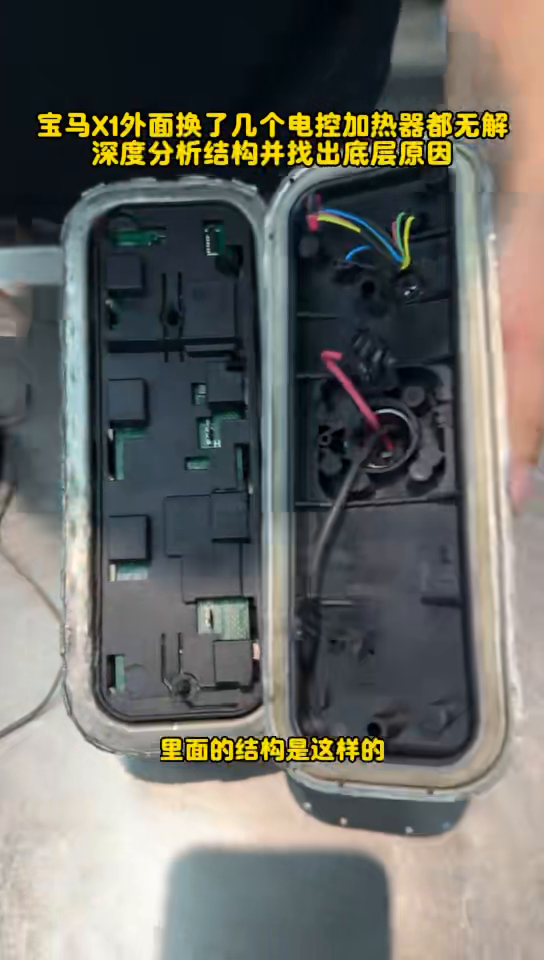
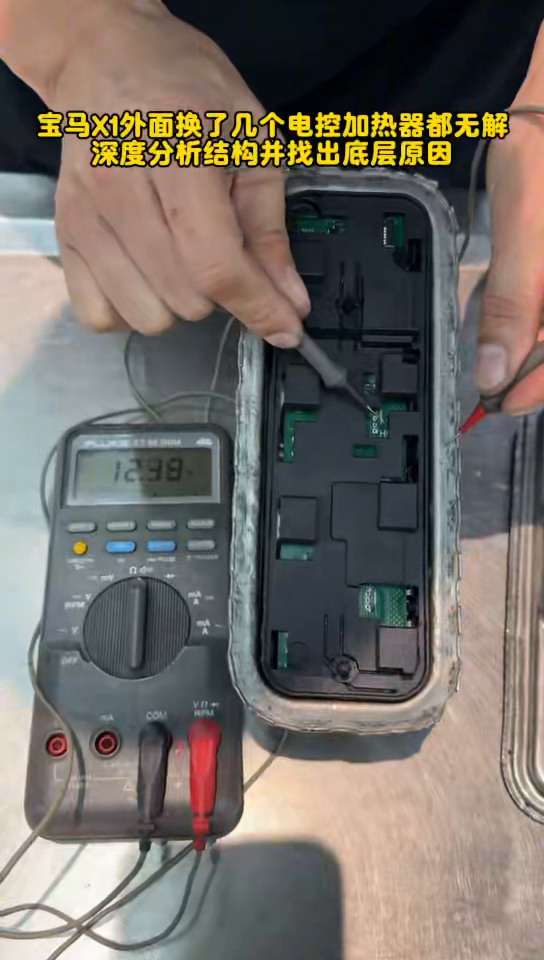
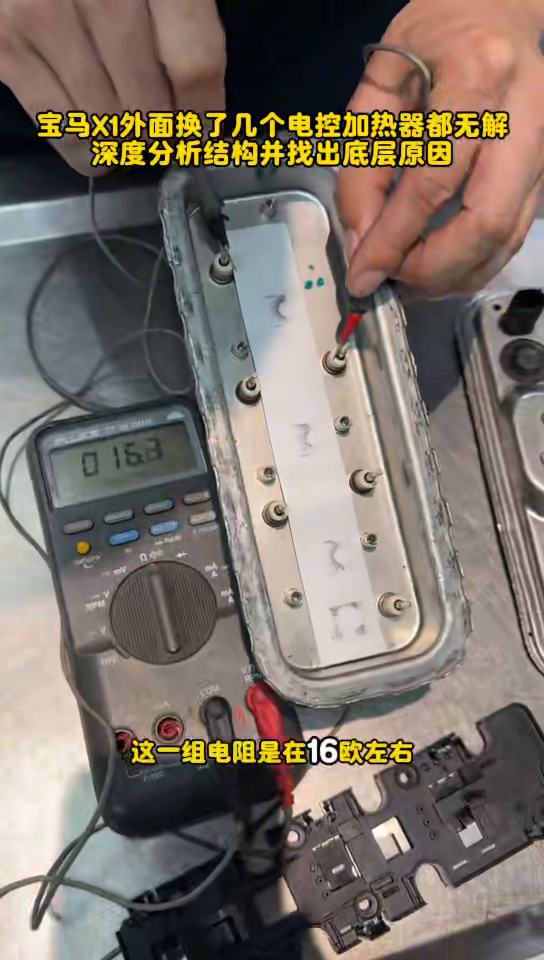
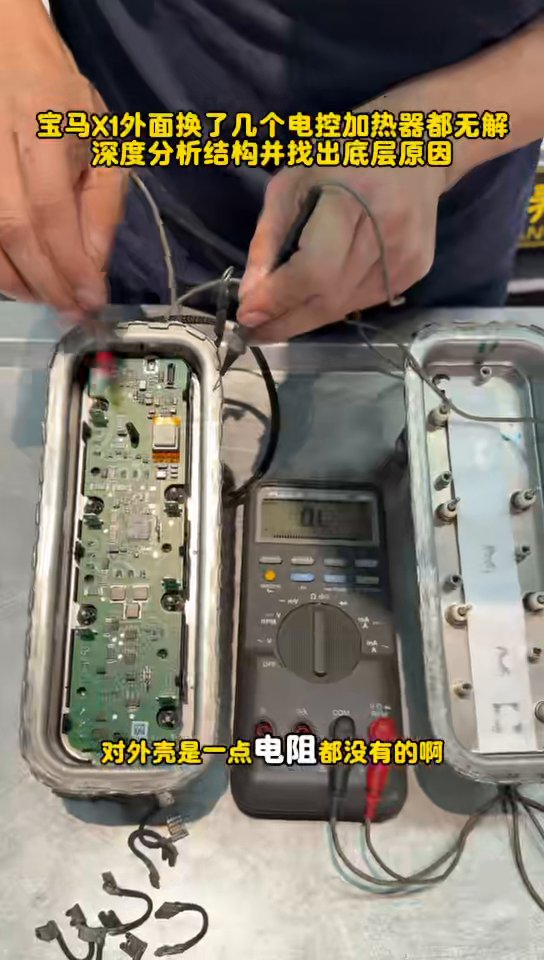
The source reports an insulation fault in the original heater, while also noting that the fault had not progressed to an opened protection fuse. On the bench, resistance checks were made across the heater sections and from the assembly toward its housing. The displayed values document what was being compared, but the source provides no BMW threshold, test voltage or temperature correction, so those readings are not published as a universal pass/fail rule.
Two control boards revealed why donor units would not cooperate
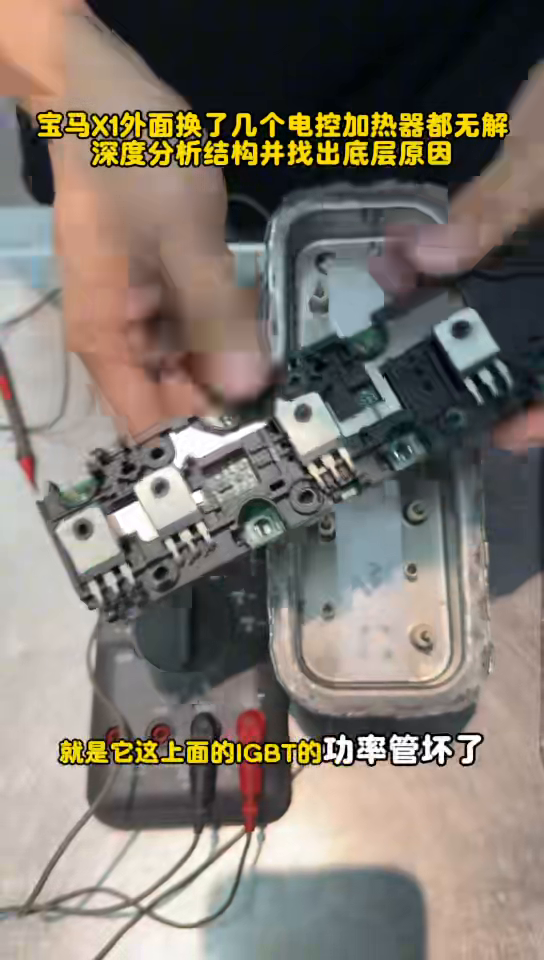
The decisive comparison was physical and configuration-specific. The early original board and the later donor board did not share the same controller layout; the source describes a smaller original control device and a larger later version. That did not prove every later PTC was unusable, but it explained this vehicle’s pattern: physically similar replacement units had not restored commanded heating.
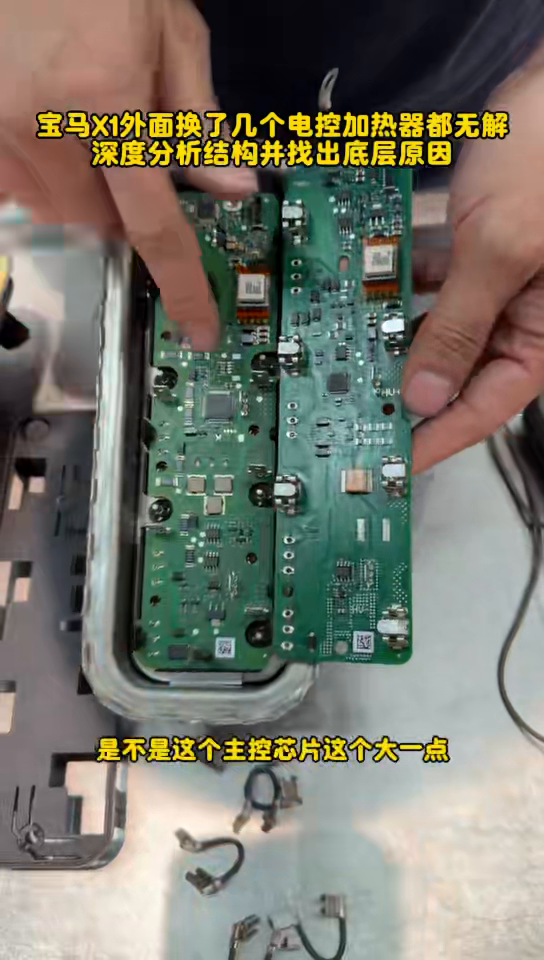
The suspicion was now distinct from the confirmation. No heat initially pointed toward the PTC system; the reported insulation fault confirmed the original heater base was not serviceable as-is; the side-by-side hardware difference and earlier failed substitutions confirmed that a random later donor controller was not the answer for this X1.
The repair joined a sound base to the vehicle’s compatible logic
The workshop retained the original vehicle-compatible controller and related power devices, then transferred them to the sound heater base. The unit was closed, installed and reconnected to the thermal-management system before stored or intermittent faults were cleared. The order mattered: prove the replacement base, preserve the matching logic, then restore communication and function.
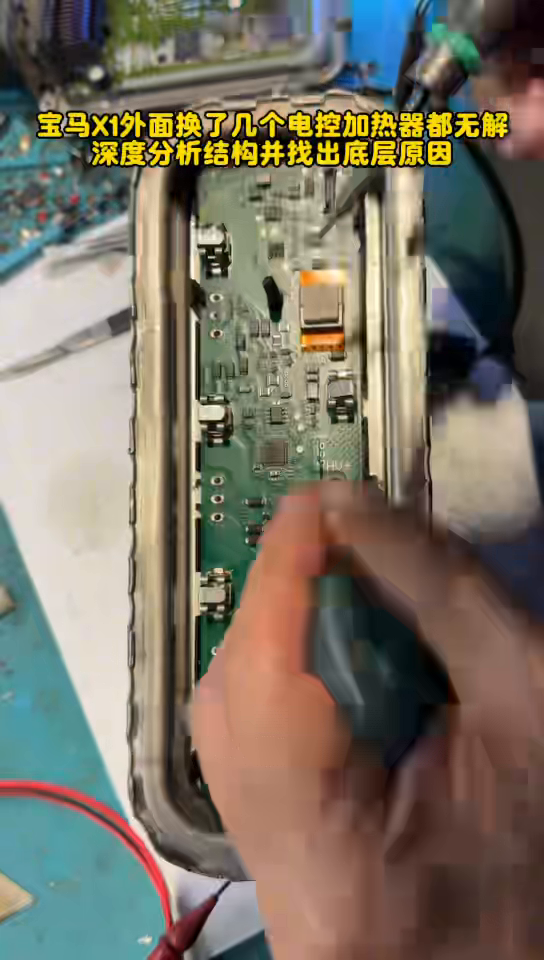
Opening a high-voltage heater and moving power electronics is not a driveway workaround. Safe isolation, absence-of-voltage verification, board identification, insulation testing and re-sealing require the exact vehicle procedure and qualified hybrid/EV capability; none of those specifications can be recovered from a social-video frame.
Warm air and the rescan closed the reported complaint
After reassembly, the visible meter at the cabin outlet displayed 65.1°C while warm air was present. A later frame shows the diagnostic result screen, and the source narration reports no relevant heater fault. Together these checks return to the original owner-visible complaint and then check the control side.
For another X1 hybrid that still has no heat after PTC replacement, preserve the original fault record, confirm the heater’s insulation condition, and compare exact controller hardware and communication compatibility before ordering another unit. Do not generalize this electronics transfer from the symptom alone: a coolant-flow problem, blend-door fault, power-supply fault or a genuinely compatible failed PTC would require a different repair.










Comments 0
Questions, fixes, and real-world diagnostic notes from readers.
Be the first to share a diagnostic result or ask a follow-up question.