2018 Toyota Corolla P0441: The Smoke Port Was Not the Failed Part

Quick answer: Smoke leaving a designed calibration opening is not automatically an EVAP leak. Interpret the system’s intended paths before replacing another pump.
Fuel-vapor testing requires the correct system state and approved equipment. Do not block unfamiliar openings, bypass emissions controls or connect unregulated shop air to the system.
A low-pressure smoke machine helps make permitted leak paths visible. The external-air AUTOOL SDT103 is one option where its pressure and medium match the vehicle procedure; flow adjustment must not be mistaken for pressure adjustment.
In this guide
Purge flow and an external leak are different questions
A purge-flow complaint concerns how the system performs an intended function. An external leak concerns an unintended escape path. The two can interact, but locating visible smoke does not automatically explain a flow-related fault. First establish what the particular test is designed to assess.
That distinction can prevent an expensive misunderstanding at the counter. Ask whether the proposed work addresses a demonstrated leak, a restriction or another failure of the commanded function. “We saw smoke” is not enough without the location, the test setup and an explanation of why smoke should not be present there under those conditions.
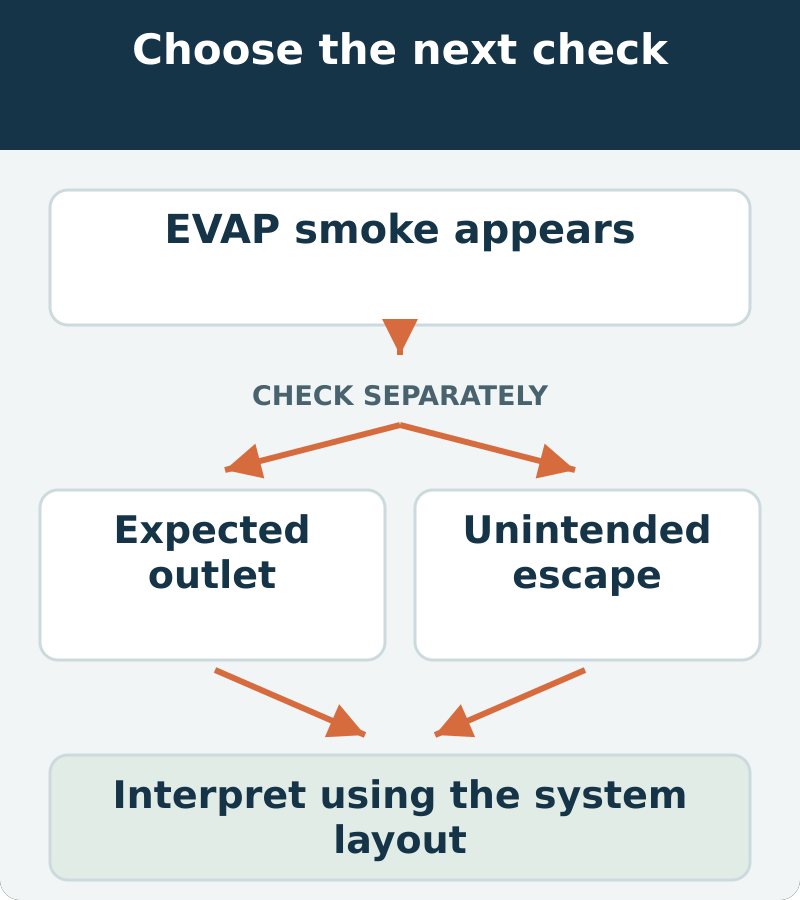
Why a little smoke can be expected
ALLDATA’s Corolla account describes a 2018 car with recurring P0441 after purge-valve and leak-detection-pump replacement. Smoke at a pump opening was identified as a calibration path. Further inspection found a water-saturated canister. Replacing the assembly and completing an EVAP-monitor evaluation reportedly resolved the warning.
The location became meaningful only after its purpose was understood. A designed opening is not automatically a defect, and an opening normal in one test state may require different handling in another. The technician needs the procedure for this vehicle, rather than a rule that all visible smoke is bad or that every small opening may be plugged.
What the canister adds to the system
The vapor-handling system is a connected set of components, not just the valve easiest to replace. Its intended flow depends on the paths and components involved being in the required condition. Once a local component has been checked or substituted without changing the complaint, the next question is what the rest of that connected path contributes.
For the owner, this means a successful electrical check at a valve does not certify the complete vapor route. Ask what evidence supports examining the canister and how that evidence relates to the actual fault. Do not substitute a guessed weight or a casual shake test for the manufacturer’s assessment of the installed system and component condition.
Set the test up before judging the result
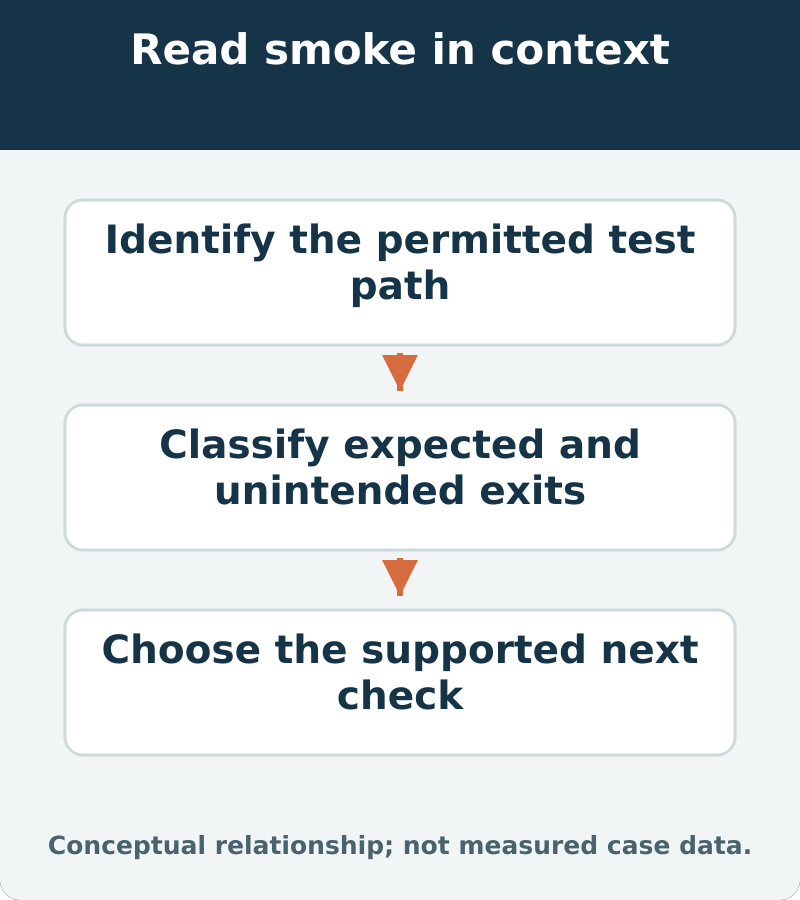
A test result cannot be separated from its setup. The connected section, permitted pressure and medium, commanded valve states and expected openings all affect interpretation. A machine capable of producing smoke cannot decide those requirements for the technician.
The practical questions are straightforward: Which section was assessed? Was it in the required state? Which observed path was expected, and which was not? Was the finding related to the original fault? These questions also help explain why an apparently negative test may need a different, properly specified assessment. More pressure is not a legitimate response to an unclear result in a delicate vapor system.
Find out how the water got there
Finding water damage raises a second question beyond restoring the failed function: is there a condition that could expose the replacement to the same problem? The answer may require inspection of the relevant protection and routing, guided by the exact service information and what is actually found on the car.
The published account does not establish the entry route, so it would be misleading to assign a universal cause. Ask the workshop what it inspected, whether it found a correctable exposure and what remains uncertain. This is more useful than blaming the owner’s driving or authorizing unrelated replacements simply because the damaged component was located in a vulnerable-looking area.
A clear lamp is not the whole emissions handover
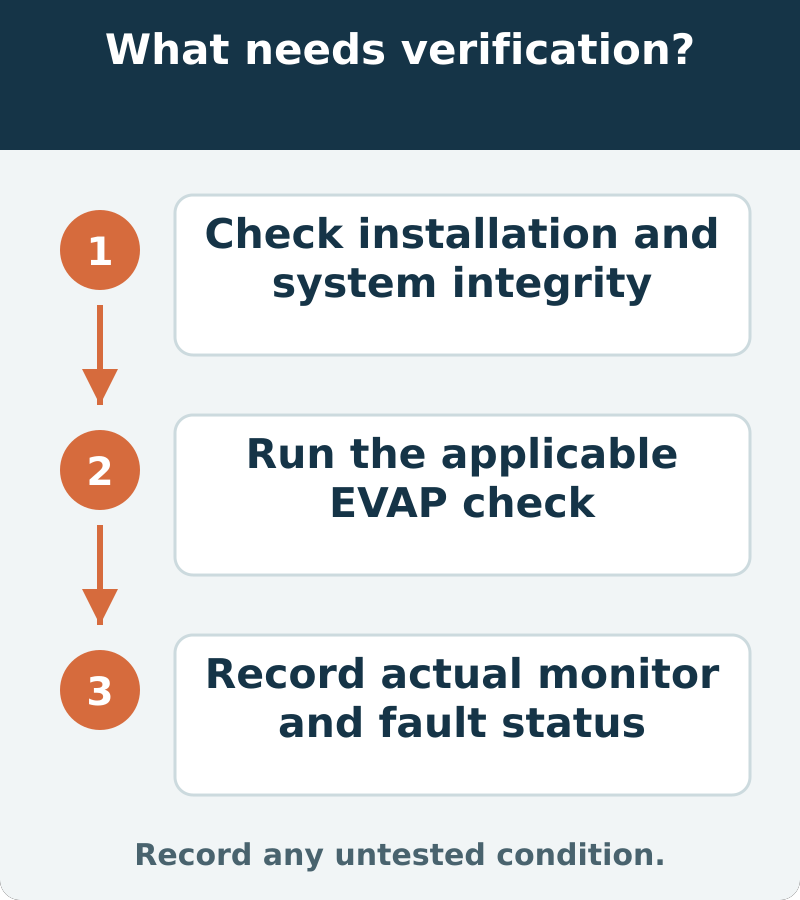
Clearing a fault and allowing the relevant monitor to assess the system are different events. The service record should distinguish memory clearing, a completed diagnostic check and the monitor status available at handover. An extinguished lamp immediately after clearing does not, by itself, demonstrate that the original condition has been reassessed.
Ask whether any required evaluation remains outstanding and how it will be completed safely. Do not follow a generic road sequence copied from another model. Keep the repaired-component details and final status with the invoice. The useful repair conclusion links the original flow complaint, the supported finding and the system’s subsequent evaluation—not merely the disappearance of visible smoke.






Comments 0
Questions, fixes, and real-world diagnostic notes from readers.
Be the first to share a diagnostic result or ask a follow-up question.