
2019 Mercedes E300 Red Coolant Warning: Cracked Bypass Pipe Repair Case

A 2019 Mercedes E300 (W213, M264) with 120,000 km was recovered after the instrument panel displayed a red “Stop Vehicle, Switch Engine Off” coolant warning. Following the pink coolant residue led to a cracked plastic bypass pipe behind the right side of the cylinder head. The pipe was replaced with an applicable metal version, the cooling system was refilled and bled, and a 30 km road test ended with the repair area dry.
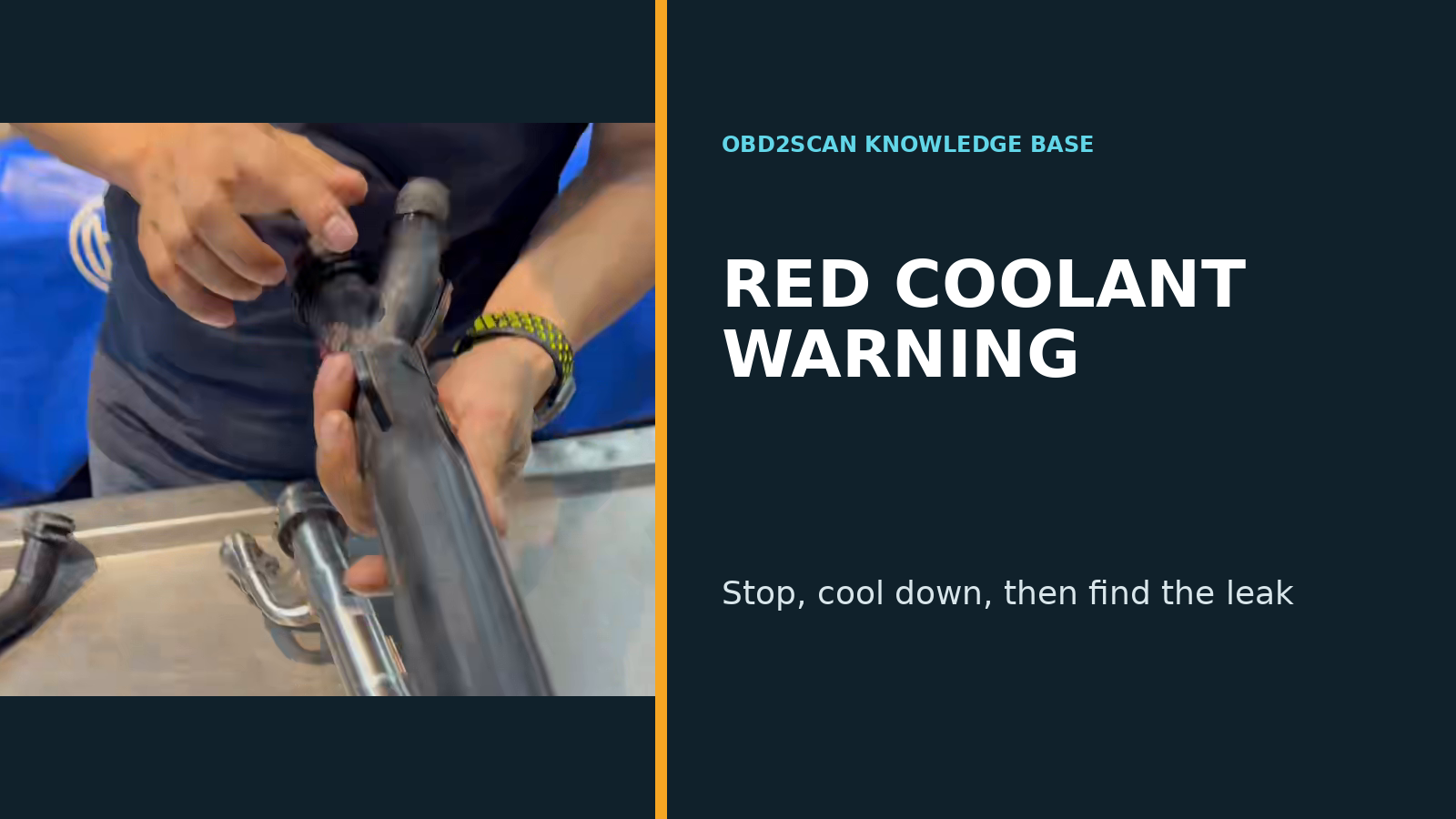
A red stop-engine warning is the decision point in this case: shut the engine down safely and do not open the cooling system while it is hot.
Case at a glance
| Item | Case detail |
|---|---|
| Vehicle | 2019 Mercedes-Benz E300, W213 chassis, M264 engine |
| Mileage | 120,000 km |
| Driver complaint | Red coolant warning instructing the driver to stop and switch off the engine |
| Confirmed fault | Cracked plastic bypass coolant pipe behind the right side of the cylinder head |
| Repair | Replaced the failed pipe with the metal version selected for this vehicle |
| System restoration | Coolant refill followed by the vehicle’s bleed procedure |
| Result reported in the case | 30 km road test; repaired area remained dry on the workshop recheck |
What happened before the car reached the workshop
The warning appeared while the car was being driven normally. The driver switched the engine off and arranged recovery instead of continuing with a low-coolant risk. That response preserved the engine and left the leak trail available for inspection.
A pre-repair scan was part of the workshop sequence, but the physical trail—not a fault-code description—identified the failed component.
How the cracked pipe was confirmed
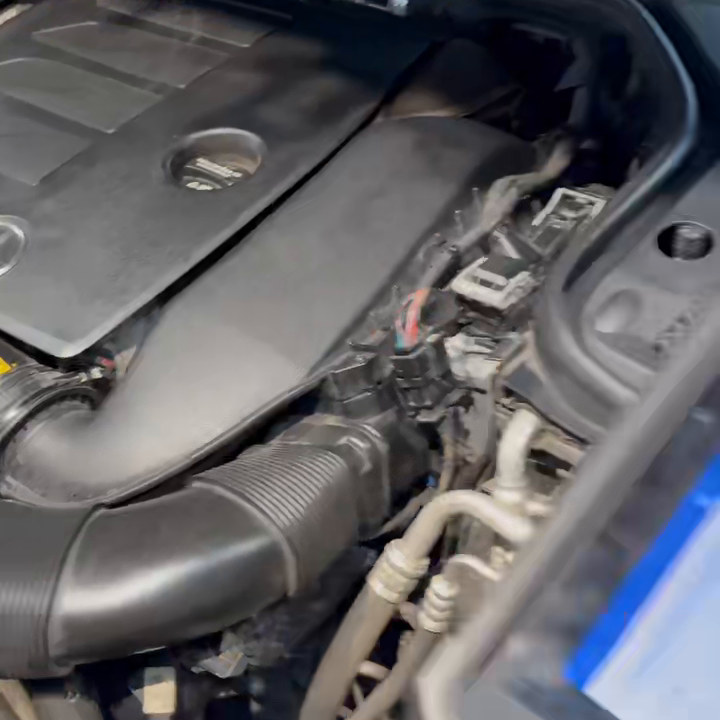
After the system had cooled, the inspection followed the pink crystalline residue rather than stopping at the lowest drip point. The trail led to the bypass-pipe assembly at the rear of the engine’s right-side cylinder-head area. Inspection of that location found the plastic pipe cracked.
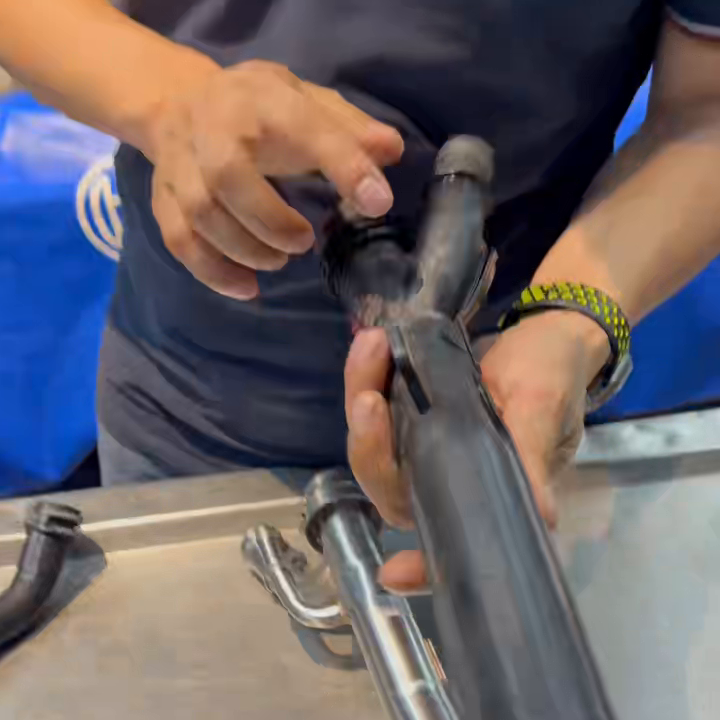
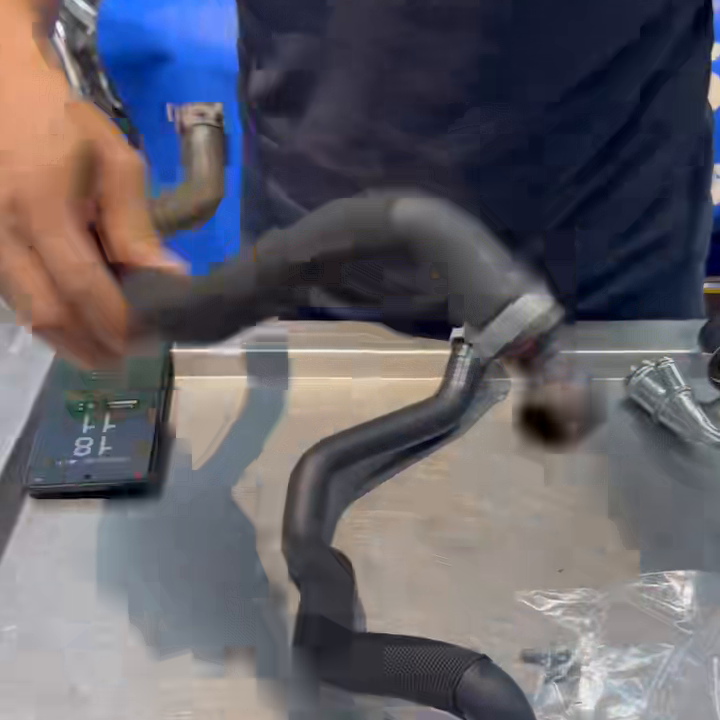
The removed part and its replacement are shown together below. This is the key finding: the red warning on this particular E300 was traced to a physical pipe failure, not treated as a generic cooling-system alert.
What was repaired
The failed bypass pipe was removed, the mating area was cleaned, and a metal replacement applicable to the vehicle was installed with the required seals. The replacement choice was made for this car; it should not be converted into a rule that every M264 pipe at a certain mileage must be upgraded.
The practical repair sequence was:
- Confirm the exact pipe location and vehicle application.
- Drain or capture coolant as required for access.
- Remove the fractured pipe without damaging the mating surfaces.
- Clean and inspect the sealing interfaces and adjacent connections.
- Install the applicable replacement pipe and new seals using current vehicle service information.
- Restore the cooling system with the specified coolant and bleed routine.
No torque, coolant specification or part number should be copied from this case to another vehicle. Those values come from the VIN-specific parts catalog and current service procedure.
Refill and post-repair checks
Once the pipe was installed, the cooling system was refilled and the prescribed bleed process was completed. When the adapter, reservoir opening, 12 V supply and compressed-air source are compatible, an AUTOOL SC301 cooling-system tester and vacuum filler can support a vacuum-hold screen and vacuum-assisted refill at this stage. It does not locate the cracked pipe, select the replacement part or perform the vehicle’s bleed routine.
The workshop then carried out a 30 km road test across different operating conditions. Back in the workshop, the rear right-side repair area and the connections below it were inspected again and remained dry. The coolant level and warning state were also rechecked after the repair.
What this case can teach on a similar E300
The reusable lesson is the order of evidence:
- Obey the red stop-engine warning.
- Preserve the warning and scan data.
- Let the system cool fully.
- Follow fresh coolant residue upward to its origin.
- Confirm the failed component before ordering parts.
- Refill, bleed, road-test and inspect the repair area again.
The cracked bypass pipe is the answer for this vehicle, not a universal diagnosis for every E300 coolant warning. A similar car may instead leak at a hose, reservoir connection, housing, radiator, pump or another pipe, so the fresh leak path still decides the repair.







Comments 0
Questions, fixes, and real-world diagnostic notes from readers.
Be the first to share a diagnostic result or ask a follow-up question.