
BMW 330GT Camshaft-Position Deviation Traced to the Central VANOS Valve

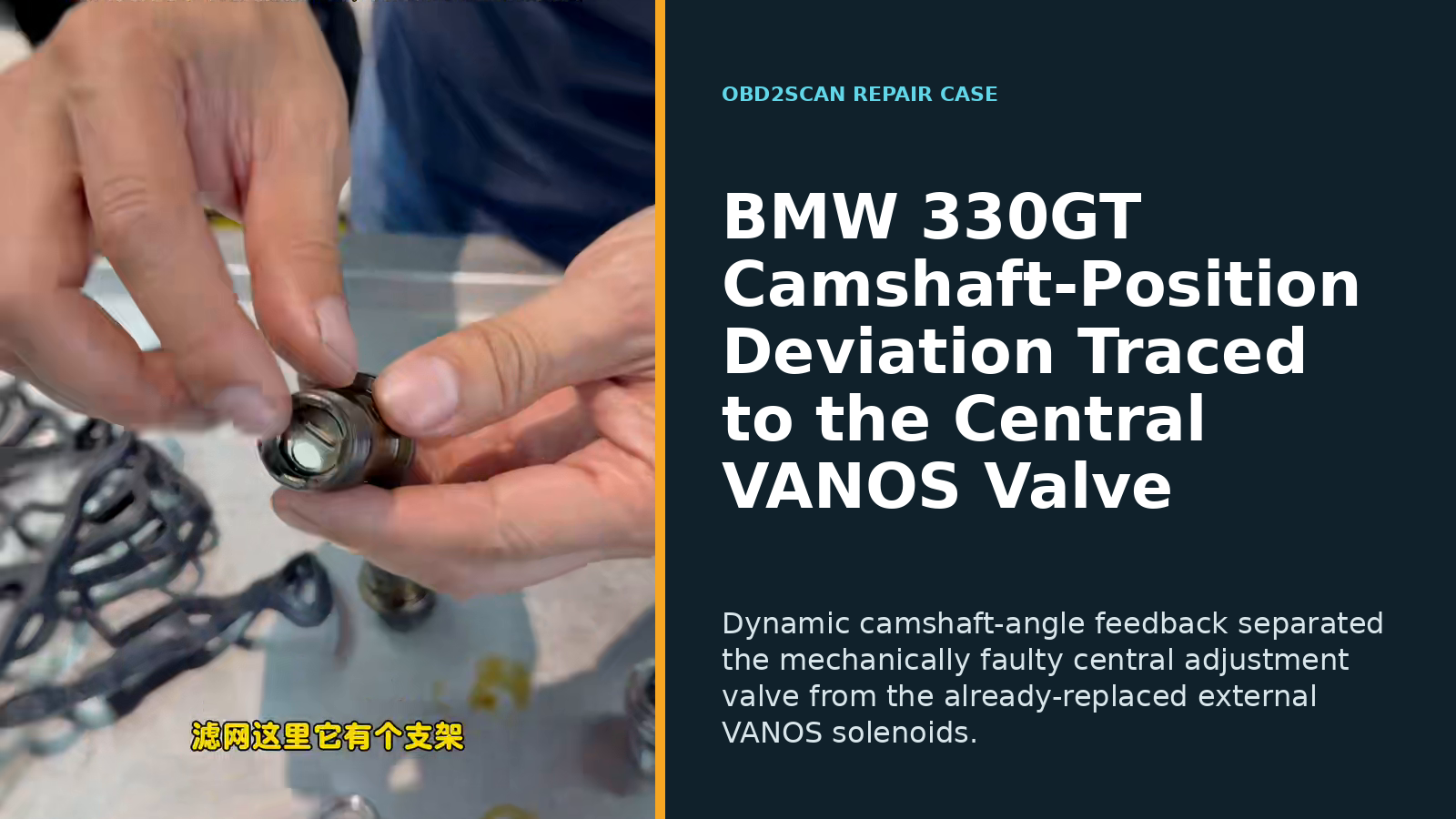
This BMW 330GT with a B48 engine—model year, chassis code, and mileage were not reported—had a camshaft-position deviation complaint that remained after both external VANOS solenoids had been replaced elsewhere. The diagnostic turning point was a dynamic camshaft-angle check that moved suspicion away from those solenoids and confirmed a mechanical fault in the central VANOS adjustment valve. The shop replaced that valve, cleaned the oil passages in its oil-distribution support, reset the VANOS adaptation, and reported acceptable commanded-versus-actual response in cold- and hot-engine checks with the fault memory clear.
Case at a glance
| Item | What this case reports |
|---|---|
| Vehicle | BMW 330GT with B48 engine; model year and chassis code not reported |
| Mileage | Not reported in the source case |
| Complaint | Camshaft-position deviation / camshaft-stuck fault remained after both external VANOS solenoids were replaced |
| Confirmed fault | Mechanically faulty central VANOS adjustment valve |
| Repair | Removed and replaced the central adjustment valve; cleaned the oil passages in the oil-distribution support |
| Restoration | Performed VANOS self-learning and cleared long-term timing correction values |
| Verification | Source reports cold- and hot-engine VANOS function checks, acceptable commanded-versus-actual position agreement, and cleared fault memory |
Two new solenoids, the same timing complaint
The useful clue was not simply that a camshaft-related fault had been stored. It was that the two externally accessible VANOS solenoids had already been changed and the complaint remained. That history made repeating the same parts swap a poor next move, but it did not by itself prove that the replacement solenoids were good or name the failed component.
The shop treated the stored deviation as a description of what the controller saw: camshaft position did not follow the requested movement. The next check therefore had to watch system response, not just read the fault label.
The angle feedback changed the suspect list
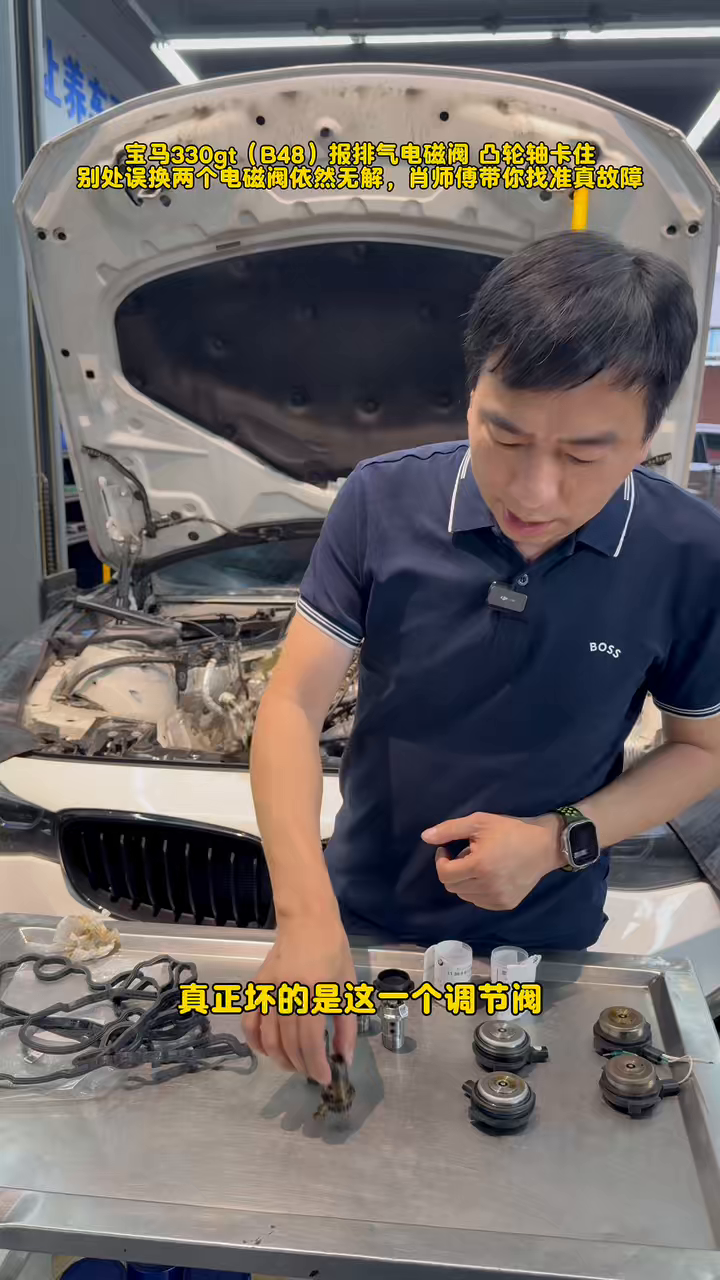
The source describes a dynamic test in which the solenoid command was isolated while live camshaft-angle feedback was observed. That result led the shop to identify a mechanical valve-body problem rather than condemn another external solenoid. The exact fault code, requested angles, measured angles, test duration, and numerical acceptance limits were not reported, so none should be supplied after the fact.
The unchanged complaint argued against repeating the earlier repair; the dynamic response was the confirming step that narrowed “camshaft deviation” to a specific repair target.
The small valve behind the larger decision
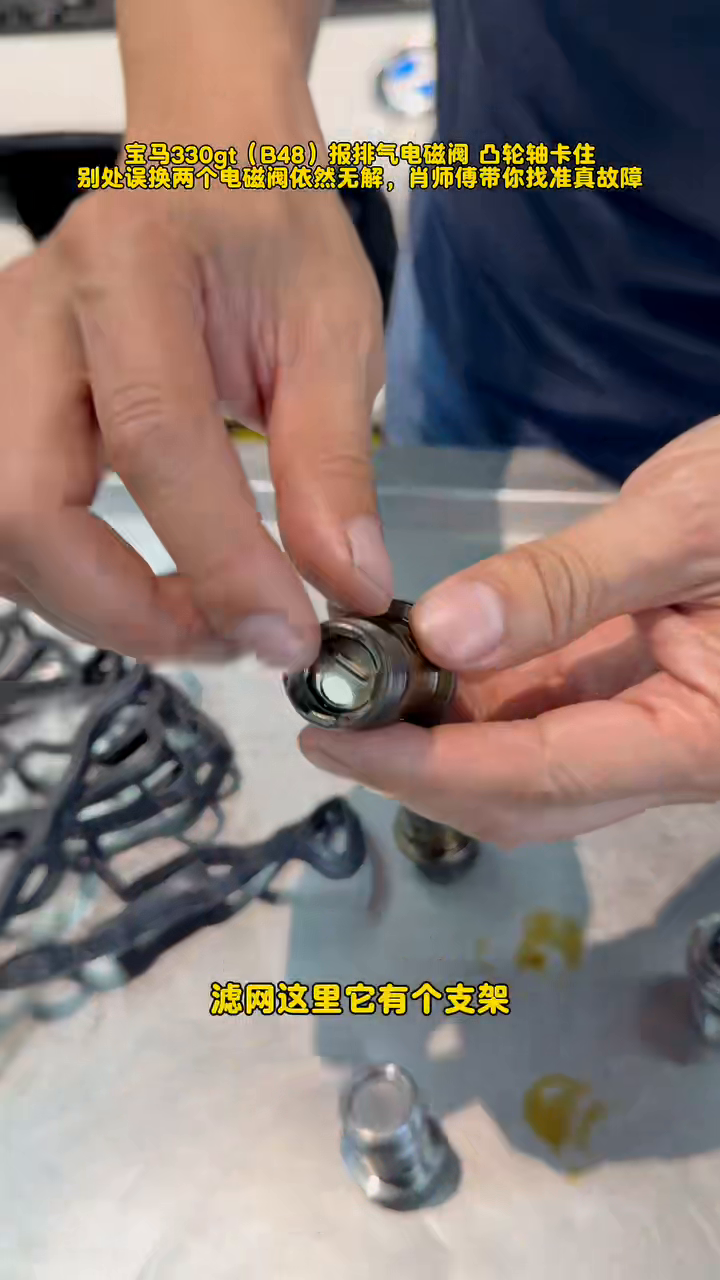
The confirmed part was the central adjustment valve in the camshaft-control oil circuit. The source attributes the failure to mechanical sticking and discusses oil contamination or varnish as possible reasons for restricted movement. The video shows the removed valve and its internal filter support, but a still image cannot determine the chemistry or origin of any deposit; the defensible case finding is the mechanically faulty valve established by the dynamic response.
The external solenoids and central valve participate in the same control chain, but they are not interchangeable diagnoses. A camshaft-position fault does not automatically identify the first electrical-looking component in that chain.
Opening the timing side without making this a timing tutorial
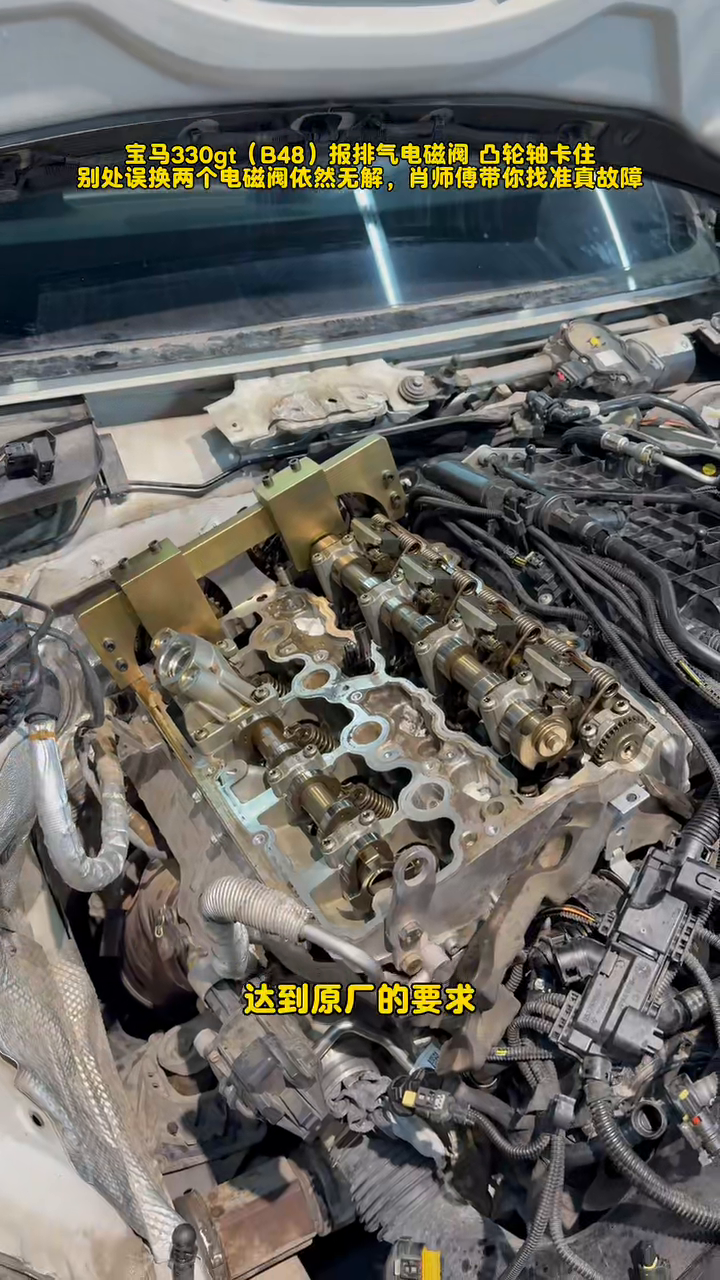
The repair record says the central valve was removed with the appropriate thin-wall socket while care was taken to keep metal debris out of the timing-cover area. The oil passages in the oil-distribution support were cleaned, and a new original-equipment central adjustment valve was installed. The source says tightening followed BMW service information, but it does not publish a torque value or a VIN-specific procedure here.
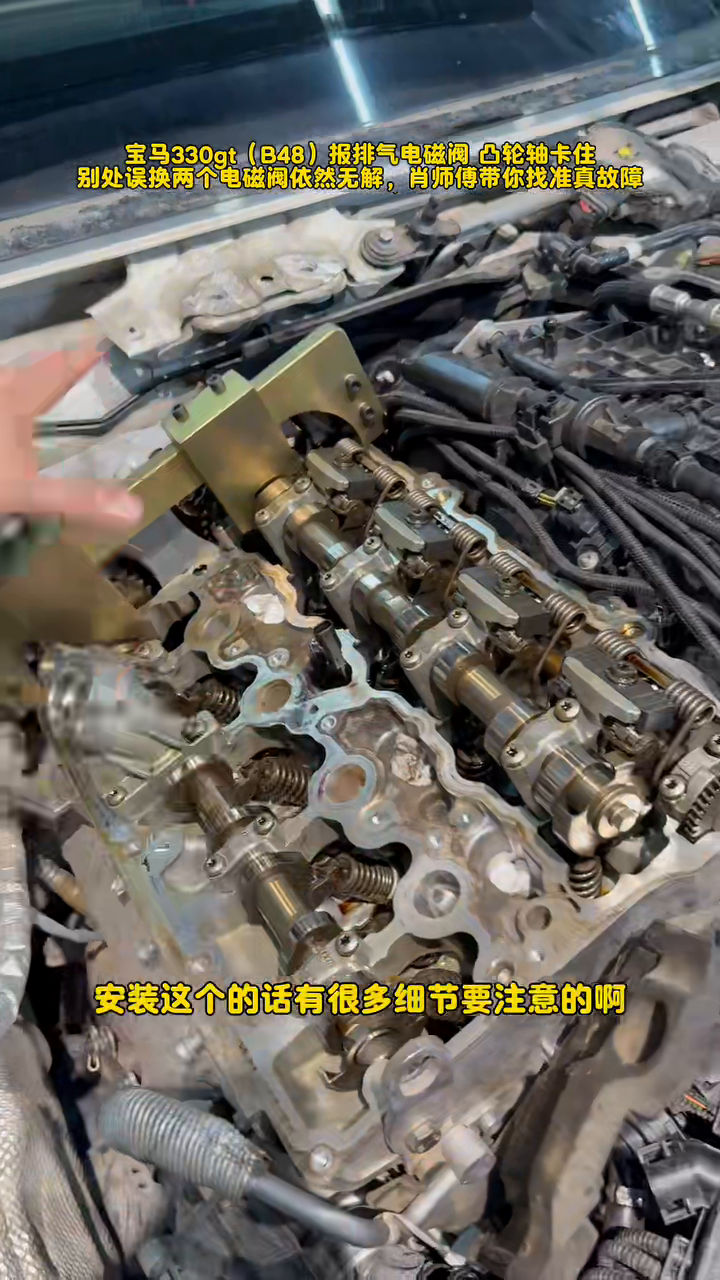
This is the practical stop boundary. Once access can disturb camshaft timing, a technician needs the correct B48 timing fixtures, current vehicle-specific service information, and the ability to verify synchronization. Without those, the useful owner-level action ends at documenting the fault and arranging a qualified diagnosis; guessing at timing position or tightening values can create a second problem.
Restoration was part of the repair, not paperwork
Mechanical installation did not finish the case. The source reports that VANOS self-learning was performed and the timing system’s long-term correction values were cleared. Those steps restored the controller’s learned reference after the oil-control hardware changed; they were not evidence that the valve had been installed correctly on their own.
No software version, menu path, relearn duration, oil grade, or oil pressure value was reported. Any service tool must support the required BMW functions for the exact vehicle; code erasure alone cannot confirm the mechanical valve.
Verification challenged the deviation again
The source reports VANOS function tests with the engine cold and hot. It says commanded and actual camshaft positions were checked for acceptable deviation and that the fault memory was clear afterward. This directly revisited the original position-deviation complaint under two temperature states, rather than treating installation or a one-time code erase as proof of success.
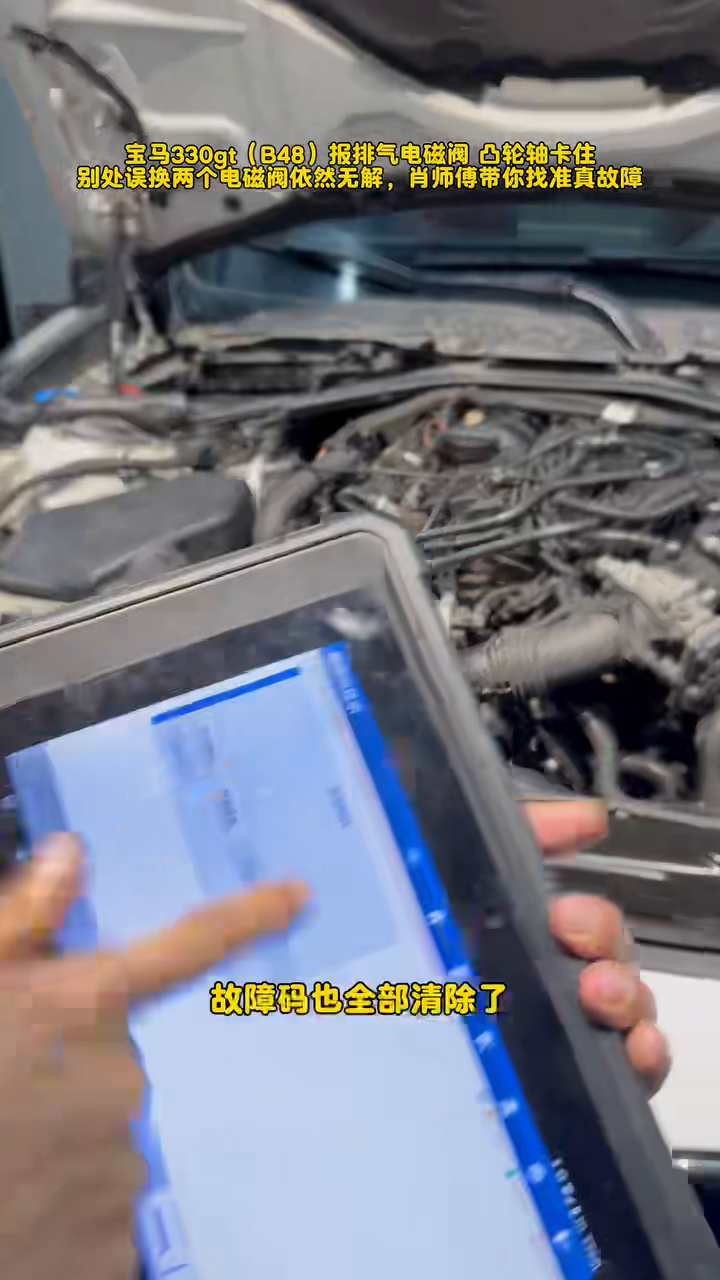
The video frame supports that a post-repair diagnostic check was shown, while the case report supplies the cold/hot function-test result. A road-test distance, soak time, numerical angle trace, and later recurrence history were not reported. The verified result is therefore limited to those staged checks, not a claim of permanent repair.
A first-check sequence for the next similar case
For another BMW with a camshaft-position deviation, first record the exact fault wording and operating conditions. Inspect the relevant connectors and oil-control components, but do not treat a fault label as a parts verdict. Then command VANOS while comparing requested and actual angle response. If that evidence points beyond the external solenoid, use current vehicle-specific information to test the central valve and its oil path. After a confirmed repair, complete the required adaptation or correction-value reset and challenge the original complaint again.
This sequence is transferable; the central valve is only this BMW’s answer, not proof that every similar deviation has the same cause.



Comments 0
Questions, fixes, and real-world diagnostic notes from readers.
Be the first to share a diagnostic result or ask a follow-up question.