
2018 Vauxhall Mokka P0300: A Spark Escaping Outside the Cylinder

Quick answer: A misfire code identifies a combustion problem, not a fuel shortage. This Mokka needed attention to the plug insulation and coil-cassette connection.
An engine can feel starved of fuel when the real problem is where its spark goes. A severe misfire or flashing warning lamp calls for a stop-use assessment, not another hard drive to make the fault obvious.
Start with evidence about the affected cylinder and the ignition system. A multimeter such as the AUTOOL DM301 can support identified supply and ground checks in a correctly prepared circuit. That does not make its ordinary leads safe for secondary ignition voltage.
For an owner, the useful distinction is simple: identifying a misfiring cylinder tells you where to investigate. It does not yet tell you whether to buy a plug, coil, injector or mechanical repair.
In this guide
Why a fuel-starvation feeling can come from ignition
Combustion needs more than fuel reaching the engine. The ignition system must deliver its energy across the intended spark-plug gap. If insulation or a mating connection is compromised, the outside of a plug can become part of an unintended electrical path.
That makes the driver’s description valuable without making it a diagnosis. Describe the shaking, when it happens and whether the warning flashes. Avoid translating the feeling into a parts request before the workshop has tested it.
P0300 is also a starting point, not a shopping list. Ask which additional observations identified a cylinder and whether the fault was present during those checks. A stored code and an active misfire are different pieces of information.
The clue that narrowed this Mokka to one cylinder
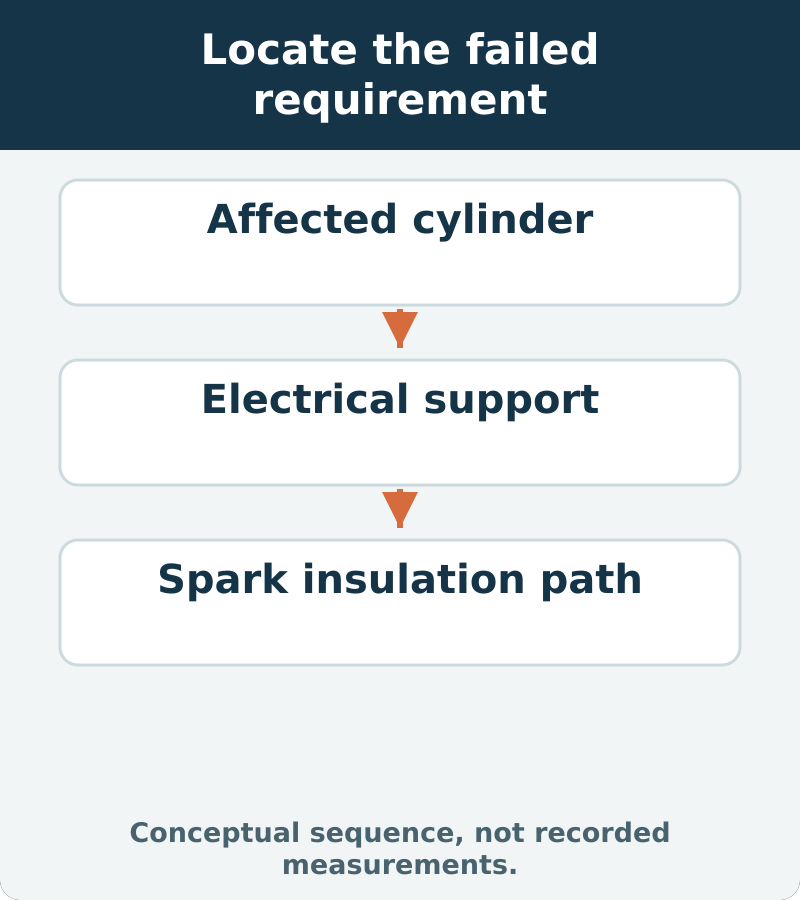
In Des Davies’s 2018 Mokka case, P0300 accompanied a severe idle misfire. Mode 6 information pointed to cylinder four. Relative compression was even; ignition comparisons and supply, ground and control checks directed attention to carbon tracking and erosion at the plug/coil connection. A replacement coil cassette and plugs were followed by improved ignition captures. The account does not provide a long-term follow-up.
The useful lesson is the sequence of questions, not a scanner menu to copy. Scan-tool labels and available test information depend on the application. Your workshop should explain how it identified the cylinder on your actual vehicle.
What the early checks did not rule out
An even relative-compression result means the cylinders behaved similarly in that comparison. It is not the same as an absolute pressure measurement proving every mechanical requirement is healthy. Equally, a good supply check does not inspect a hidden crack or contaminated insulating surface.
Think of each result as answering a bounded question. If the fault remains unexplained, the next check should address a question still open rather than repeat the same reassuring test with a different tool.
This is a sensible conversation to have before approving parts: which result supports ignition, and what plausible alternative has not yet been assessed? A clear answer can be brief. It needs a connection between evidence and decision, not a long printout of unrelated readings.
Two surfaces have to keep the spark inside
The plug’s ceramic and the boot or connection surrounding it work together. Looking at only the metal electrode can miss a problem on the outside. Conversely, an external mark needs interpretation; a photograph alone does not establish the complete operating behavior of the assembly.
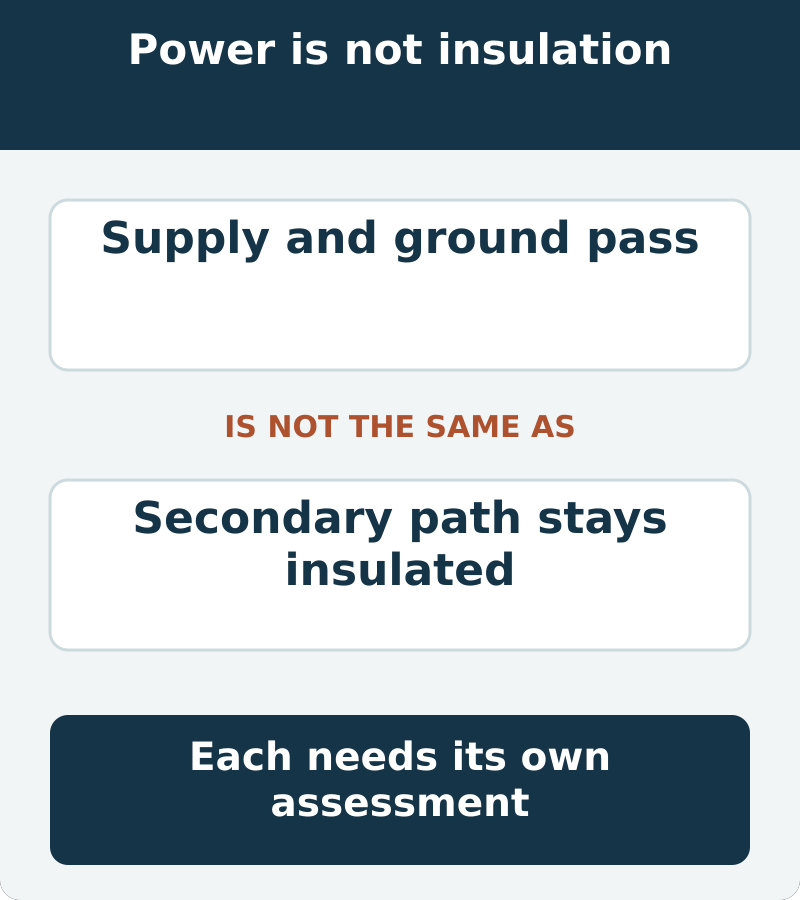
Inspection should be done with the engine disabled and the components safely accessible. Do not pull a boot from a running engine or reproduce an exposed-spark demonstration. Protect the mating surfaces during service and use the specified assembly method; improvised cleaning materials or force can create a new problem.
If a component is removed, ask the shop to record which cylinder it came from and what was found. That small detail makes a photograph useful on the invoice instead of leaving an unidentified dirty part to stand in for an explanation.
When a parts decision is justified
The repair scope should address the condition actually established. A damaged mating interface raises a different question from a plug simply reaching its scheduled replacement interval. Ask how the proposed parts address both the observed fault and any associated damage.
Do not turn one successful cassette replacement into a rule that every Mokka P0300 needs the same assembly. Similar symptoms can reach different branches. Confirm engine identification, the fitted ignition arrangement and the relevant service information before deciding what belongs in the order.
There is also no requirement for the owner to buy diagnostic equipment. Paying for a well-explained comparison can be more useful than buying a tool and still lacking safe access, specifications or interpretation.
Check combustion again, not just the warning lamp
The proposed acceptance check should revisit the condition that produced the complaint, within a safe test plan. Request the relevant cylinder information, confirmation of correct assembly and a check for returning faults. Clearing a warning before handing over the keys is not the same observation as normal combustion afterward.
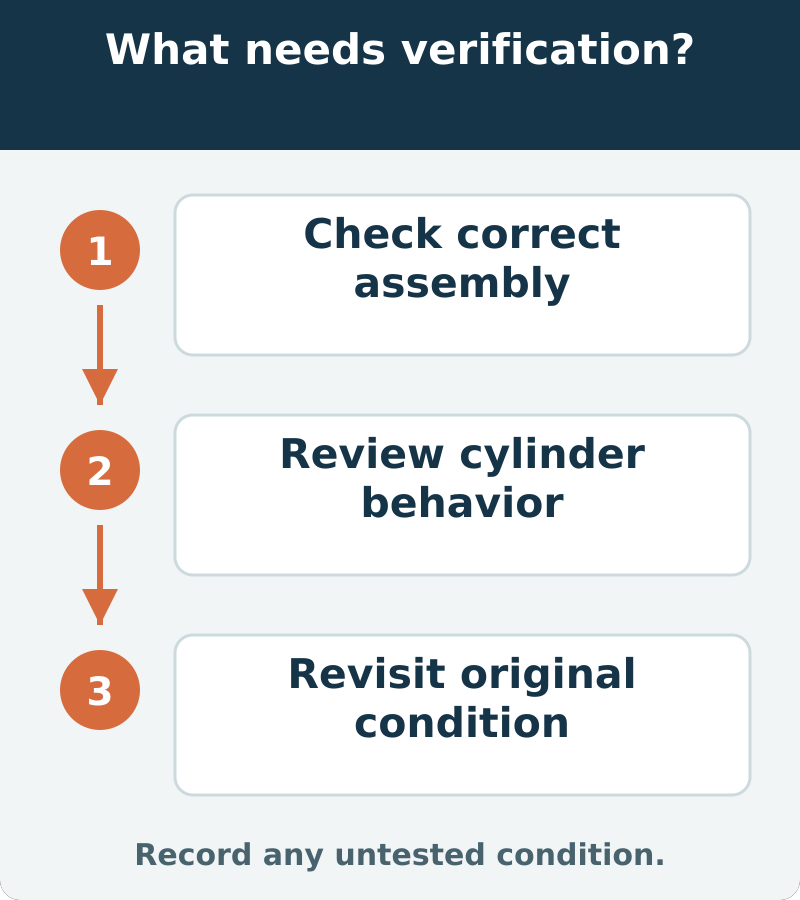
Keep any untested condition visible. If the workshop verified idle but not another reported operating condition, record that distinction. The next visit, if one is needed, can then begin with new evidence rather than the assumption that every rough-running event is the same fault.




Comments 0
Questions, fixes, and real-world diagnostic notes from readers.
Be the first to share a diagnostic result or ask a follow-up question.