
2014 BMW 525Li Overheating: Corroded Water-Pump Connector and Heater-Valve Leak

A 2014 BMW 525Li (F18, N20) with 220,000 km arrived with an intermittent engine-temperature warning. The scan showed an electronic water-pump communication problem, and removing the undertray revealed coolant residue at the pump connector, severely corroded terminals inside it and a second leak at the heater-valve housing. The electronic water pump and heater valve were replaced, the system was vacuum-filled and bled with the electronic-pump routine, and a 20 km road test ended with no related fault codes and both repair areas dry.
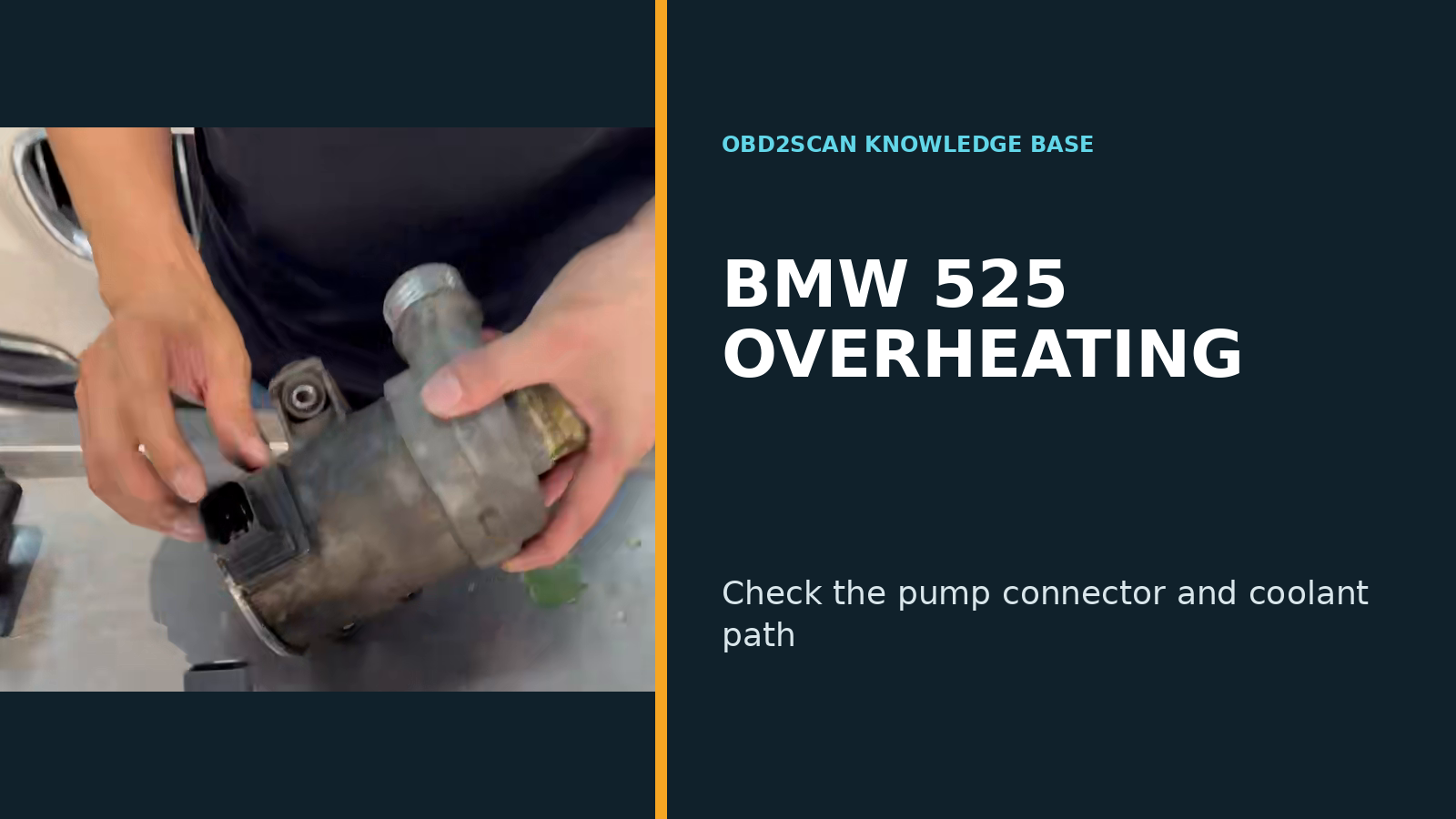
Case at a glance
| Item | Case detail |
|---|---|
| Vehicle | 2014 BMW 525Li, F18 chassis, N20 engine |
| Mileage | 220,000 km |
| Driver complaint | Intermittent engine-temperature warning while driving |
| Scan finding | Electronic water-pump communication fault recorded |
| Physical findings | Coolant crystals at pump connector, severe terminal corrosion and heater-valve housing leakage |
| Repair | Electronic water pump and heater valve replaced; affected interfaces cleaned and restored |
| System restoration | Vacuum fill followed by the BMW electronic water-pump bleed routine |
| Result reported in the case | 20 km road test, no related DTCs, repair areas dry |
The first clue was electronic, but the cause was visible
The pre-repair scan recorded a communication problem involving the electronic water pump. That was enough to direct attention to the pump circuit, but not enough to order a pump by itself.
After the cooling system was allowed to cool and the lower shield was removed, the physical inspection found crystallized coolant around the pump connector. Disconnecting it revealed heavy corrosion on the internal terminals, explaining why the communication complaint and the coolant system could not be treated as unrelated problems.
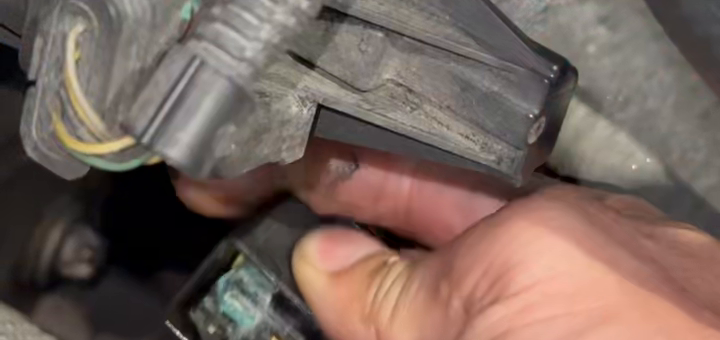
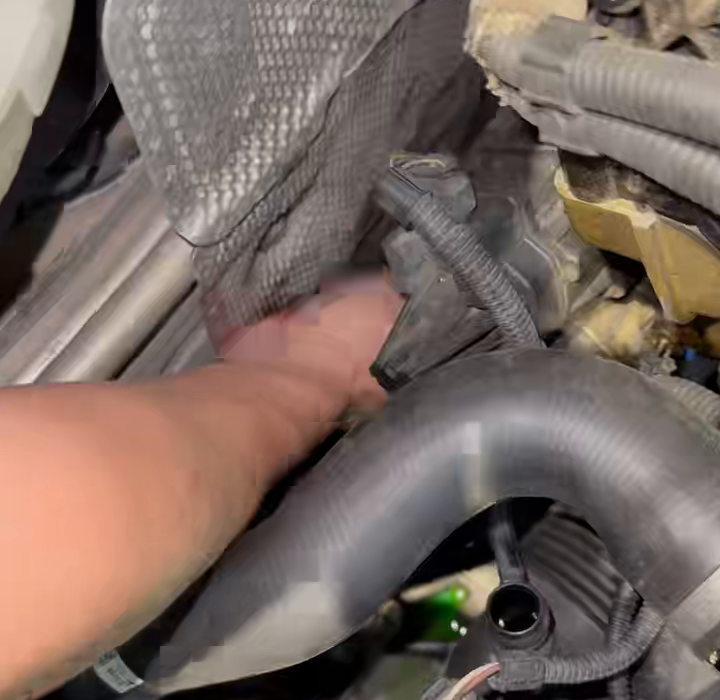
The important diagnostic move was to inspect the interface before clearing the code or replacing a component. Surface cleaning alone would not restore terminals whose plating, contact pressure or conductor connection had been seriously damaged.
A second leak was found before the repair plan was closed
The inspection did not stop once the corroded pump connector was found. Following the coolant path through the same system revealed fresh leakage at the heater-valve housing near the firewall.
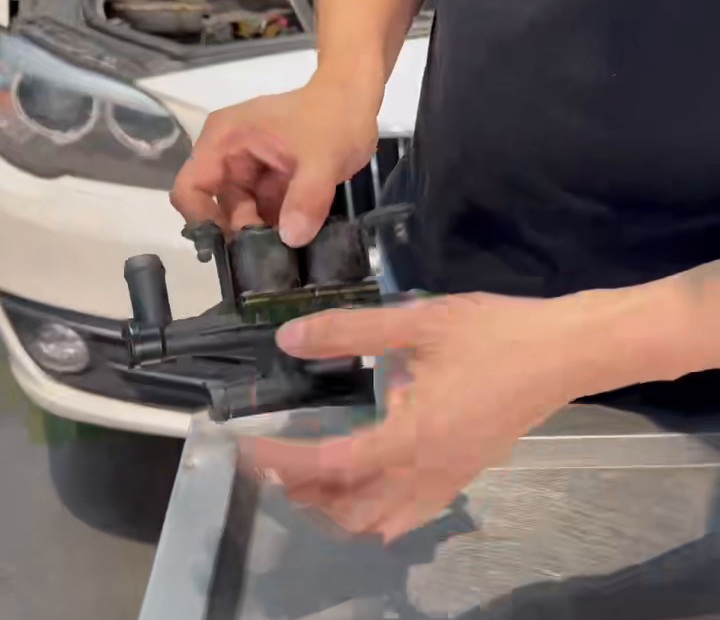
This second finding explains why replacing only the water pump would have produced an incomplete cooling-system repair. It also shows why a second component in a case should be named only when it has its own evidence—the pump communication fault did not, by itself, prove the heater valve was leaking.
What the workshop replaced
The electronic water-pump assembly was removed because its coolant-contaminated connector and corroded terminals were part of the confirmed communication fault. The leaking heater-valve assembly was replaced as a separate hydraulic repair.
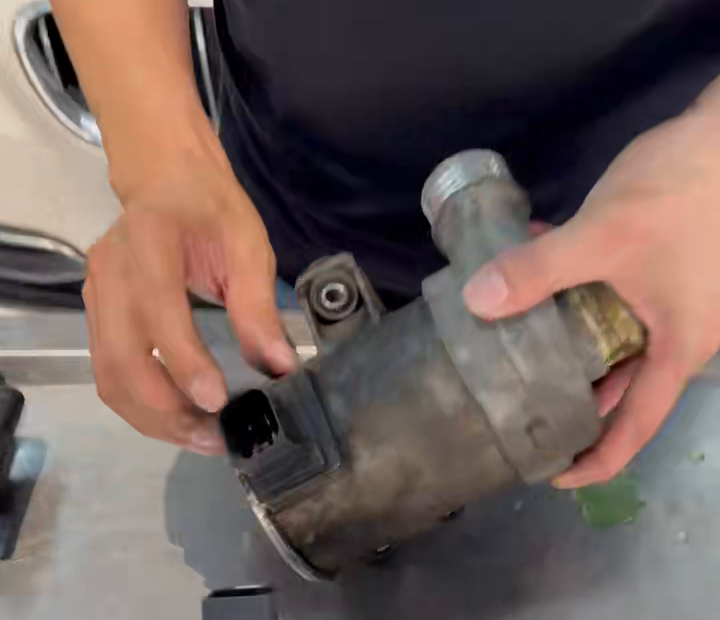
The repair sequence recorded for this BMW was:
- Save the complete pre-repair scan and fault context.
- Let the cooling system cool and inspect the pump area from below.
- Document the connector contamination, terminal damage and harness condition.
- Continue tracing the coolant path and confirm the heater-valve housing leak.
- Replace the electronic water pump and heater valve with parts applicable to the VIN.
- Clean the hose interfaces and inspect the affected connector and harness before reassembly.
- Refill and complete the electronic-pump bleed routine.
Exact connector-repair criteria, part numbers, fasteners, coolant and service functions must be taken from current BMW information for the vehicle.
Filling and bleeding the N20 cooling system
After both leaks were addressed, the system was vacuum-filled and the vehicle’s electronic water-pump bleed routine was run. When the reservoir opening, adapter, compressed-air source and 12 V supply are compatible, the AUTOOL SC301 cooling-system tester and vacuum filler can support the vacuum-hold screen and vacuum-assisted filling portion. It cannot test the pump’s control-network communication, repair terminals, command the BMW pump or replace the vehicle bleed routine.
How the two faults were verified
The workshop completed a 20 km road test and then scanned the vehicle again. The case reports no remaining pump-communication or cooling-flow fault codes. The water-pump connector area, heater-valve housing and surrounding coolant connections were also checked and remained dry.
The result was credible because both branches were closed:
- the electrical branch ended with restored pump communication and no returning related DTC;
- the hydraulic branch ended with stable sealing and dry repair areas after the road test.
What to carry over to another BMW 525
On a similar intermittent-overheating complaint, save the scan first, then inspect the electronic-pump connector and the coolant path before ordering a pump. If corrosion is present, find where the liquid entered and determine whether the connector or harness is repairable under the applicable procedure. Continue checking the system for another leak even after one strong fault is found—the heater valve in this case would otherwise have been missed.


Comments 0
Questions, fixes, and real-world diagnostic notes from readers.
Be the first to share a diagnostic result or ask a follow-up question.