
2020 Grand Cherokee Would Not Start After Tinting: Follow the Water, Not the Mirror

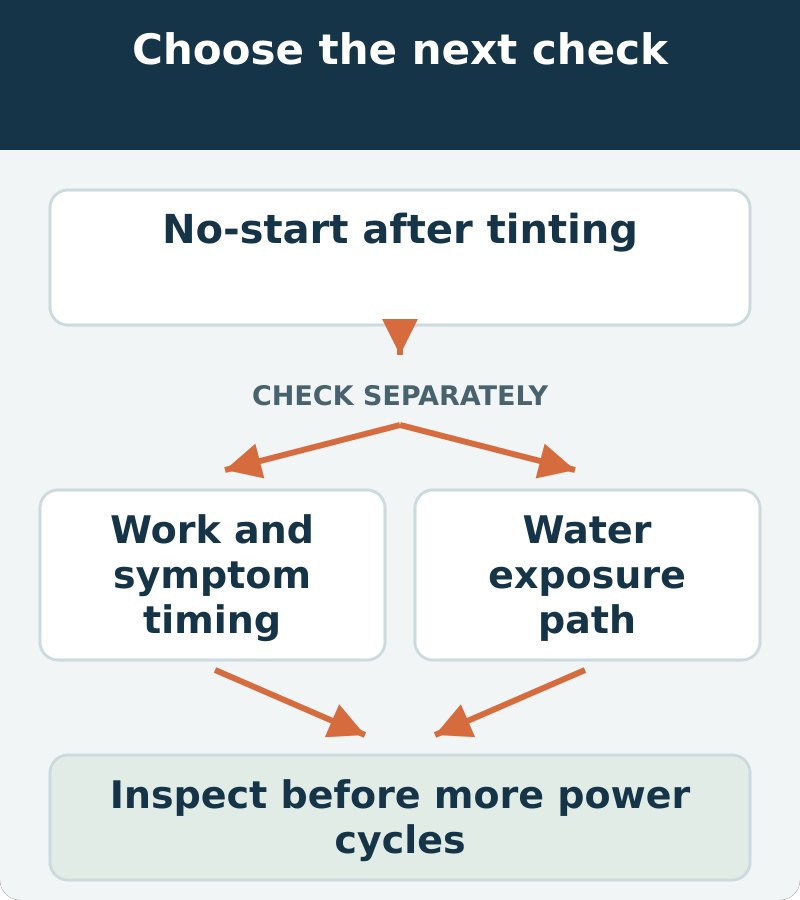
Quick answer: A no-start immediately after work near the windshield calls for a careful event and water-path review. It does not automatically identify the last component removed as defective.
A failure immediately after windshield work naturally sends attention back to the glass, mirror and nearby connectors. Start with that timeline, but keep the search open. A concealed water route may need an articulating inspection camera, such as the AUTOOL SVB308. Photographs can document exposure; establishing whether wet electronics still work is a separate diagnostic task.
In this guide
Write down what happened before the first failed start
Build a short chronology while the details are fresh: when the vehicle last started normally, what work occurred, when the first warning appeared and whether the instrument display changed between attempts. Keep photographs and the service paperwork together.
Separate things you saw from things you suspect. “The display changed after the tinting appointment” is an observation. “The mirror has damaged the engine computer” is a conclusion that needs evidence. This distinction helps a repairer investigate efficiently and gives everyone involved a factual basis for discussing the incident. It also avoids losing the original complaint beneath later battery or starting problems.
The last part touched may not be the failed part
The component handled most recently is an obvious inspection point, but proximity in time is not proof of component failure. Work near the windshield may involve several nearby areas, and liquid can take a route that is not apparent from the seat.
An investigation should therefore include the relevant service activity, the observed electrical symptoms and any signs of moisture. It should not become a contest between a mirror diagnosis and a module diagnosis before either has been tested. The exact equipment fitted to the vehicle also matters: do not assume that every Grand Cherokee has the same windshield-mounted electronics or replacement requirements.
In the published ALLDATA case, following windshield tinting, this Jeep lost PCM communication and showed inconsistent starting and gear indications. Inspection found tinting solution inside the body controller. Controller replacement restored normal operation. The report says no programming was needed on that vehicle; it does not establish that this applies to other replacements.
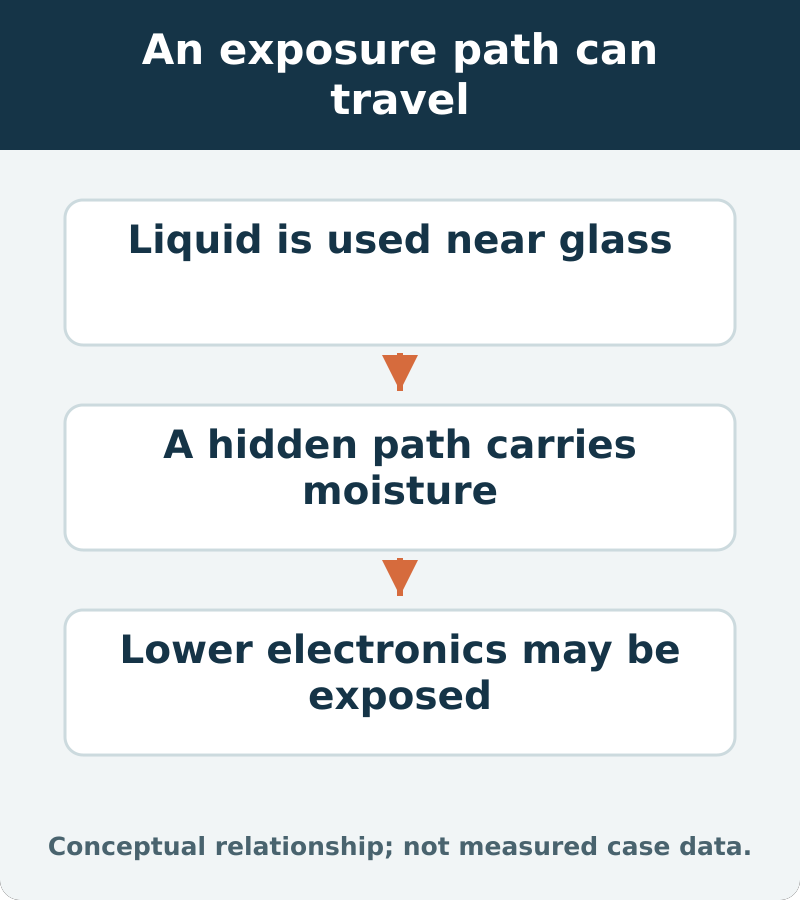
Why water can appear far below the glass
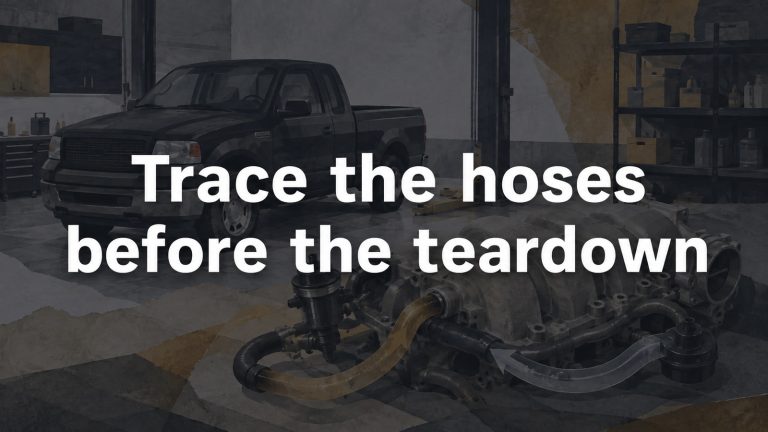
A dry patch of glass does not tell you where all the cleaning or application fluid went. The useful inspection follows possible entry points, concealed surfaces and the place where moisture was actually found. The illustration here explains that general relationship; it is not a map of this Jeep’s trim or a photograph of the original leak.
Ask for photographs with enough surrounding detail to identify the location. A close-up of droplets without context may be difficult to interpret later. Any camera used in a damp area must stay within its own protection limits; a water-resistant probe does not make its display unit waterproof.
Inspect before repeatedly reconnecting power
Repeated starting attempts are not a harmless way to see whether water has dried. If electronics are wet or electrical behavior is unpredictable, stop experimenting and obtain recovery or workshop guidance. Do not bridge a relay, bypass an interlock or reconnect a controller simply because a forum describes that approach.
The repairer needs to decide how to make the vehicle safe, assess affected circuits and preserve useful evidence. That assessment can include areas beyond the visibly wet component. The owner’s useful contribution is the timeline and the observation record, not invasive testing around powered electronics or restraint-related equipment.
A controller estimate needs a setup plan
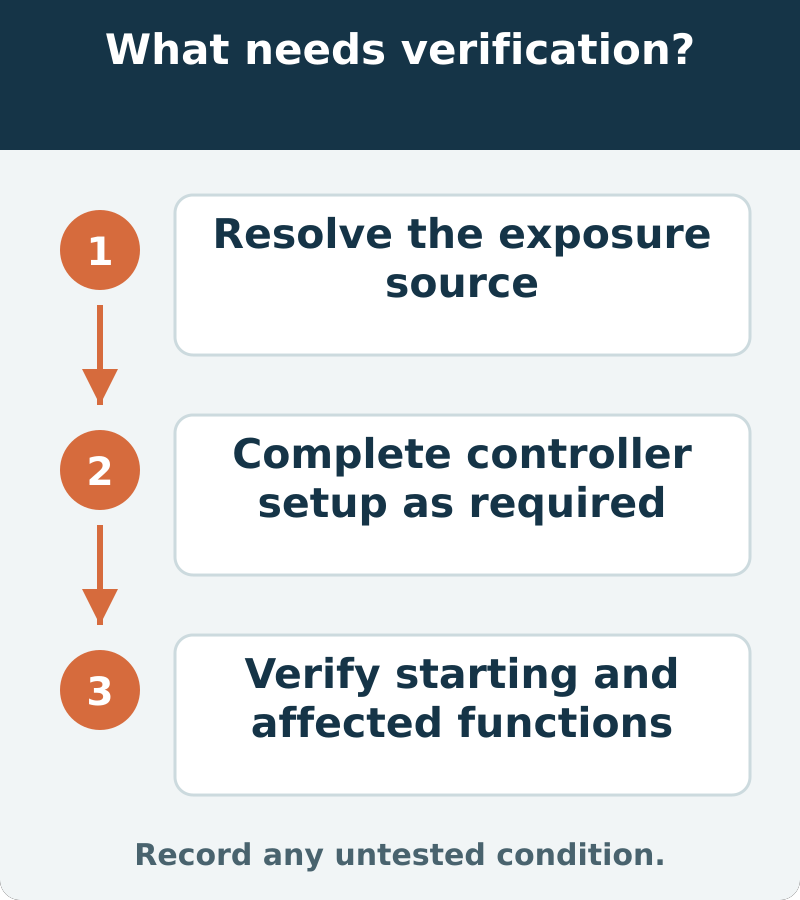
A replacement quote should identify the exact controller, compatibility checks and any programming, configuration or security work required for this vehicle. Ask who will perform that work and whether it is included in the estimate.
Do not generalize from a report in which a particular replacement worked without programming. Another vehicle or replacement unit may have different requirements. Likewise, replacing a controller does not by itself demonstrate that its connectors, surrounding wiring and water exposure have been resolved. The estimate should explain both why the electronics need attention and how the replacement will be protected from the same conditions.
Keep the repair and water-prevention records together
Keep two completion questions separate: does the vehicle now start and communicate correctly, and has the exposure route been addressed? Neither answer substitutes for the other. Ask the workshop which affected functions it checked and what follow-up is appropriate if moisture or unusual behavior returns.
For future work near the glass, share the repair history without assuming a recurrence is inevitable. The useful record is specific: location of confirmed moisture, affected equipment, work performed and completion checks. That record helps resolve a later concern much faster than a broad note saying only that the vehicle had an electrical problem after tinting.





Comments 0
Questions, fixes, and real-world diagnostic notes from readers.
Be the first to share a diagnostic result or ask a follow-up question.