
Mercedes GLS 450 Hot Stalling and Fuel Odor: Injector Seal Leak Repair

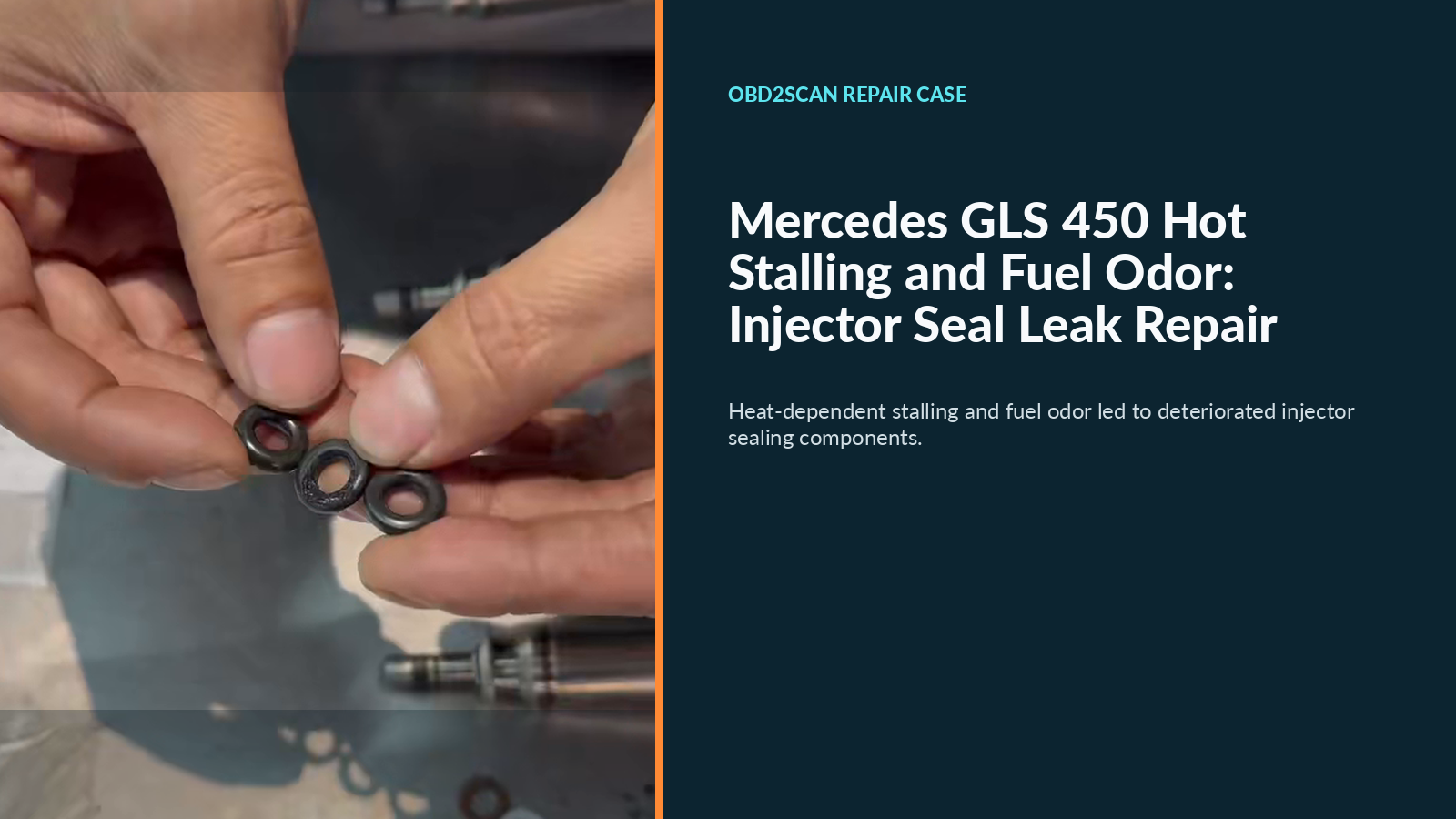
The case record identifies a Mercedes-Benz GLS 450, tagged X166, but reports no model year or mileage and labels the engine “M276/M256” rather than resolving the exact engine. Once hot, the vehicle developed an unstable idle, sometimes stalled, and carried a strong gasoline odor in the engine bay. Fresh fuel at the injector seats and deformed injector seals confirmed an external leak; the workshop cleaned the injector tips, fitted seal kits, reassembled the intake area, and reported no leakage with stable rail-pressure feedback during static and dynamic pressure-hold tests.
Case at a glance
| Element | What this case establishes |
|---|---|
| Vehicle | Mercedes-Benz GLS 450; recorded as X166; year and mileage not reported; engine unresolved between M276 and M256 |
| Owner-visible problem | Uneven hot idle, intermittent hot stalling, and a strong gasoline odor |
| First data clue | High-pressure rail feedback fluctuated abnormally before a stall |
| Confirming evidence | Fresh fuel at the injector seats plus visibly deformed sealing pieces after removal |
| Repair | Ultrasonic cleaning of injector-tip deposits and installation of injector repair-kit seals, buffer pieces, and O-rings |
| Restoration | Injectors and removed intake-related components were reassembled |
| Verification | Written record reports no leak and stable rail-pressure feedback during static and dynamic pressure-hold tests |
Why the gasoline smell changed the priority
A rail-pressure disturbance can have several causes. A pump, control problem, sensor signal, injector behavior, or a leak could all affect the pressure the control unit sees. The gasoline odor supplied a different kind of clue: this was not only an electronic value moving on a screen. Fuel might be escaping into the engine bay.
That makes the first decision a safety decision. If raw fuel, wetness, or a strong gasoline odor is present, stop the engine, do not restart it, keep ignition sources away, and have the vehicle transported. A gasoline direct-injection circuit can retain hazardous pressure after shutdown. Depressurizing or opening it belongs with a trained technician using current, engine-correct Mercedes service information and proper fire controls.
Rail pressure was a clue, not a parts verdict
The workshop reported abnormal high-pressure rail fluctuation just before the hot stall. That supported the complaint, but it did not by itself identify a failed high-pressure pump or prove that every injector needed replacement. A data symptom names the system that is losing control; inspection still has to locate the reason.
The team removed the intake manifold and related parts to inspect the injector area. The decisive observation was fresh fuel pooled at the injector seats. That visible external leakage gave the pressure fluctuation and gasoline odor a common direction, while moving the diagnosis away from an unsupported whole-injector or pump decision.
The injector seat made the leak visible
Once the injectors were out, their sealing pieces could be inspected directly. The video shows dark rings with irregular, degraded profiles. The written case attributes the loss of sealing to physical deformation after repeated heat and pressure cycles. The observable fact is narrower and strong enough: the removed components were visibly deteriorated, matching the leak found at the seats.
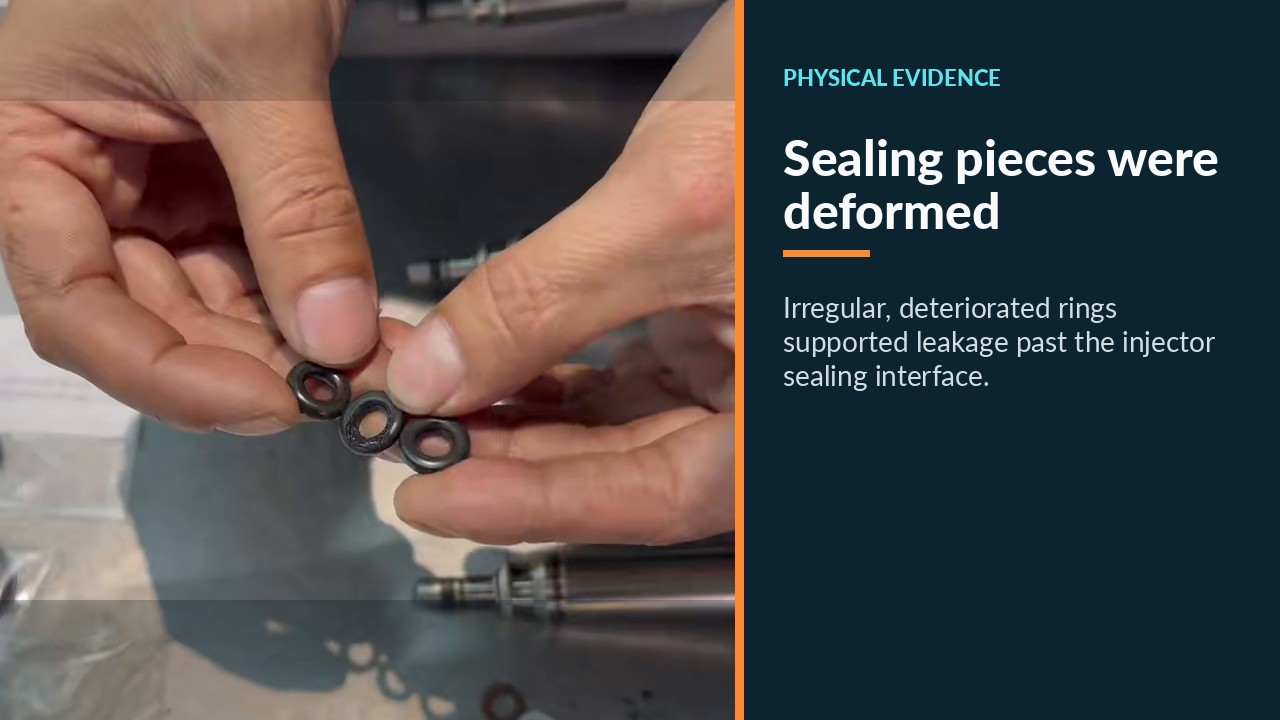
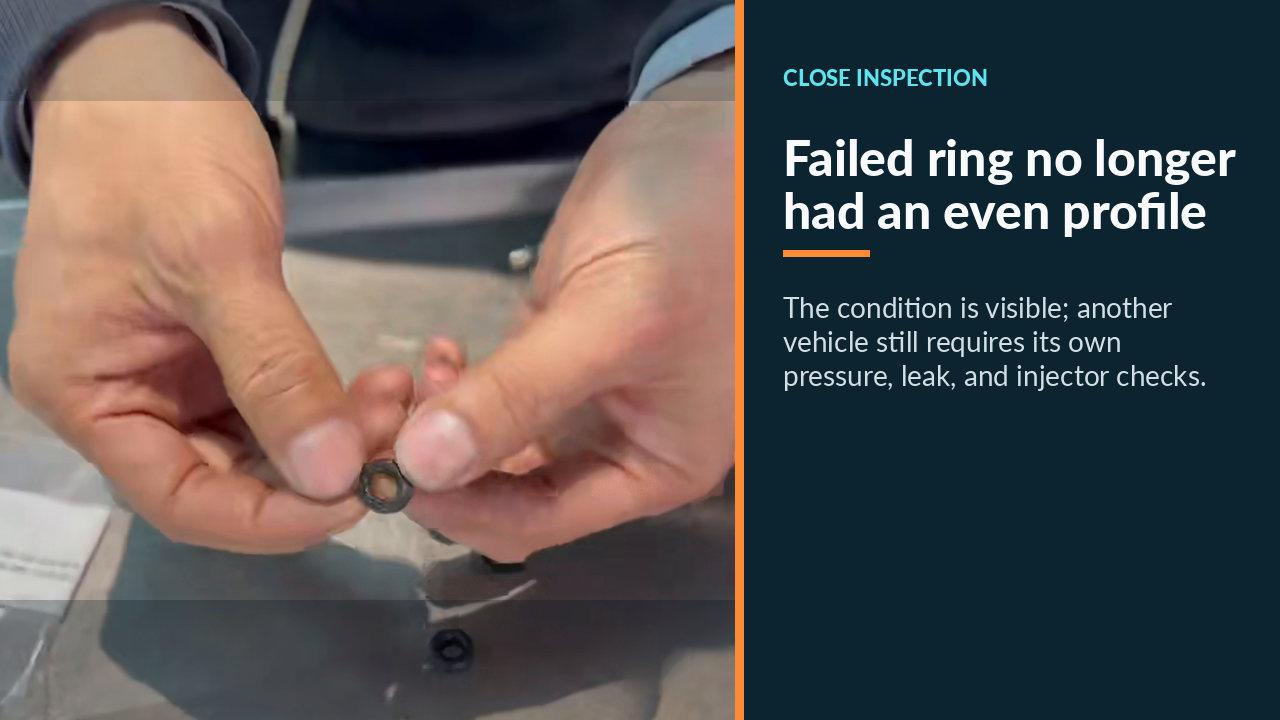
This distinction matters. Rail-pressure fluctuation began as a diagnostic clue; pooled fuel localized an external leak; inspection of the removed seals supplied component-level confirmation. The sequence prevents a jump from “hot stall” straight to an expensive injector assembly.
A seal-kit repair instead of whole injectors
The repair retained the injector bodies. According to the record, the injector tips underwent ultrasonic cleaning to remove carbon deposits. The old sealing pieces were removed, and repair kits containing high-pressure PTFE seals, buffer pieces, and O-rings were installed with the appropriate service tooling.
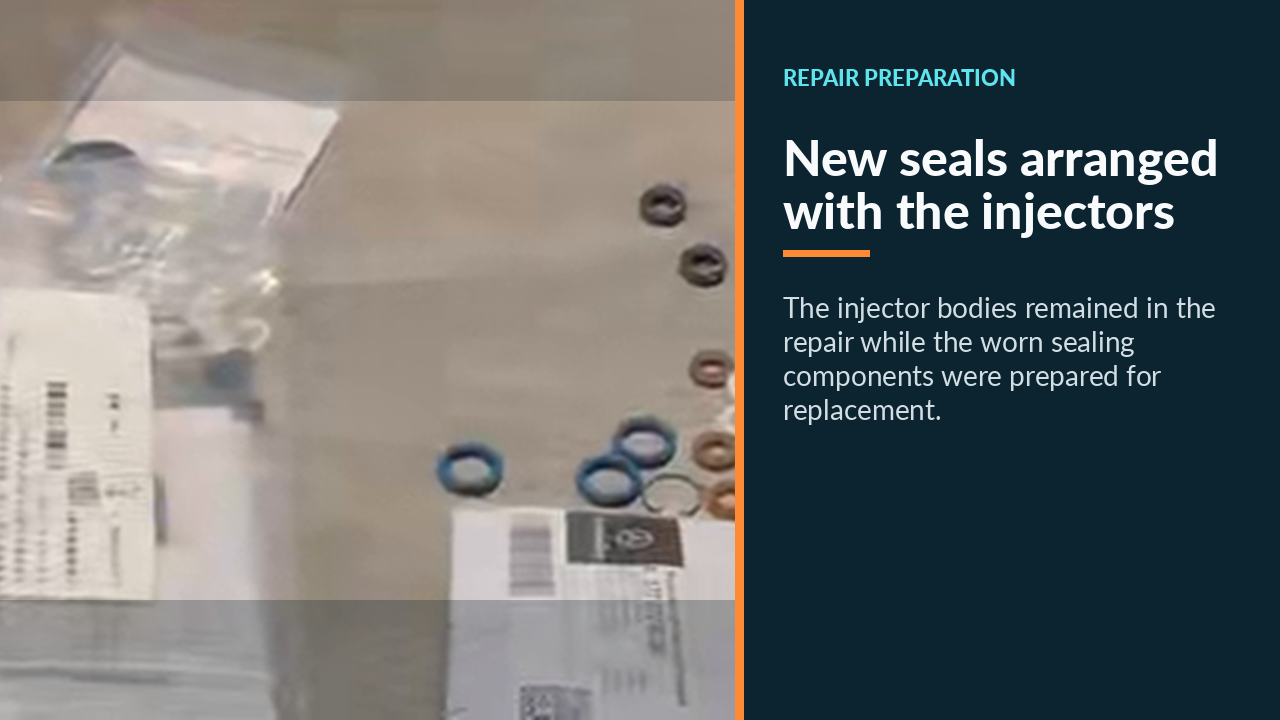
The case record says assembly followed the technical manual and specified tightening requirements, but it does not publish a torque value, seal-sizing procedure, part number, or injector position. None should be borrowed from a different GLS. Engine identification is unresolved here, so selecting parts or instructions from this article would be unsafe. The useful repair fact is the scope: clean the injector tips, renew the documented sealing stack, and reinstall the removed intake-area components under the correct service procedure.
Restoration ended at a pressure-hold test
After reassembly, the workshop reports performing both static and dynamic pressure-hold tests. It states that no fuel leakage remained and rail-pressure feedback was stable. Those checks directly challenge two parts of the original complaint chain: the external escape of gasoline and the unstable pressure behavior associated with stalling. This is a valid staged post-repair result, even though the video frames selected here do not display the test equipment or readings.
The boundary is important but concise. No measured before-and-after pressures, test duration, separate hot-soak restart, road test, or later owner follow-up appears in the record. The documented outcome is therefore a successful leak and pressure-stability recheck, not proof of long-term durability under every hot operating condition.
A first-check order for another hot-stall GLS
On a similar vehicle, first confirm the exact year, VIN, engine, and complaint conditions. Next, treat any gasoline odor or visible wet fuel as an immediate stop condition. With the vehicle safely handled, preserve fault data and compare commanded with actual rail pressure through the relevant temperature transition. Then inspect the high-pressure circuit for the actual leak location before deciding that a pump or complete injector has failed. If fuel is present at an injector seat, examine the injector, bore, and sealing components under model-correct service information and confirm the repaired system with leak and pressure-stability checks.
Apply this case only where evidence follows that same path. Other hot-stall vehicles can have electrical, sensor, pump, control, vapor-management, or internal injector faults, and this record’s unresolved M276/M256 identity prevents direct transfer of its parts or procedures.









Comments 0
Questions, fixes, and real-world diagnostic notes from readers.
Be the first to share a diagnostic result or ask a follow-up question.