
BMW 530Le Drivetrain Warning: Heater Short Damaged the EME Protection Branch

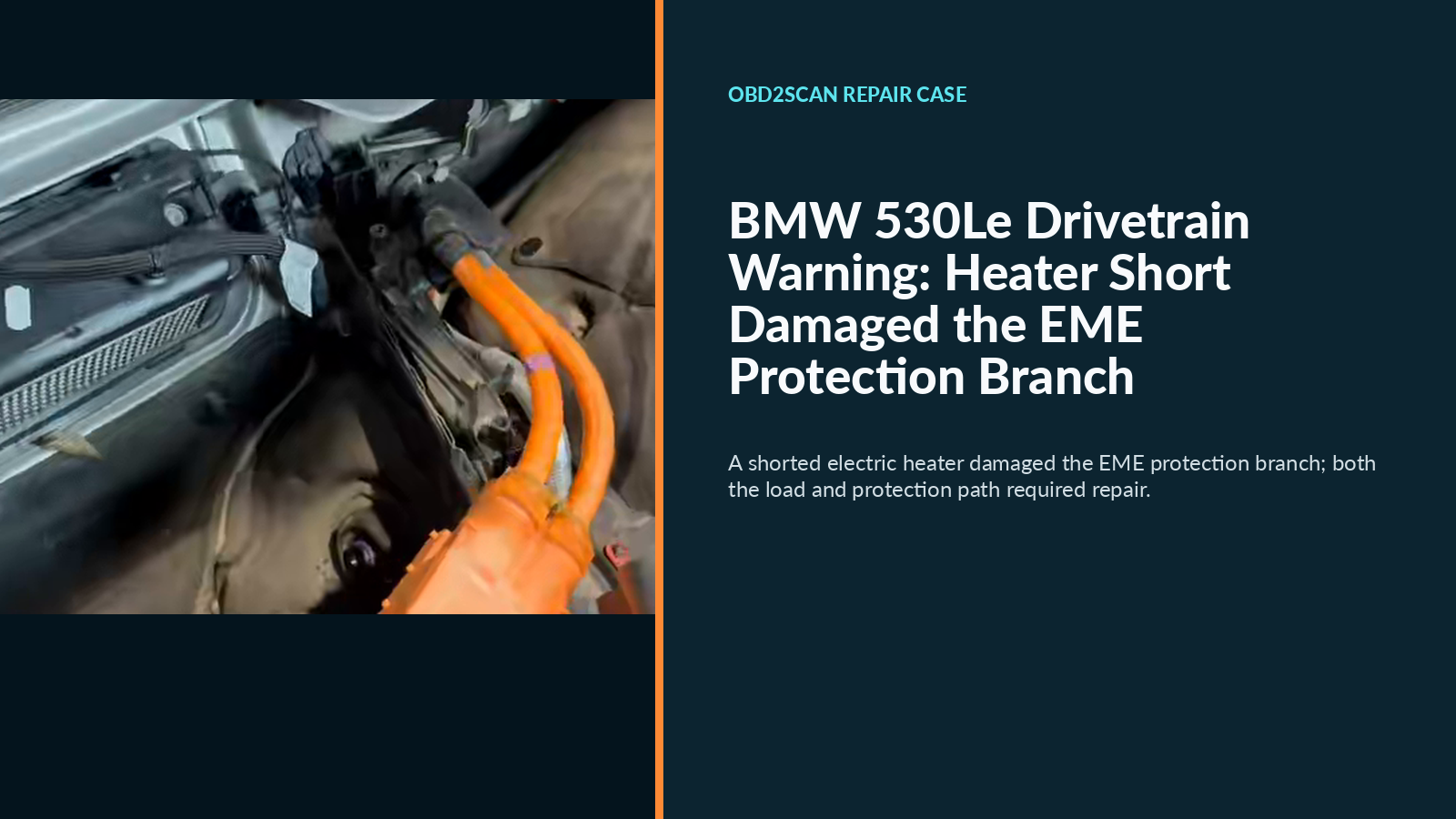
A BMW 530Le G38 plug-in hybrid arrived with a drivetrain warning, no electric driving and abnormal cabin heating. The available record does not state the year, engine variant or mileage, so those details remain open. Diagnosis found two connected faults: the high-voltage electric heater had shorted, and the event had damaged the heater-supply protection branch inside the Electric Machine Electronics (EME). The workshop replaced the heater, repaired the damaged EME circuit, cleared the related faults and reported that cabin heat and electric mode returned.
Case at a glance
| Question | Answer from this 530Le |
|---|---|
| What did the driver see? | Drivetrain warning, electric mode unavailable and abnormal cabin heat |
| What was initially suspected? | The high-voltage heater circuit |
| What was finally confirmed? | A shorted heater plus damage in its protected EME supply branch |
| What was repaired? | Electric heater replacement and board-level EME protection-circuit repair |
| What changed afterward? | Warning cleared, heat worked and electric propulsion returned |
Three symptoms pointed to one high-voltage load
The combination mattered. A drivetrain message by itself could cover many systems, while loss of electric drive alone would not explain the cabin-heating complaint. When all three appeared together, the electric heater and its power path became a coherent starting branch.
The useful first move on a comparable vehicle is to preserve the warning and module fault record before clearing it. That record should identify which high-voltage load or protected branch needs testing. It is a direction for controlled diagnosis, not permission to open a high-voltage assembly.
The heater failure did not explain the whole vehicle
The heater was the failed load. The case record says it had shorted, but replacing it alone would have left the vehicle with an open or damaged supply path. That is the key turn in this repair: the technician followed the electrical consequence upstream instead of assuming that removal of the original short automatically restored power.
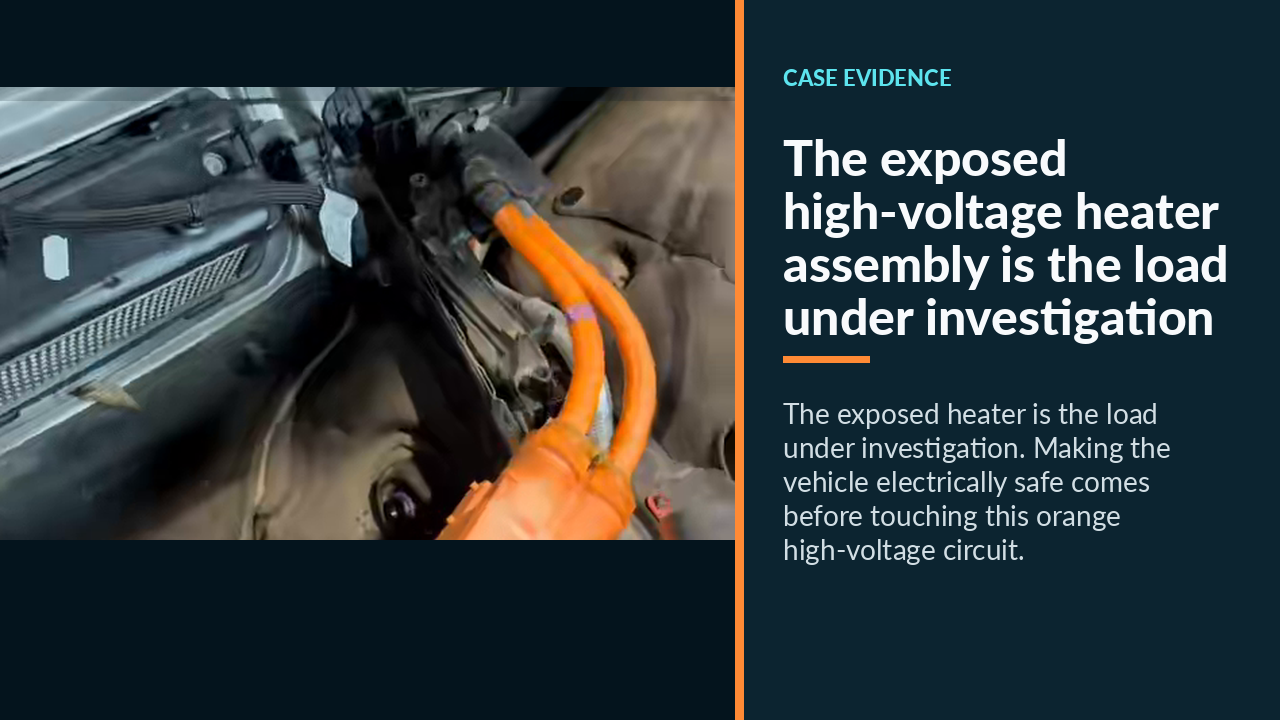
This separates suspicion from confirmation. The symptoms raised the heater branch as a candidate; the diagnosed short confirmed the load failure; continued loss of the protected feed identified a second fault inside the EME branch. The available record does not provide insulation-resistance values or the complete test routine, so no thresholds have been added.
Inside the EME, protection had operated as a boundary
The opened EME revealed the area associated with the heater supply. Protective components exist to interrupt a dangerous fault; replacing or bypassing one without removing the short would defeat that function and could create a much more serious failure.
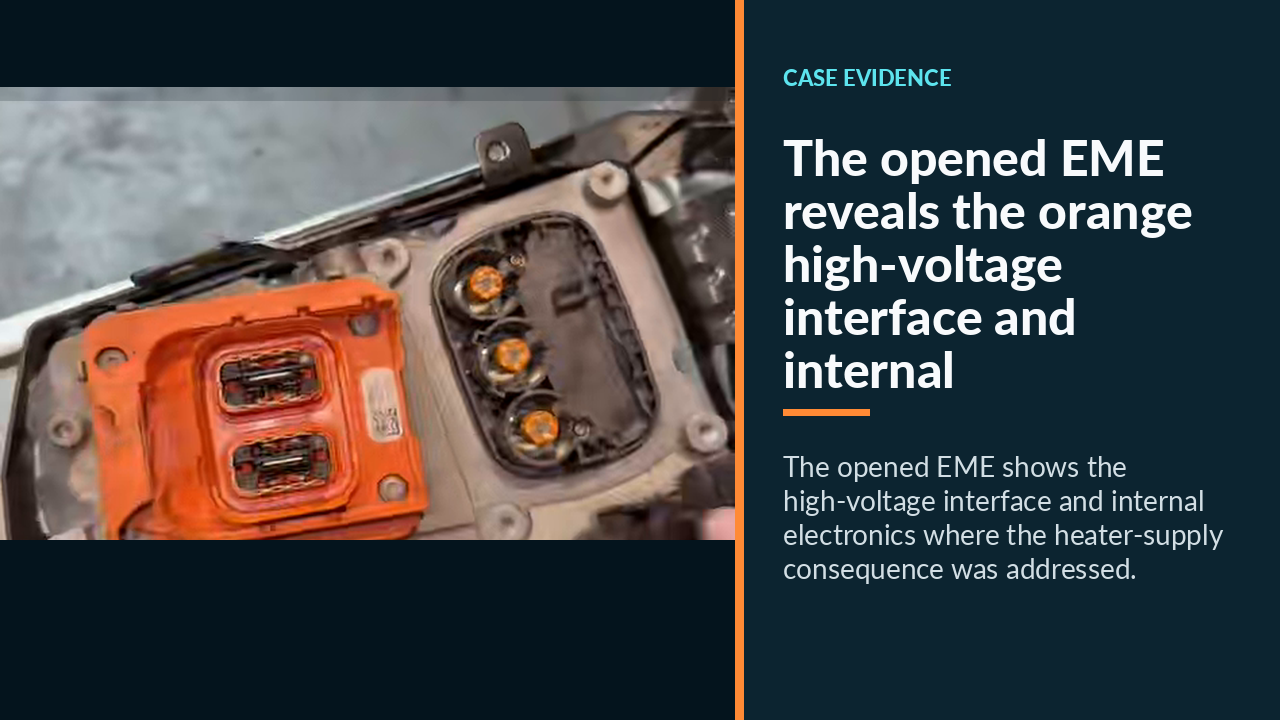
The recorded finding was damage in the protection branch, not a universal EME weakness. Board-level work also cannot be reduced to a component-swap recipe: circuit identification, isolation, workmanship and validation require the exact EME version and qualified hybrid/EV repair capability.
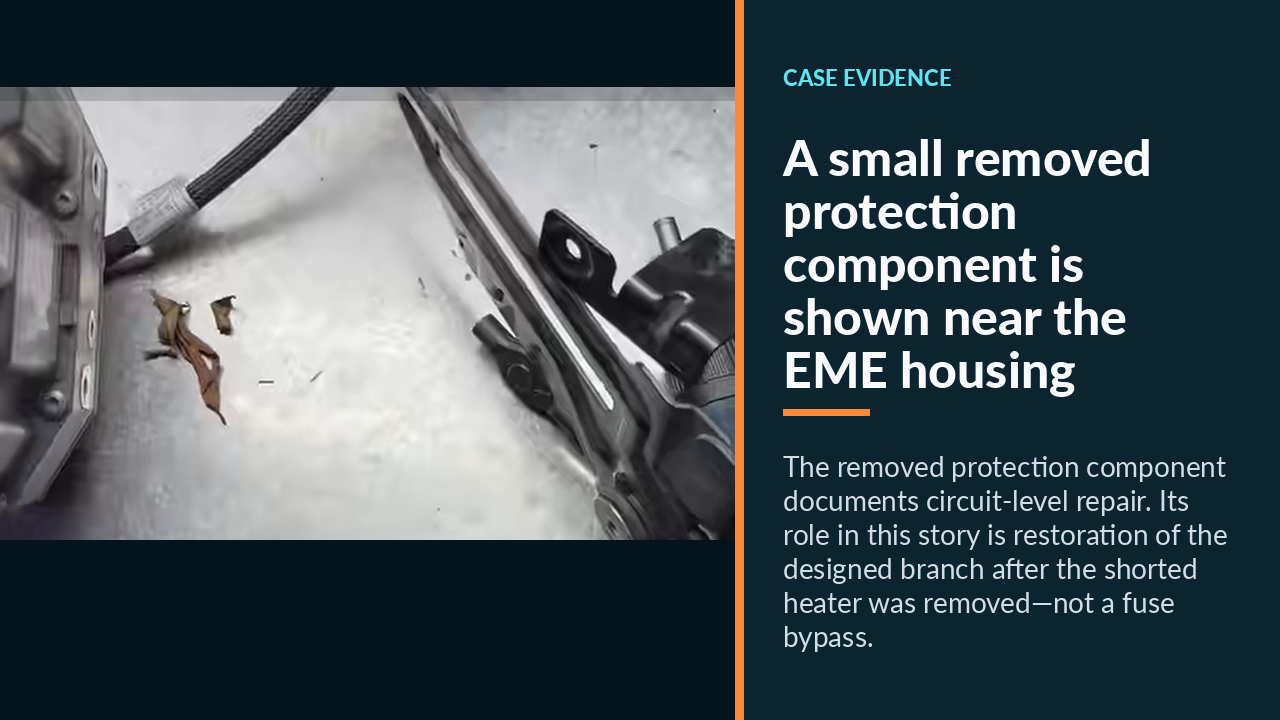
Repair order prevented the new protection from failing again
The workshop first replaced the high-voltage electric heater, removing the shorted load. It then repaired the damaged EME heater-supply circuit. That order is the practical lesson: correct the cause before restoring the device that protected the circuit from that cause.
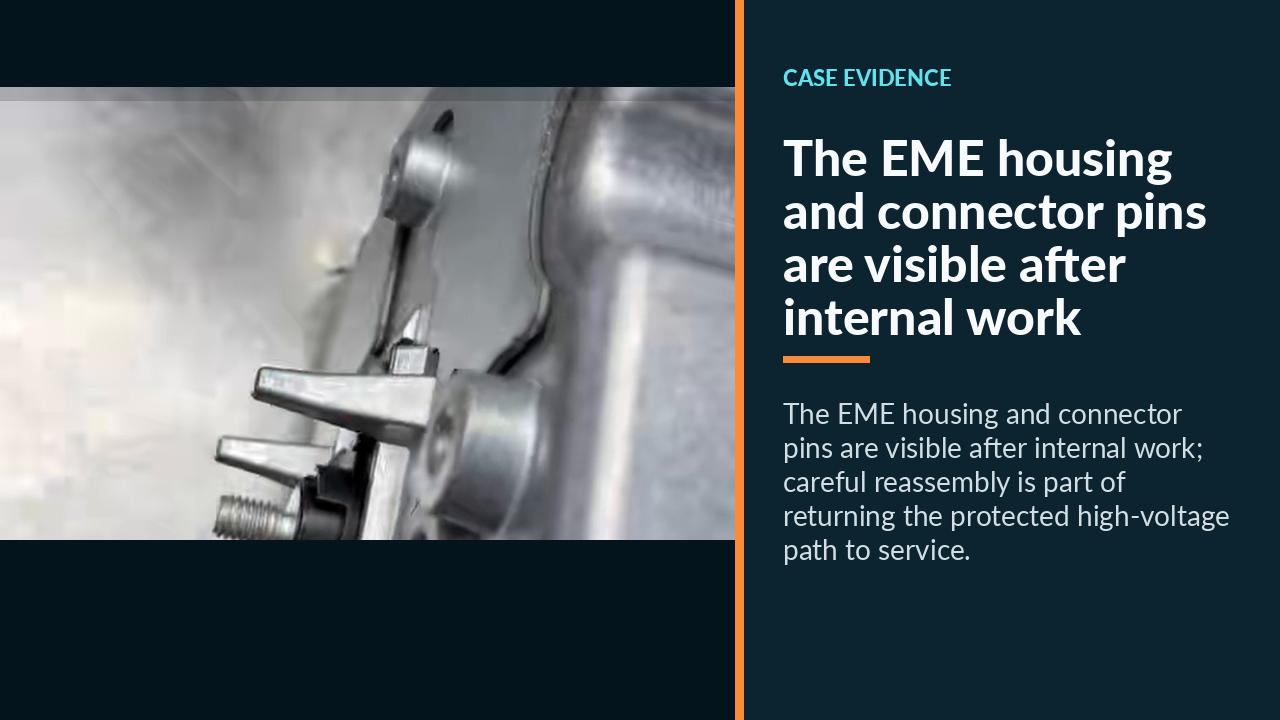
The public case does not list part numbers, tightening values, coding files or the high-voltage disconnection sequence. Work in this area requires an authorized technician to identify the vehicle, isolate and lock out the high-voltage system, prove absence of voltage with approved equipment, and restore every cover and connector under current BMW instructions.
Function returned on both sides of the complaint
After related faults were cleared, the case record reports three closing results: the drivetrain warning disappeared, cabin heat operated and electric mode became available. Those checks revisit the original complaint more directly than a simple “no codes” statement. The record does not give a road-test distance, temperature cycle or later follow-up, so the result is best described as same-condition functional confirmation rather than long-term durability proof.
For another 530Le with the same warning, start by asking whether heat and electric propulsion failed together. Preserve module evidence, identify the commanded load, prove the heater’s condition, and inspect its protected supply if the load has shorted. Do not copy the EME repair merely because the dashboard wording matches: a different heater fault, wiring defect, interlock problem or low-voltage supply issue can produce a different chain.





Comments 0
Questions, fixes, and real-world diagnostic notes from readers.
Be the first to share a diagnostic result or ask a follow-up question.