
2022 GMC Sierra P129F After a New Module: Test the Fuel Supply Before Buying Again

Quick answer: A replacement control module did not cure this Sierra. Low lift-pump pressure led to tank cleaning and pump replacement; the lesson is to separate electrical command from actual fuel delivery.
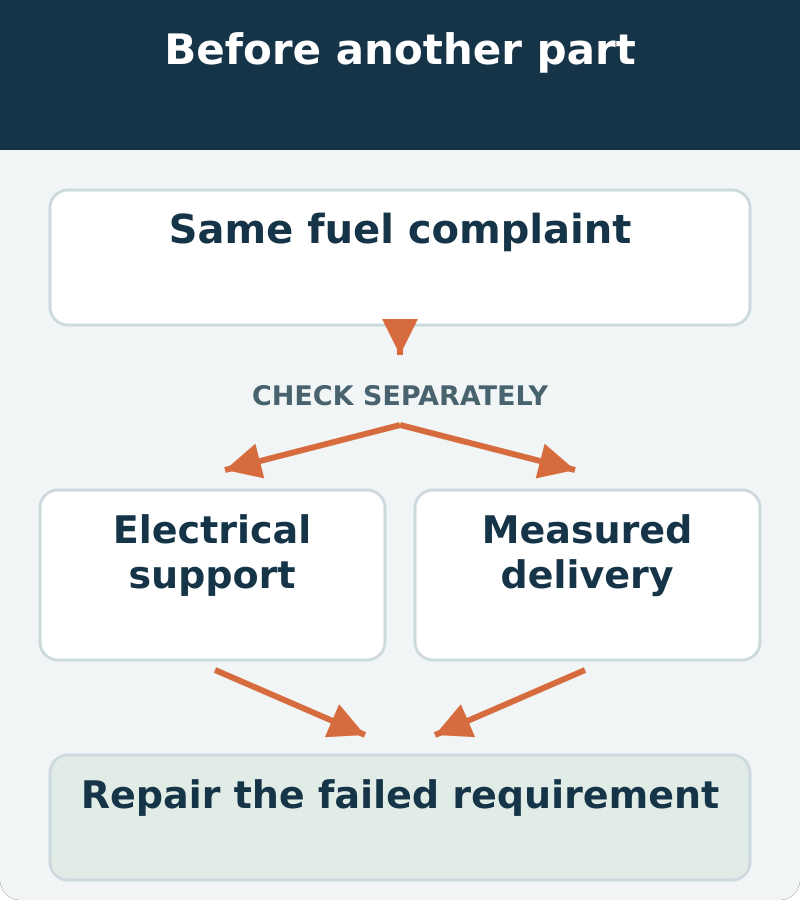
The difficult conversation starts when the truck comes back with the same complaint and a new part already on the invoice. Before approving another replacement, ask what the next test will distinguish. A code naming a control circuit is a direction for testing, not a purchase order.
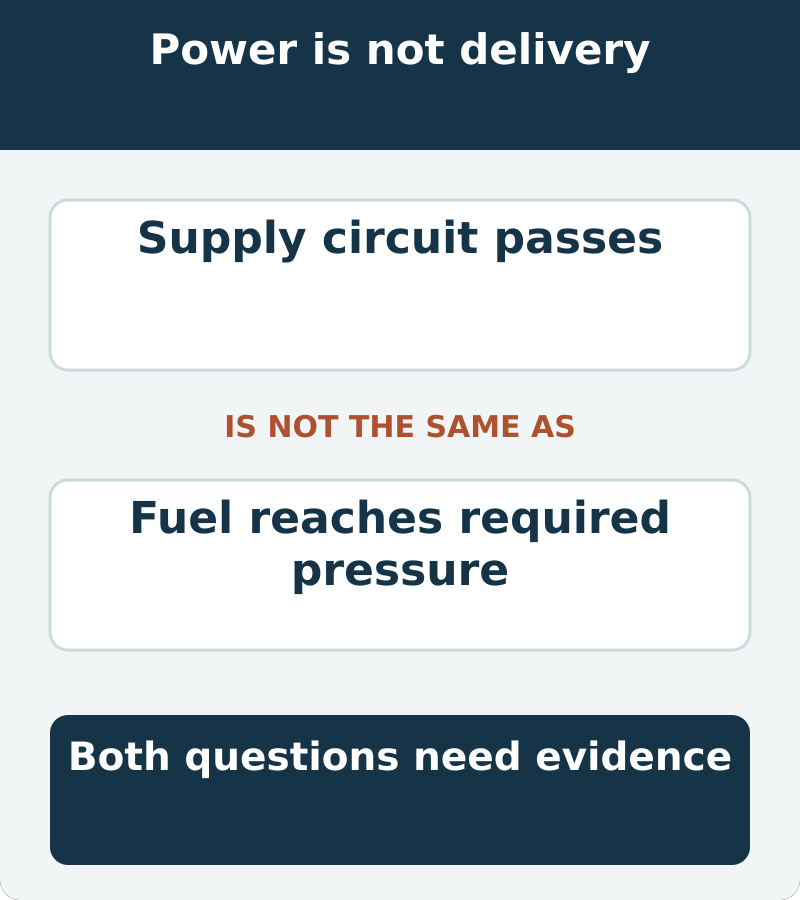
That investigation may need both electrical measurements and a separate fuel-delivery test. A circuit meter such as the AUTOOL DM301 can support identified low-voltage supply checks; it cannot measure diesel fuel pressure or establish that the pump delivers enough fuel.
This discussion concerns a reported 2022 Sierra 2500 with the 6.6L diesel, not every truck carrying a similar code. If yours stalls unpredictably, stop using it in traffic and arrange professional diagnosis. Do not try to reproduce a dangerous loss of power while towing.
In this guide
- What should happen before another estimate?
- What changed the direction of this case?
- Separate the two fuel-pressure systems
- Make the electrical test earn its conclusion
- Build a pressure test that matches the complaint
- What belongs on the repair authorization?
- Check the repair under demand, not just at idle
What should happen before another estimate?
Ask the shop to separate three possibilities: the original diagnosis was incomplete, the installation needs correction, or more than one fault exists. Those possibilities call for different evidence. None is settled simply by saying the replacement part is new.
A useful authorization names the question and the deliverable: check the pump’s electrical support and fuel supply under the conditions that bring on the complaint, then report the results before ordering another component. It does not need to tell the technician which part must be bad.
What changed the direction of this case?
In ALLDATA’s Sierra P129F case, a replacement fuel-pump driver module had not corrected hard starting, stalling and low power. Testing found low lift-pump pressure. The tank was cleaned and the in-tank pump replaced; the subsequent road test was successful. The report does not provide an actual measured pressure trace, establish tank contamination as the cause, or document long-term follow-up.
That is enough to justify a lesson about testing delivery. It is not enough to declare every P129F a failed tank pump.
Separate the two fuel-pressure systems
When an estimate says “fuel pressure checked,” ask which part of the system it means. Tank-side supply and engine-side high pressure are different measurement problems. A favorable result in one location should not silently stand in for a result at another.
The technician should identify the test point, the applicable service specification and the operating condition. A pressure number without those three details is difficult to interpret, even if it looks reassuring on a printout.
Diesel high-pressure work belongs to a properly equipped professional. Never loosen a running engine’s fuel lines to look for delivery, and do not adapt an ordinary low-pressure gauge to the common rail.
Make the electrical test earn its conclusion
There is a difference between finding voltage at an unplugged connector and establishing that a circuit supports its intended load. Ask which condition was tested and whether the fault was present at the time. Equally, an abnormal reading needs a location: supply, ground, connection or control path.
Use the wiring diagram for the vehicle, appropriate adapters and the prescribed testing method. Avoid injecting battery power into an unidentified signal terminal. If testing requires a commanded pump operation, confirm that the scan tool actually supports that function; a circuit tester does not provide manufacturer diagnostic commands.
Build a pressure test that matches the complaint
Before connecting equipment, record whether the problem occurs after sitting, when hot, under acceleration or with a particular fuel level. This is more useful than requesting a long list of disconnected tests. It lets the shop decide how to capture the event safely and which observations need to be recorded together.
Do not carry a mechanical gauge or a fuel-containing hose into the passenger compartment. A professional can choose an approved remote measurement arrangement or a controlled test setting. A stationary reading should be described as stationary evidence, not silently promoted to proof of performance under demand.
What belongs on the repair authorization?
Request a short explanation of the failed requirement, the proposed repair and how the repair will be checked. If tank work is recommended, ask what observation makes that work necessary and whether the estimate includes inspection of the removed assembly and connections.
Keep the earlier invoice with this record. A part’s installation date matters when assessing the sequence, but it is not proof that someone caused the fault. The best discussion focuses on what was tested, what remains uncertain and which next action has a defensible reason.
Check the repair under demand, not just at idle
Agree on the acceptance test before the repair. It should address starting and the original loss-of-power condition without recreating an unsafe roadside event. Ask for a post-repair scan and a description of the operating conditions covered, not merely “runs fine.”
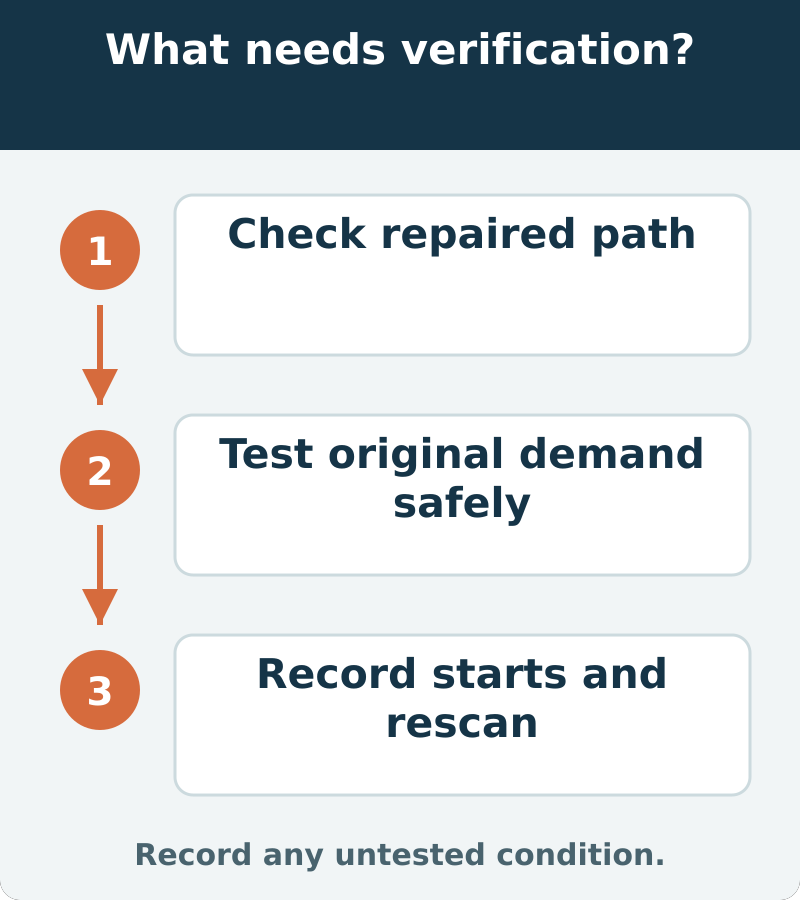
If a symptom could not be reproduced safely, put that limitation on the handoff. An honest limited test is more useful than an unconditional promise—and gives both owner and shop a clear starting point if the complaint returns.






Comments 0
Questions, fixes, and real-world diagnostic notes from readers.
Be the first to share a diagnostic result or ask a follow-up question.