
2007 RAV4 A/C Light Flashes and Cooling Stops: Investigate the Compressor Lock Signal

Quick answer: A flashing A/C request can reflect protective control, not simply low refrigerant. A compressor-signal fault needs the correct sensor and circuit assessment.
An A/C lamp that flashes as cooling stops is useful control information, not an automatic request for refrigerant. The relevant sensor circuit may need passive electrical checks; the MRCARTOOL B550 can support voltage or correctly de-energized resistance measurement. It does not recover refrigerant, evaluate compressor internals or justify bypassing protection.

In this guide
The flashing light is part of the complaint
Record whether the lamp flashes immediately, after a period of cooling or intermittently during normal use. Tell the workshop whether airflow from the vents continues while the air stops cooling. These observations distinguish the request, the blower and the cooling result without diagnosing a component from the driver’s seat.
Do not repeatedly cycle the A/C to force it to stay engaged. A control system may be withholding operation for a reason that needs assessment. Adding refrigerant without establishing the condition is also not a diagnostic shortcut. The repairer should investigate the warning and the relevant system information before deciding what service is required.
Lock signal is not a teardown finding
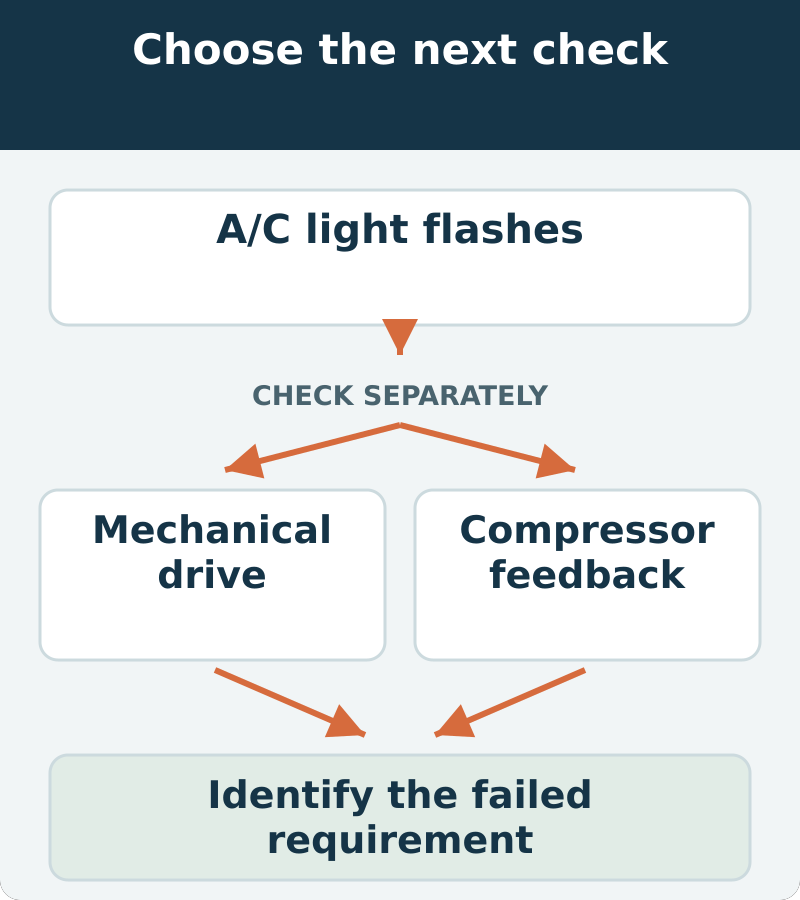
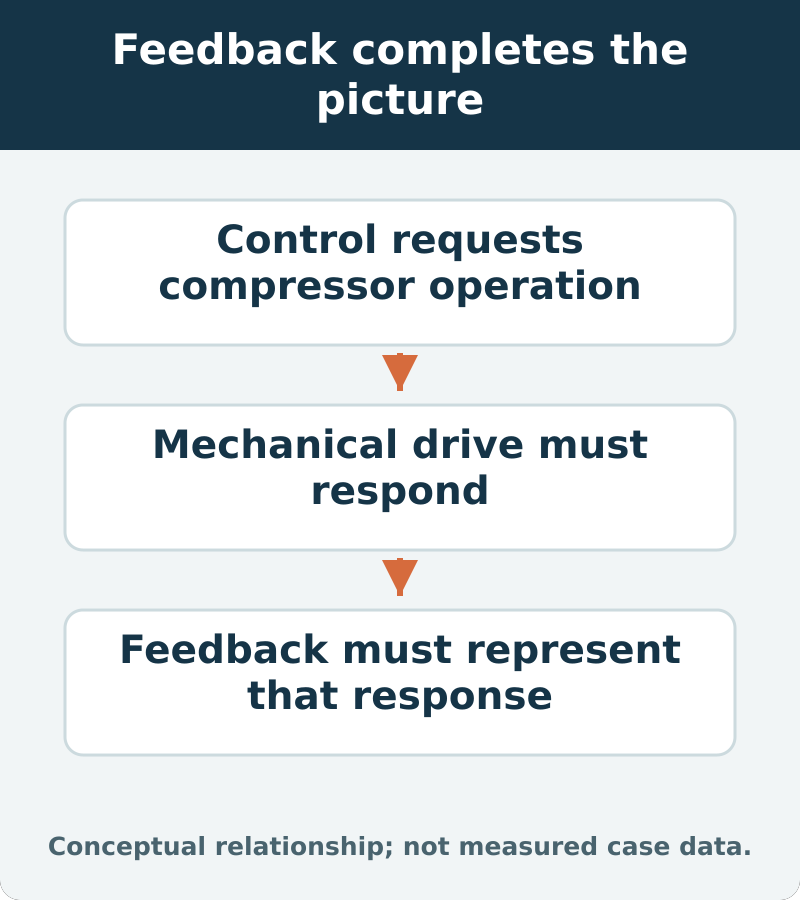
The word lock in a fault description can sound like a physical finding that the compressor has seized. A recorded signal concern is not the same as dismantling or testing the mechanism and proving that conclusion. Feedback, its circuit and the physical equipment need to be distinguished.
Ask the technician what the controller expected to see and what evidence was actually found. The answer may direct testing toward a sensor or wiring, or it may support a broader mechanical concern. The code alone cannot complete that reasoning. This distinction prevents a dramatic fault label from doing the work that a proper diagnosis should do.
Check the correct circuit in the correct state
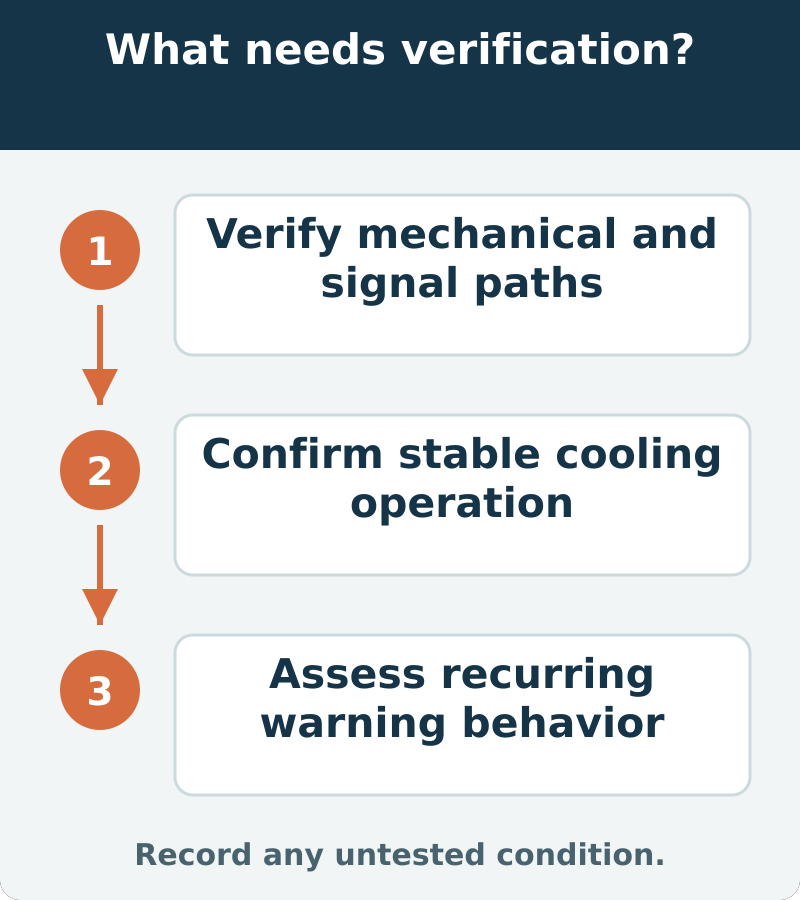
Electrical testing requires the correct sensor identification, connector information and circuit state. A resistance check on powered electronics is not an appropriate substitute for the prescribed method. Nor can a value from another compressor establish the condition of this one.
No copied resistance range or connector pin is provided here. Ask whether the measurement was compared with the applicable specification and whether relevant circuit concerns were assessed. A passive tester can support that work, but its power-injection feature is not a reason to energize an unknown output. Refrigerant-side work has separate equipment and personnel requirements and must not involve venting the system.
In the published ALLDATA case, the RAV4 compressor intermittently stopped with a flashing A/C light. B1422 accompanied two solar-sensor entries. The lock sensor measured outside the source specification, and compressor replacement restored cooling. No full mechanical-lock analysis or environmental explanation of the solar codes is supplied.
Why the repair may involve the compressor assembly
A fault associated with a sensor does not guarantee that the sensor is separately serviceable on the fitted assembly. Conversely, the fact that an assembly was replaced in one case does not establish that every similar complaint requires the same scope.
Ask the shop how serviceability, compatibility and the confirmed condition determine the proposed repair. An estimate should identify the actual assembly and the associated A/C service, not merely translate a code into a part number. If you seek another opinion, share the circuit findings and the exact component identification. They are more useful than asking whether compressors should ever be replaced for an electrical symptom.
Keep the other fault entries in context
A scan can contain entries that need different interpretation depending on test conditions. Do not erase the other entries from the discussion simply because one fault appears central. Ask which remain relevant and what the repairer used to assess them.
The short account does not provide a complete explanation of its solar-sensor entries, so this article does not declare them universally harmless. The same discipline applies to the compressor finding: preserve the scope of the evidence. A convincing explanation says which concern drove the repair and how any remaining information was handled, rather than dismissing everything outside the headline diagnosis.
Verify cooling and the protective control together
At collection, ask about cooling performance, the original flashing-lamp behavior and the applicable control checks. Do not accept a forced-engagement demonstration as equivalent to correct automatic operation. Protection should work as designed, not be disabled to keep cold air flowing.
Retain the electrical findings and refrigerant-service record together. If cooling later stops, those records help distinguish a recurring signal concern from a different A/C problem. This RAV4 case is useful because it translates a warning into a testable feedback question. It does not make low refrigerant, a seized compressor or a failed sensor the automatic answer whenever an A/C light flashes.







Comments 0
Questions, fixes, and real-world diagnostic notes from readers.
Be the first to share a diagnostic result or ask a follow-up question.