
2008 Nissan Versa TPMS Light Returns After Relearning: Registration Cannot Recharge a Sensor

Quick answer: Correct tire pressure and healthy sensor communication are different checks. A warning that returns after registration needs renewed fault diagnosis, not endless relearning.
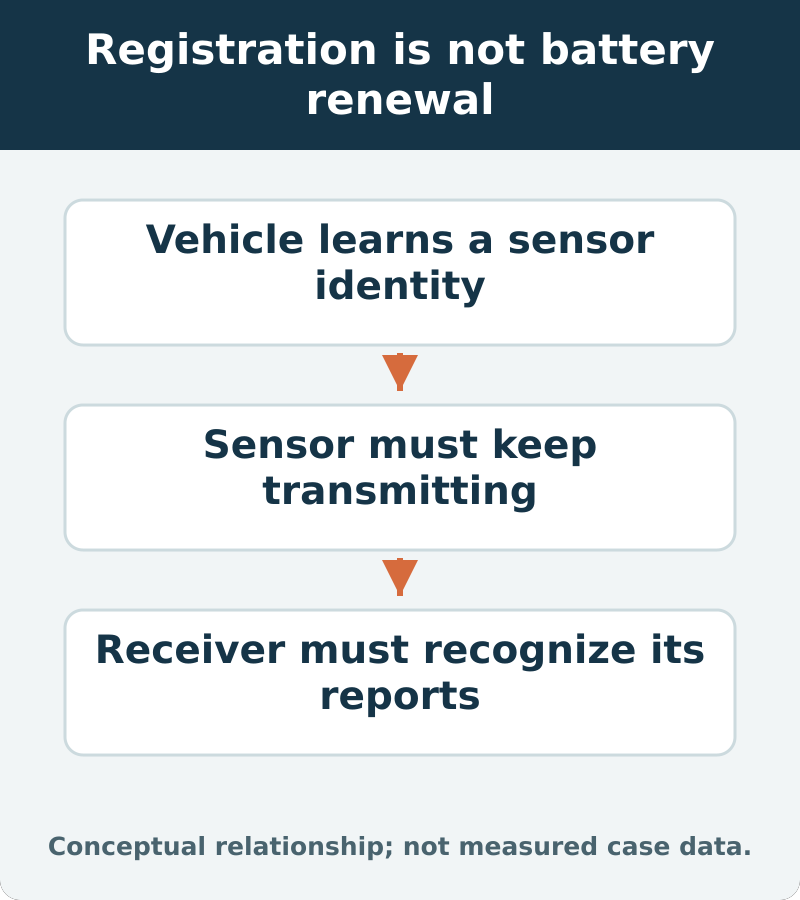
A relearn teaches the vehicle about sensor registration; it does not supply a fresh battery to an aging transmitter. If the warning returns, ask what the system is reporting now. You may need a sensor repair, but a quote for four sensors should distinguish the diagnosed fault from any optional decision to renew an older set.
In this guide
Measure tire pressure even when a sensor is suspected
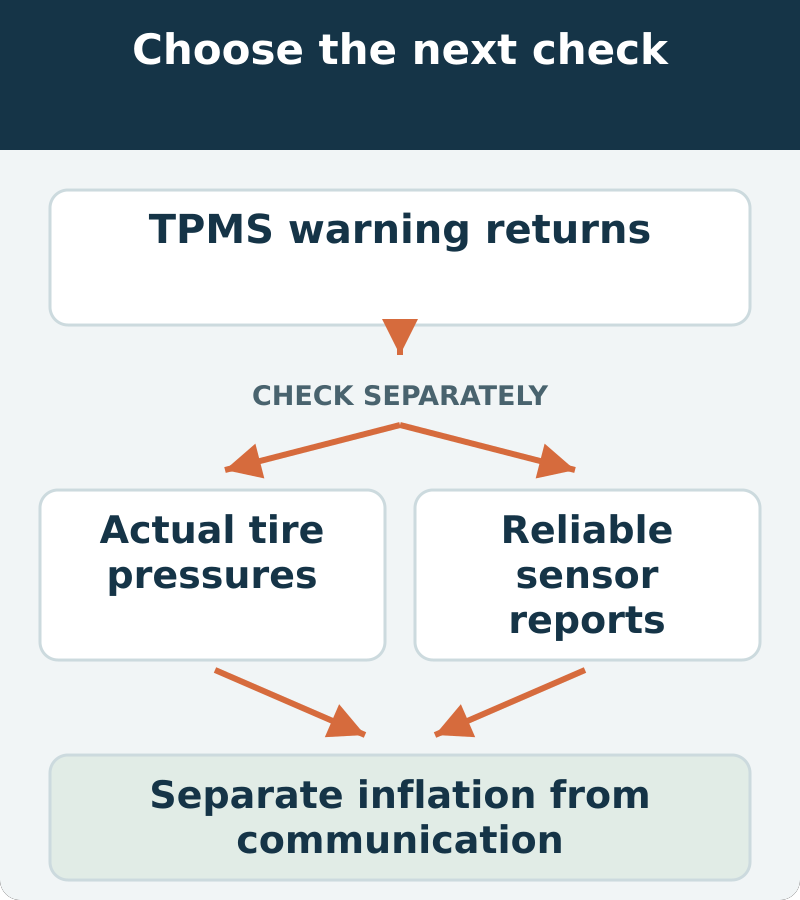
Start with the tires’ actual condition and cold pressures using the vehicle placard and an appropriate gauge. A suspected communication problem is not a reason to ignore a low or damaged tire. The monitoring system does not replace that basic check.
Tell the tire shop whether pressure loss, recent wheel work or a change in warning behavior occurred. Avoid assuming that the pressure written on a tire sidewall is the vehicle’s required setting. This article supplies no universal pressure. The physical tire question and the sensor-communication question need separate answers, even when both arrive at the counter under the same TPMS warning.
Flashing and steady are worth describing accurately
Describe the sequence accurately: whether the lamp flashes, becomes steady or behaves differently after starting. Also record whether it disappears temporarily after service. Warning patterns and scan descriptions vary by application, so the exact vehicle information governs interpretation.
A short note about the sequence can help distinguish what the driver sees from what the shop’s diagnostic equipment reports. Do not conclude that a steady lamp always means the same cause on every model. The useful evidence is the combination of the visible behavior, actual pressures and the relevant fault or transmitter information for this vehicle.
Why relearning can help without lasting
Registration can correct a registration problem. It cannot repair every reason a transmitter fails to communicate, and a temporary improvement does not prove that the underlying issue has been removed. If the warning returns, reassess rather than simply repeating the same routine indefinitely.
Ask which sensor or communication concern is identified now and how that finding compares with the earlier visit. Keep the original relearn record if available. A repeat visit is more useful when the technician can distinguish a recurring fault from a new wheel or sensor change. Clearing the warning without preserving that information can turn several visits into disconnected guesses.
In the published ALLDATA case, the Versa flashed its TPMS lamp before leaving it on despite correct pressures. A front-right transmitter communication code recurred a week after relearning. Replacing and registering all four sensors resolved the report. The source does not independently prove that every replaced sensor had failed.
One diagnosed fault versus four new sensors
A single identified communication fault and a proposal to replace all four sensors are different statements. A complete aged-set replacement may be offered as a preventive choice, but the estimate should not describe every sensor as failed unless the evidence supports that claim.
| Quote item | Ask the shop to distinguish |
|---|---|
| Diagnosed sensor repair | Which current finding supports it? |
| Optional additional sensors | Why renew them now rather than later? |
| Registration and final checks | What is included for the completed set? |
Do not treat a precise remaining-battery-life prediction as a guaranteed calendar. The decision should acknowledge uncertainty.
What a sensor quote should include
Ask about compatible sensor identification, installation-related service, registration and the final communication check. If tire removal or other work is required, the quote should make that scope clear. Comparing only the price of a loose sensor can miss much of the actual job.
For optional replacement of additional sensors, discuss the practical tradeoff in another visit versus doing the work together. There is no universal best choice for every owner. Tire condition, planned ownership and the repairer’s actual findings can inform the decision. What matters is that the necessary repair and preventive recommendation are labeled honestly rather than blended into one unsupported failure claim.
Finish with pressures and communication both verified
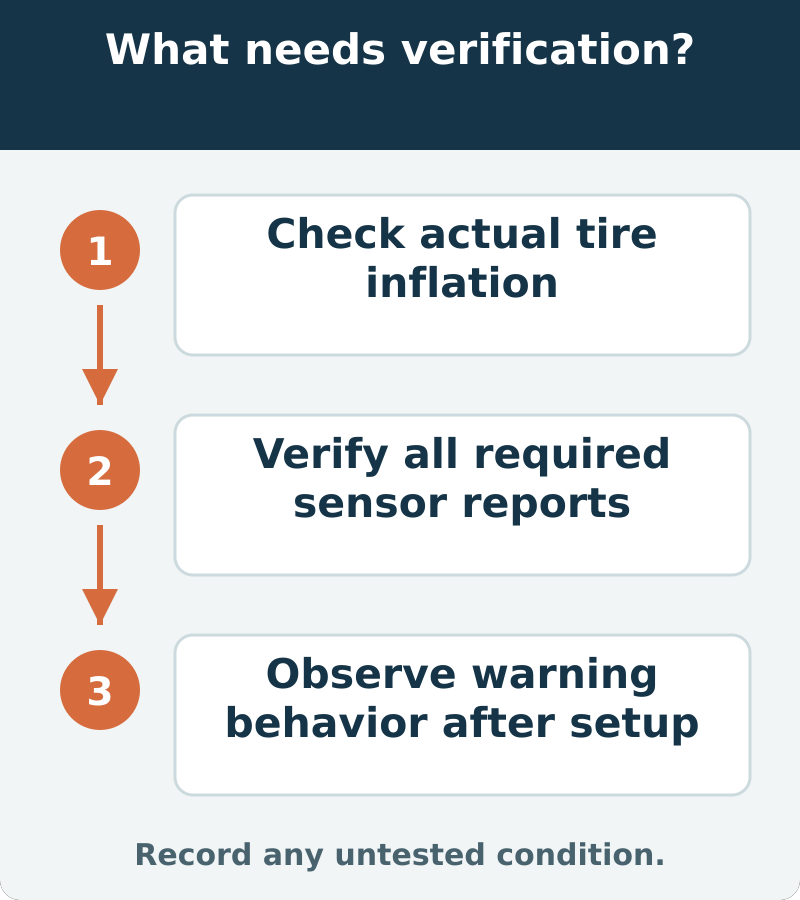
At collection, confirm the correct tire pressures and the relevant sensor communication or registration results. A lamp extinguished briefly is not the only useful result, especially when the original complaint returned after earlier relearning.
Keep the sensor and wheel-position records with the invoice where supplied. If the warning comes back, check tire safety first and return with the history. The lesson is not that relearning never helps or that every old vehicle needs four sensors. It is that software registration, transmitter condition and actual tire pressure are three separate questions. A good repair answers the ones that are genuinely unresolved.







Comments 0
Questions, fixes, and real-world diagnostic notes from readers.
Be the first to share a diagnostic result or ask a follow-up question.