
2010 Mercedes G550 Lumbar Support Will Not Hold: Follow the Air Path Beyond the Seat

Quick answer: Pneumatic lumbar support depends on a sealed air path, not just a pump or a seat switch. A leak elsewhere in that path can remove the adjustment you feel in the seat.
Seat access may involve restraint wiring. Do not remove seats casually, force a protected pump to run or apply unregulated shop air.
A permitted low-pressure leak test can make a hidden escape visible. Equipment such as the AUTOOL SDT103 belongs in this assessment only if the exact seat-system procedure permits its pressure and medium; otherwise use the specified alternative. This case does not establish that compatibility.

In this guide
First identify what makes the support move
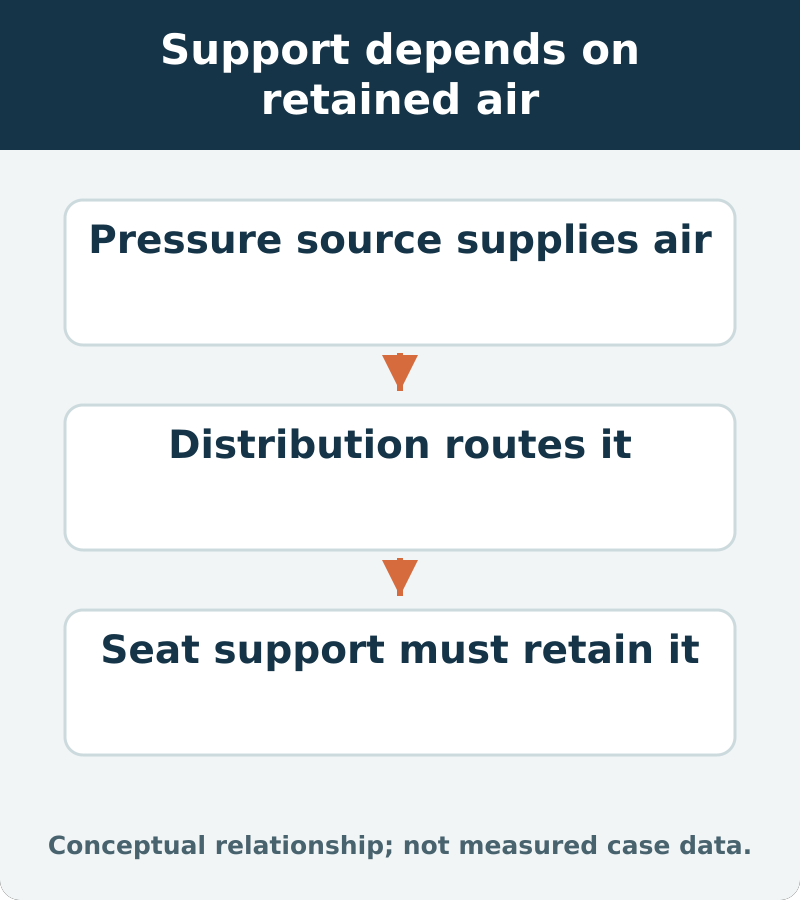
An adjustment felt in a seat can be produced by different mechanisms. Before pricing a motor or switch, identify the system fitted to the vehicle. In a pneumatic arrangement, the important relationships include the air source, distribution path and the support element that changes shape.
That map changes the questions at intake. Does the support never respond, respond and then fade, or behave differently at different settings? Is the complaint limited to one adjustment? Record what ordinary use revealed. Those details help the technician choose an assessment without assuming that every seat-comfort problem is an electrical motor failure simply because a button initiates it.
The failed path did not end at the seatback
ALLDATA’s G550 account describes inoperative lumbar support without stored codes on a 2010 vehicle. A controlled smoke assessment located leakage at a hose manifold beneath the carpet; replacement restored function. Despite “vacuum” in the original title, the account describes a pressurized pneumatic support system.
The useful lesson is the extent of the connected path. The location where the driver feels lost support need not be the location where air escapes. Follow the actual system layout beyond the seatback where the service information requires it. Do not assume the hidden location in this particular case is a universal failure point on every G-Class.
Why a quiet pump is not automatically broken
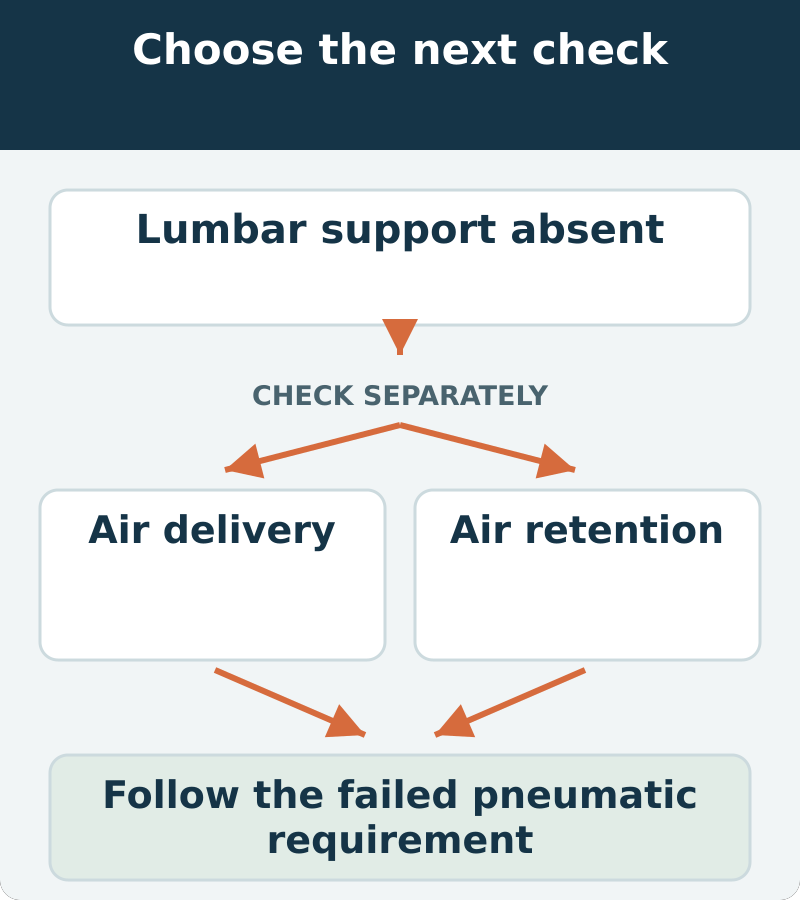
A pump that is not running may lack a request, lack support or be prevented from operating by the system’s control behavior. An actual pump failure is another possibility. The relevant diagnostic information is needed to distinguish those conditions; listening alone cannot settle which applies.
This matters when a leak and a quiet pump appear together. A protection response may need consideration where the system uses one, but it should not be asserted as the measured cause without evidence. Ask what command and operating information supports the diagnosis. Repeatedly forcing operation can expose the system to the very condition its controls are intended to avoid.
Choose a leak test the system permits
Pressure direction matters. A system designed to hold positive air pressure should not be described or tested as though every vacuum-system method automatically applies. The permitted test medium, pressure, connection point and system state must all match the application.
The equipment decision follows those requirements. A low-pressure smoke machine may be suitable for some permitted assessments, but its general capability does not constitute approval for a particular seat. If compatibility cannot be established, use the manufacturer’s specified method instead. Neither increasing pressure nor changing the medium by guess is a reasonable response when an initial test does not reveal a leak.
Repair the line and its protection
Repairing an air path involves more than making it hold during a brief open-interior test. The connection, hose routing and surrounding protection must remain correct after the trim and seat-area components are restored. A line that becomes trapped or stressed during reassembly has not received a durable repair.
Ask the workshop which part of the path was confirmed defective and whether any related damage or exposure was found. The published account does not establish why the manifold failed, so the estimate should not borrow an invented cause. If the vehicle requires work near restraint components, the correct isolation and reassembly procedures are part of the job, not optional precautions.
Confirm adjustment and retention over time
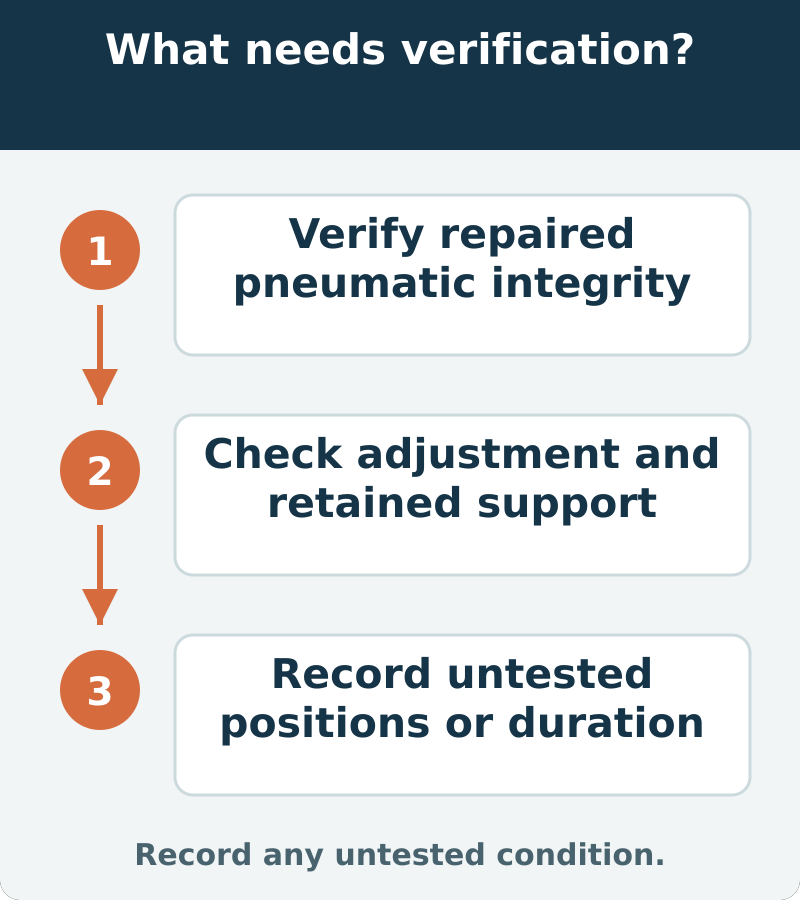
The final assessment should include both the ability to change support and its ability to retain the intended condition under the specified evaluation. One brief inflation or movement answers only the first part. The relevant controls and any related functions disturbed during access also need their appropriate checks.
At collection, understand what was verified and whether any follow-up is needed. If support fades again, report the setting and elapsed circumstances from normal use rather than repeatedly commanding the pump. The practical answer is to investigate the complete air path: replacing the component nearest the driver’s hand or back may leave the actual leak elsewhere untouched.








Comments 0
Questions, fixes, and real-world diagnostic notes from readers.
Be the first to share a diagnostic result or ask a follow-up question.