
2020 BMW 530Le Would Not Charge or Cool: Compressor Short Opened EME Protection

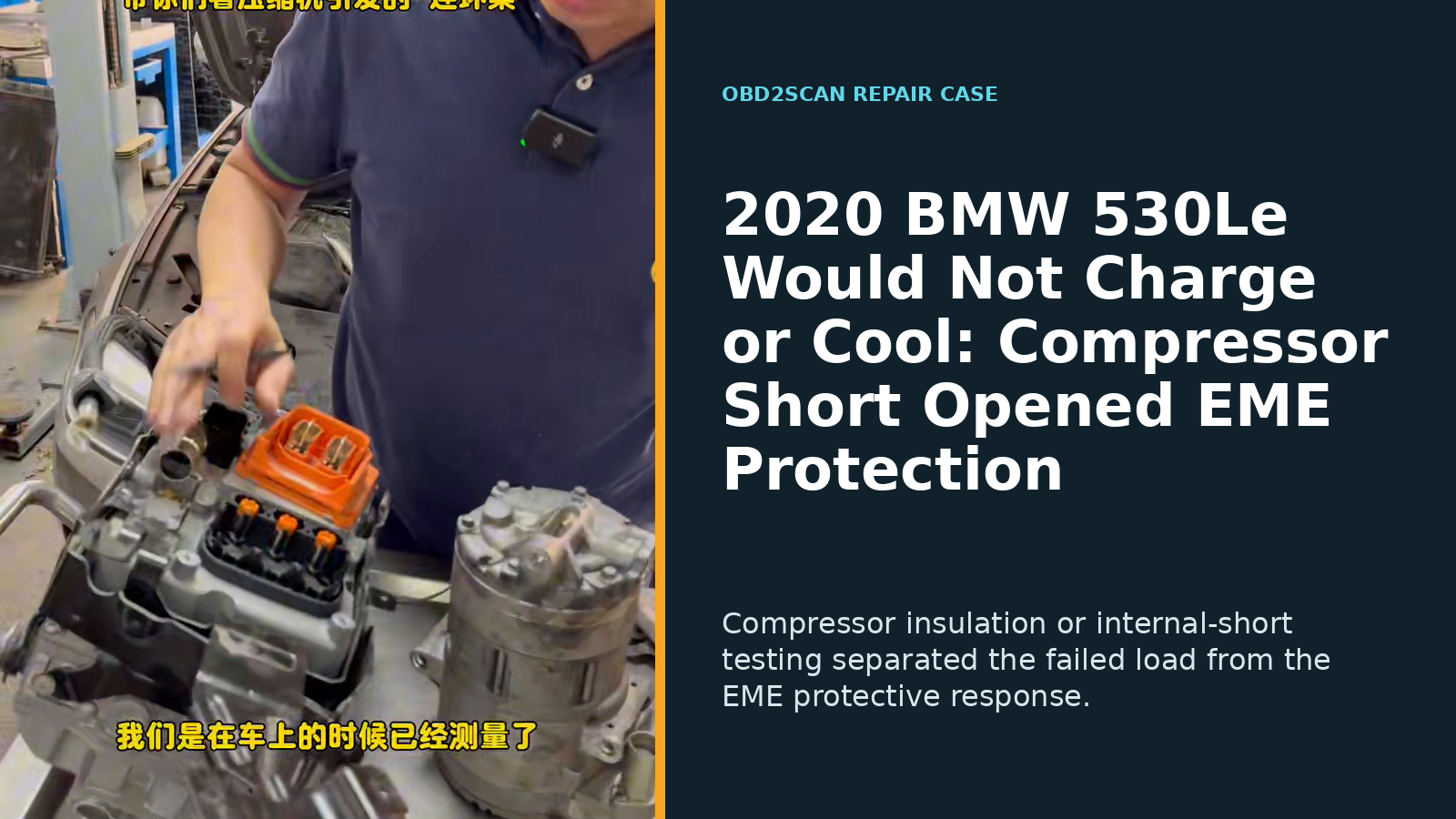
A 2020 BMW 530Le G38 with 120,000 km arrived with a high-voltage warning, no AC charging and no air conditioning; its engine designation was not reported. Testing confirmed insulation failure/internal shorting in the electric A/C compressor, and the short had opened the EME’s protected supply branch and locked charging. The workshop replaced the compressor first, restored the designed protection, evacuated and recharged the refrigerant circuit with the recorded POE oil restoration, then reported normal EME communication, charging current and compressor operation without the insulation warning.
Case at a glance
| Item | This 530Le |
|---|---|
| Vehicle | 2020 BMW 530Le, G38 |
| Mileage | 120,000 km |
| Engine | Not reported |
| Complaint | High-voltage warning, AC charging unavailable, A/C unavailable |
| Confirmed fault | Electric A/C compressor insulation failure/internal short |
| Protection consequence | EME protected supply opened; charging locked |
| Repair order | Replace compressor, then restore the specified protection |
| Restoration | EME work completed; refrigerant circuit evacuated/recharged and POE restored as recorded; faults cleared |
| Verification | EME communication normal, AC charging current normal, compressor working, no insulation warning reported |
One high-voltage load linked both missing functions
At first glance, “will not charge” and “will not cool” could send the diagnosis in two directions. In this plug-in hybrid, however, the electric refrigerant compressor is itself a high-voltage load managed through the EME. A short on that branch can disable the compressor and provoke a protection response that also prevents charging.
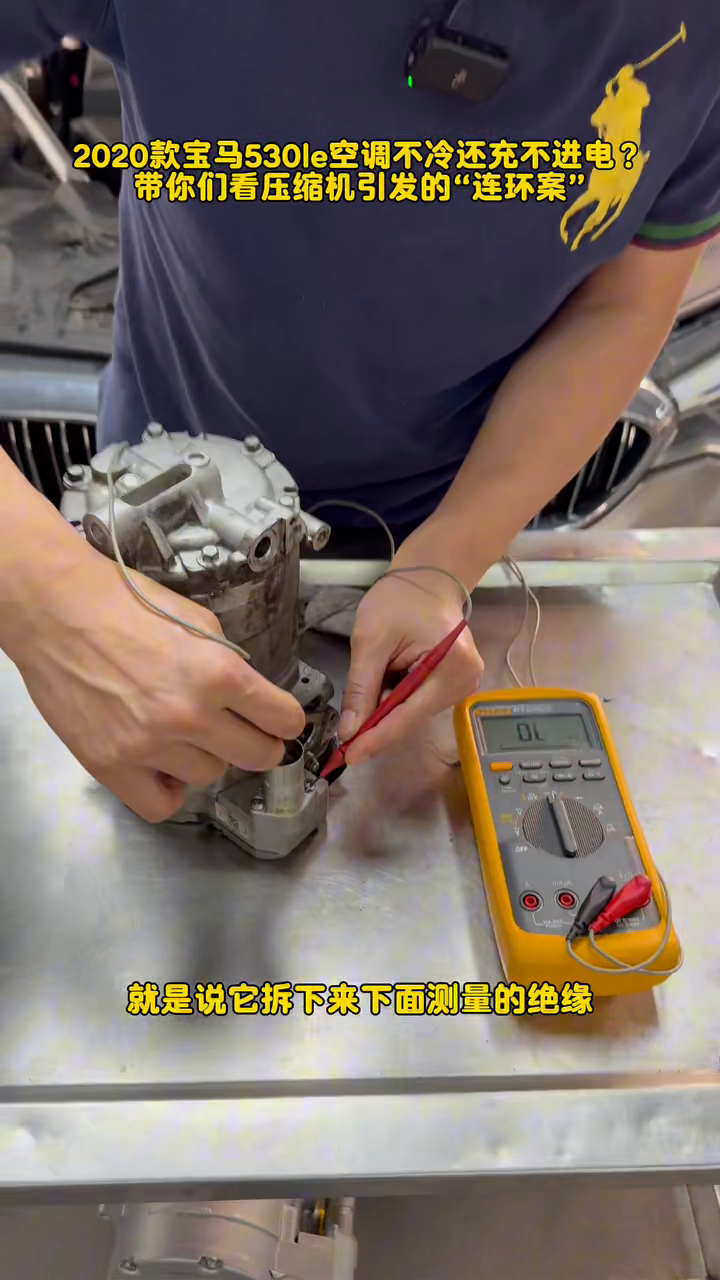
That made the charging lock a consequence to explain, not evidence that the onboard charging hardware had independently failed. The investigation followed the failed load back toward its protected supply.
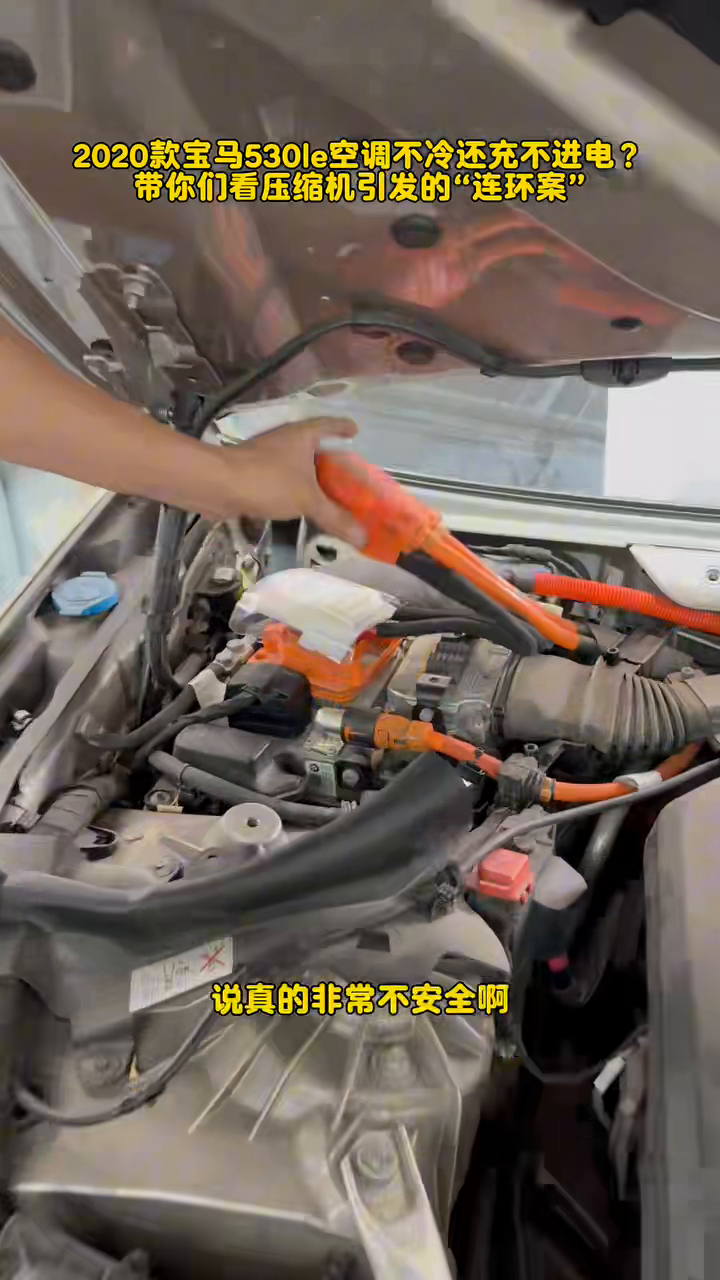
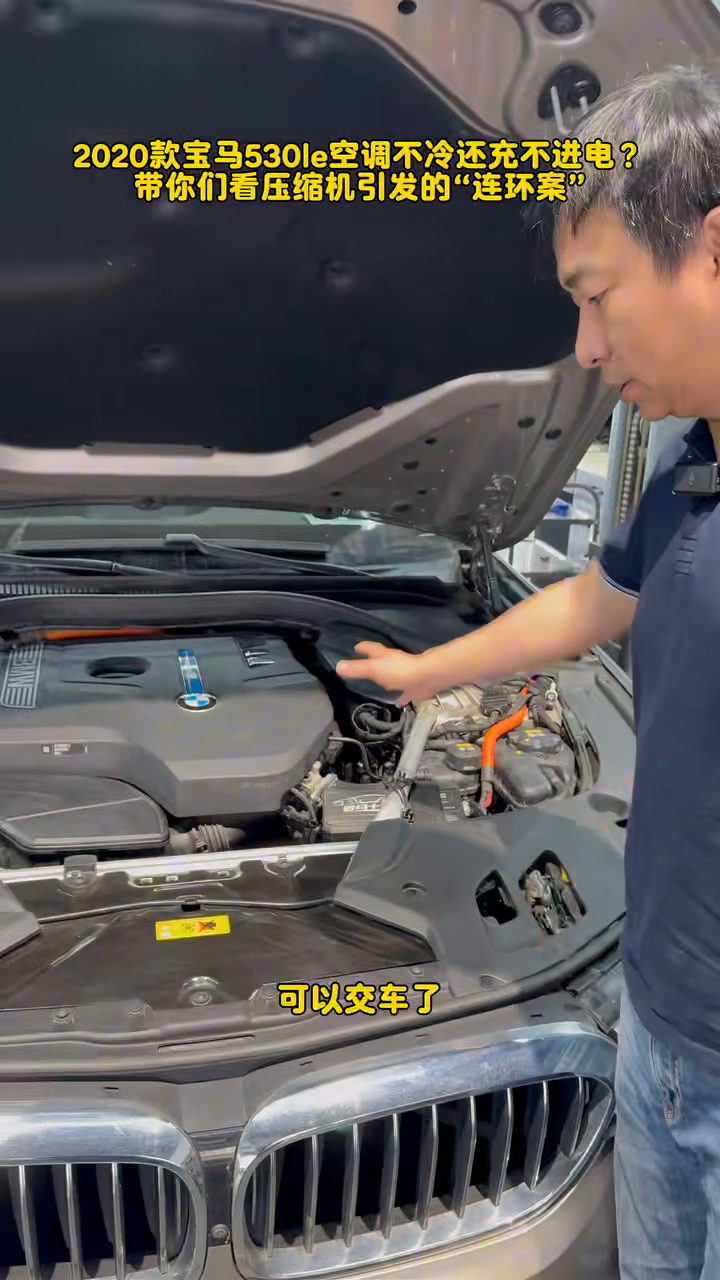
The orange branch led from compressor to EME
The video locates the high-voltage route and its orange connector before moving to the bench comparison. Those images establish the physical branch being discussed. They do not provide an isolation procedure; safe de-energization, absence-of-voltage verification and exact connector handling require the vehicle’s service information and qualified hybrid/EV capability.
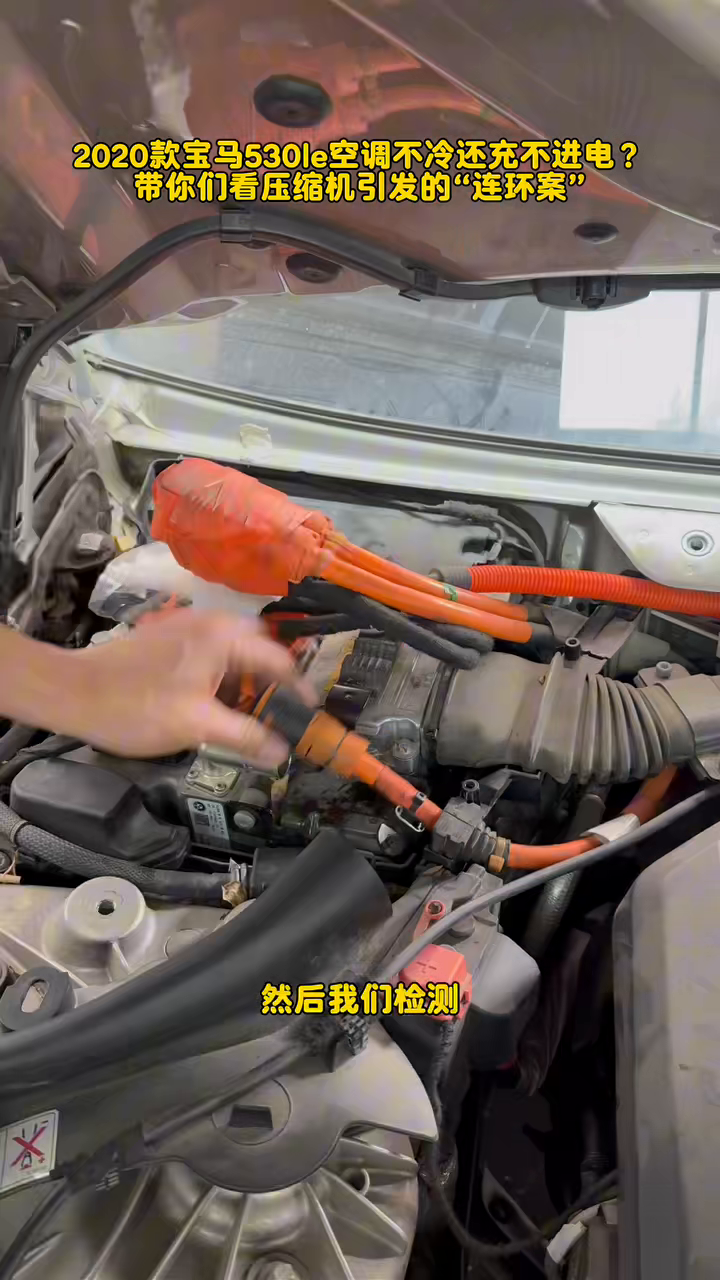
Bench checks then separated suspicion from confirmation. The simultaneous loss of charging and cooling suggested a shared high-voltage issue. Compressor insulation/internal shorting confirmed the failed load, while the opened EME protection explained why the car remained locked out.
The compressor had to leave before protection returned
The workshop compared the removed and replacement compressors, then installed the sound unit. This order is the safety and diagnostic hinge of the case: restoring an opened protective device while its shorted load remains connected can reapply fault current and damage the circuit.
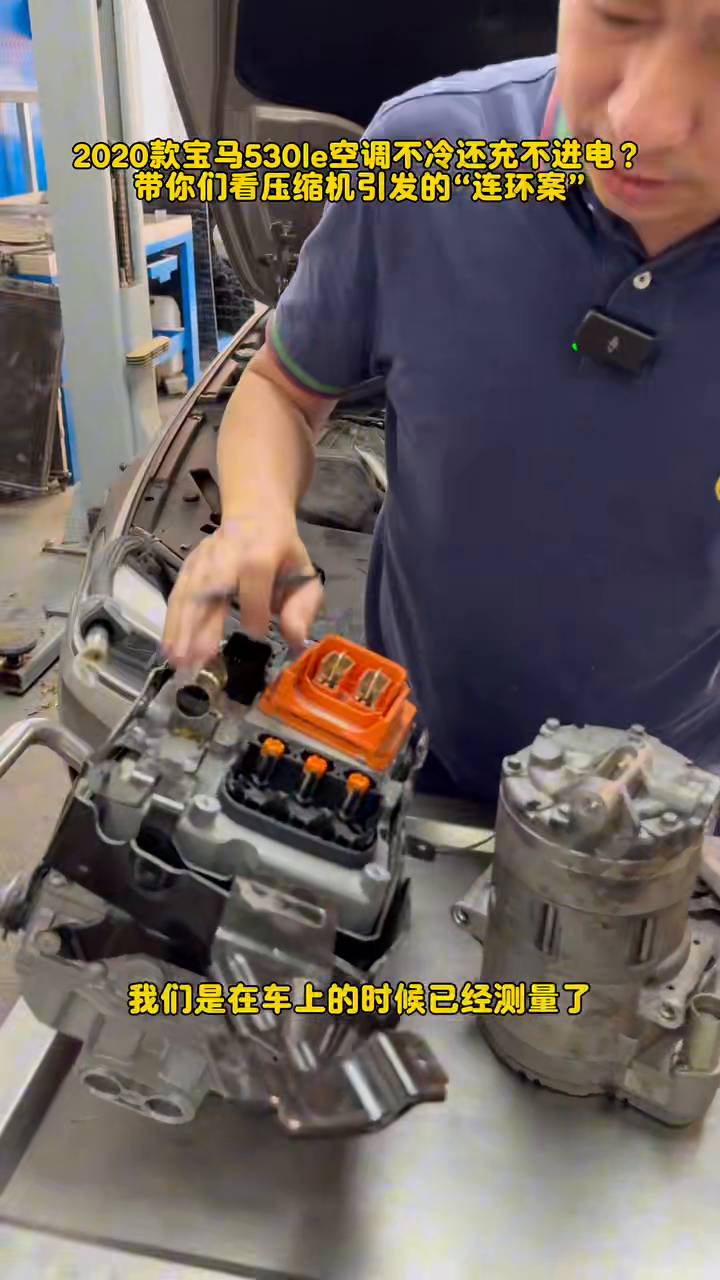
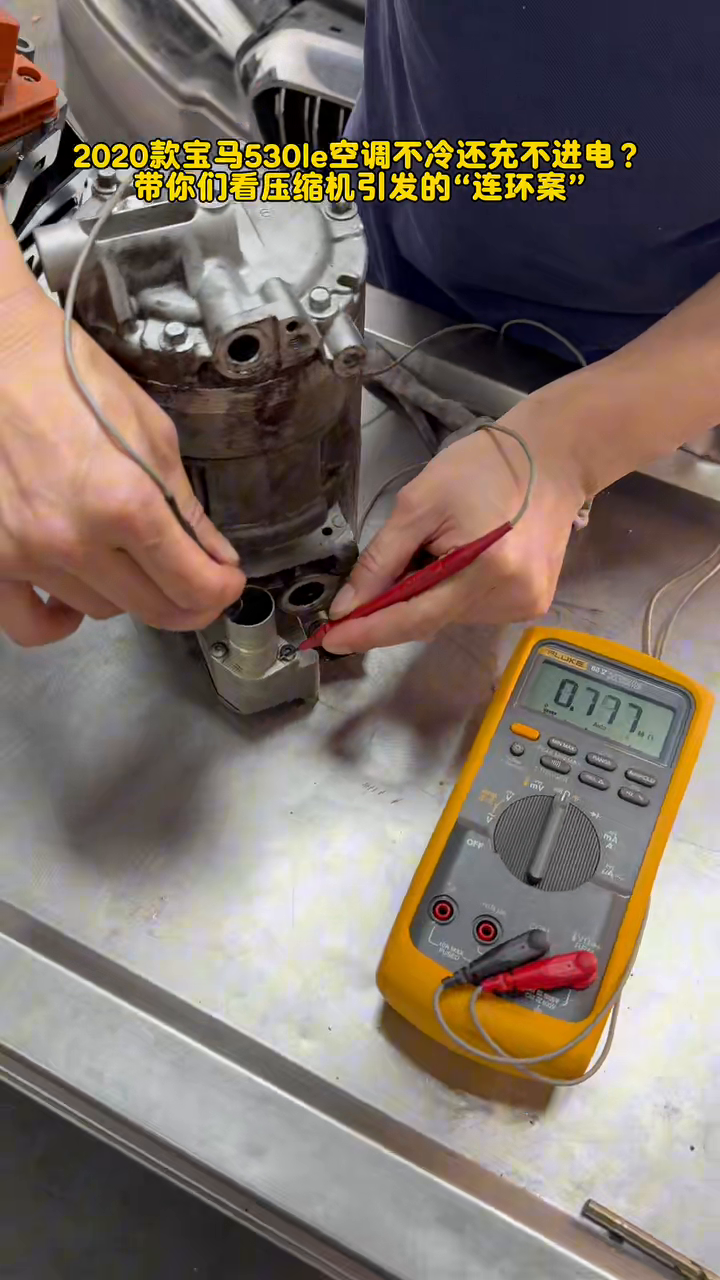
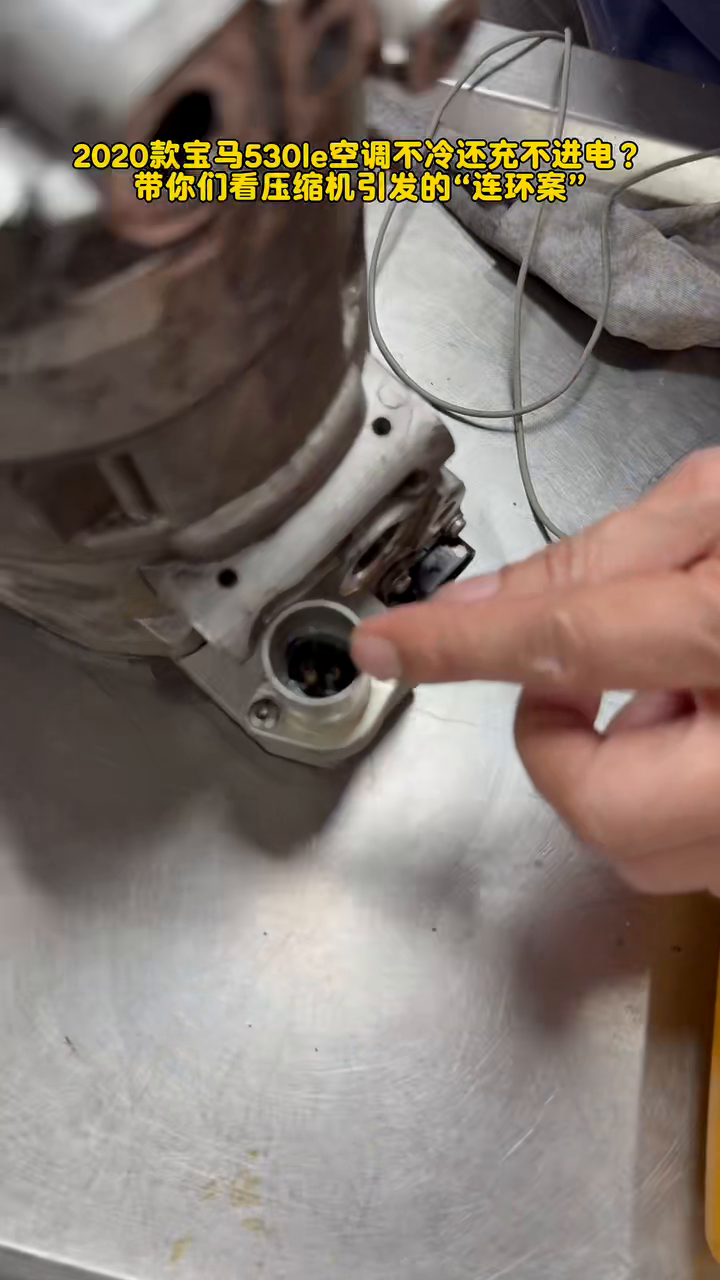
Only after the failed compressor was out of the fault path did the shop repair the opened protection inside the EME. The source calls this a fuse/protected supply repair but does not provide an exact circuit identifier, rating, approved repair part or board procedure. The only safe transferable rule is to restore the specified protective design—never bridge, up-rate or bypass it.
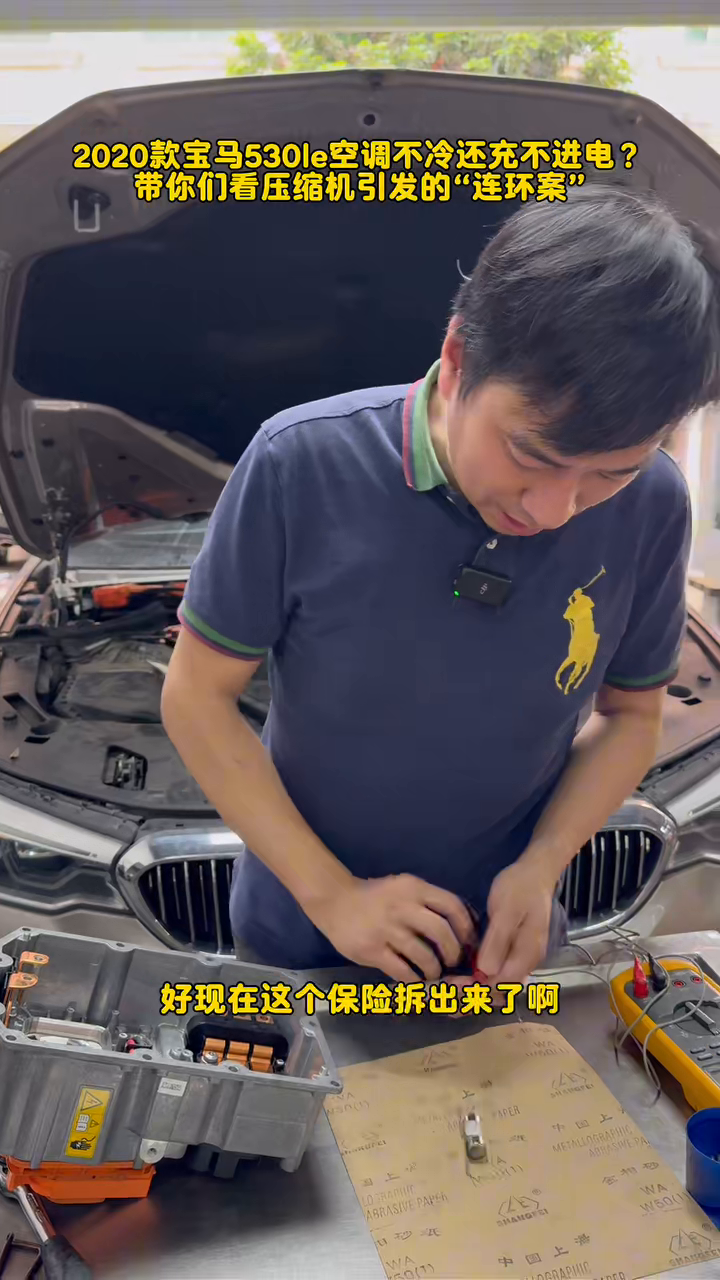
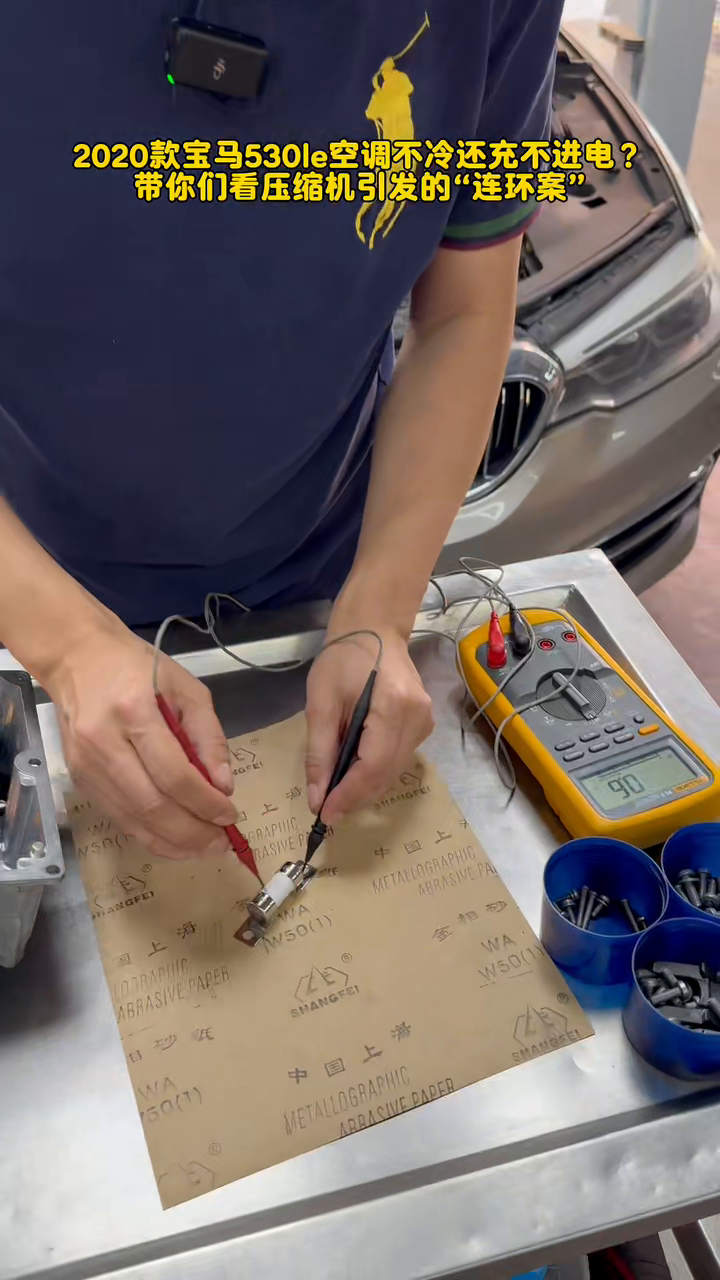
Recharging both systems closed the causal chain
After the electrical repair, the refrigerant circuit was evacuated and recharged and POE oil was replenished as recorded. No refrigerant type, charge mass, oil quantity, evacuation target or hold time is reported, so the case supplies no substitute for the underhood label and exact service data.
Historical faults were cleared, EME communication returned normally, and the source reports normal AC charging current. It also reports that the replacement compressor operated and the insulation warning did not return. Those are same-condition functional checks for both original losses, although no road distance or later cold-soak follow-up is given.
For another 530Le with both no charging and no A/C, preserve the original fault record, identify which high-voltage branch fails insulation testing, and remove that failed load before restoring its designed protection. Do not copy this compressor-and-EME repair when the insulation fault follows another load, the protected branch remains intact, or charging failure persists for an unrelated reason.






Comments 0
Questions, fixes, and real-world diagnostic notes from readers.
Be the first to share a diagnostic result or ask a follow-up question.