
2005 VW Golf TDI Still Lacks Power After a Turbo: Three Circuit-Low Codes Led to Missing Fuses

Quick answer: Several circuit-low codes on related actuators point toward their shared electrical requirements. A new turbo cannot restore a control supply that is missing.
Three actuator faults can be an invitation to read the diagram before pricing three parts. Passive supply testing with a suitable meter, such as the AUTOOL DM301, can help establish whether the identified circuits receive what they need. A visible pulse or an empty fuse position still requires interpretation against the exact vehicle information.

In this guide
Read the shared words in the three codes
Read the full descriptions, not only the component names. When several entries share an electrical qualifier such as circuit low, ask whether the affected devices also share an electrical requirement. Their different mechanical jobs do not necessarily make their supplies independent.
The next step is a vehicle-specific circuit map, not a universal assumption that one fuse serves every similar engine. Preserve the complete scan record and the complaint conditions. Severe power loss requires a safe-use assessment; do not keep driving in demanding traffic to prove that all three codes recur together. The pattern already offers a useful starting question for the workshop.
A new turbo still needs working control
Replacing the major air-moving hardware cannot restore a missing electrical requirement elsewhere in its control system. The new assembly remains part of a larger arrangement. Ask which control functions and supporting circuits were assessed after the earlier repair.
This does not establish that the original turbo was sound or that its replacement was unnecessary. A later diagnosis can identify an unresolved problem without rewriting every earlier condition. Keep the repair sequence clear. The useful question is what remains unable to do its job now, not whether the newest part should be trusted simply because it is new.
An electrical pulse is not automatically usable supply
A meter or scope can show activity without demonstrating that a circuit has the intended usable supply. The meaning depends on where the observation was made, the circuit design and the operating state. Control or diagnostic behavior must not be mistaken for proof that an actuator is correctly powered.
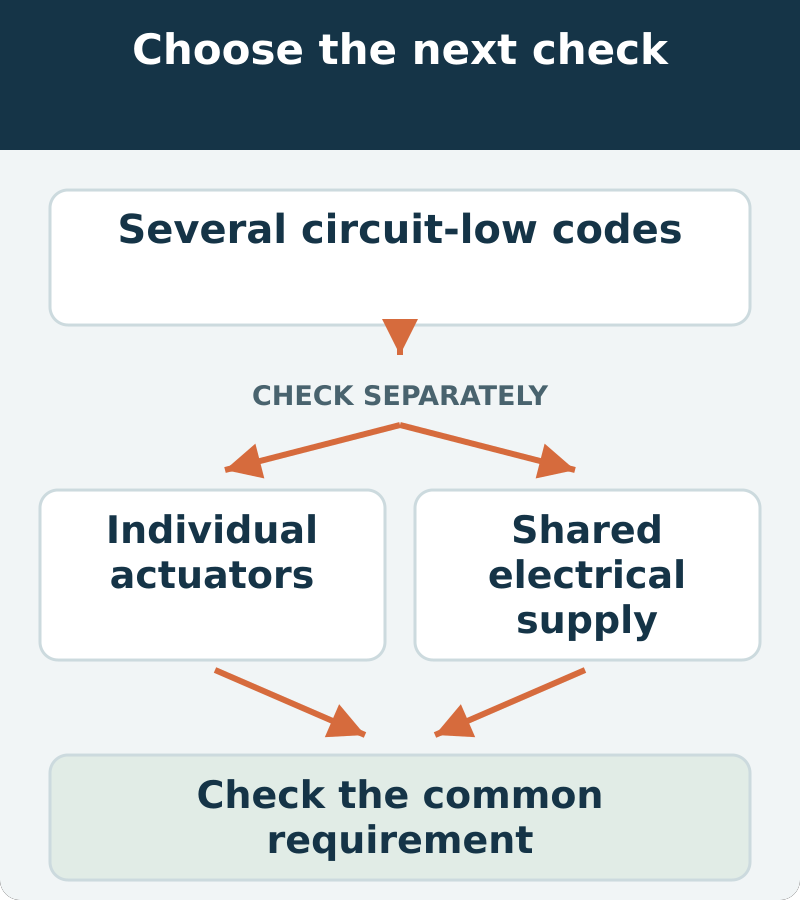
Ask the technician to explain which side of the circuit was assessed and what the observation established. No waveform or voltage target is supplied here because the exact test conditions govern. The conceptual diagram separates shared supply from individual control paths. It is not a pinout and should not be used to energize an unknown wire.
In the published Professional Motor Mechanic case by Joshua Jones, the Golf had severe low power with EGR, cooler-control and boost-solenoid circuit faults. Diagram-led testing found their shared supply absent; fuse positions had been disturbed during earlier work. Restoring the correct fuse arrangement returned proper electrical behavior and performance. The turbo had been replaced before this investigation.
Empty fuse positions need the correct map
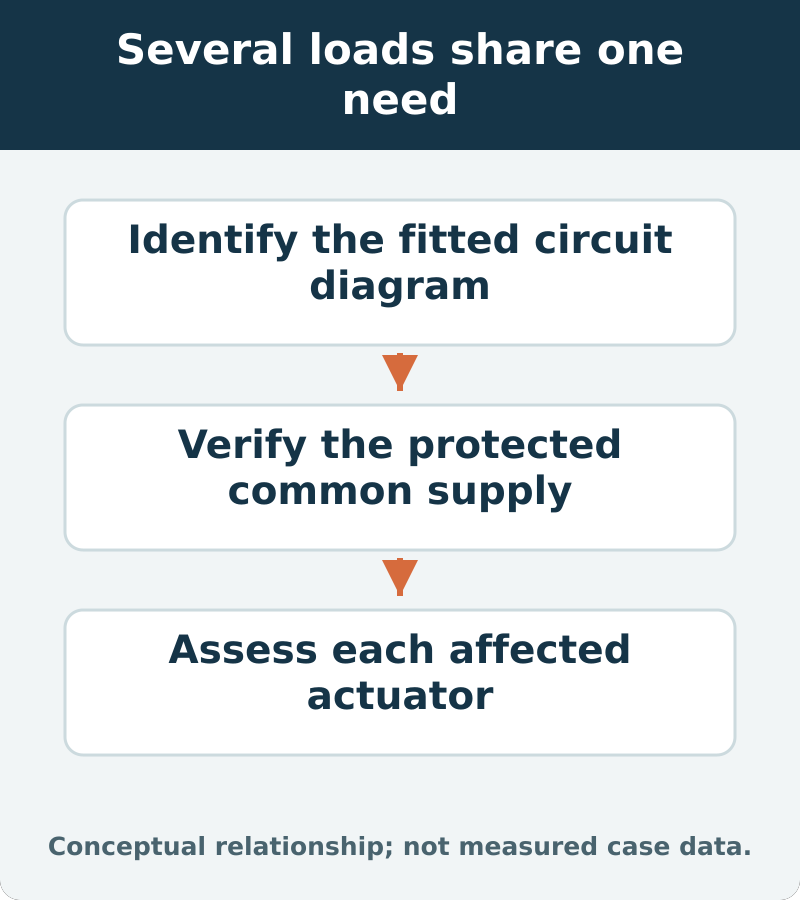
A vacant fuse slot is not automatically a fault. Fuse boxes often serve different equipment arrangements, so only the correct information for the fitted circuits establishes which positions should be populated and with what protection.
Do not fill every empty space, fit a larger rating or bridge a slot to see whether performance returns. The repairer needs to identify the intended arrangement and assess why it is wrong if a discrepancy is confirmed. A photograph of another Golf’s fuse box is not sufficient authority. Compatibility includes the actual engine and equipment, not just the model name on the back of the car.
Ask about small work as well as major repairs
Major parts replacement is memorable; small electrical work can disappear from a service summary. Ask about accessory installation, fuse investigation or any earlier attempt to resolve another concern. Include who worked where and what was moved if that information is known.
Keep the account factual. A remembered intervention is a lead to verify, not automatic proof of responsibility. The best history lets the technician compare the designed circuit arrangement with the actual vehicle. It can explain why a shared requirement deserves attention even when the current complaint sounds primarily mechanical. Small changes can be diagnostically important without making every previous service action suspicious.
Verify the circuits after restoring their protection
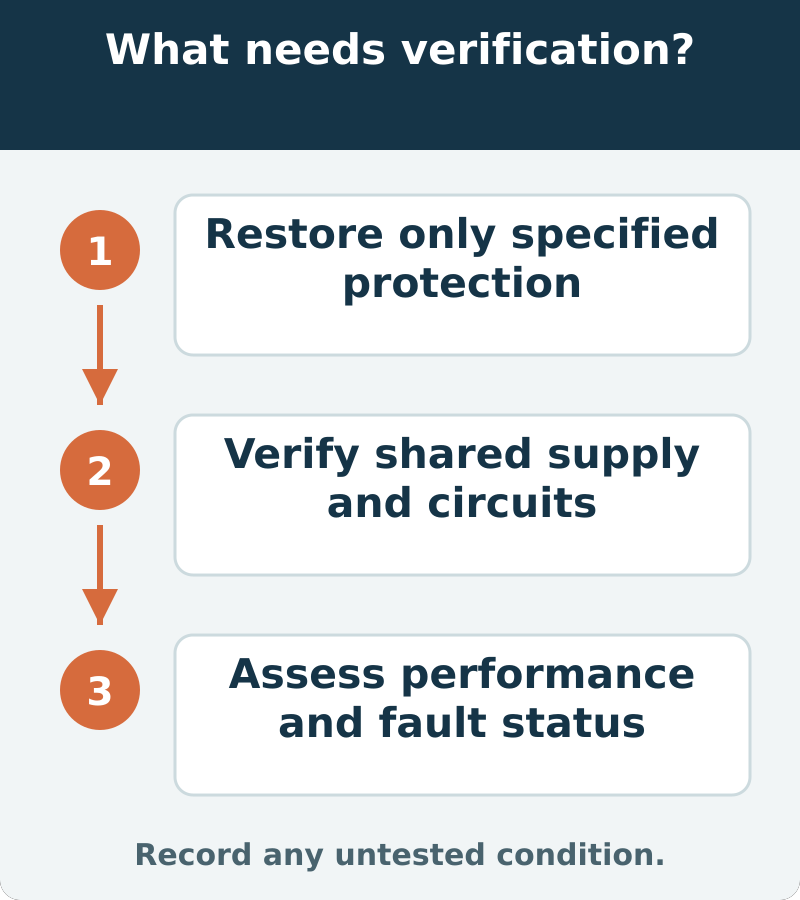
After the intended protection arrangement is restored, the relevant circuits still need verification. Ask whether supply and control behavior were reassessed and whether the original performance complaint was checked under appropriate conditions. Simply inserting a fuse is not a complete diagnosis if the reason for its absence or a related defect remains uncertain.
Keep the confirmed arrangement and repair findings with the service record. The point of this case is not that every low-power TDI needs missing fuses. It is that shared electrical language can reveal a shared requirement. Establishing that requirement can be more productive than treating each named actuator as a separate replacement candidate.









Comments 0
Questions, fixes, and real-world diagnostic notes from readers.
Be the first to share a diagnostic result or ask a follow-up question.