
2006 MINI Cooper S P1688 and Low Power: Check the Drive Before Blaming Throttle Electronics

Quick answer: An airflow-related electronic fault can reflect a real mechanical delivery problem. On a belt-driven supercharger system, the drive path belongs in the diagnosis.
A code interpreted as an electronic-control problem can still be describing a real shortage of delivered air. Inspecting a hidden drive component may call for an articulating camera such as the AUTOOL SVB308. It can show visible condition with the engine cool and disabled; it cannot measure belt speed or prove boost from a still image.

In this guide
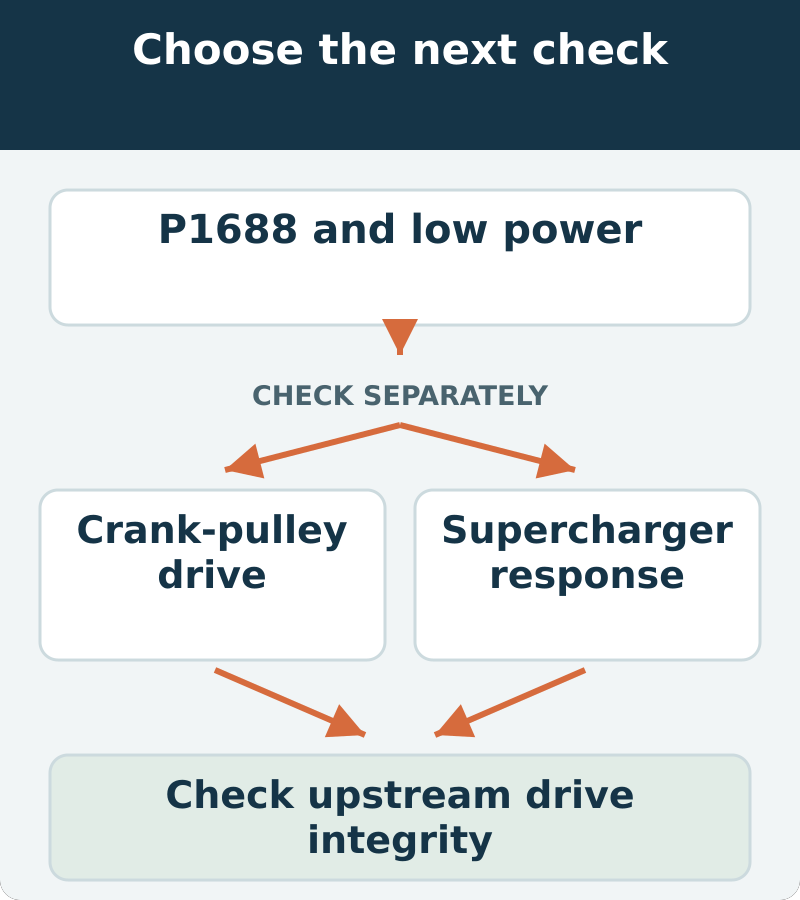
The fault wording does not identify the failed technology
The system that reports a discrepancy is not necessarily the technology that failed. An electronic controller can recognize a performance relationship that has gone wrong because of a mechanical problem. That is why a code description should begin an investigation rather than choose a control module automatically.
Ask what physical and electrical requirements were assessed before the estimate reached the electronics. The exact engine matters here: this case concerns a supercharged MINI, not every later turbocharged model. Preserve that distinction when comparing advice. Similar badges and familiar fault words do not establish that two vehicles create their air delivery in the same way.
Trace how the supercharger receives motion
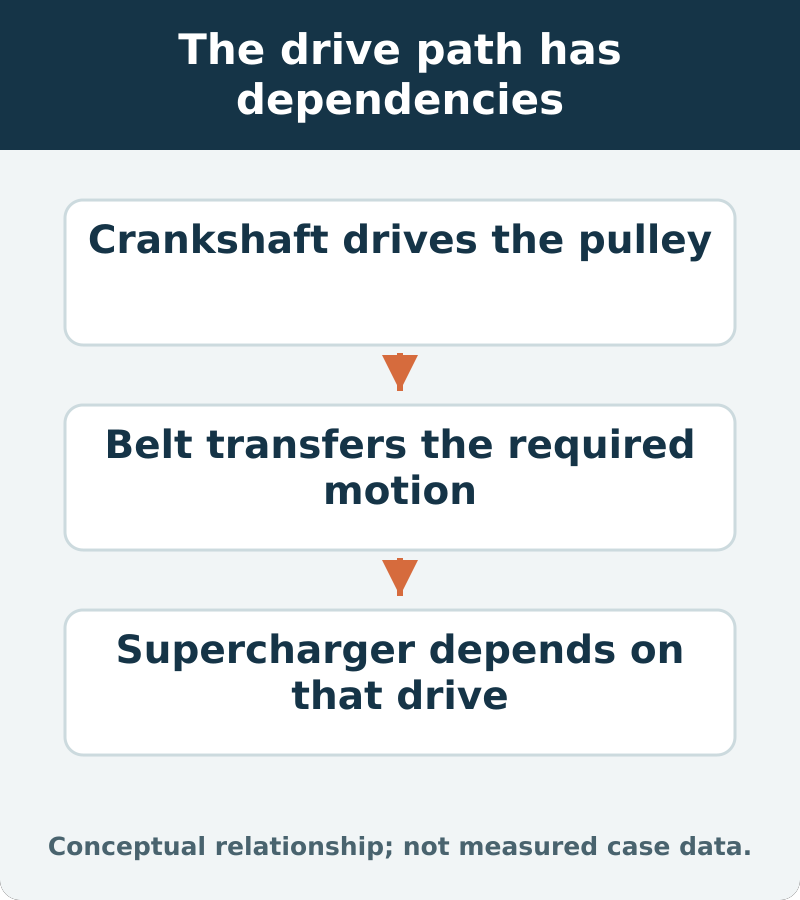
A belt-driven supercharger depends on motion supplied through the drive path. The investigation can therefore follow the transfer of energy: engine rotation, the relevant pulley and belt arrangement, then the equipment that uses that motion.
The drawing is an explanation of dependency, not the MINI’s exact belt-routing diagram. Do not use it for installation, tensioning or parts selection. A technician must use the correct procedure and assess the actual configuration. For an owner, the useful question is simpler: has the drive path been shown to perform its job, or has the diagnosis assumed that because all its parts are visibly present?
Why a pulley can look present but transmit poorly
A component can remain in place while a connection within it transmits motion poorly. Presence, appearance and useful mechanical transfer are different observations. Visible separation or instability would be important, but a still photograph cannot quantify slip during operation.
Do not mark a live pulley, lean in for a running close-up or place a camera in the belt path. A visibly unstable pulley or damaged belt requires a stop-running assessment. The workshop should choose the appropriate safe inspection method. This article explains the mechanical possibility without borrowing a hazardous demonstration or inventing a before-and-after speed comparison.
In the published ALLDATA case, the MINI remained low on power after an intake clamp correction. A relevant bulletin redirected attention away from immediate DME replacement. Inspection found crank-pulley separation that allowed slip. Pulley replacement restored performance and cleared the reported fault. No quantitative boost or belt-speed comparison is supplied.
Use a bulletin to widen the question
A relevant bulletin can suggest a possibility that deserves checking. It does not diagnose the vehicle simply by sharing a symptom or model name. Ask whether its applicability was confirmed and which actual finding supported the repair.
The case also included earlier intake-related attention. That history should not be rewritten as proof that the earlier correction was pointless. A vehicle can have more than one concern, or a necessary correction can leave another fault unresolved. The useful role of service information is to widen and focus the investigation, not replace observation with a preselected answer.
Inspect the drive as an assembly
If a pulley concern is confirmed, ask what related drive components and installation requirements need assessment. The correct scope depends on the damage, access and manufacturer procedure. It is not a reason to replace every nearby item automatically.
The estimate should identify the compatible part and the required completion checks. Avoid a generic pulley fitment claim or an aftermarket change intended to alter boost as a cure for a damaged original arrangement. Restoring the specified drive is a different task from modifying performance. Mixing them can make the result harder to interpret and leave the original diagnostic question unanswered.
Check both the repaired motion and restored performance
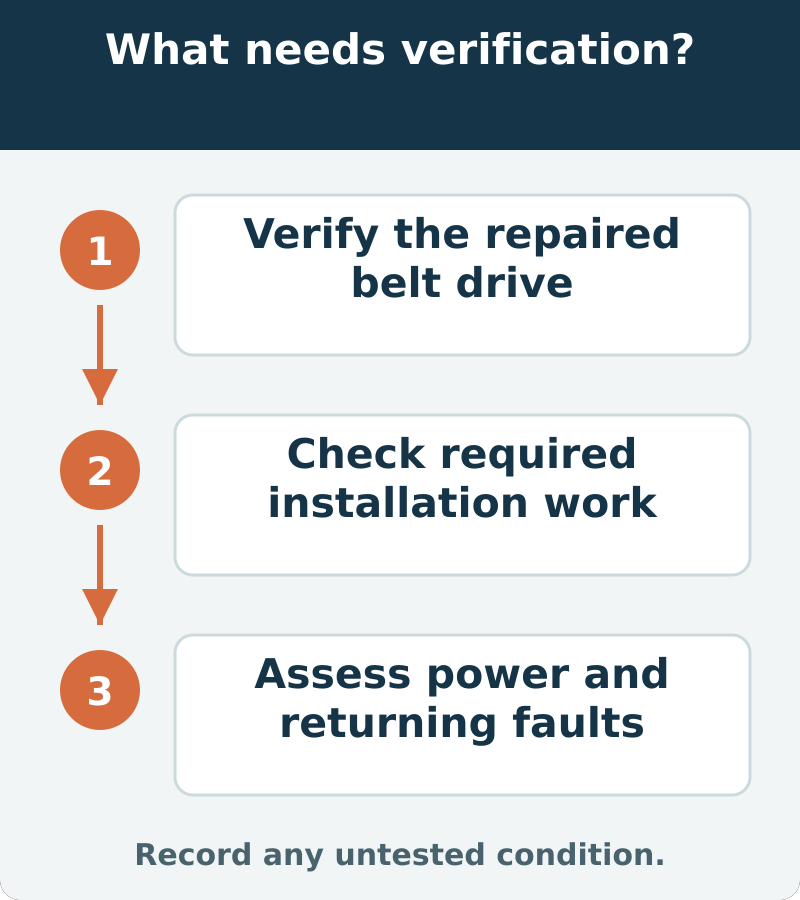
A completed repair should address both the mechanical condition and the original performance complaint. Ask which drive checks and appropriate operating assessment were performed, and whether relevant warnings remain. A cleared code is not the only useful evidence.
Retain the earlier intake work and the pulley finding in the service history. If another air-delivery concern develops, the sequence gives the next repairer a clear starting point. The broader lesson is about following the work the system must do. Before condemning the electronics that report a mismatch, establish whether the mechanical path can deliver what the controller expects.










Comments 0
Questions, fixes, and real-world diagnostic notes from readers.
Be the first to share a diagnostic result or ask a follow-up question.